

Ten wpis jest również dostępny w języku:
 Polski
Hey! 
From the outside, Kuwait looks like a country that’s easy to skip on the Gulf map. It doesn’t shout about attractions, doesn’t build the tallest of everything, and doesn’t try to be a global “must-see.” And that’s exactly why it can surprise you when you drop in for even just two or three days.
To give that some context: movement in and out of the country is noticeable, but it’s largely “practical” in nature. Analysts at Oliver Wyman point out that Kuwait has relatively low tourist arrival numbers compared to other GCC countries, with a big share of inbound travel driven by visiting friends and family, business trips, or shopping. That actually explains a lot about why Kuwait works best as a short, city-focused stop rather than a long sightseeing marathon.
In 2023 alone, traffic at Kuwait’s airport clearly picked up — around 15.6 million passengers were handled in total, marking an increase compared to 2022. Official announcements also include data on approx. 7.9 million arrivals in 2023 . It’s not strictly a “tourism” statistic, but it does show the pace and scale of how many people move through the country.
And one more clue that says a lot about where Kuwait wants to attract visitors from: in 2025, the country started opening up more broadly to residents of other GCC states by easing entry requirements.
That’s why in this post we’re approaching Kuwait the way it sells itself best: as a calm, enjoyable stop with a handful of strong highlights, good food, and an easy city rhythm. No pressure. Just solid recommendations. If you’ve got 1–3 days and want to use them well, you’re in the right place.
👉 Please also check out our main post describing our impressions of our stay in Kuwait City.
Kuwait Towers
 Pin on Google Maps – click here.
It’s hard to skip this place, even if observation towers aren’t really your thing. The Kuwait Towers are one of the city’s main symbols and probably the most recognisable image associated with Kuwait as a whole. They were built in the 1970s and officially inaugurated in 1979. The main tower rises to about 187 metres, so sure, it’s not the tallest structure in the Middle East — but that’s not the point. This is more about identity: a visual landmark and a piece of the country’s modern history.
We decided to walk over, mostly because we felt like stretching our legs a bit. In theory it’s fine, but in practice pedestrian crossings here aren’t exactly designed with sightseeing strolls in mind. The crosswalks can be surprisingly far apart, so if patience (or heat tolerance) is low, taking a taxi or driving yourself will probably make more sense. Luckily, there’s a proper parking area right next to the towers, so logistics are easy either way.
The view from the top? Well… it’s decent. The Gulf, the city, a bit of skyline, a classic urban panorama. For some, it’s a solid highlight; for others, more of a symbolic box to tick. Either way, we don’t regret going up — spots like this helped nicely frame our short stay in Kuwait City.
A ticket to the observation deck costs 3 KWD per adult. You can buy it through the official website via this link. The youngest kids (for example, under 4 years old) usually enter for free, and there are often discounts for older children — so in practice it follows the typical model: full price for adults, reduced prices for kids.


Kuwait Waterfront
Pin on Google Maps – click here.
And this is exactly the kind of spot that works well right after the Kuwait Towers. Not another attraction to tick off, but an easy, relaxed walk with views over the Gulf. In practice, this coastal path stretches along a long section of the shoreline, linking the area around the Kuwait Towers with further parts of the city’s waterfront. You can stroll here without any pressure, just settling into the city’s rhythm.
And yes, the classic Gulf ritual applies here too: iced coffee. The nearby Starbucks really did the job — after that kind of sun, even a basic cold brew tastes like a well-earned reward for surviving the day 😄.


Souq Sharq Marina
Pin on Google Maps – click here.
Souq Sharq is a waterfront complex built around the idea of a traditional souq, but today it also works as a regular urban shopping and walking area. According to local sources, the complex was officially opened in 1998.
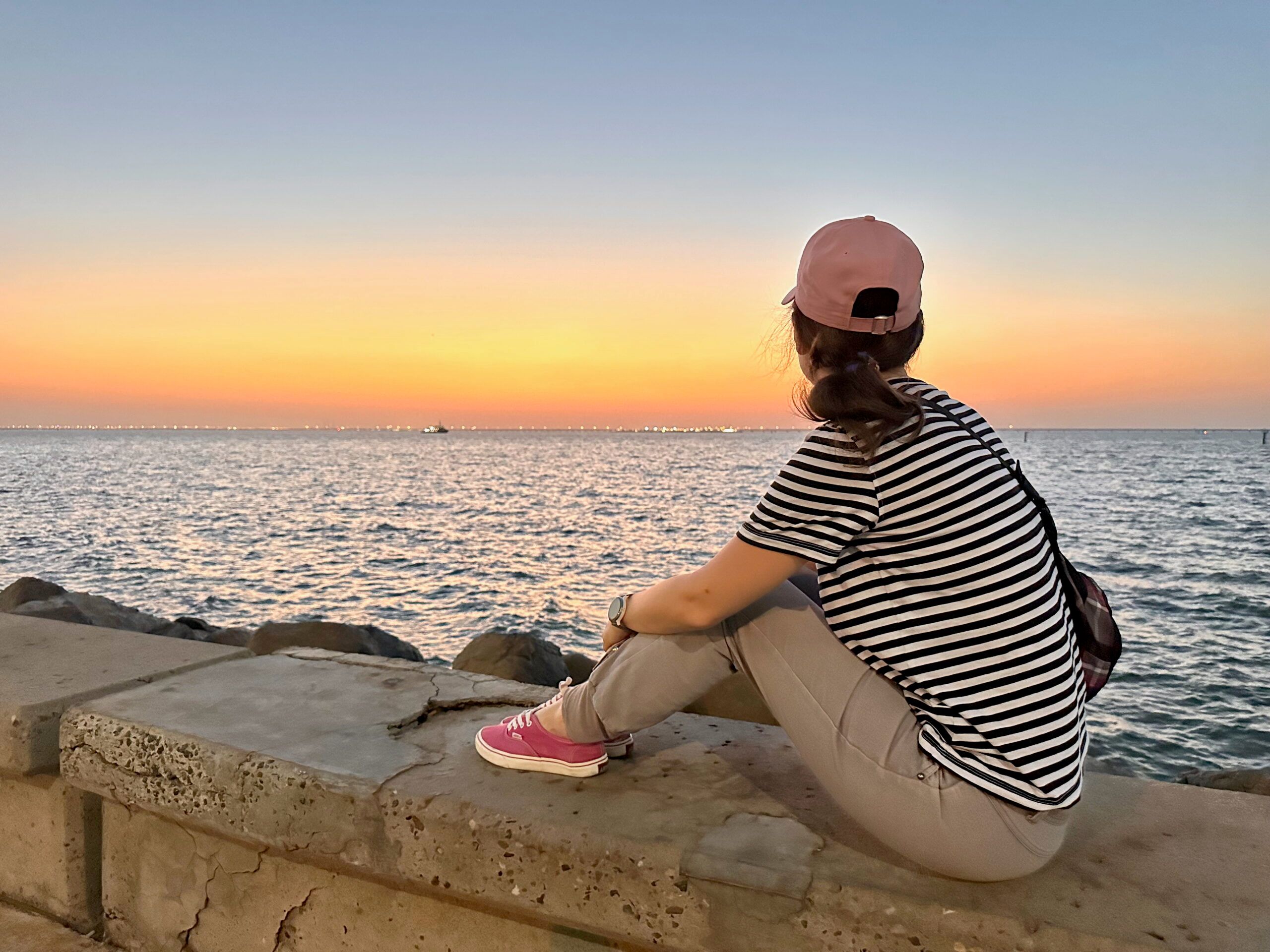
The marina feels like the natural heart of the place. Boats and yachts moor here, there are promenades, and the kind of views that don’t try to be a “world-class attraction” — they’re just genuinely nice to look at, especially around sunset. It also works well as a relaxed stop along the Kuwait Waterfront if you’re putting together a walking route by the sea.
A small update worth keeping in mind when planning your trip: in November 2025, reports started circulating about commercial changes around Souq Sharq, with tenants being asked to vacate their premises by 31 January 2026. This suggests major reshuffling or a potential redevelopment of part of the complex. If you’re reading this closer to 2026, it’s a good idea to check the latest updates before visiting.

Souq Al-Mubarakiya
Pin on Google Maps – click here.
If there’s one place in Kuwait where you really feel that this country wasn’t built solely on oil and modern highways, it’s Al-Mubarakiya. One of the oldest markets in Kuwait City, operating for over 120 years and named after Sheikh Mubarak Al-Sabah. Before the oil era, this was simply the commercial heart of the city.
This isn’t a souq built purely for show. Sure, it’s been renovated and made visitor-friendly, but it still keeps a real, everyday rhythm. You move between stalls with spices, perfumes, dates, gold, textiles, and all sorts of small gift items. What should you buy here? The safe bets are spices, oud and perfumes, sweets, dates, or simple souvenirs without any over-the-top flair. And if you enjoy bargaining, this is a good place to do it in a relaxed, low-pressure way.
It also works really well as a food stop. Even if you’re not planning a big feast, it’s worth dropping by for something local or just sitting down with a tea and watching the place go about its daily life.


Kuwait National Museum
Pin on Google Maps – click here.
Kuwait National Museum is one of those places that looks modest on the map, but once you’re there, the scale becomes clear pretty quickly. It’s not a single building, but an entire complex — several structures arranged around a shared central space, designed to work together as one coherent story about the country. The museum opened in 1983, and the architecture immediately gives away that it was meant to be more than just a quick stop with a few display cases. Even if museums aren’t high on your must-see list, simply walking up to this place and taking a loop around the complex from the outside is well worth a moment.
The idea behind it was to tell Kuwait’s story in a broader way — heritage, archaeology, the country’s maritime roots, and elements that help paint a picture of life before the era of skyscrapers and shopping malls. A place meant to show that Kuwait’s identity goes beyond being just a modern Gulf capital.
And now, our confrontation with reality.
In September 2025, we happened to visit at a time when the museum was heavily limited for visitors. In practice, we saw only a modest exhibition, mostly based on photographs and a short narrative about the site itself. It was genuinely surprising, because the scale of the complex and the number of buildings suggest a full, in-depth exhibition. For a moment, it was hard to believe that this was really all there was.


Grand Mosque of Kuwait
Pin on Google Maps – click here.
The Grand Mosque is the largest mosque in Kuwait. It’s located along Arabian Gulf Street, opposite the Al-Seif Palace area. The entire complex covers around 45,000 square metres, with the built-up area accounting for roughly 20,000 m². Construction began in 1979, and the mosque was completed and officially inaugurated in the mid-to-late 1980s — most sources point to 1986 or 1987 as the opening year.
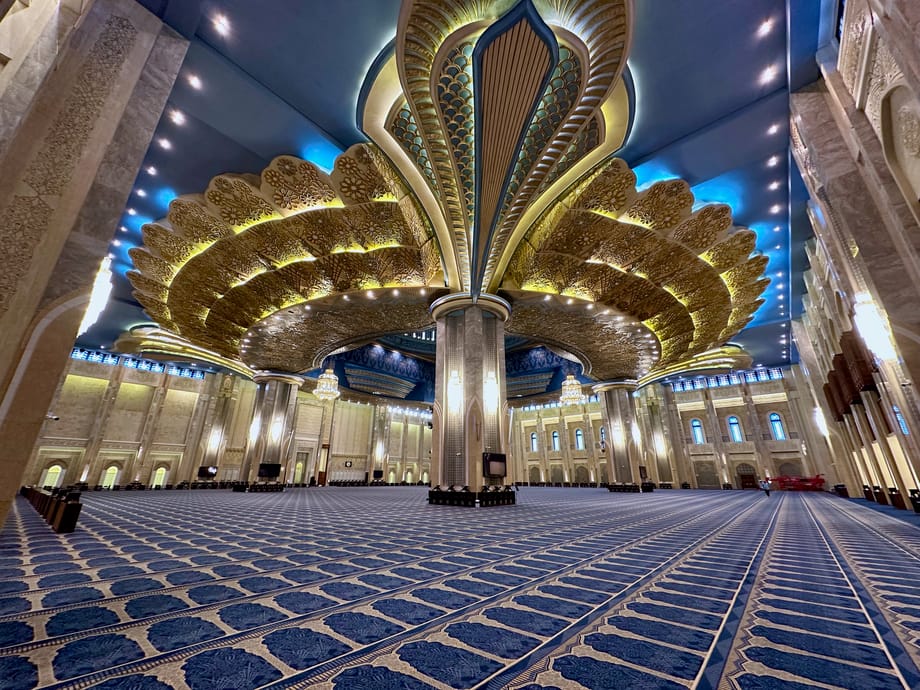
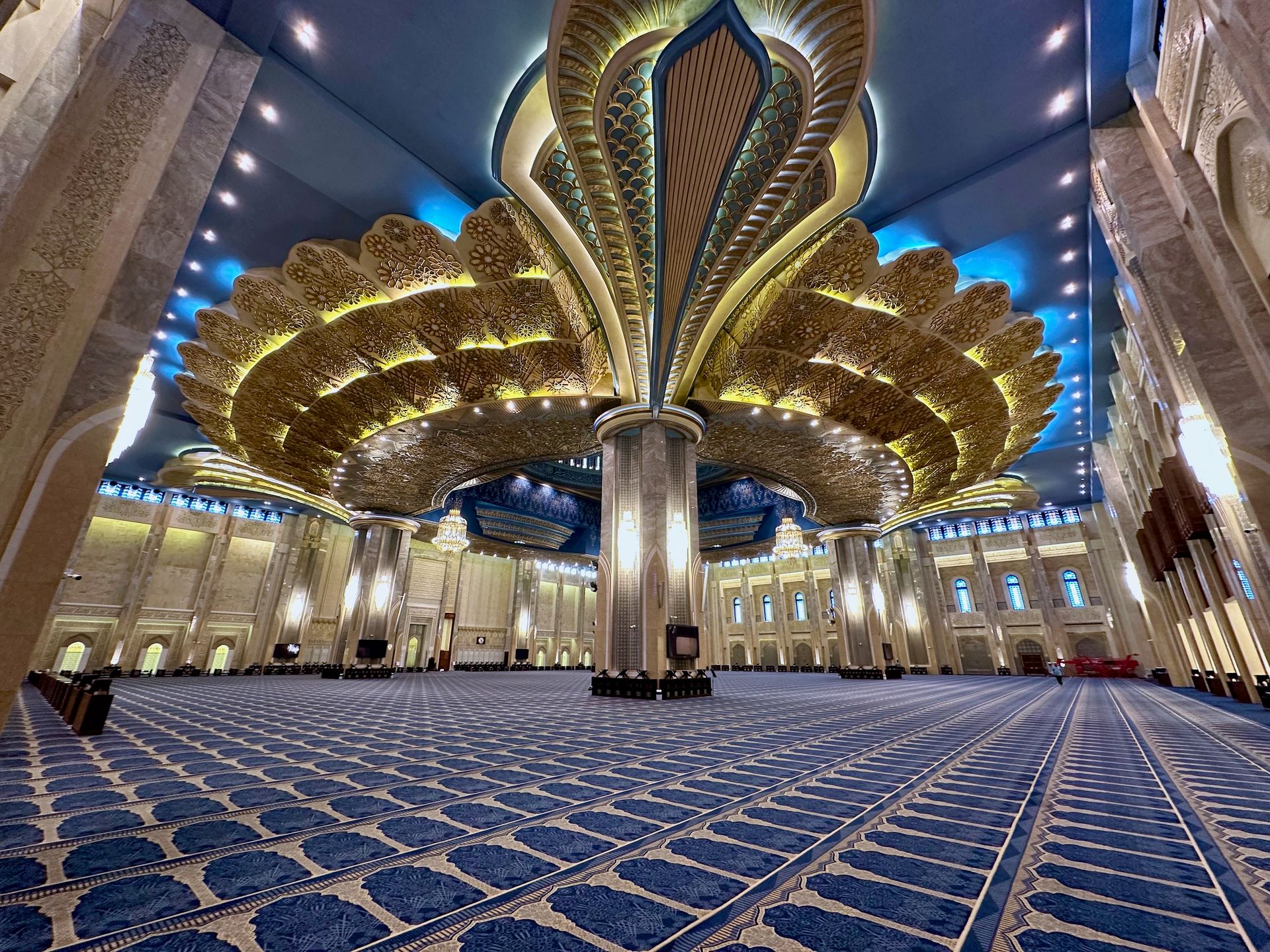
Inside is where the place really comes into its own. A vast dome, plenty of light, calm and carefully crafted details. There’s scale here, no doubt about it, but without any feeling of excess. It leans more toward elegance than spectacle. According to available sources, the mosque can accommodate around 11,000 worshippers, which gives a good sense of just how large it actually is.
When it comes to visiting, it’s worth planning it properly, because tourists can only enter during designated time windows. The most commonly listed visiting hours are Sunday to Thursday, usually in the morning around 9:00–11:00 and again in the afternoon around 16:00–18:00. On Fridays and Saturdays, standard tourist visits are generally not available. You can visit with a guide or on your own. Admission is free.
The dress code is pretty standard, just like in most large mosques across the region. Shoulders and legs need to be covered, and women are expected to cover their hair. If you don’t have the perfect outfit with you, it’s usually easy to sort it out on the spot.


Safat Square
Pin on Google Maps – click here.
Safat Square is a slice of old Kuwait City’s heart, but in a fully living, urban form — not sealed behind a museum glass case. Back in the day, this was a key hub for trade, meetings, and everyday life. A place where merchants’ routes crossed and where the city simply happened on a daily basis.
One of those small details that adds real context: this is where the city’s first modern street began back in 1945 — then known as Dasman Street, later renamed and eventually restored. It’s a minor detail, but it makes it clear this isn’t just a random square on the map. It’s a place around which Kuwait actually grew.
Today it’s more of a transitional, symbolic spot than an attraction you’d plan half a day around. You stop by to catch a street-level slice of the city’s history, take a quick look around, and then move on toward the souqs or the waterfront.

The Avenues
Pinezka na Google Maps – kliknij tutaj.
The sheer size of this mall is genuinely hard to put into words, so let’s keep it simple: it’s a city within a city. In Kuwait, it’s a place you don’t visit just for shopping, but to simply exist for a while in an air-conditioned world — especially when outside feels like a full-on battle with the heat.
The numbers speak for themselves. The Avenues has been operating since 2007 and has grown in stages over the years. Today, the complex is divided into several themed “districts” – officially, there are 12 districts. Each one has a slightly different character: from the more luxurious ones, through those styled after shopping streets, to areas focused on family food and entertainment.
There are an absurd number of shops here – official sources put the number at over 1,100. The parking lot is also one of those “Kuwaiti” ones – for about 13,000 cars. And that explains why it can be crowded here even in the middle of the day.
And in one part, they have escalators at an angle – we’ve never seen that before in our lives XD.


