
Ten wpis jest również dostępny w języku:
 Polski
Hey! 👋
Essaouira was a short stop for us during our week-long trip to Morocco. After intense Marrakesh, we wanted to slow down for a bit, see a stretch of the Atlantic coast, and check whether this city really has something more to offer than just nice photos of the port and medina. And it does — but we should say honestly right away that this isn’t a place where you’ll be ticking off attractions nonstop from morning to night.
We had a more ambitious plan, but the weather wasn’t cooperating, and Essaouira itself quickly showed us that it’s more of a city for a walk and a calm breather than for intensive sightseeing. Essaouira is also strongly associated with wind and water sports — surfing, kitesurfing, and windsurfing — so people coming here with a board in the trunk will get a lot more out of it than we did. We’re not surfers, so we looked at this city differently: as a calm break on the route that’s worth seeing, but without inflated expectations.
Where is Essaouira?
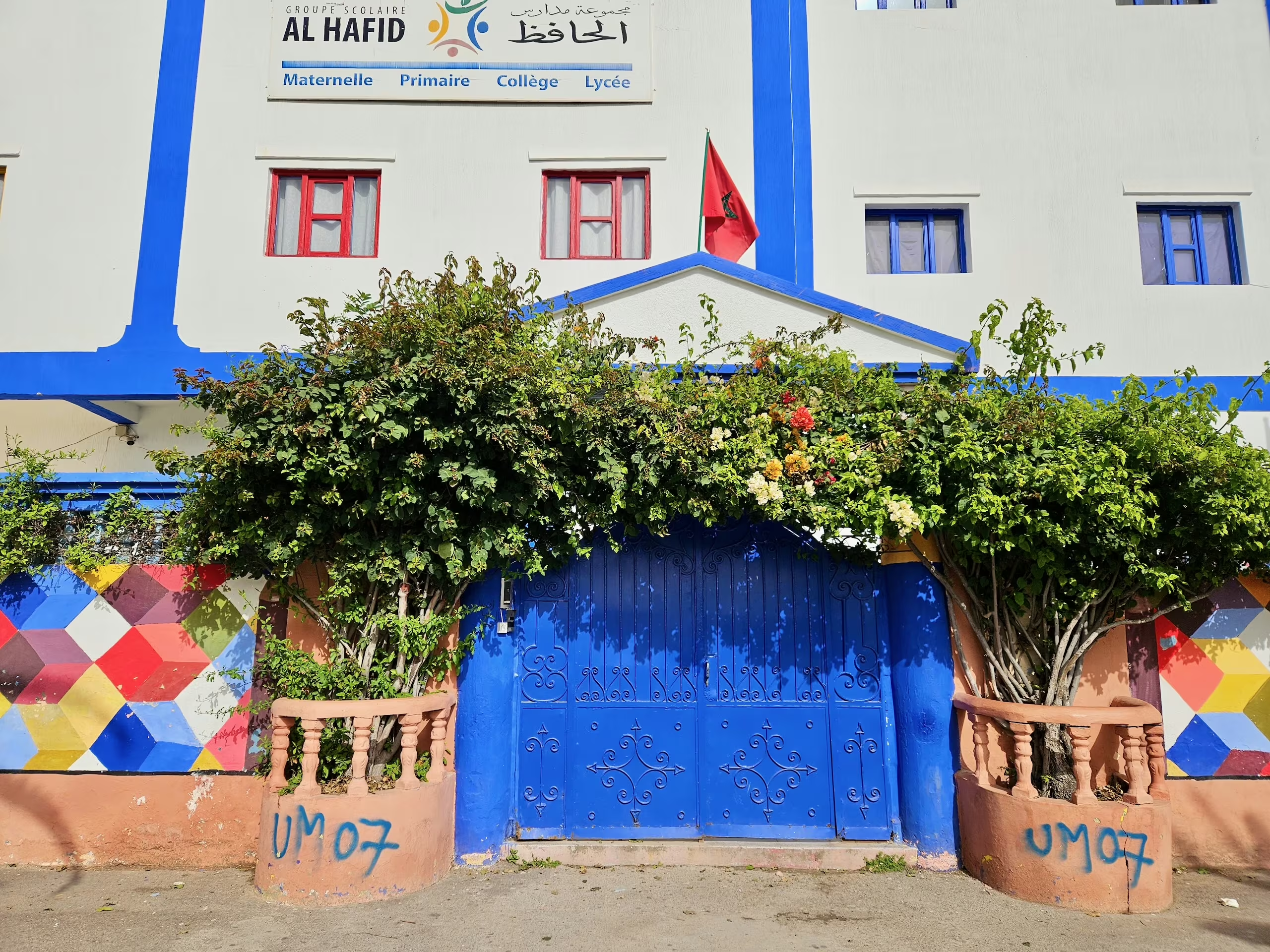
Essaouira lies on the western coast of Morocco, right on the Atlantic. After Marrakesh, that change hits immediately — instead of a crowded inland city, you get a port, the ocean, and a clearly calmer rhythm. From Marrakesh it’s about 180 km, so a lot of people add Essaouira to their route as a short trip to the water or a 1–2 day stop.
You don’t come here for a long list of attractions. It’s more about a walk through the medina, the ocean view, and that calmer breathing you feel from your first minutes in the city. The medina of Essaouira is on the UNESCO list as an example of a fortified city from the late 18th century — built according to the principles of European military architecture, but set in a North African context. Interestingly, the city was designed from scratch by a French architect commissioned by Sultan Sidi Mohammad — that’s why the street layout feels a bit different, more open, than in typical Moroccan medinas.
The wind also does its part — Essaouira is simply known for it. That’s exactly why it attracts surfers, kitesurfers, and windsurfers, and for many people it’s mainly a base for water sports, not a city for classic sightseeing. If, like us, you’re coming without a board — it’s good to know that upfront. This is a good place for the port, the medina, the beach, and a bit of breathing room, but not the kind of place that will keep serving up new must-see spots every day.
How do you get to Essaouira?
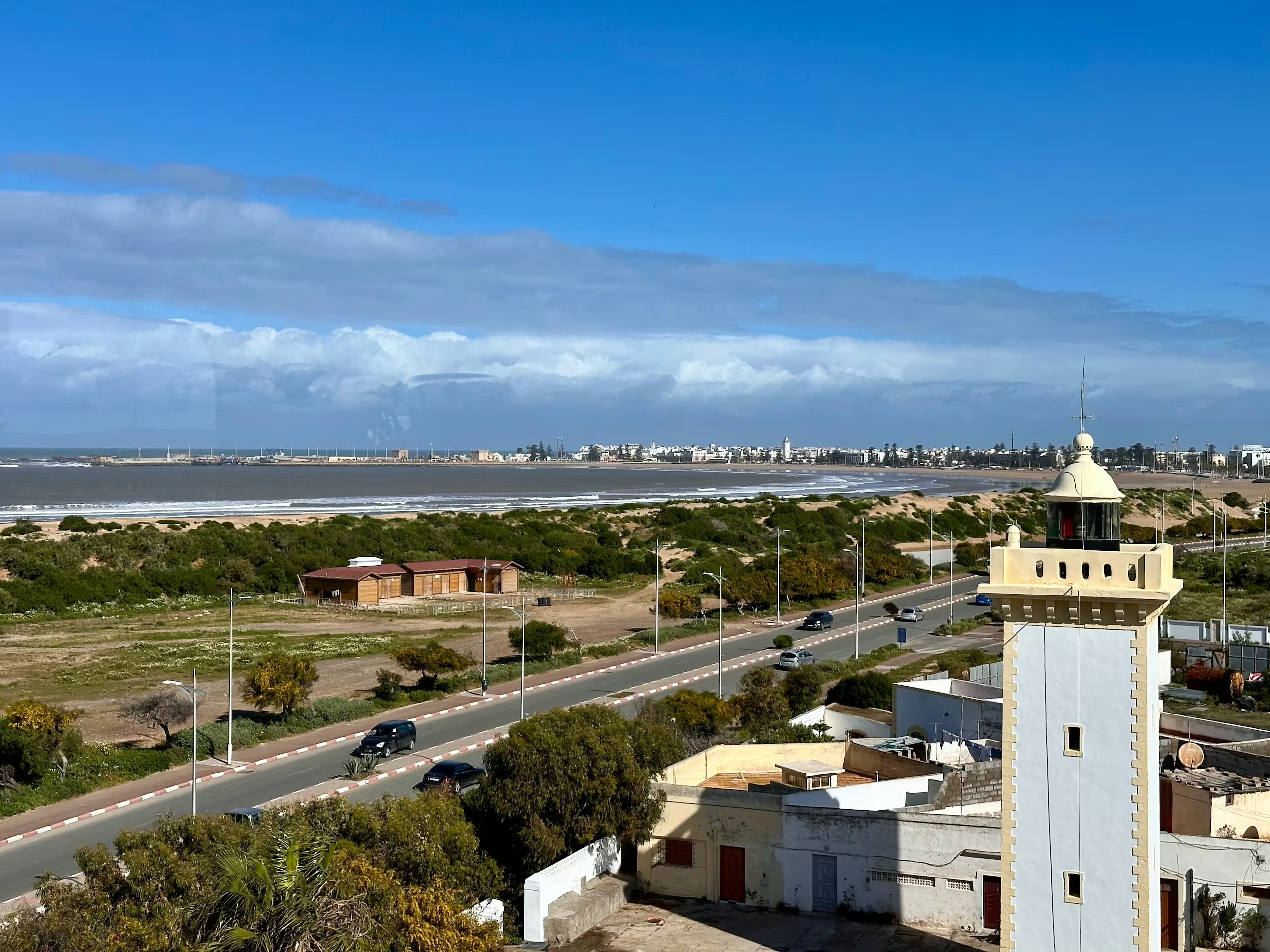
🚗 By car: We drove to Essaouira from Marrakesh, and for us this was by far the most convenient option. The route isn’t demanding — at first you drive on a faster, better stretch, and then the road through smaller towns and more provincial parts of Morocco does the rest. That’s where the atmosphere starts, and it’s hard to describe it any other way than as going back a good dozen or so years. From Marrakesh to Essaouira it’s around 177–182 km, and the route via N8 and R207 usually takes 2.5–3 hours.
One thing to keep in mind: there really is a lot of police on Moroccan roads, and we had the feeling that cars with tourists get special attention. There’s no point risking even a few kilometers over the limit. Waze has helped us on trips like this for years — beyond standard navigation, the app shows reports from other drivers: checks, traffic jams, accidents. It came in handy here too.
🚐 Bus: You can easily get here without a car too. On the Marrakesh–Essaouira route, CTM and Supratours run regularly — both carriers are proven options and are regularly used by tourists. The trip takes about 3 hours, so time-wise it doesn’t come out worse than driving.
🚄 Train: Essaouira isn’t on the Moroccan rail network, so the train is out. The nearest major rail hub is Marrakesh — after that you need to switch to a bus or road transfer. That’s good to know because the ONCF network in Morocco is quite convenient, but this is where it ends.
✈️ Plane: Essaouira has its own airport — Essaouira-Mogador Airport (ESU). Until recently this was more of a theoretical option, but from 2025 something changed here: Ryanair launched a direct route from Paris, and EasyJet resumed routes from Lyon and Bordeaux. For many people traveling from Europe, this may be an alternative worth checking, although for those flying into Marrakesh, getting here from there will still be more convenient.
Where did we stay?
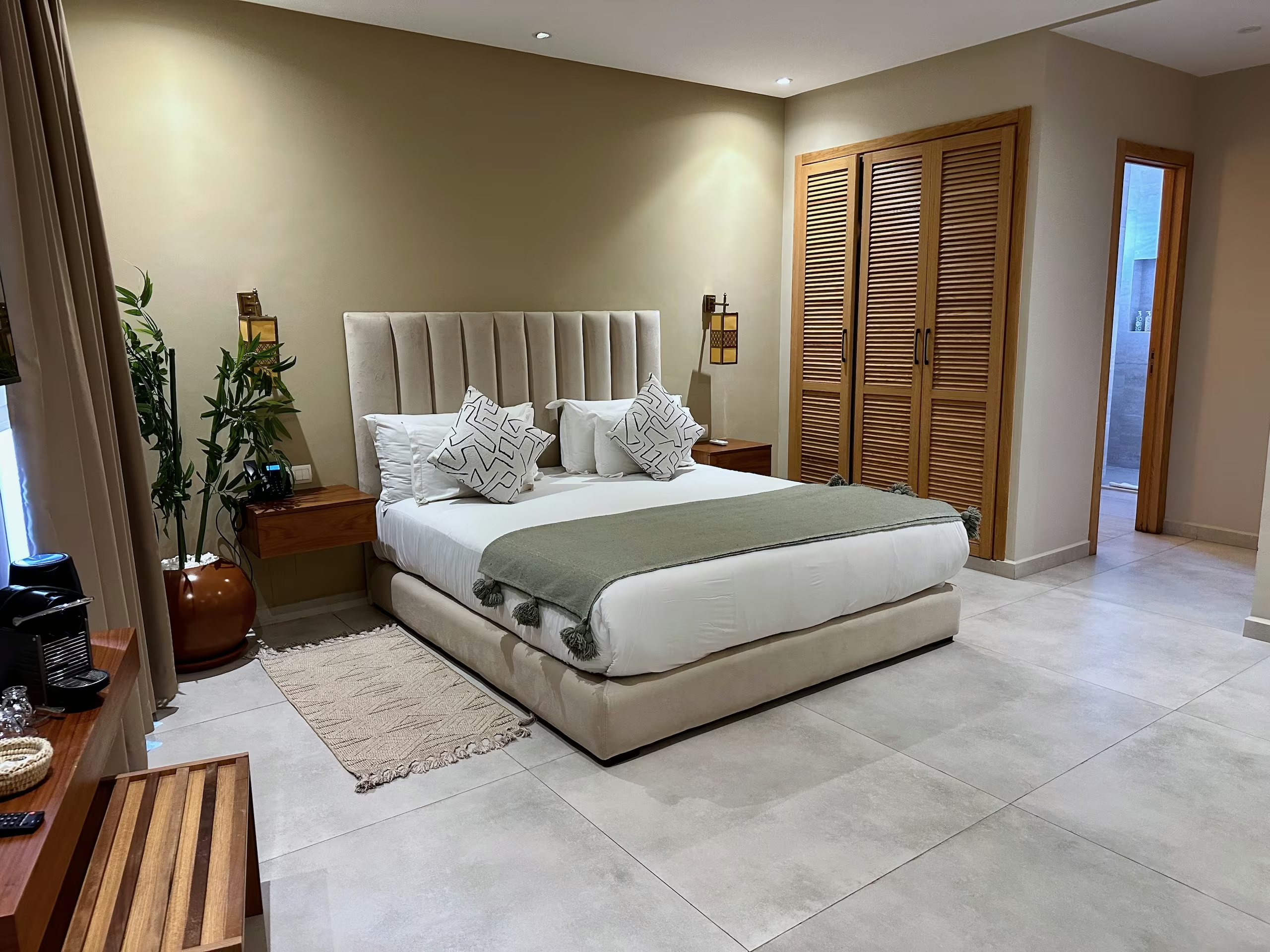
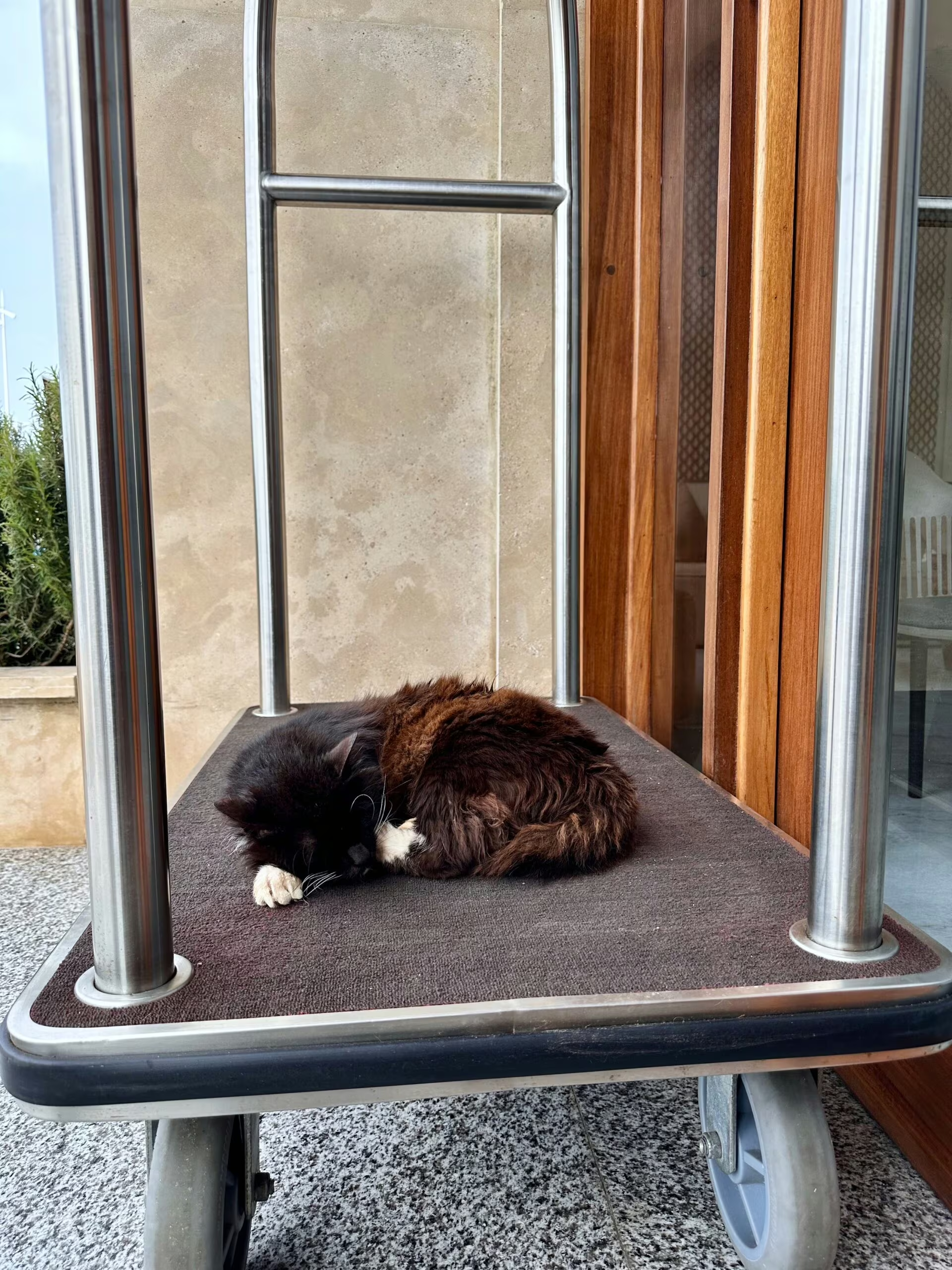
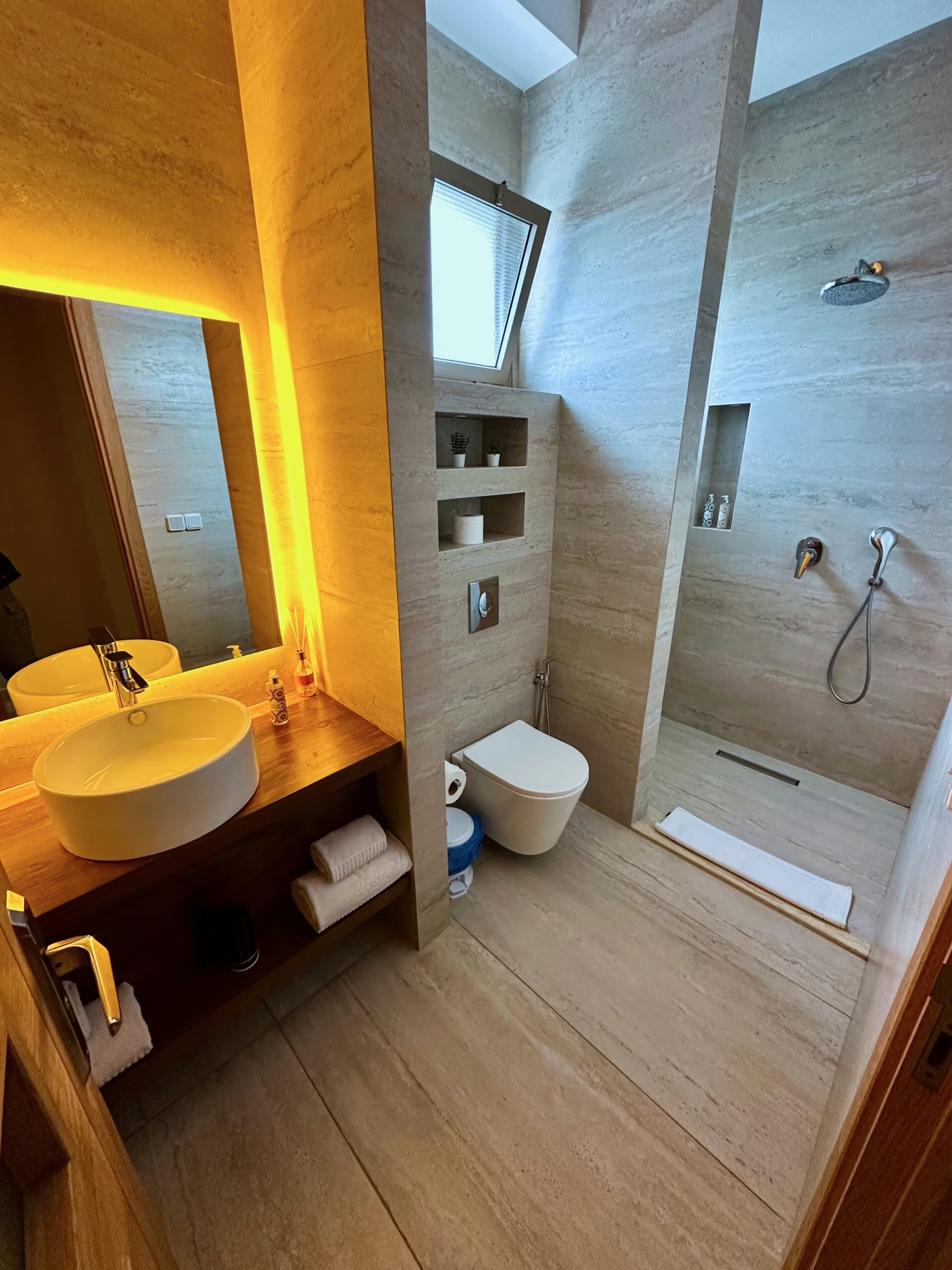
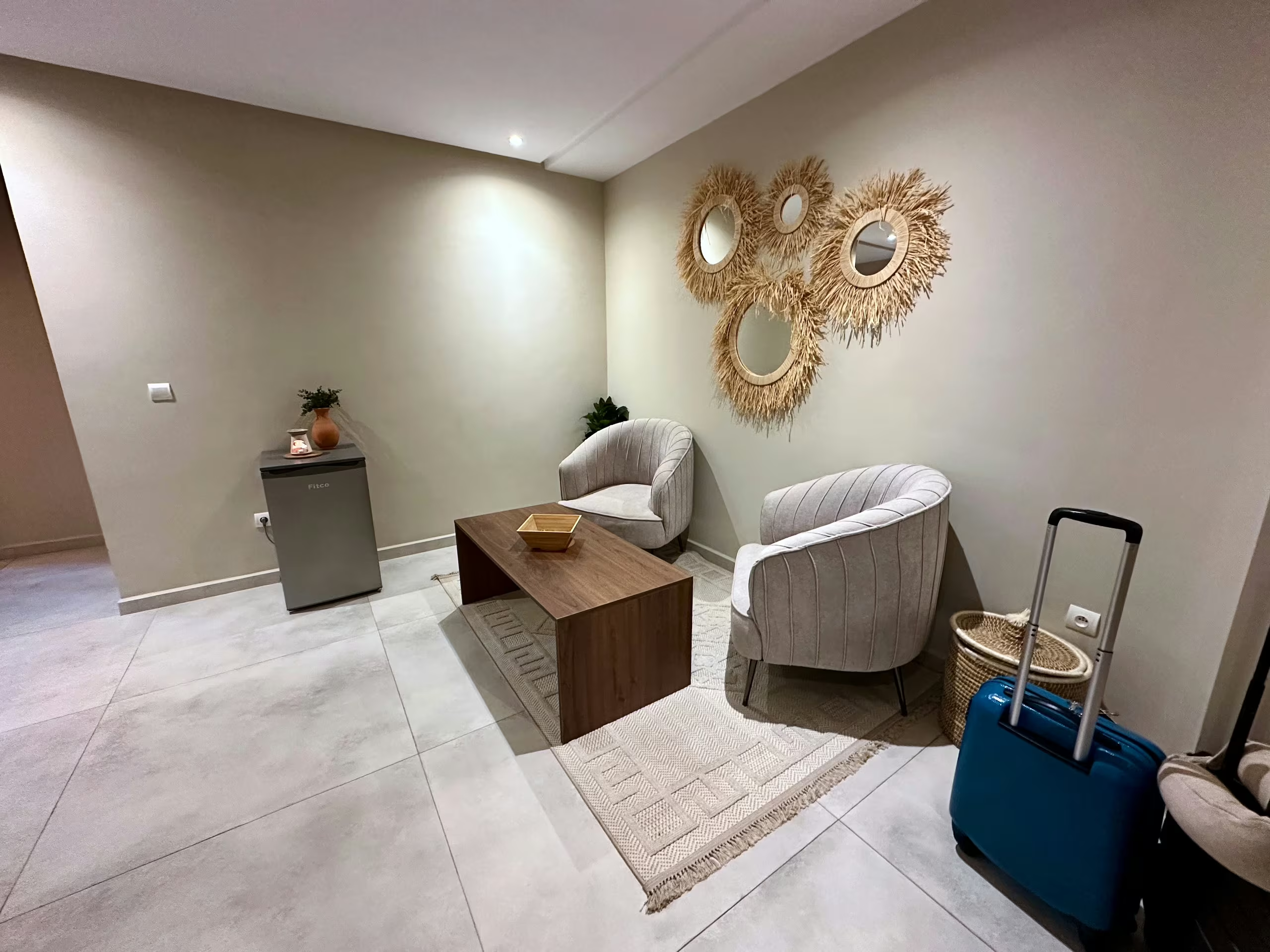
We stayed for two nights at Cruiser Mogador Essaouira, and it was a good choice for this kind of stay. We paid 547 PLN for two people with breakfast, and for that price we got a comfortable, clean, hassle-free place with no surprises.
The hotel is about 2.4 km from the center of the medina, which may look like a downside at first, but in practice it isn’t a problem at all — Essaouira is a small city, a taxi to the medina costs next to nothing, and in return you get free parking at the hotel and a quieter area than in the middle of town. For us, arriving by car, that was an extra advantage.
What should you see?
Essaouira doesn’t work like Marrakesh, where you can plan a full day point by point and still feel you haven’t seen enough. Here it’s more about the walk, the port, the medina, the walls, and the ocean — a city you feel best while moving through it, turning into side streets wherever something catches your eye. Still, a few specific places are worth keeping in mind, especially since most of them are close to each other and don’t require any planning.
Beach in Essaouira
📍 Find this place on Google Maps
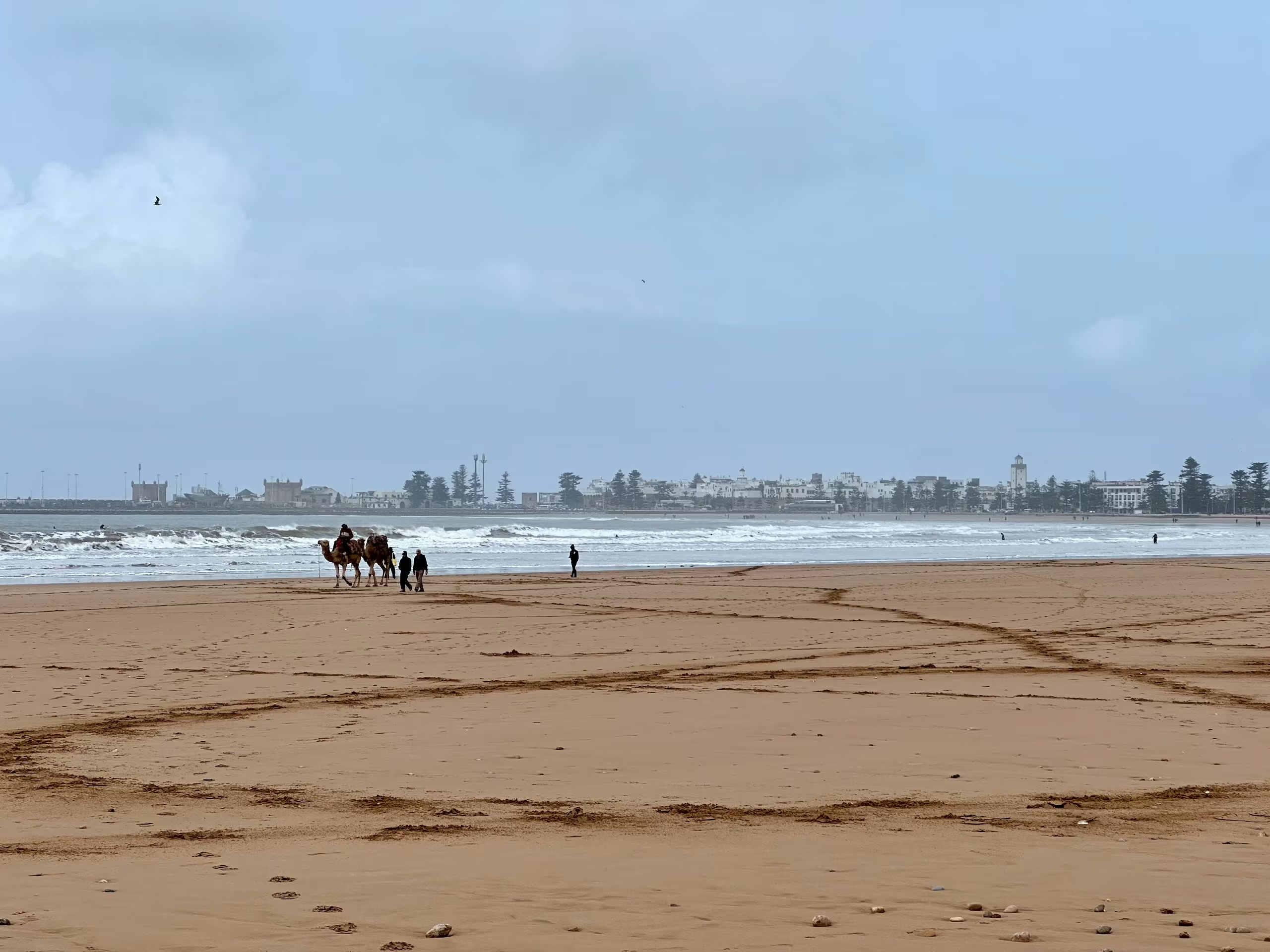
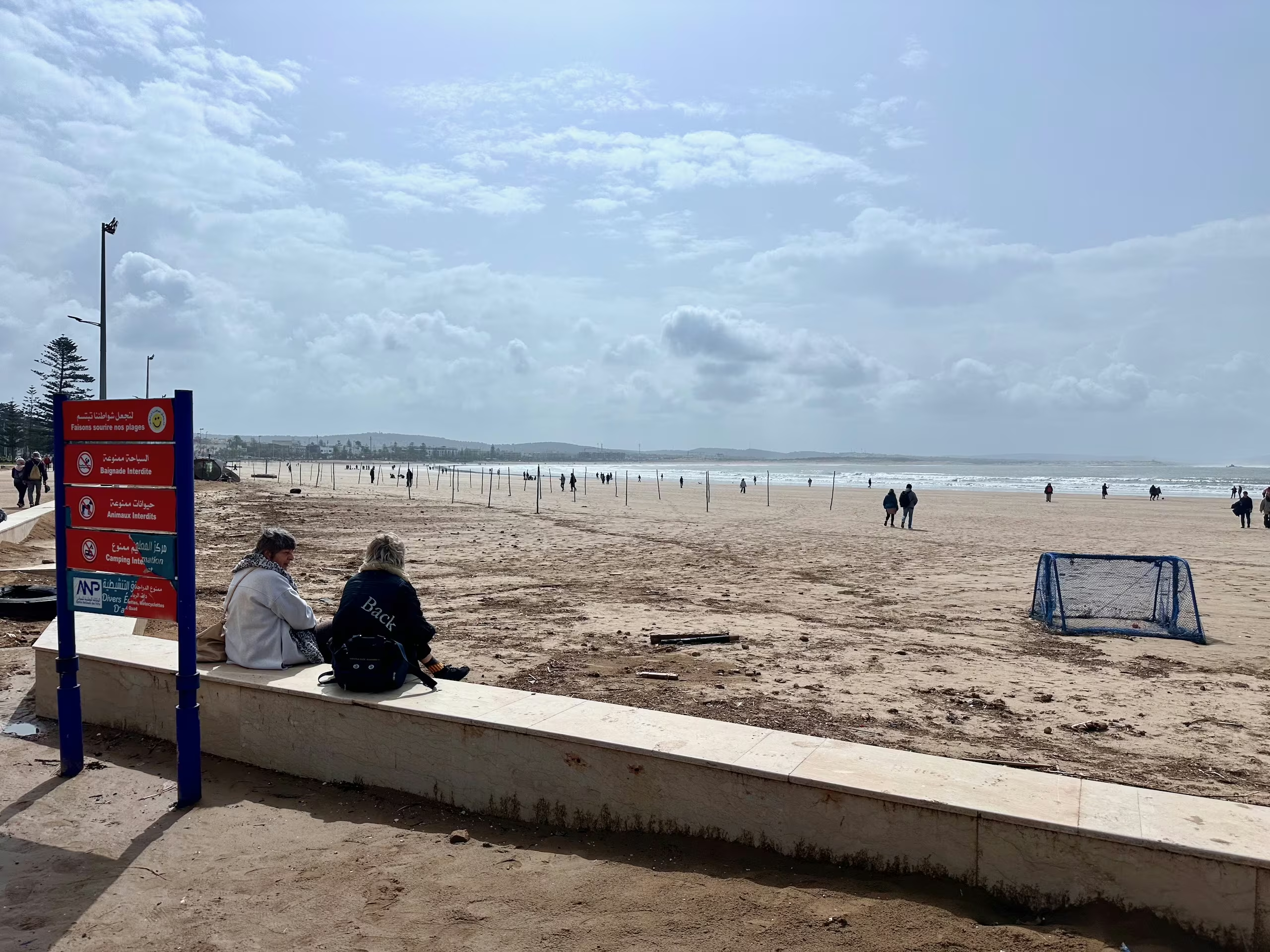
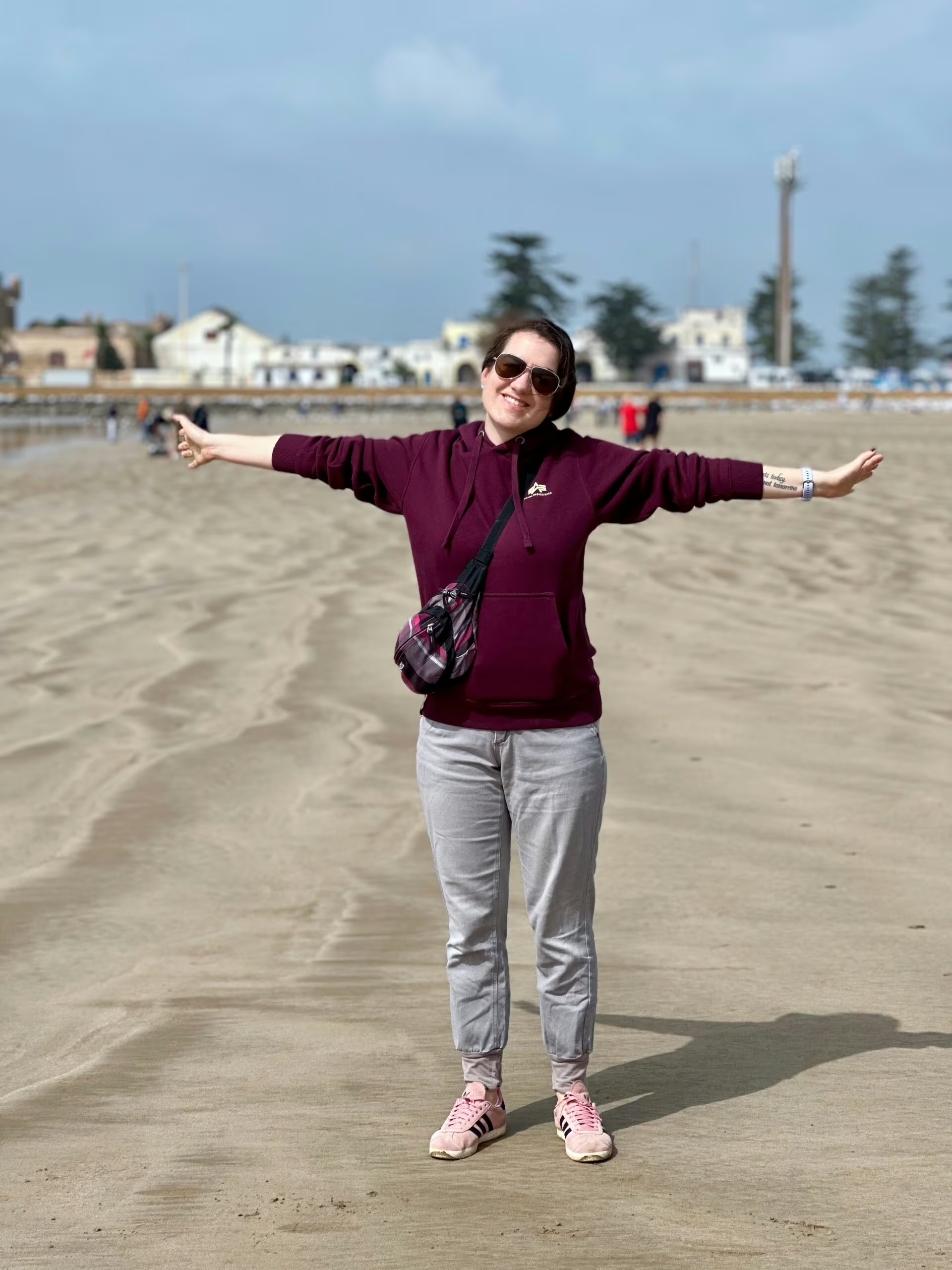
The beach stretches in a wide strip along the whole city — with the medina walls on one side and the ocean and open space on the other. It’s a natural extension of a walk through town and one of those places where it’s worth stopping, even if you’re not planning a full day by the water. The wind here is constant and strong, which has been attracting surfers, kitesurfers, and windsurfers for years — for many of them, Essaouira is mainly about this, and the medina and port are just the backdrop.
For us, a walk along the promenade and the view of the ocean were enough — even the way the wind literally sets the rhythm of this place leaves an impression.
One small practical note: you won’t get into the medina by car. You need to look for parking by the city gates — including near Bab Sbâa and Bab Marrakech — or closer to the beach, on the port side. It’s good to know that in advance so you don’t end up circling the area for no reason.
Medina in Essaouira
📍 Find this place on Google Maps
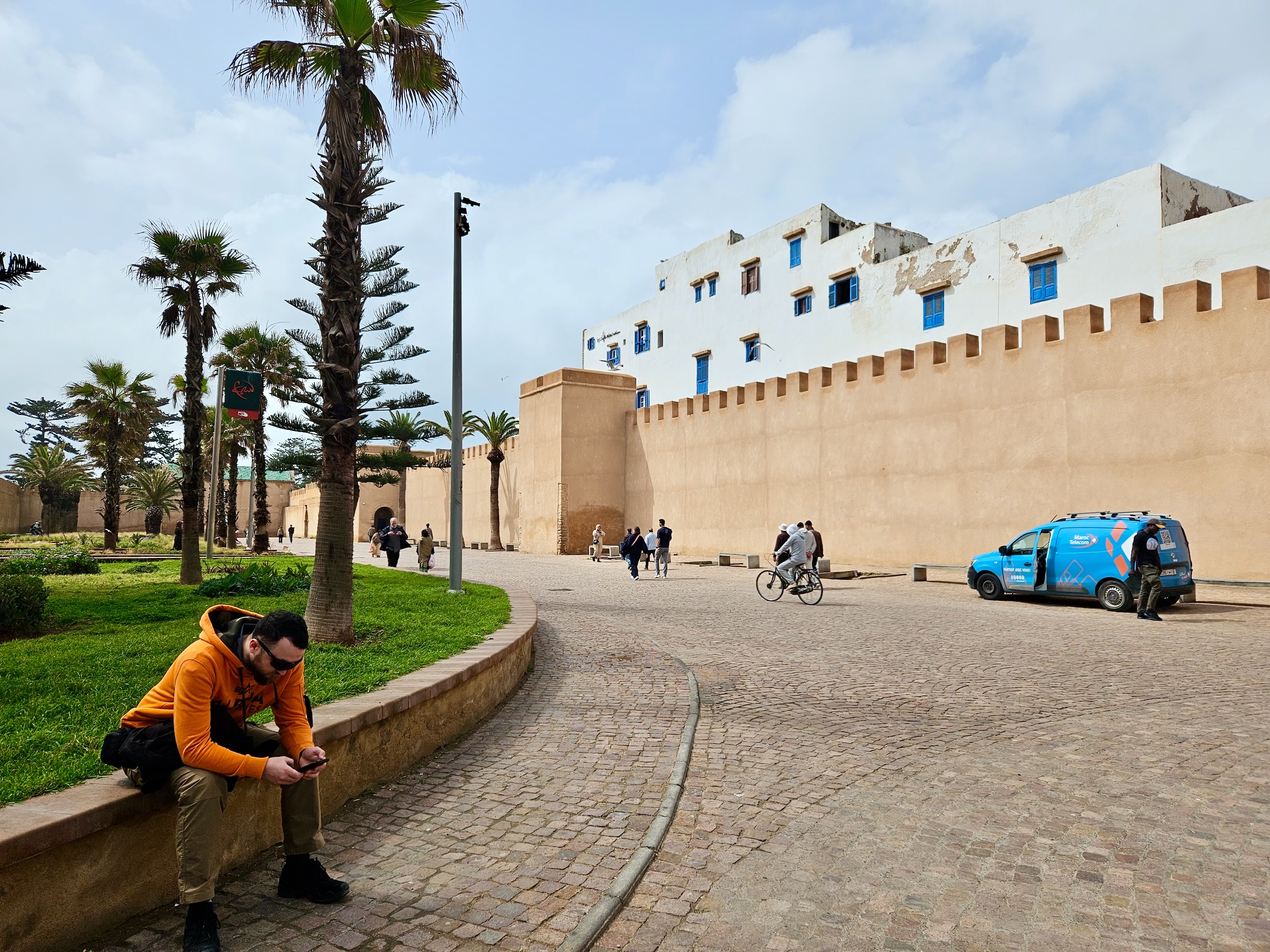
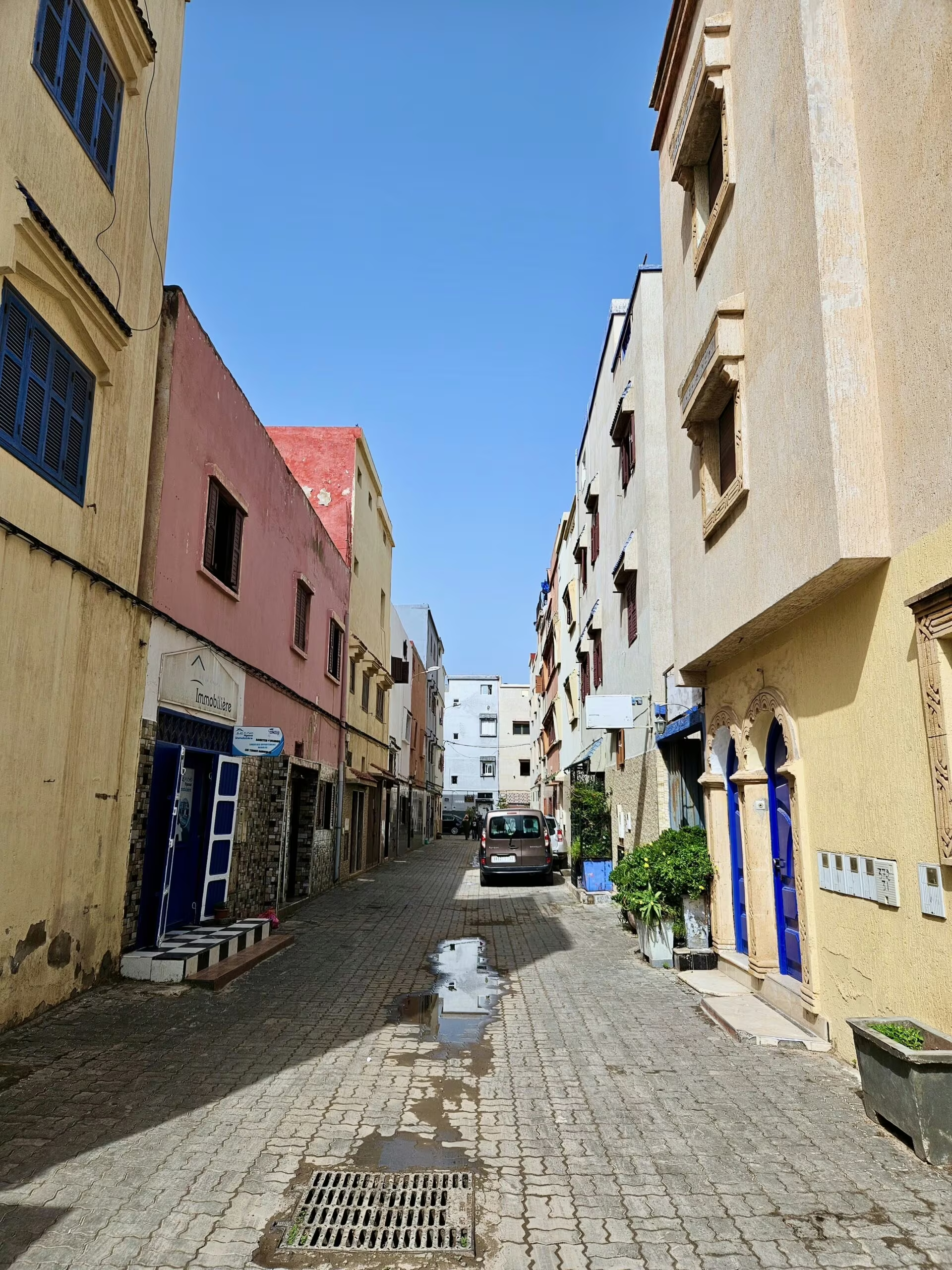
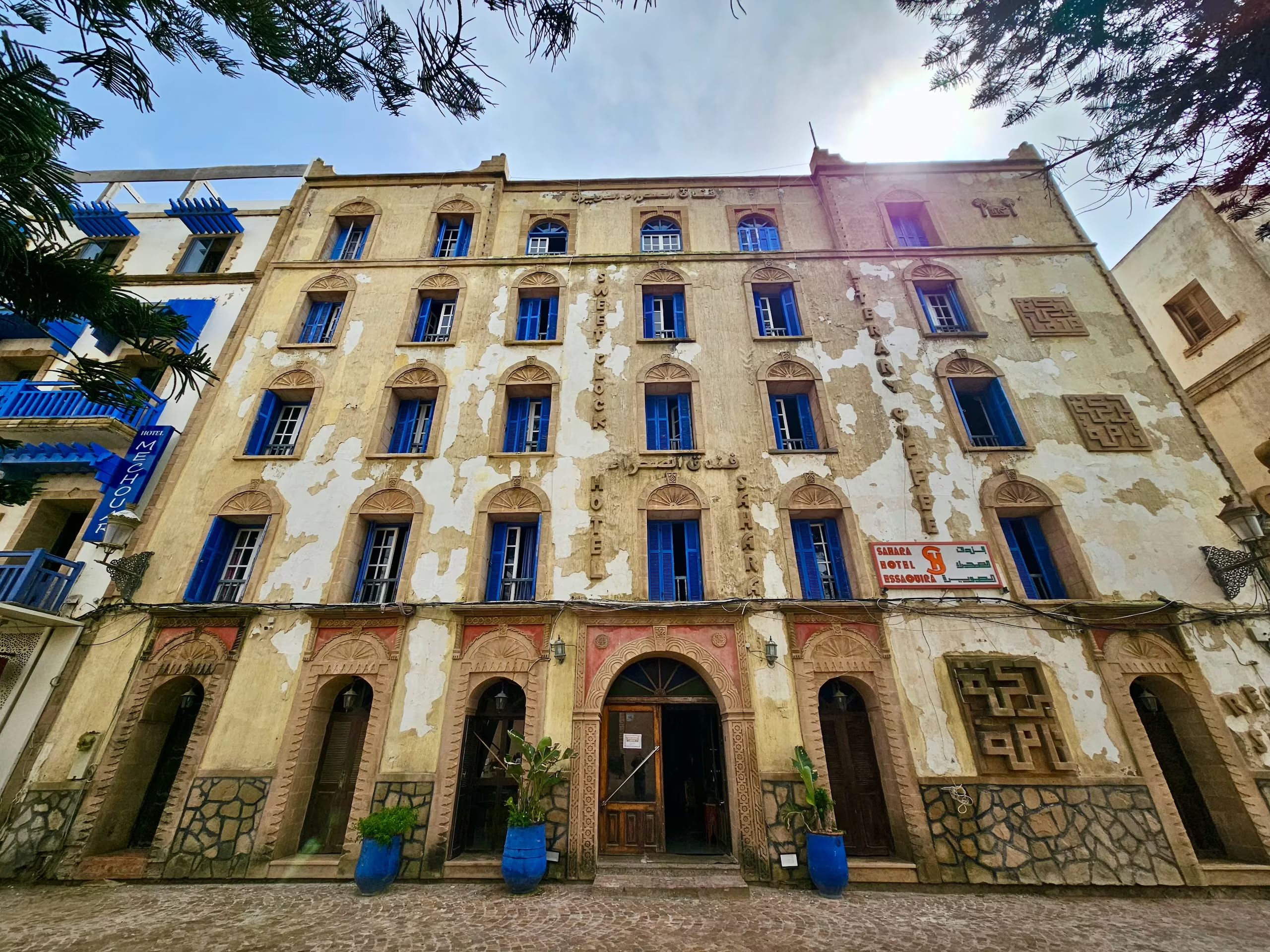
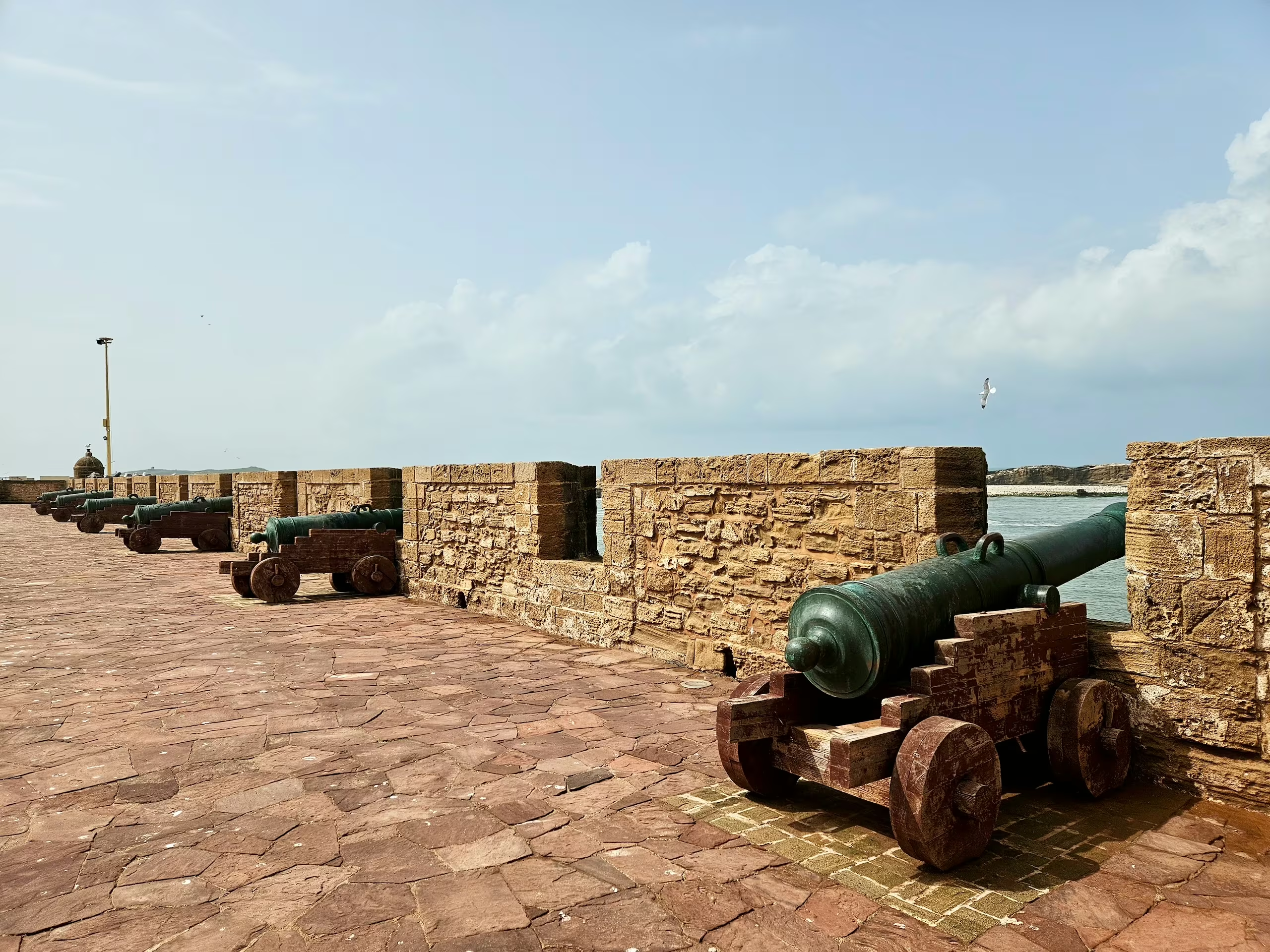
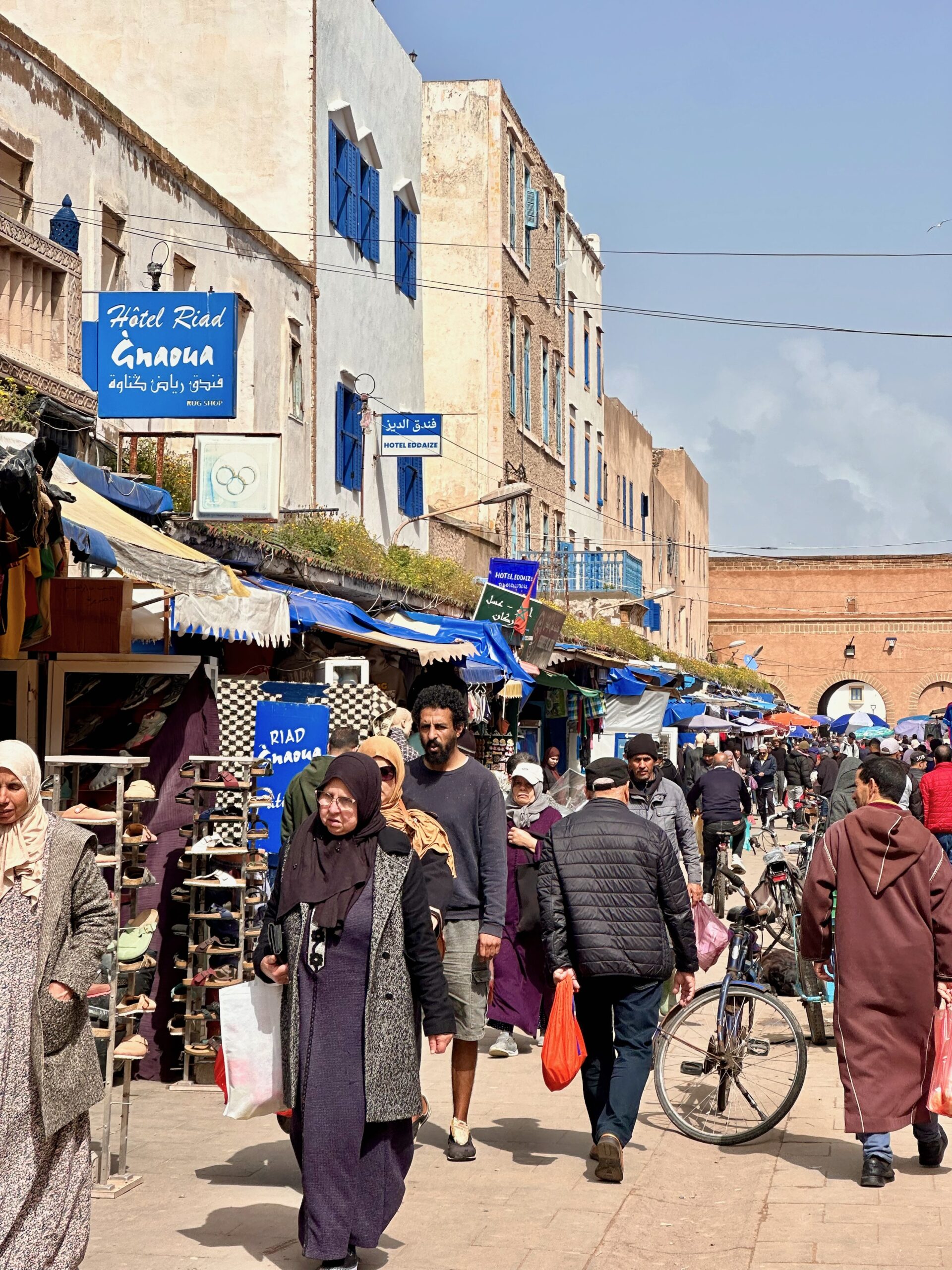
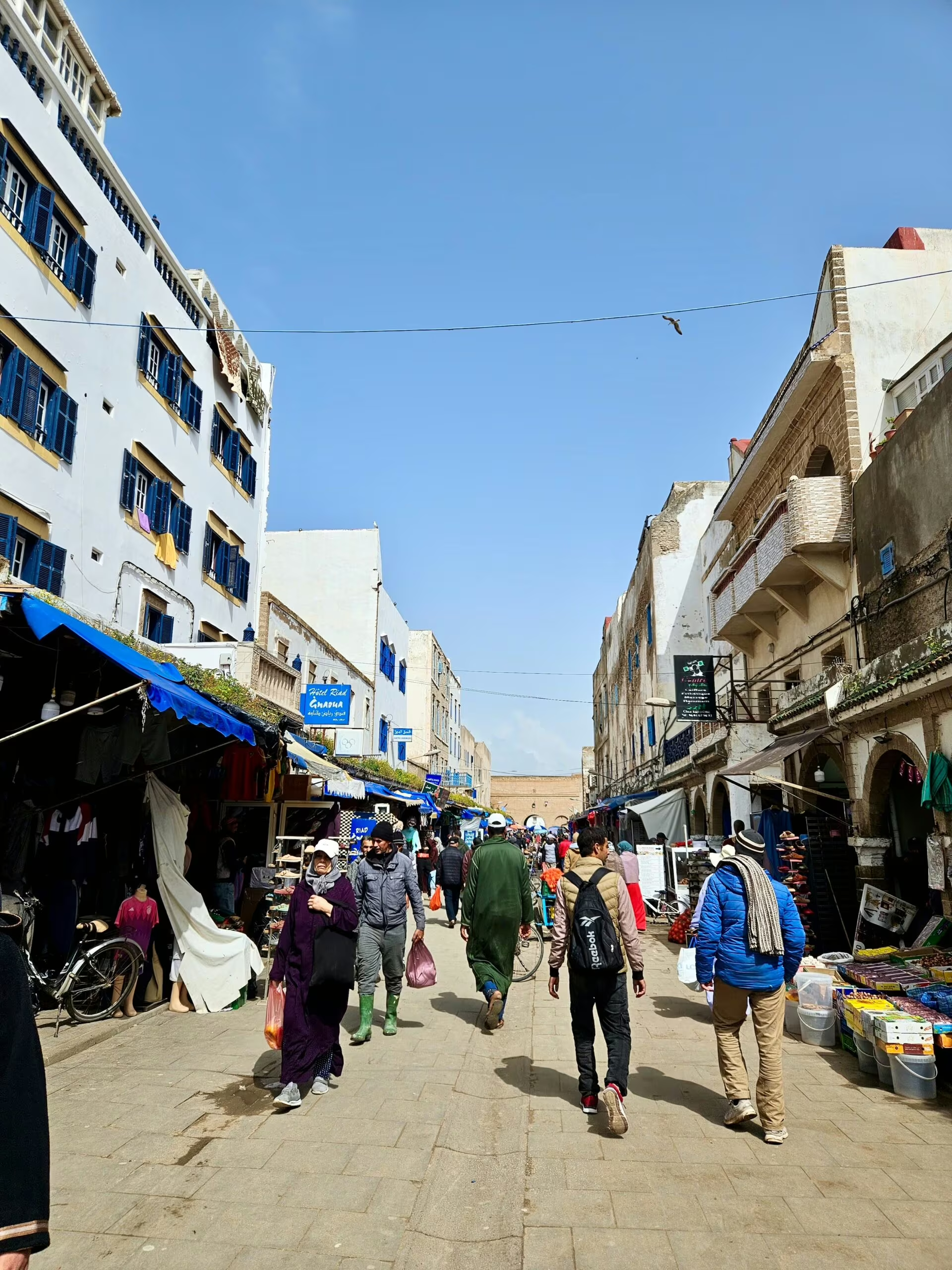
The medina is the heart of Essaouira and the place where we spent by far the most time. There’s none of Marrakesh’s chaos here, where you can lose your bearings after a few minutes — here the street layout is clearer, wider, and noticeably more open. That isn’t accidental: the medina was created in the 18th century as a planned port city, designed from scratch with trade with Europe and caravan routes leading toward the Sahara in mind. That’s where the wide streets and seaside character come from, and they set it apart from typical Moroccan medinas that feel like a tight labyrinth.
For a long time the city operated under the name Mogador — that name still shows up on old maps and in older sources, and the airport still carries it today. You can feel that historical weight here, but without any pomp. You see it in the walls, the street layout, and the proportions of the space, not in some “wow” effect served up at every turn.
Plac Orsona Wellesa
📍 Find this place on Google Maps
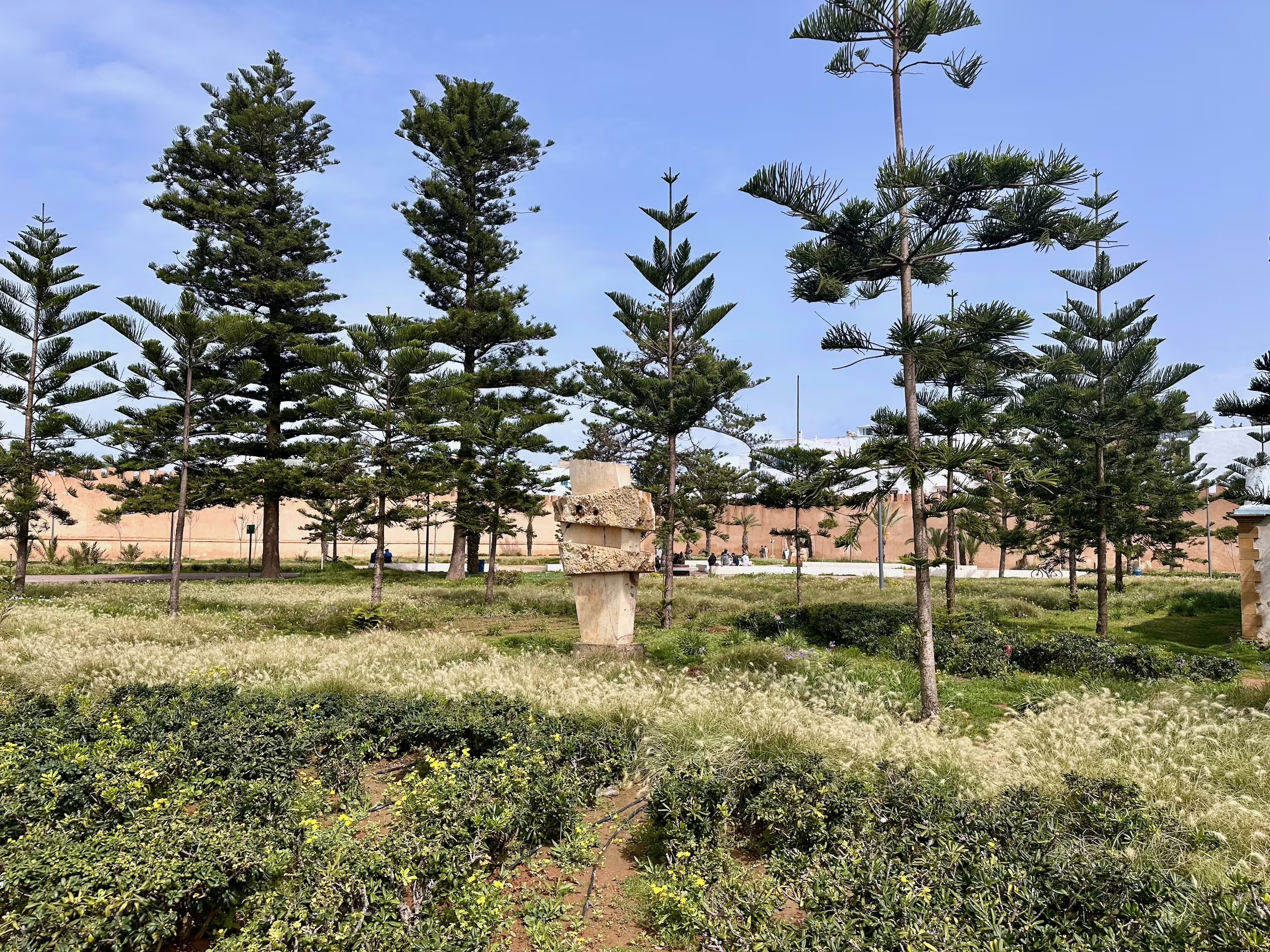
Plac Orsona Wellesa is a short stop rather than a destination in itself — it’s right by the walls and close to the ocean, so you naturally end up here while walking through this part of the city. The name comes from Orson Welles, who shot his Othello in Essaouira in the 1950s. The city still refers back to that episode, and the square is its most visible trace.
Port in Essaouira
📍 Find this place on Google Maps
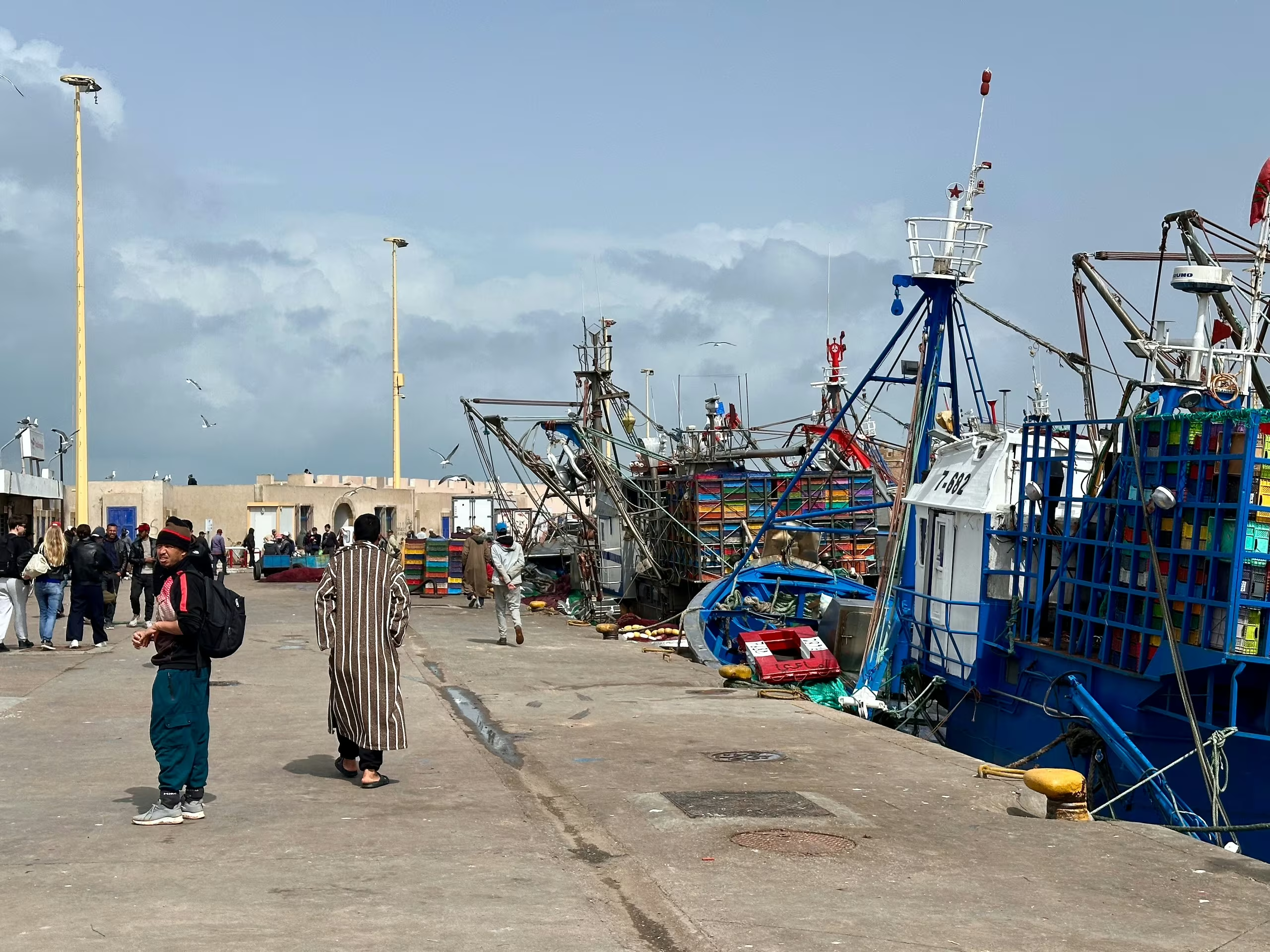
The port is one of those places where it’s really worth stopping. This is where you feel best that Essaouira lived off trade and the sea for centuries — in the late 18th century and throughout the 19th century, it was one of Morocco’s more important Atlantic ports, known as the “port of Timbuktu” thanks to the trade routes linking Africa with Europe.
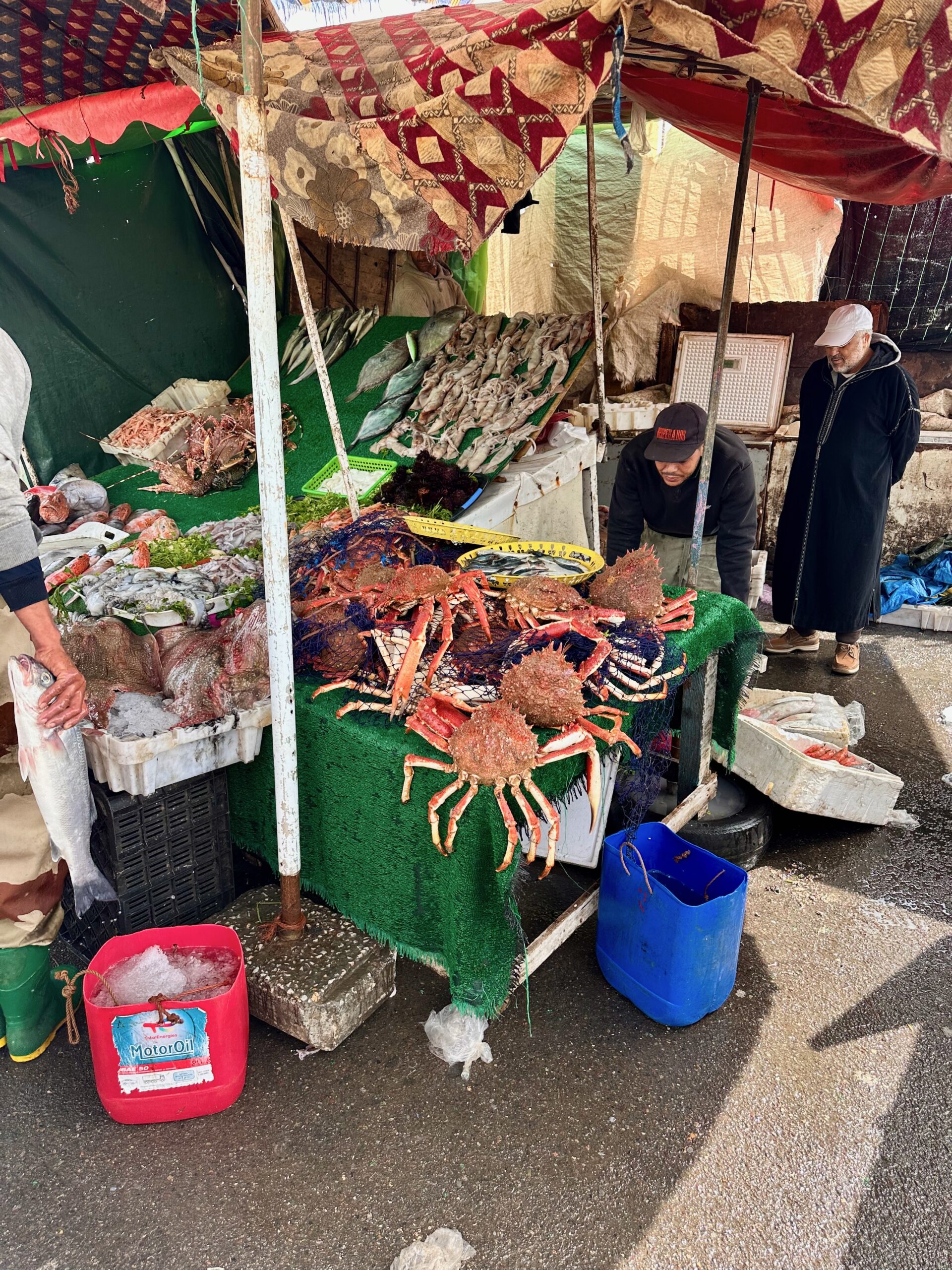
Today it still works as a fishing port, so there isn’t any polished setup here made for tourists. There are real boats, fishermen, and a raw, slightly salty atmosphere. The most recognizable view — those blue boats — shows up in pretty much every photo from Essaouira, and in real life it looks exactly the way it does in the pictures.
Plac Moulay Hassan
📍 Find this place on Google Maps
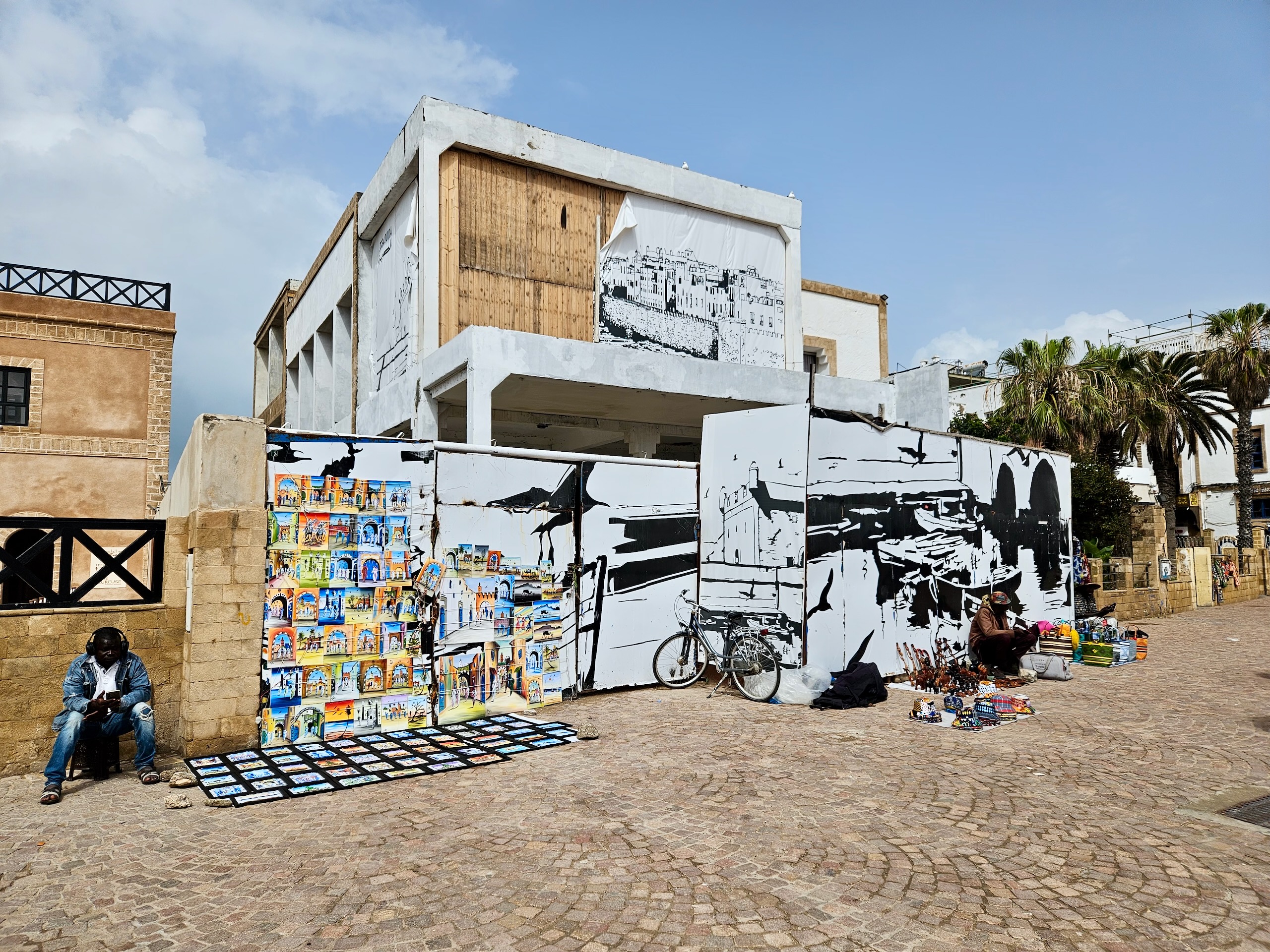
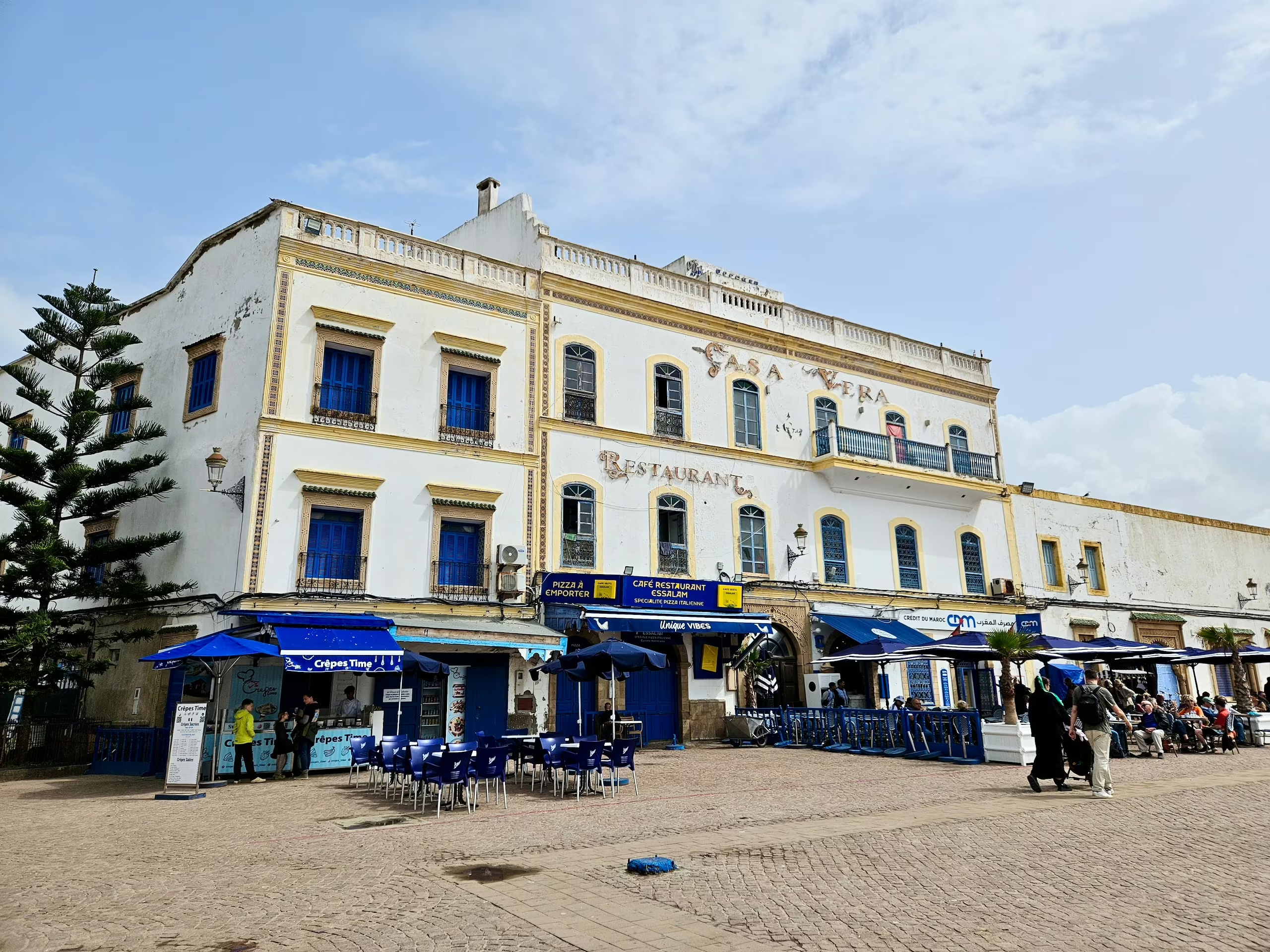
Plac Moulay Hassan is the central square of Essaouira — a wide, open space between the medina and the port where, naturally, most walks through the city begin and end. Around it you’ll find café and restaurant tables, seagulls overhead, the entrance to the medina’s narrow streets on one side, and the smell of fish from the port on the other. This isn’t a place with one specific attraction to tick off, but it’s exactly here that you can best see how Essaouira simply works day to day.
Mellah
📍 Find this place on Google Maps
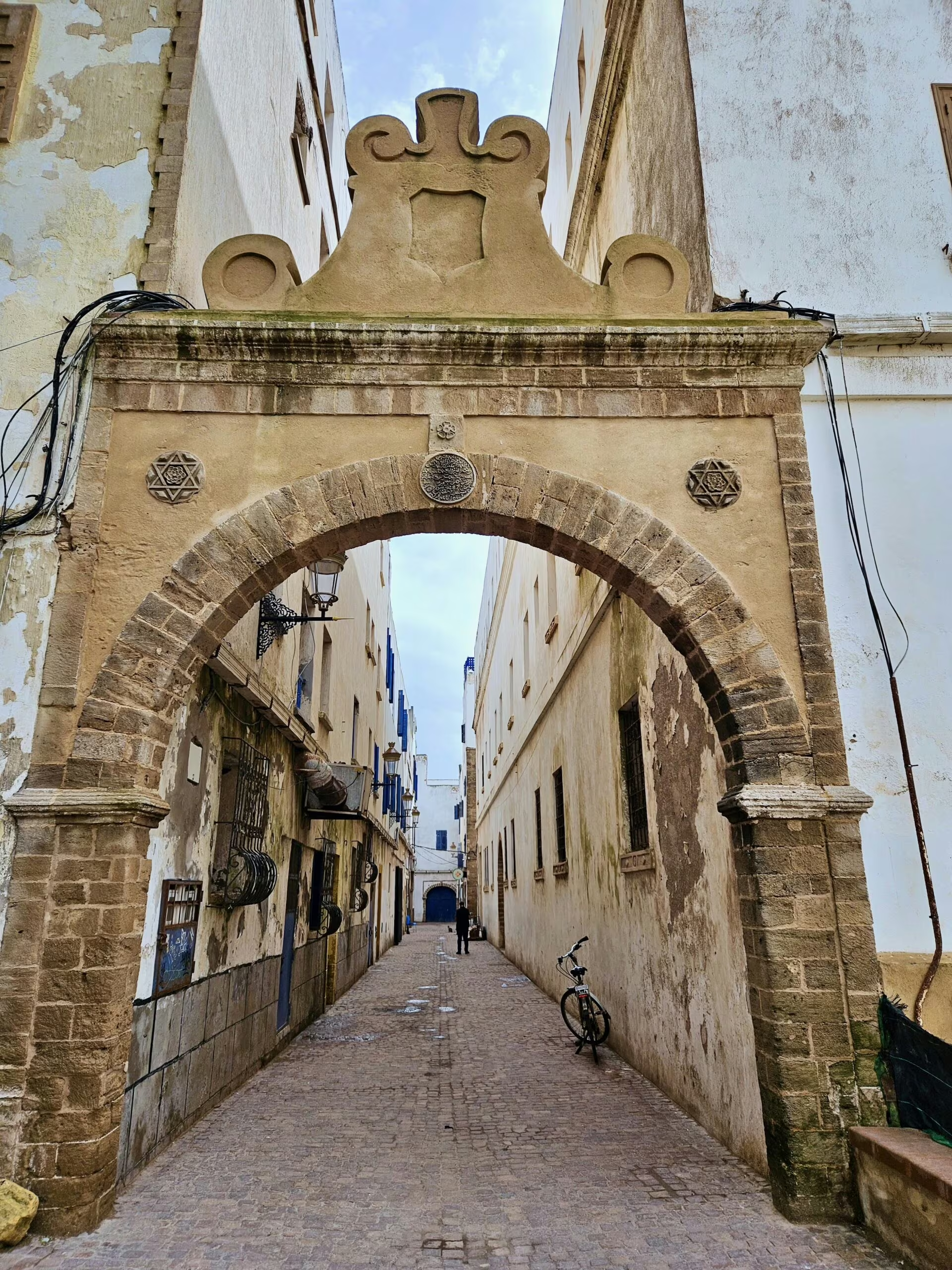
The Mellah is the former Jewish quarter of Essaouira — and one of those places that leaves an impression not because of what remains, but because you can see what used to be here. For centuries the Jewish merchant community was part of the city’s commercial fabric; today that history survives mainly in the distinctive balconies, the Stars of David above some gates, and the streets that are clearly quieter than the rest of the medina. There are no souvenir stalls or crowds here — this is more a part of the city for people who prefer to step off the main route and look at Essaouira from a slightly different angle.
Maybe you’ll stop by Marrakesh too?
If Essaouira was your first stop and you’re only now planning Marrakesh — or the other way around, you started with Marrakesh and you’re wondering whether Essaouira is a good next step — then this contrast between the two cities is something we describe in more detail in separate posts.