
Ten wpis jest również dostępny w języku:
 Polski
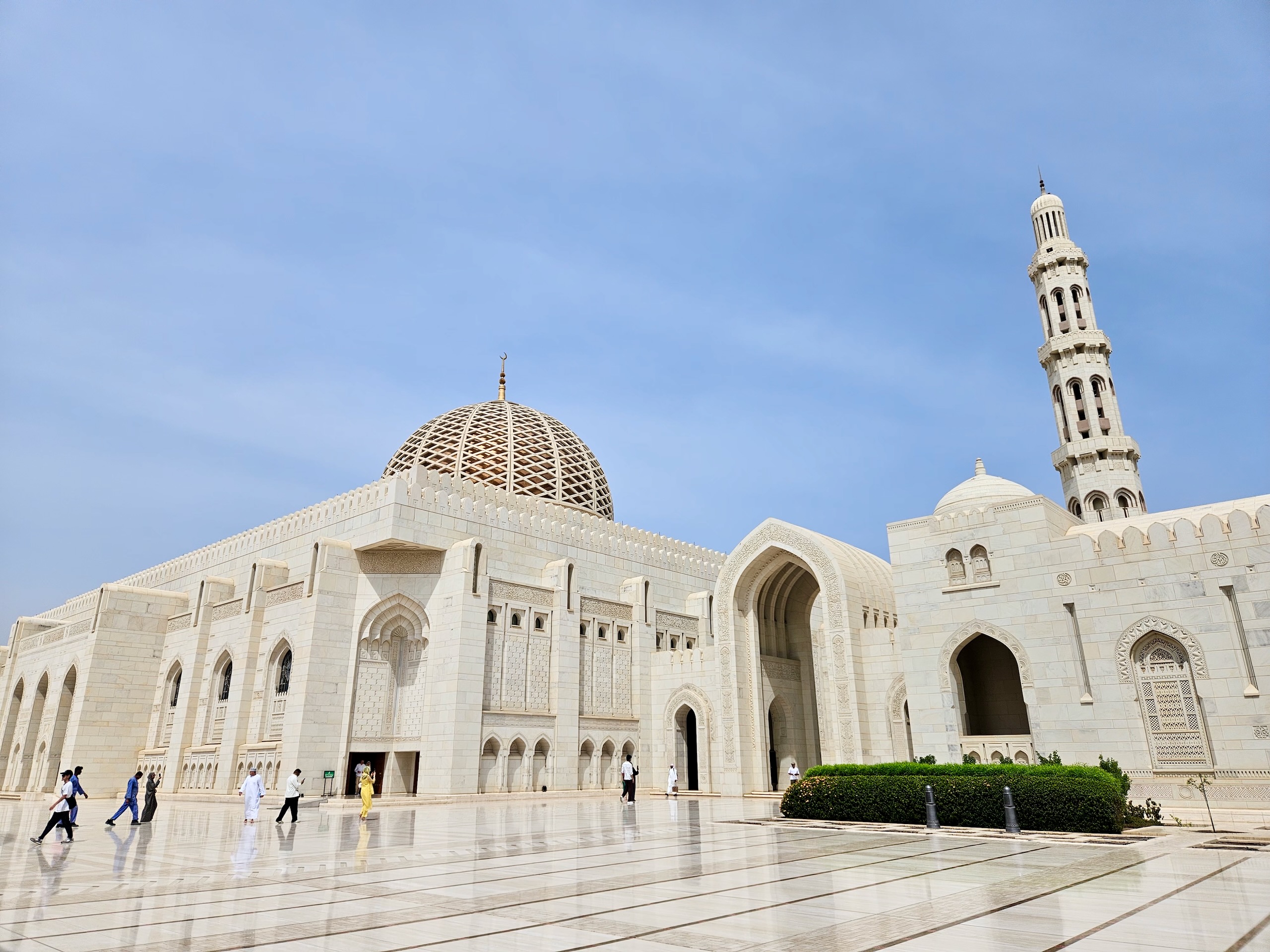
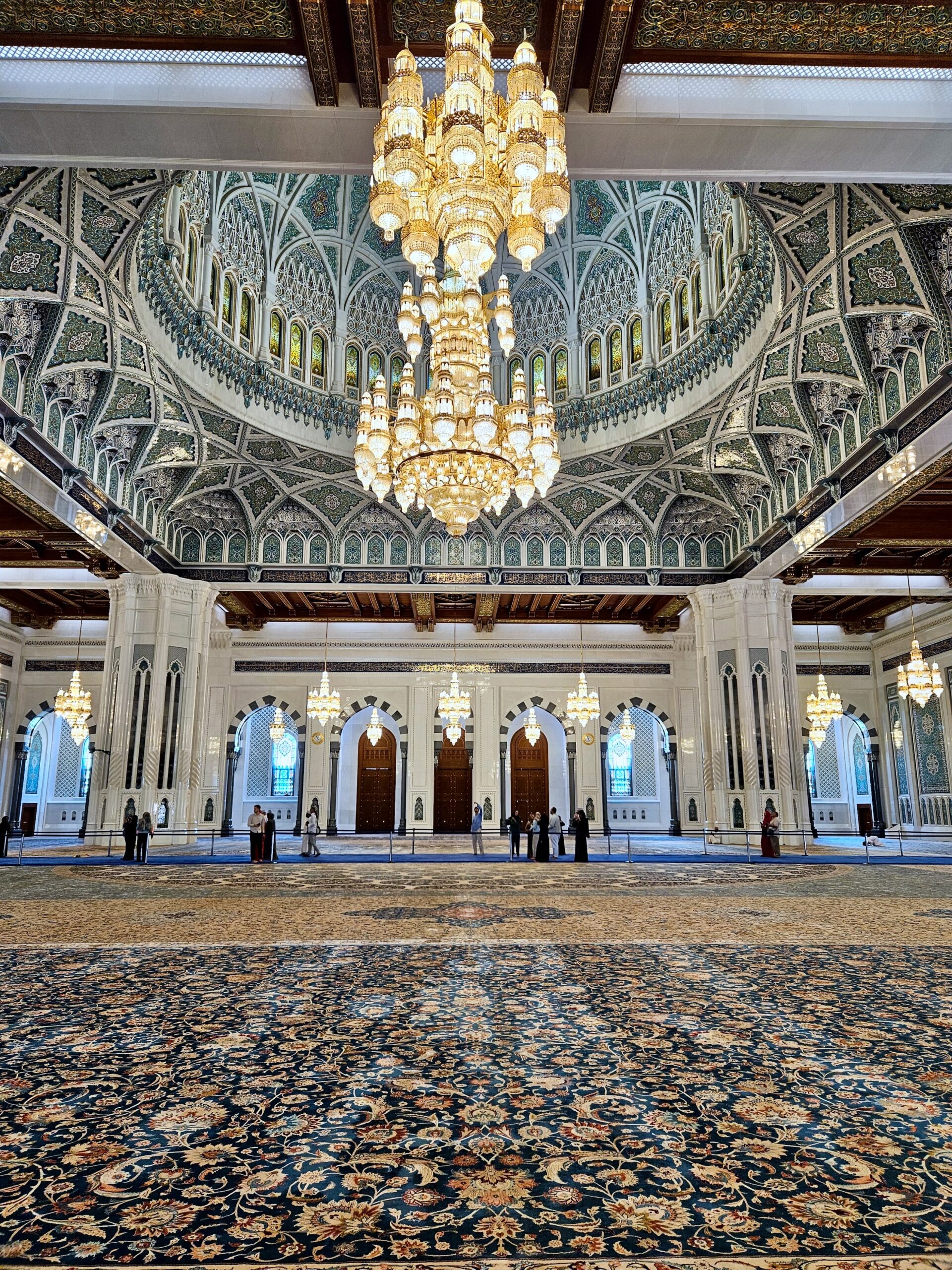
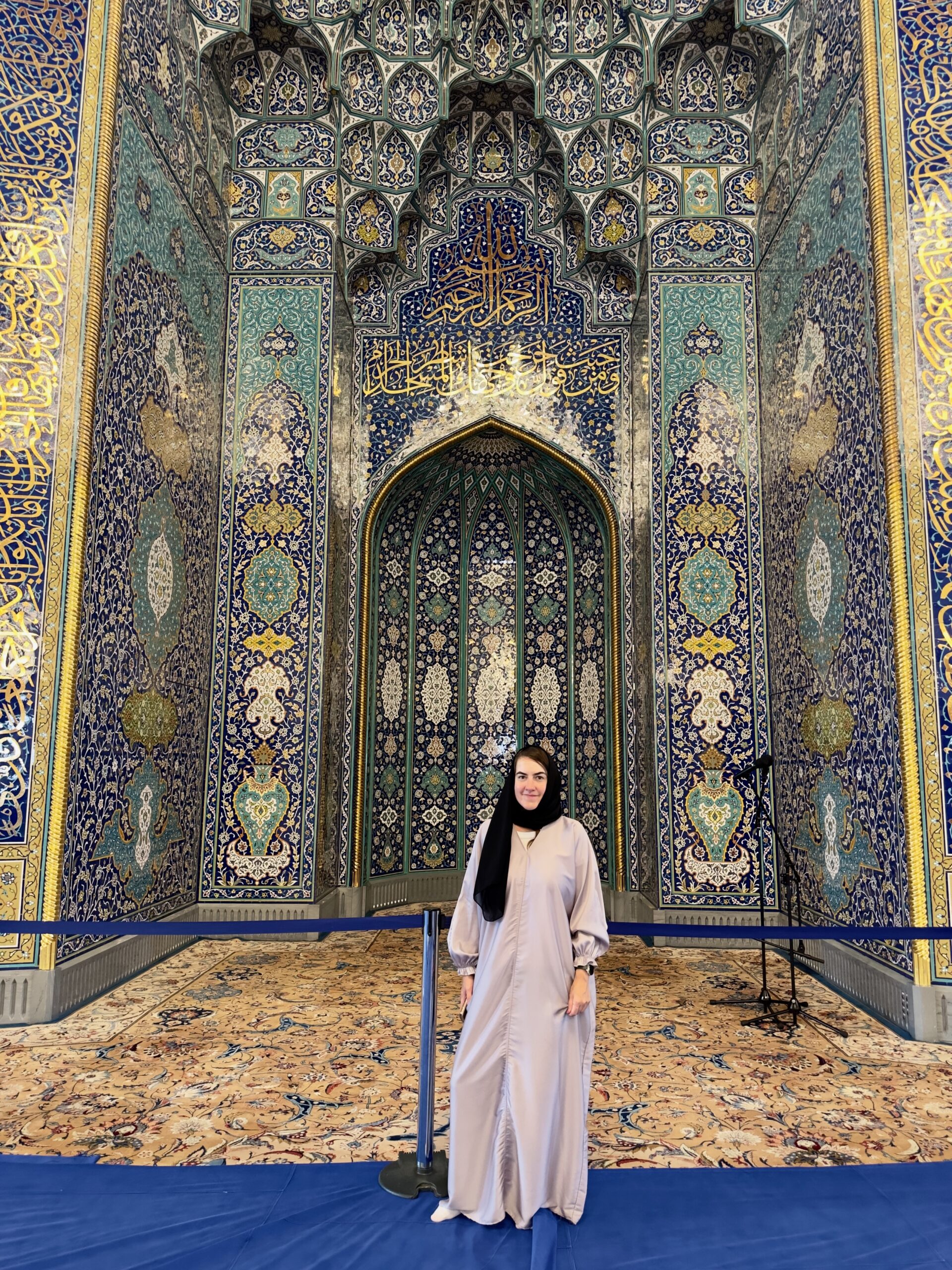
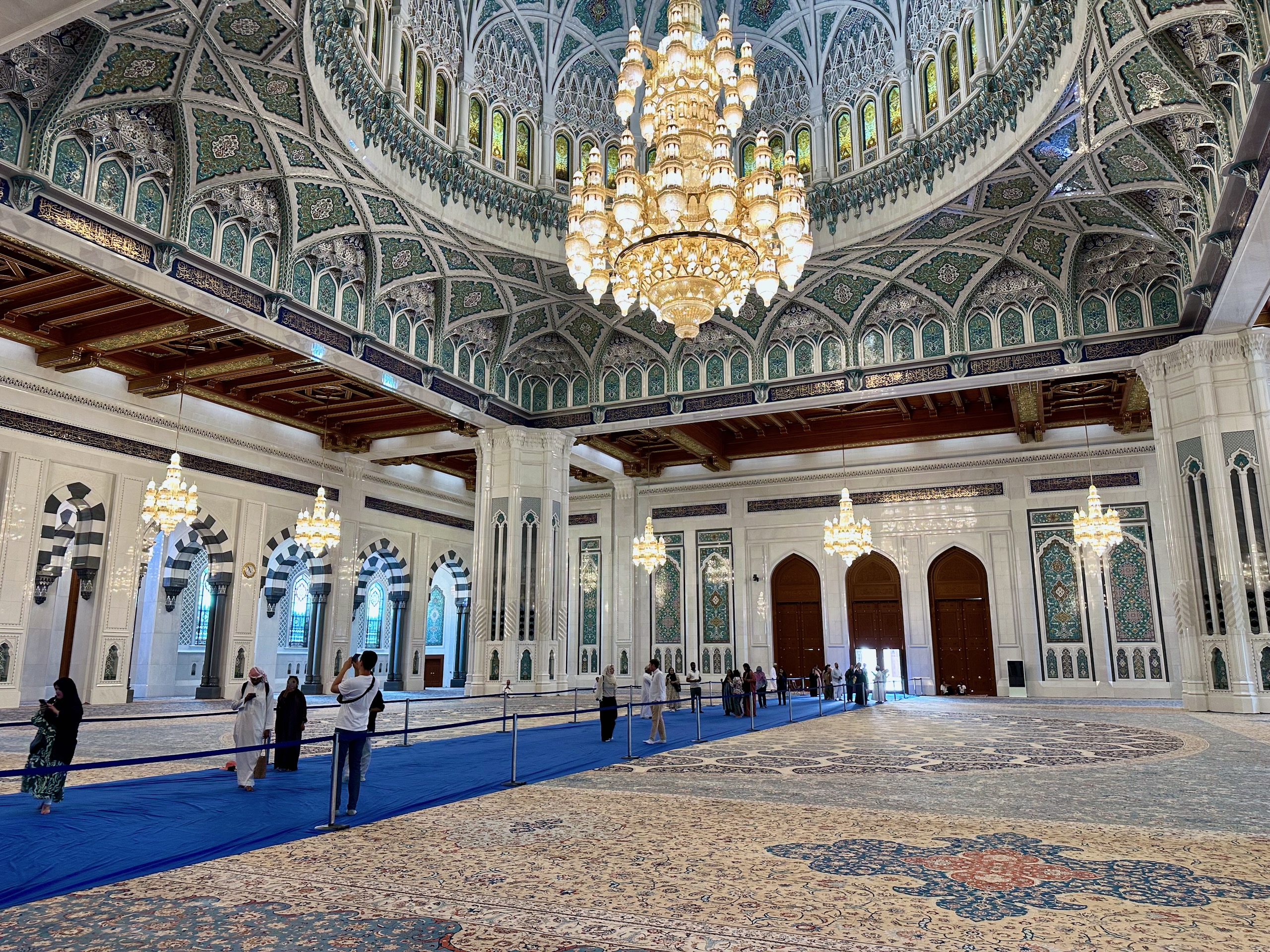
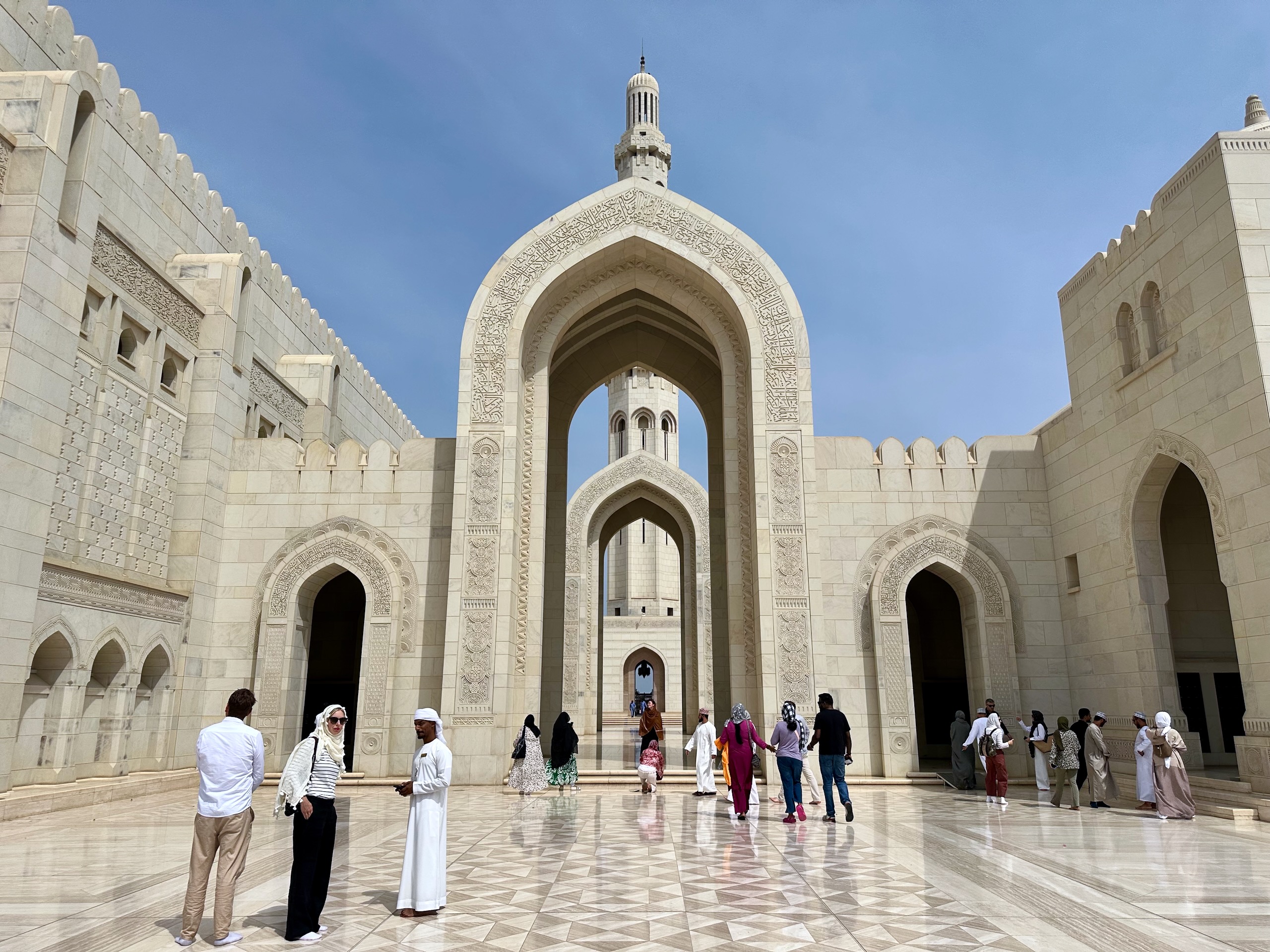
Sultan Qaboos Grand Mosque
 Pin on Google Maps – click here.
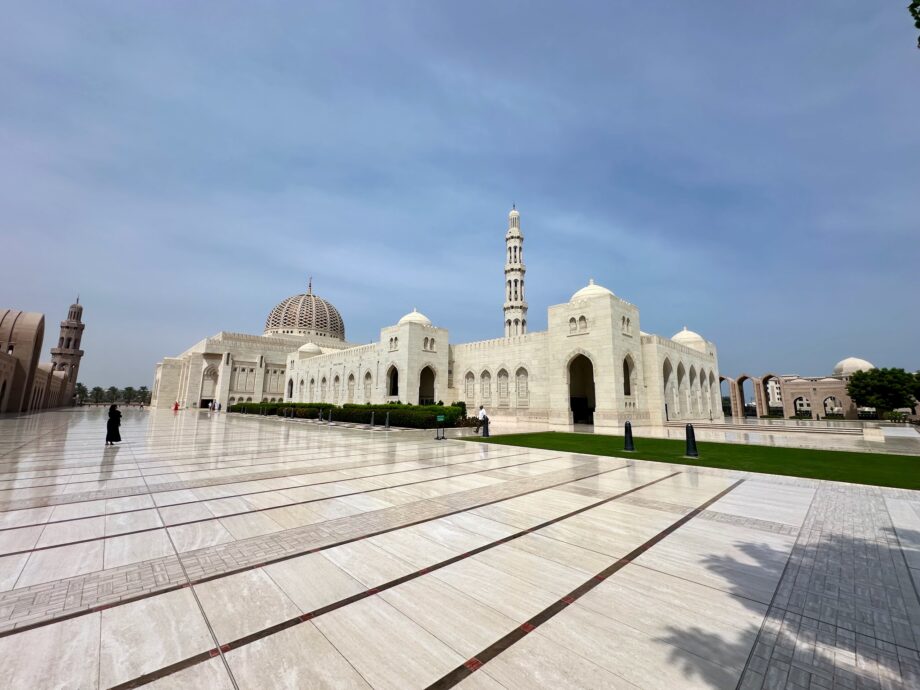
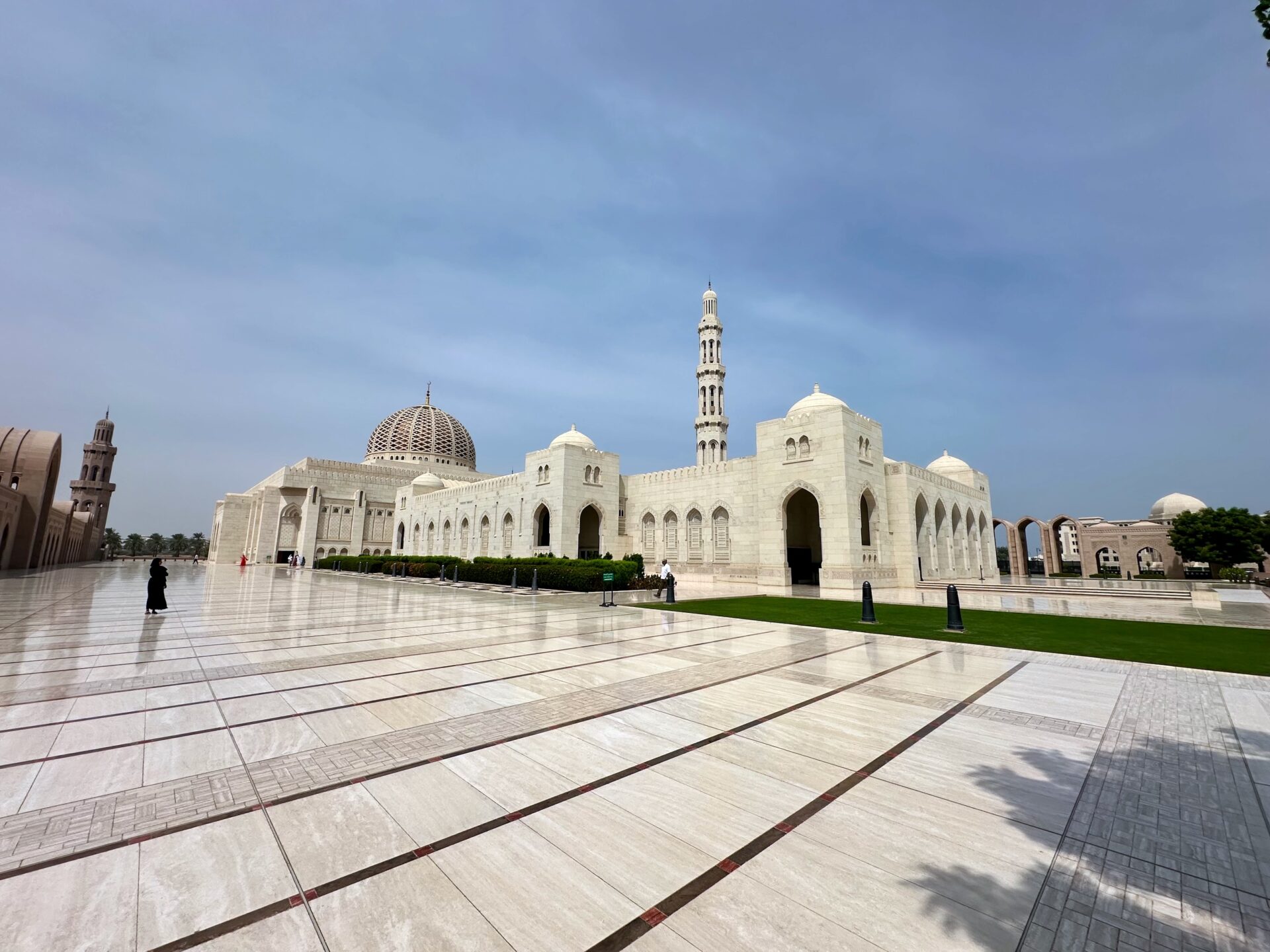
If you’re going to pick one proper “can’t-miss” spot in Oman’s capital, this mosque deserves the time. The grounds are huge, the details are beautifully done, there’s loads of space, and that sense of order sets the tone the moment you arrive. It sits in the Bawshar district and is widely seen as Muscat’s key landmark, a perfect first stop to get a feel for Oman’s scale. The size hits you even before you step inside. The whole complex covers around 416,000 m², and the mosque can hold up to 20,000 worshippers. The main prayer hall itself was designed to hold around 6,500 people, with a central dome dominating the space above it.
The idea for the project dates back to the early 1990s. Sultan Qaboos reportedly commissioned a “grand mosque” in 1992, and the design was chosen through an architectural competition. Construction began in December 1994, and the mosque was completed and opened in 2001, which worked out to roughly six and a half years of work.
Important note: non-Muslim visitors are only allowed inside during a specific visiting time window. Officially, it’s open to visitors every day except Friday, from 8:30 to 11:00.
Dress code matters, and it’s the easiest way to get turned away at the entrance. Modest clothing is required, and for women that also means covering your hair. If you don’t have the right outfit, you can rent suitable clothing on site. In our case it came out to roughly 25 PLN for a full set for a woman.
Entry was free when we visited, but since January 2025 there have been reports online about introducing a small fee for some visitors, while keeping free access for religious, cultural, or educational visits. It’s best to double-check the current rules before you go.
One big plus — getting there is simple, and there’s no stress about parking your car or motorbike. There’s a proper parking area by the mosque, and finding a spot is usually no problem at all.
Królewski Teatr Operowy
Pin on Google Maps – click here.
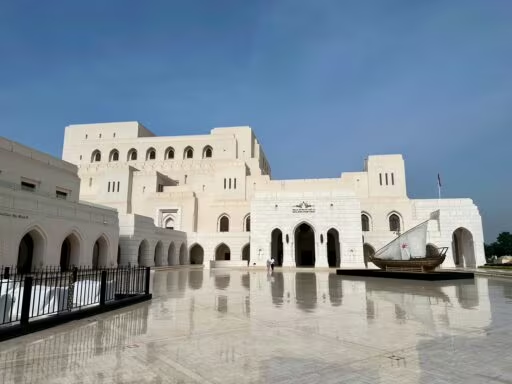
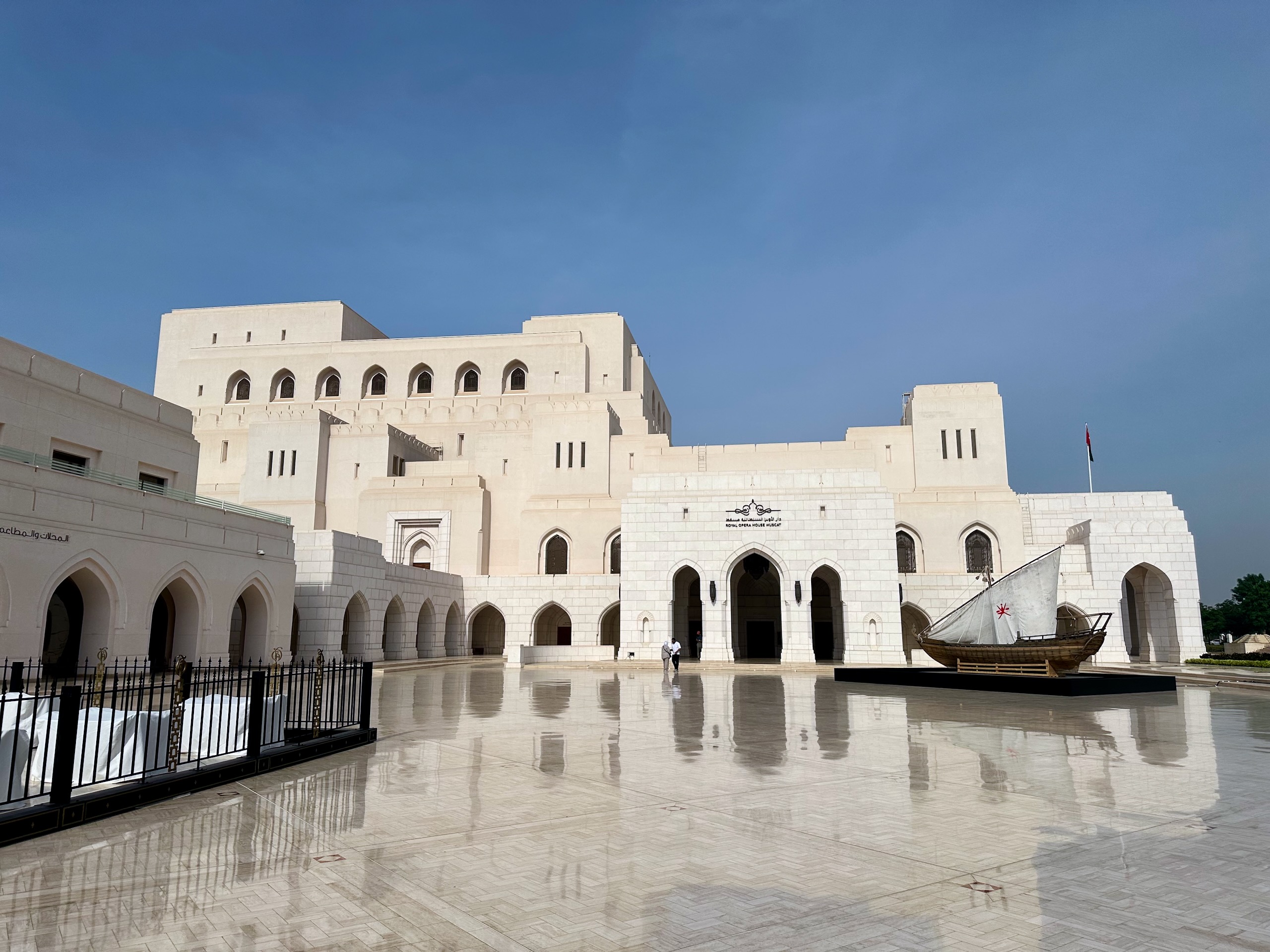
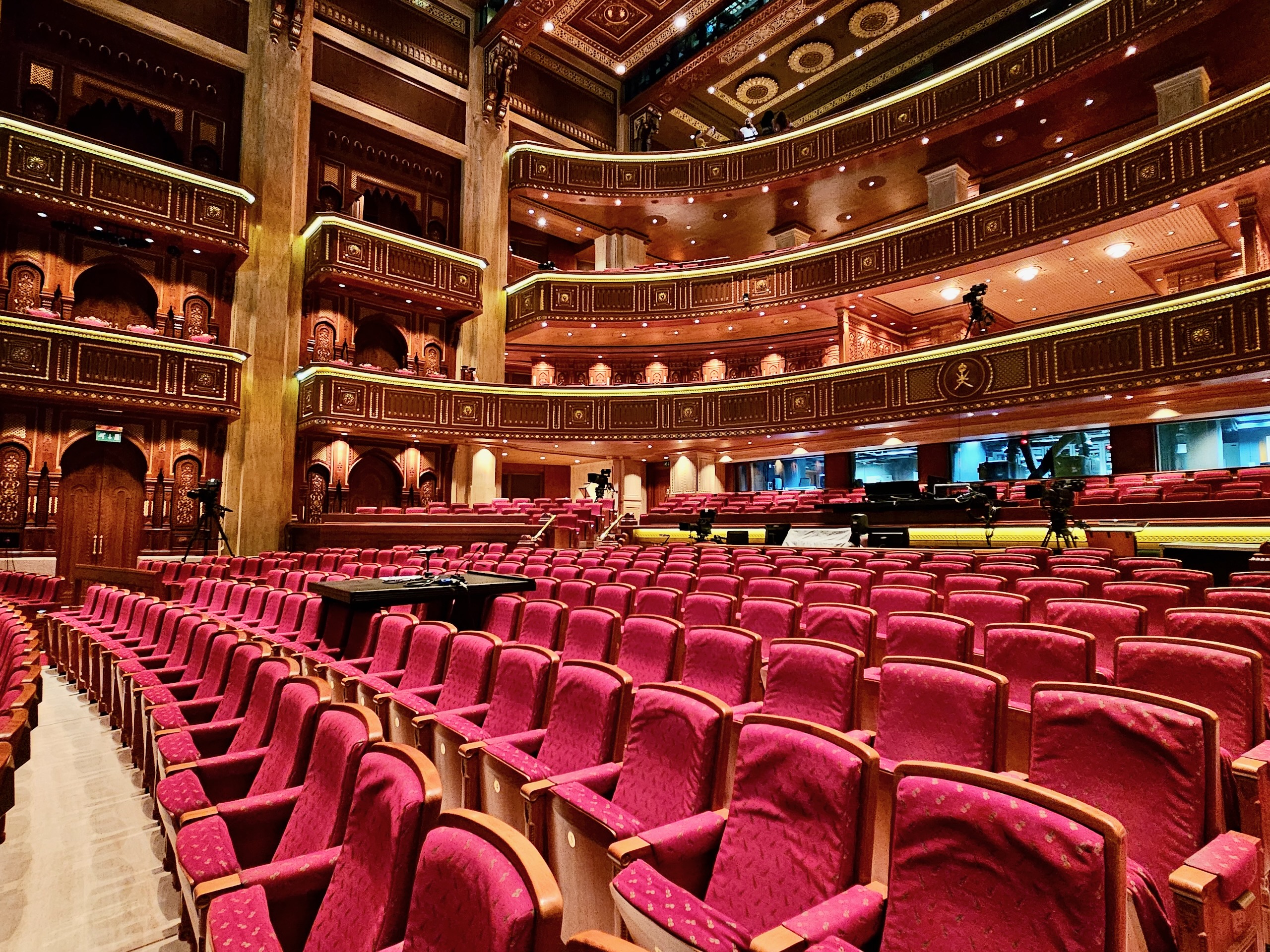
In Muscat it’s hard to stay indifferent to this place, even if opera isn’t really your thing. “This feels kind of luxurious” was literally our first reaction 😄, but without the over-the-top vibe. White stone, everything spotless, everything neat, and the whole place looks perfectly put together.
Royal Opera House Muscat opened on 12 October 2011. It was commissioned by Sultan Qaboos and seats around 1,100 people, so it’s the real deal, not just a pretty building for photos from the outside.
You visit it on a ticket bought at the box office (card payment worked fine for us). For adults, a basic “house tour” ticket is often around 3.15 OMR. One real-life tip: check in advance if they’re actually letting people inside. We arrived the day before an event and parts of the building were simply closed off, but the next day we managed to see the main auditorium using the same ticket.
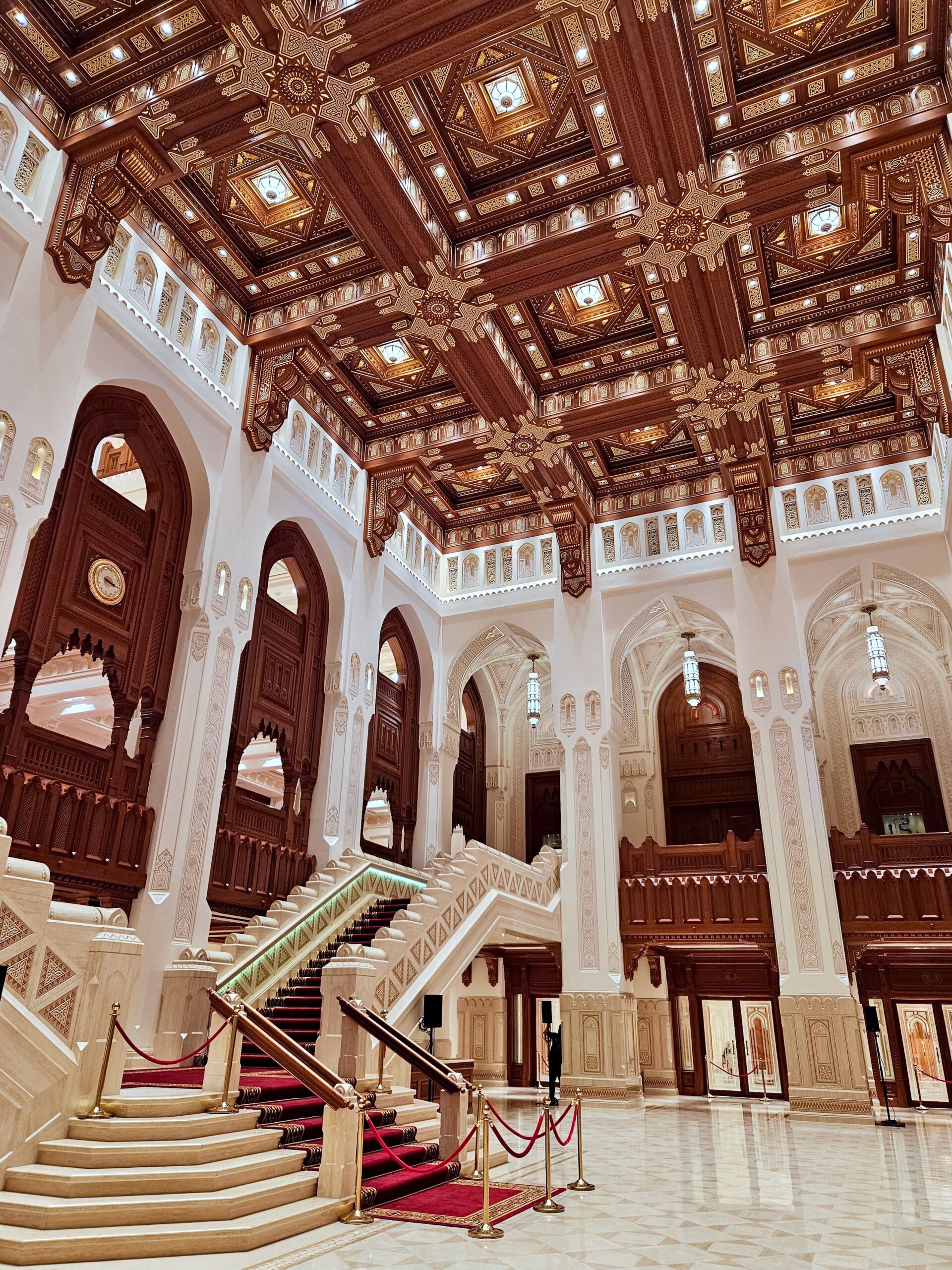
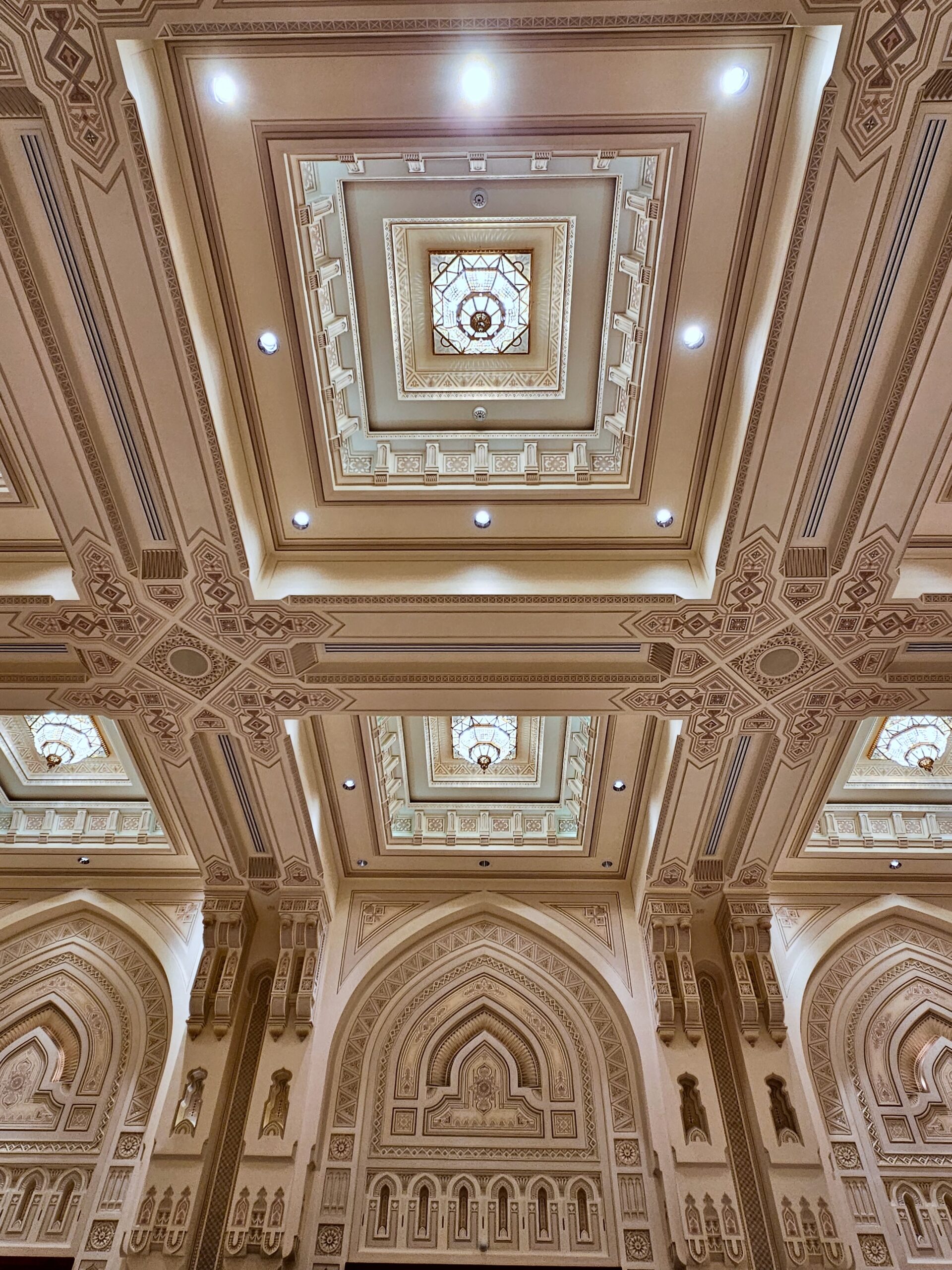
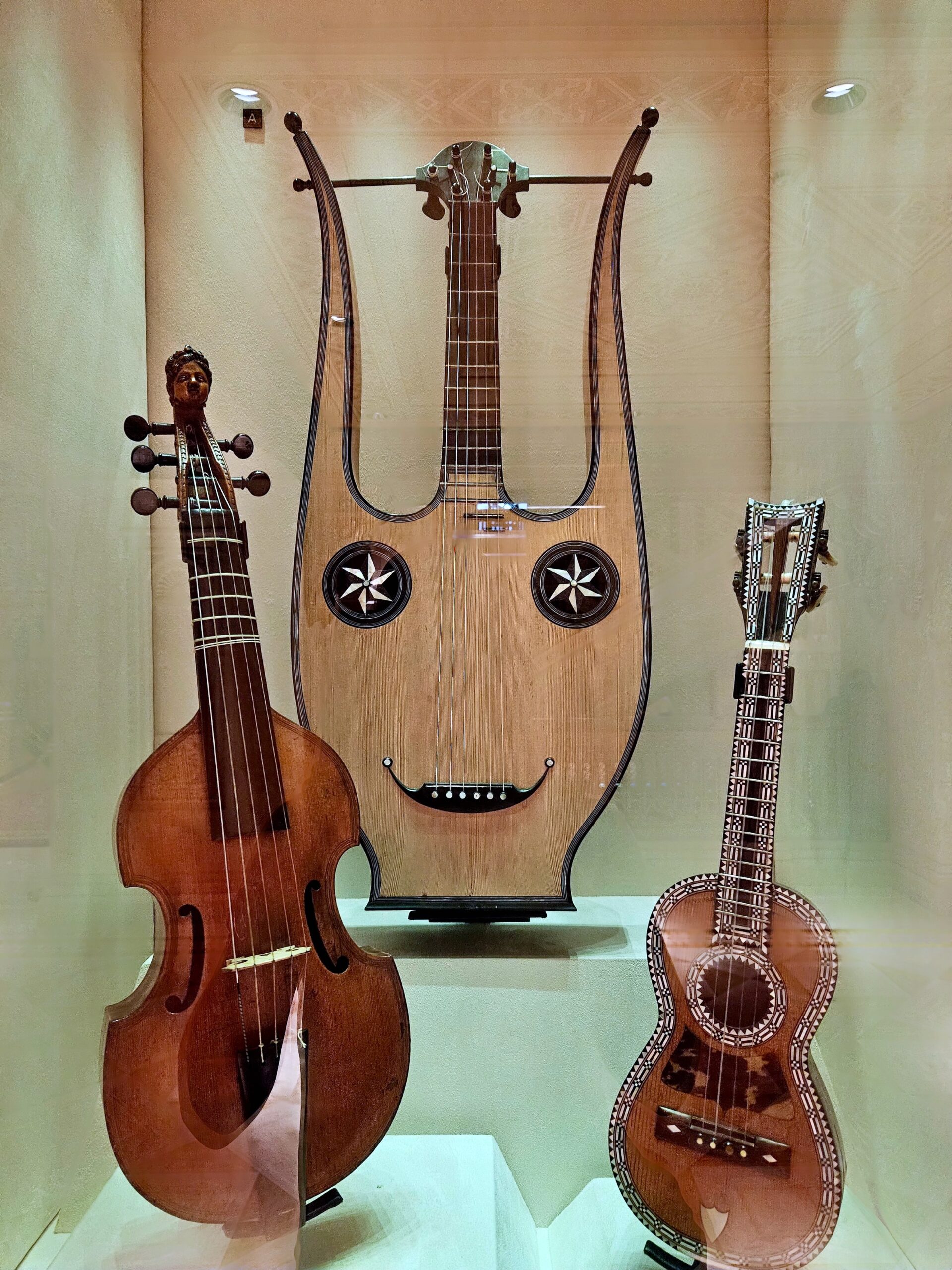
Inside, the highlight is the auditorium itself. It’s impressive even if you can’t tell opera from a regular concert 😅. Along the way you’ll spot a few nice music-related details too, like instruments displayed in glass cases and bits that show how the venue is built from a technical point of view. The space was designed to be reconfigurable, switching between theatre and concert setups, so it’s not just a pretty building. It’s a seriously well-thought-out performance machine.
Qurum Beach
Pin on Google Maps – click here.
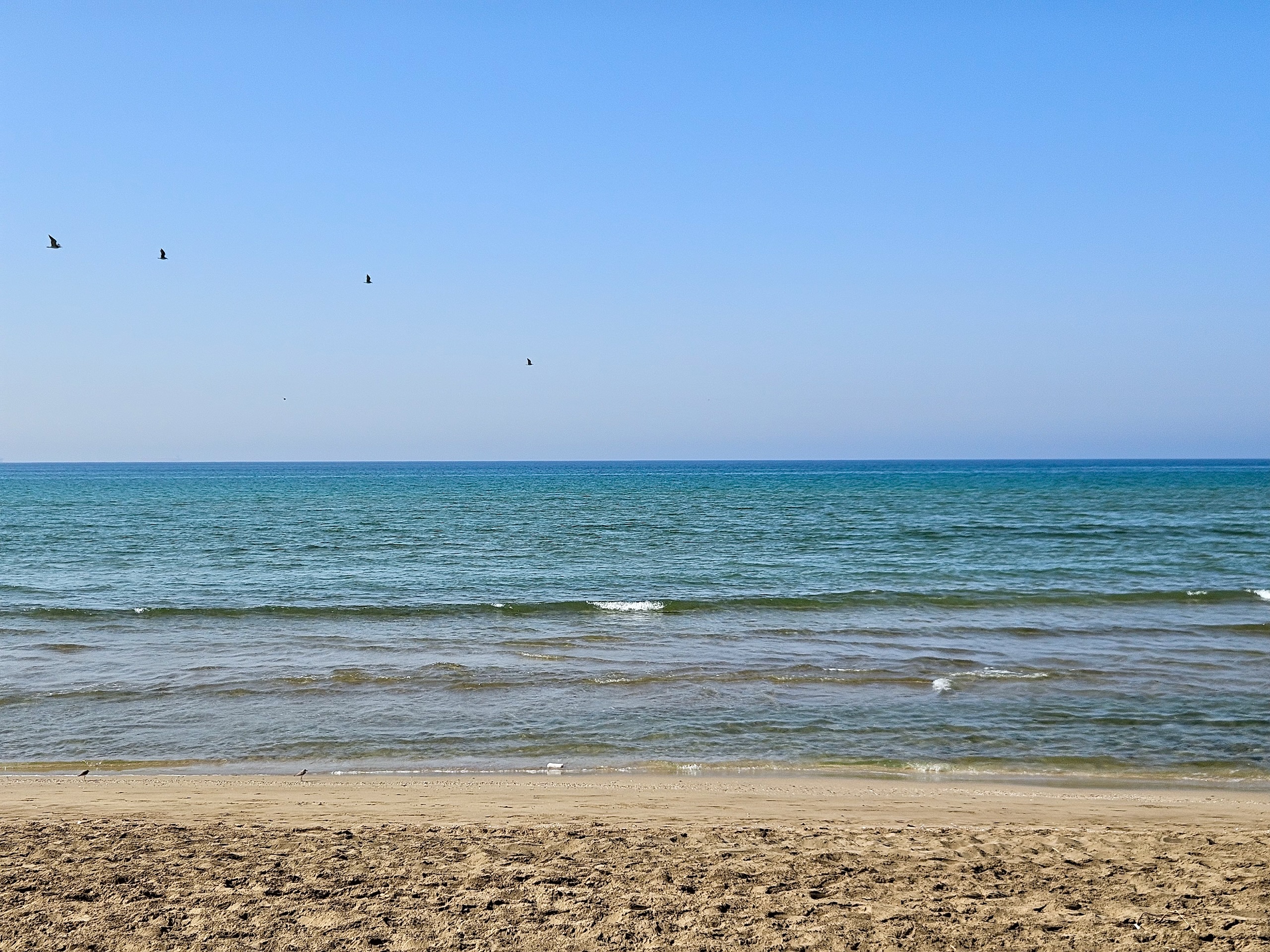
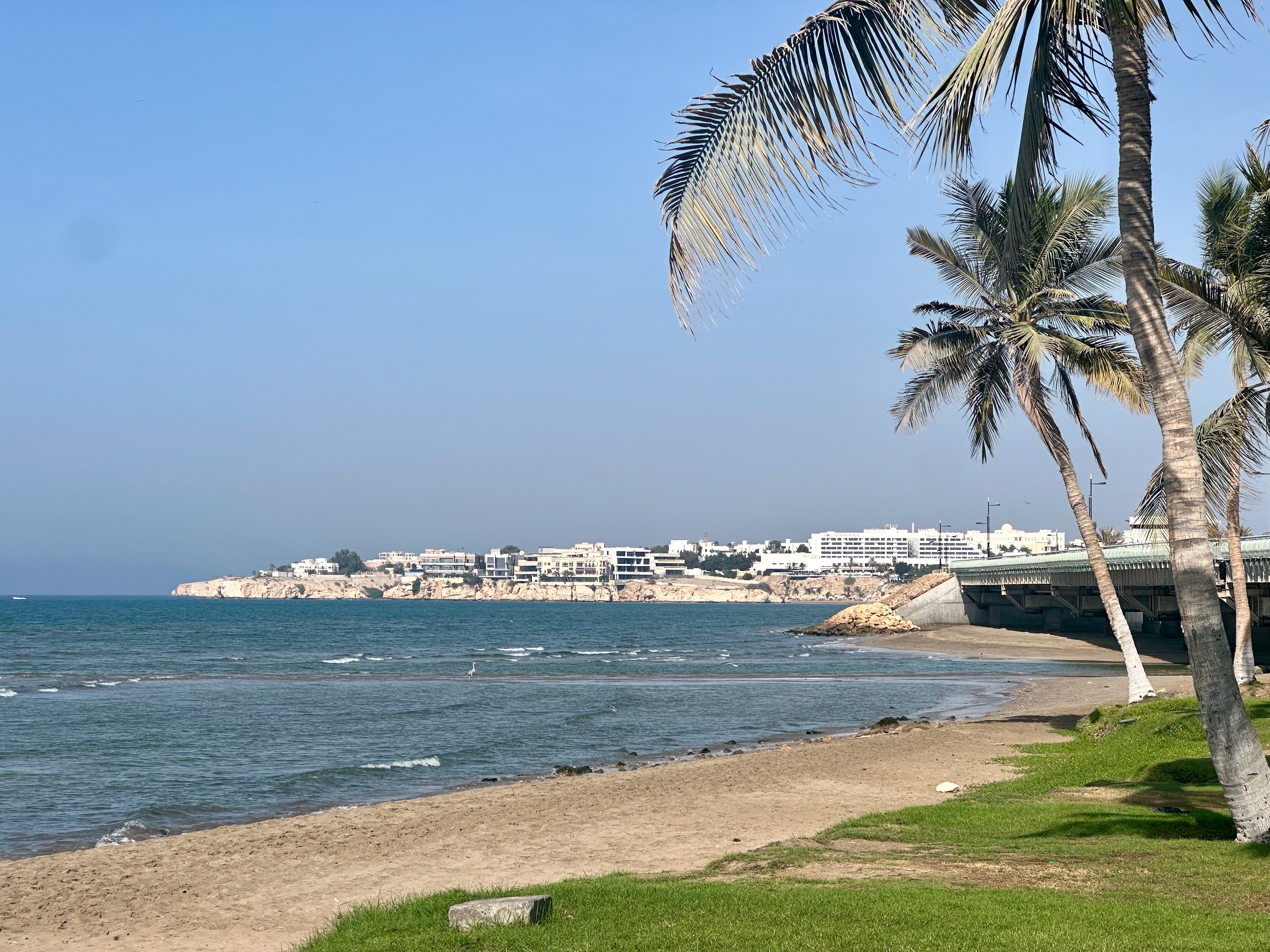
After sightseeing, heat, and bouncing around the city, Qurum feels like a lifesaver. The beach sits in the Al Qurum area and has that exact “let’s go for a walk with no plan” vibe, not “let’s tick off another attraction”. A lot of people come here for sunset, a jog, a calm walk on the sand, or just to clear their head.
Logistics are easy too. Getting there is straightforward, parking nearby is usually fine, and there are no tickets or gates to deal with.
One small local tip: like everywhere in Oman, it’s best to keep your outfit on the modest side once you’re not actually in the water, especially if you’re heading from the beach into nearby cafés or restaurants.

Qurum Natural Park
Pin on Google Maps – click here.
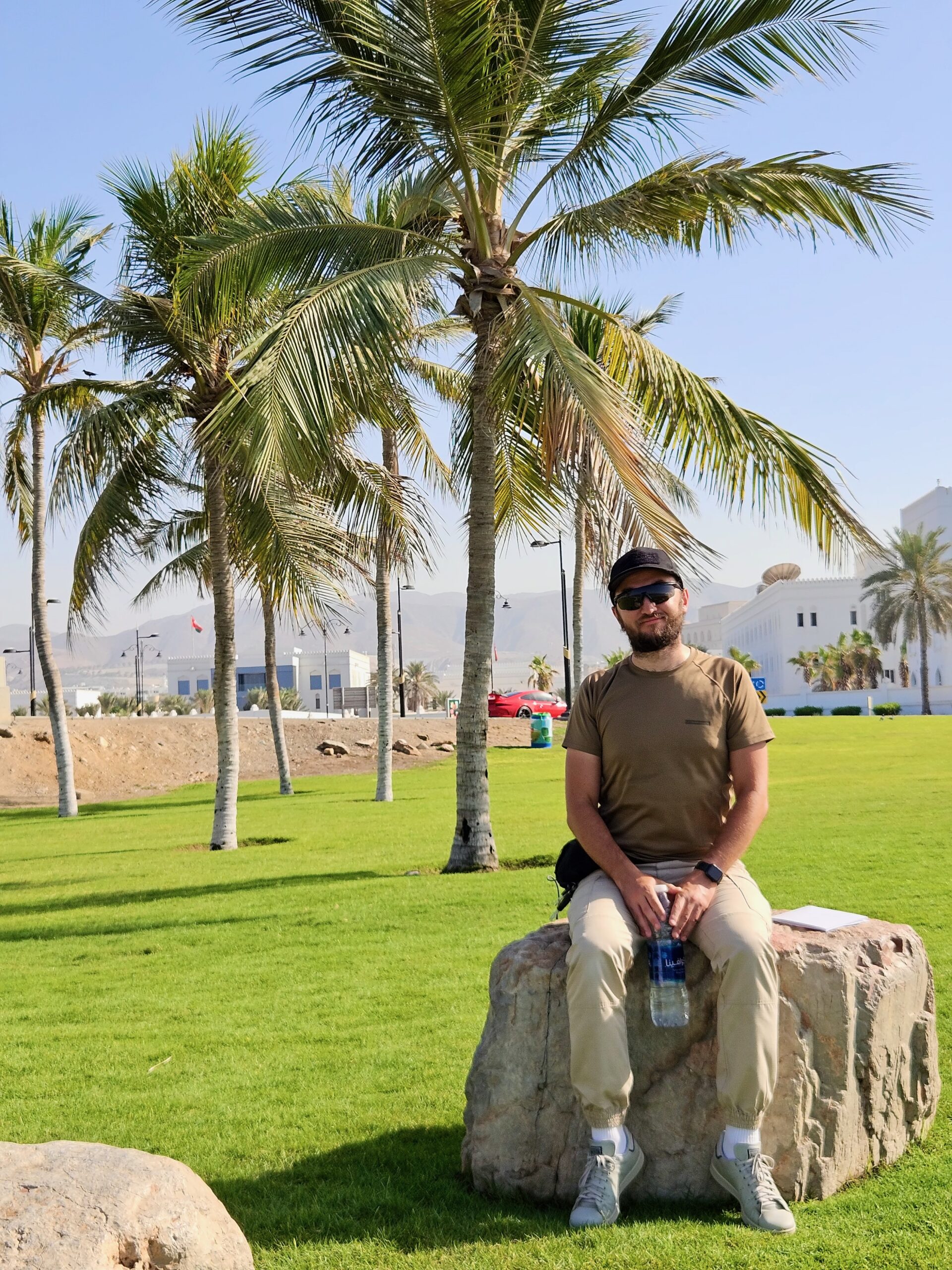
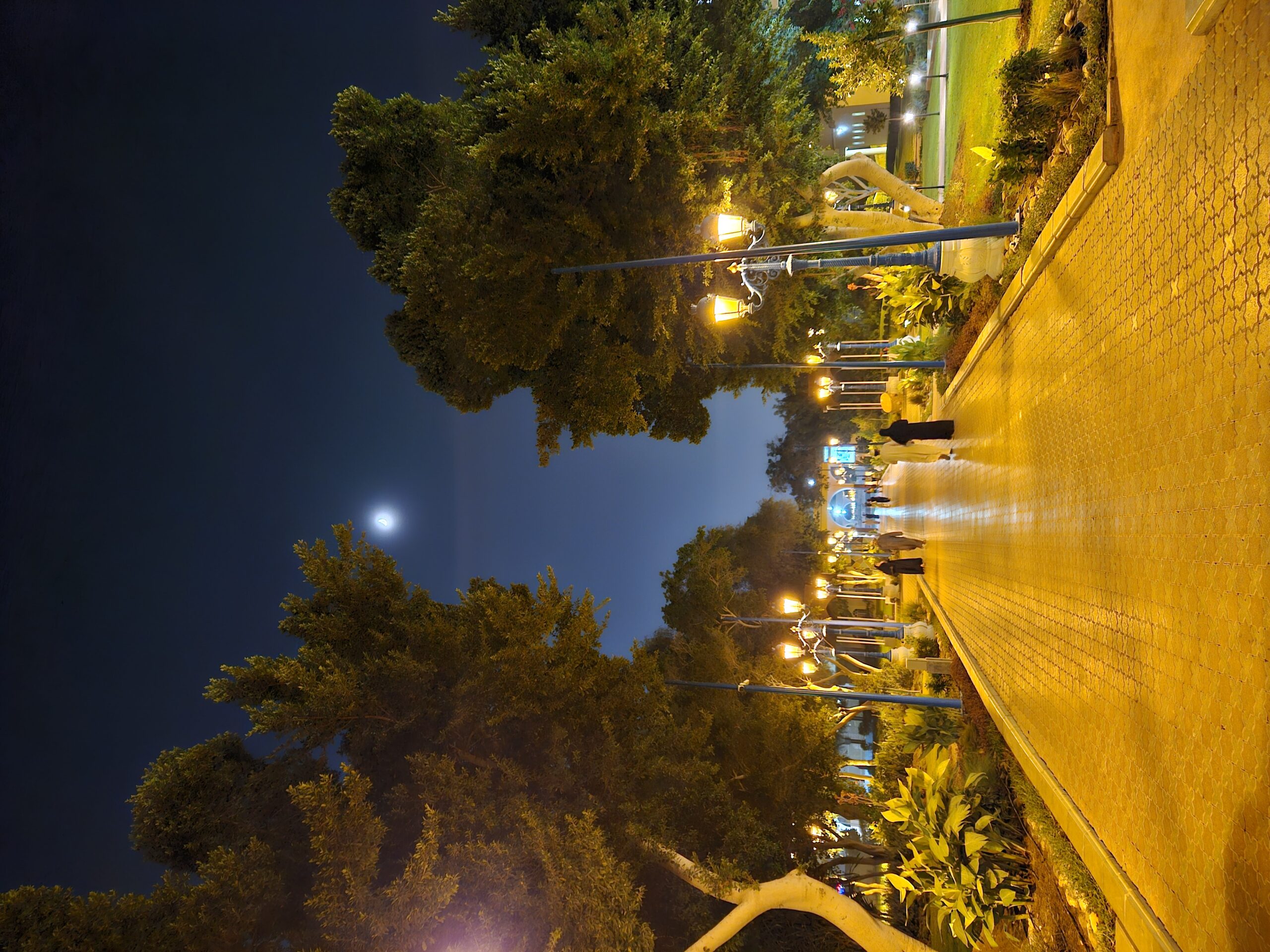
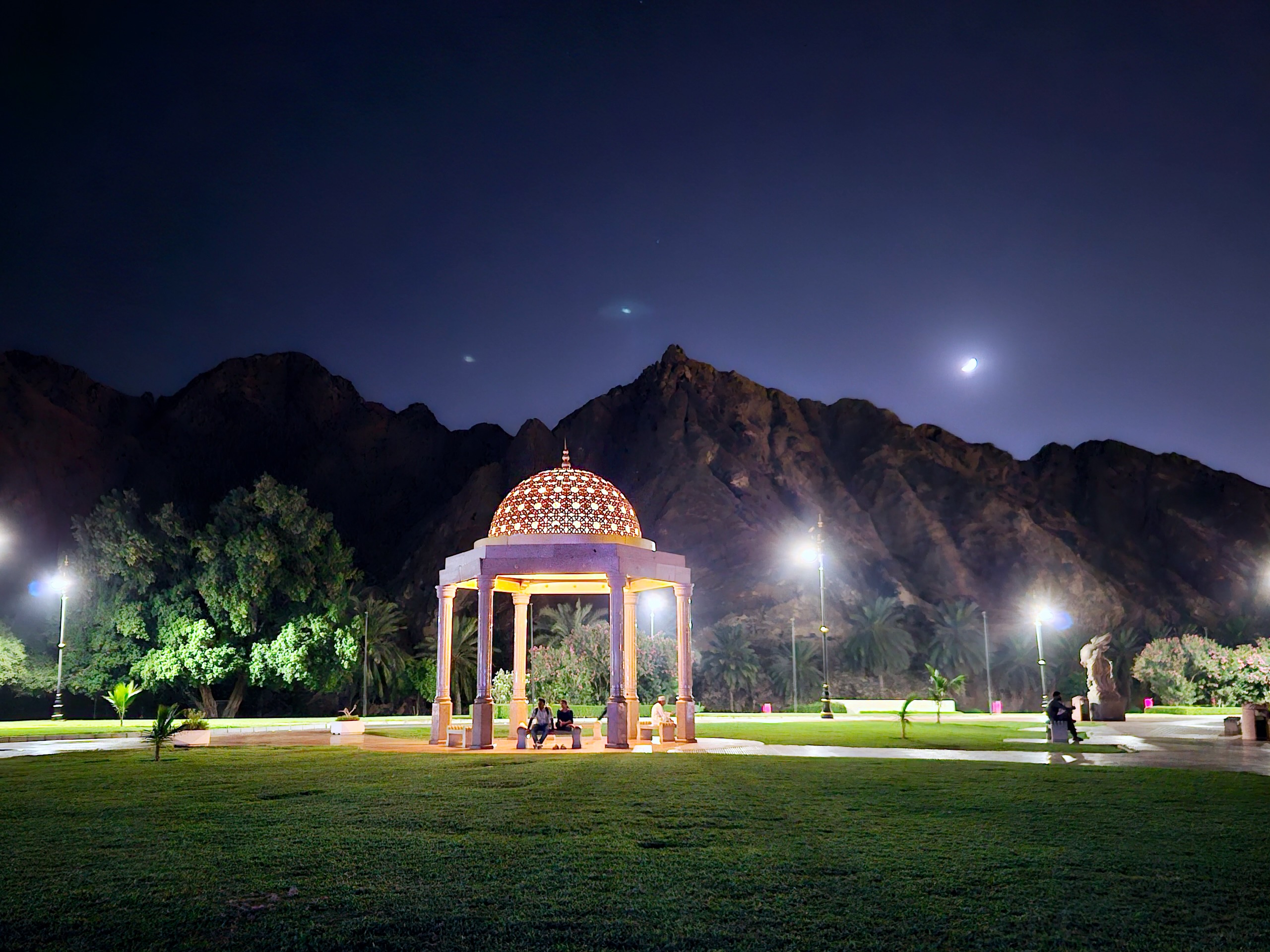
Just a simple city park for a short break from Muscat. We came here in the evening for a walk and to clear our heads, and that’s exactly what it’s good for. No big “wow” factor and nothing life-changing, but it works as an easy stop for a stroll.
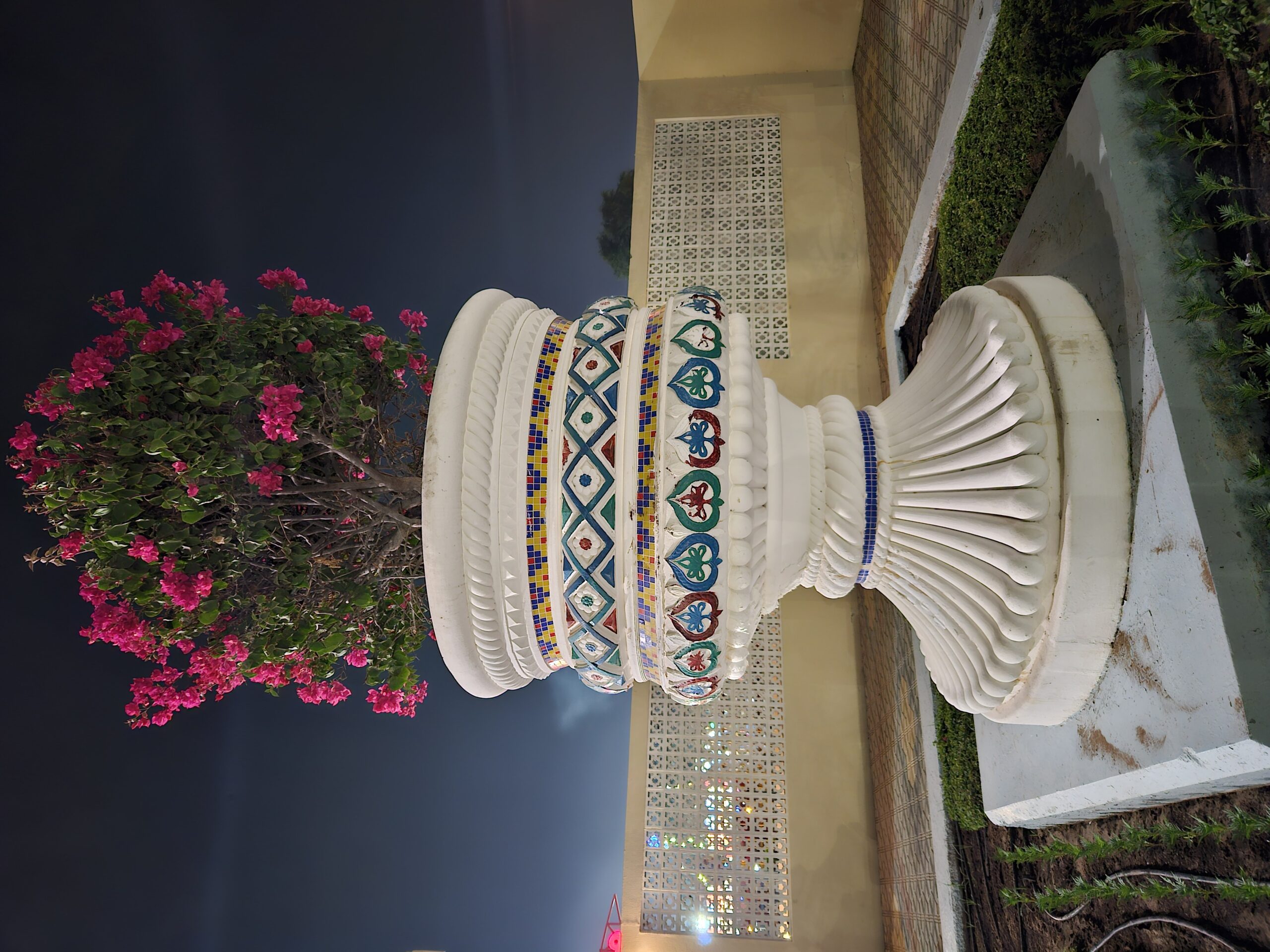
The upside is the space, because the park is genuinely big. There are walking paths, some greenery, benches, a small lake with a fountain, and a few spots that work nicely for photos, but we definitely wouldn’t plan a whole day around it 🤣.
There’s also a small entertainment area next to it, kind of a mini funfair. It looked pretty average, so we’d treat it as a “for kids” add-on rather than something worth coming here for on its own.
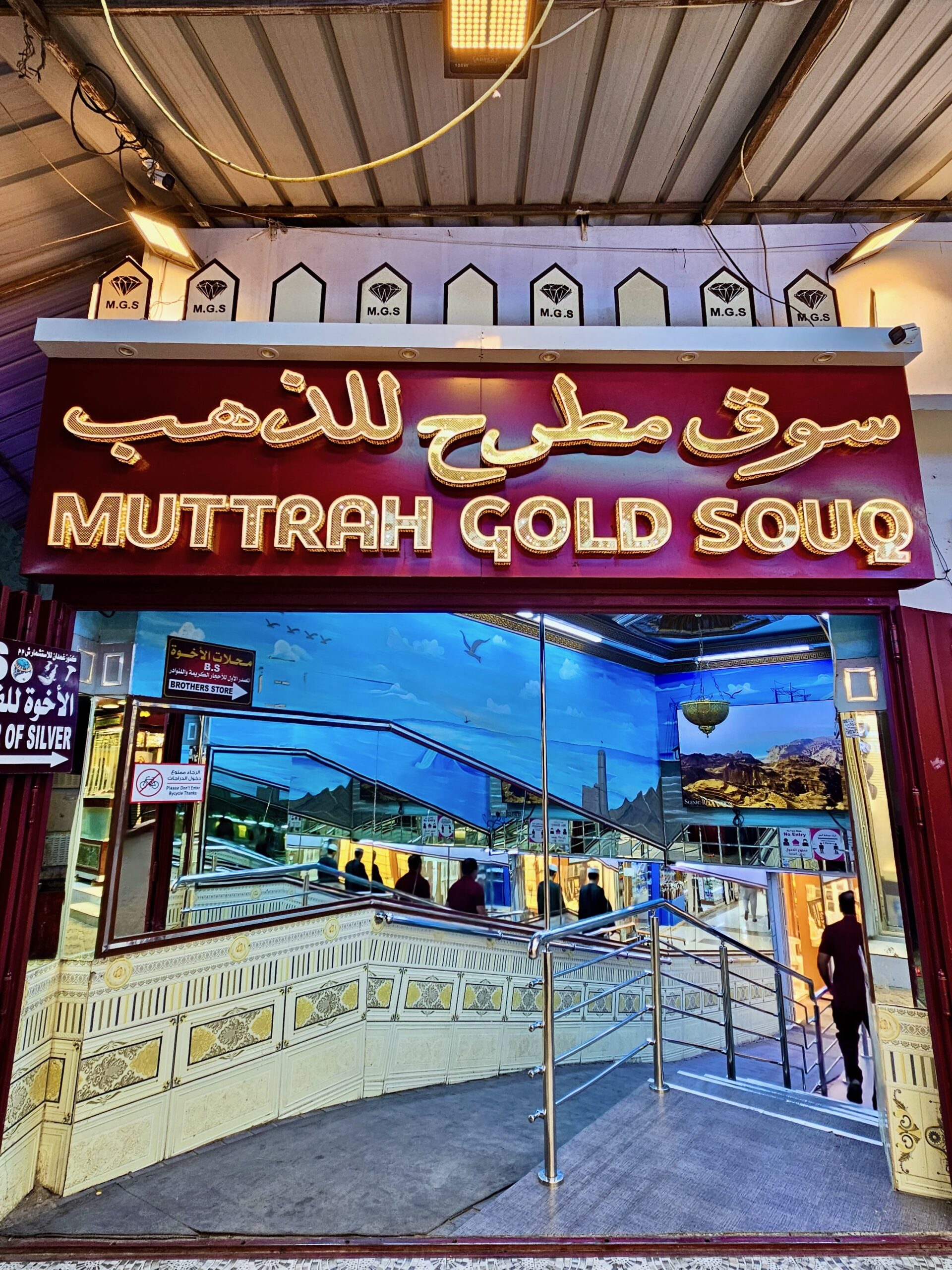
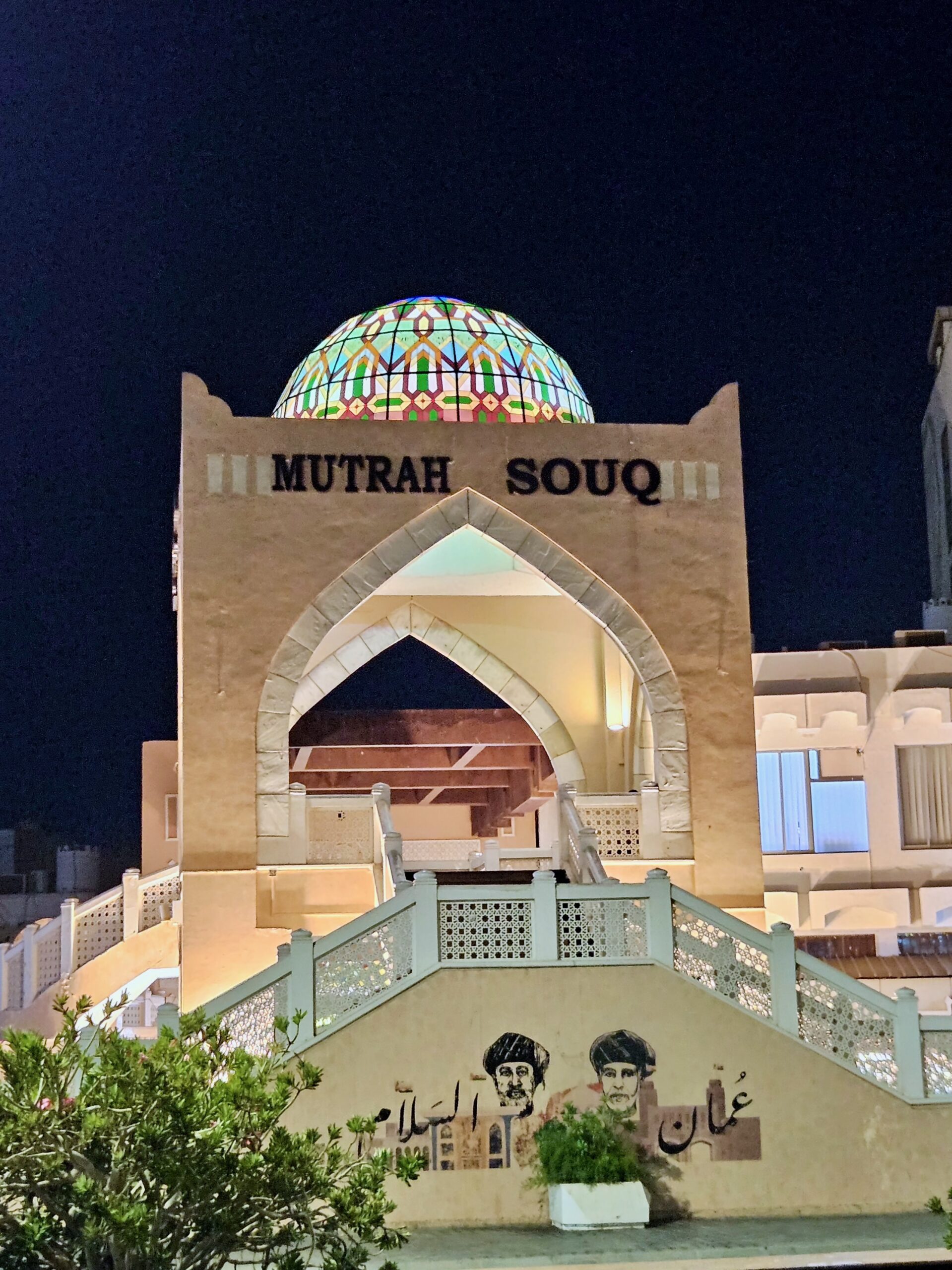
Mutrah Souq
Pin on Google Maps – click here.
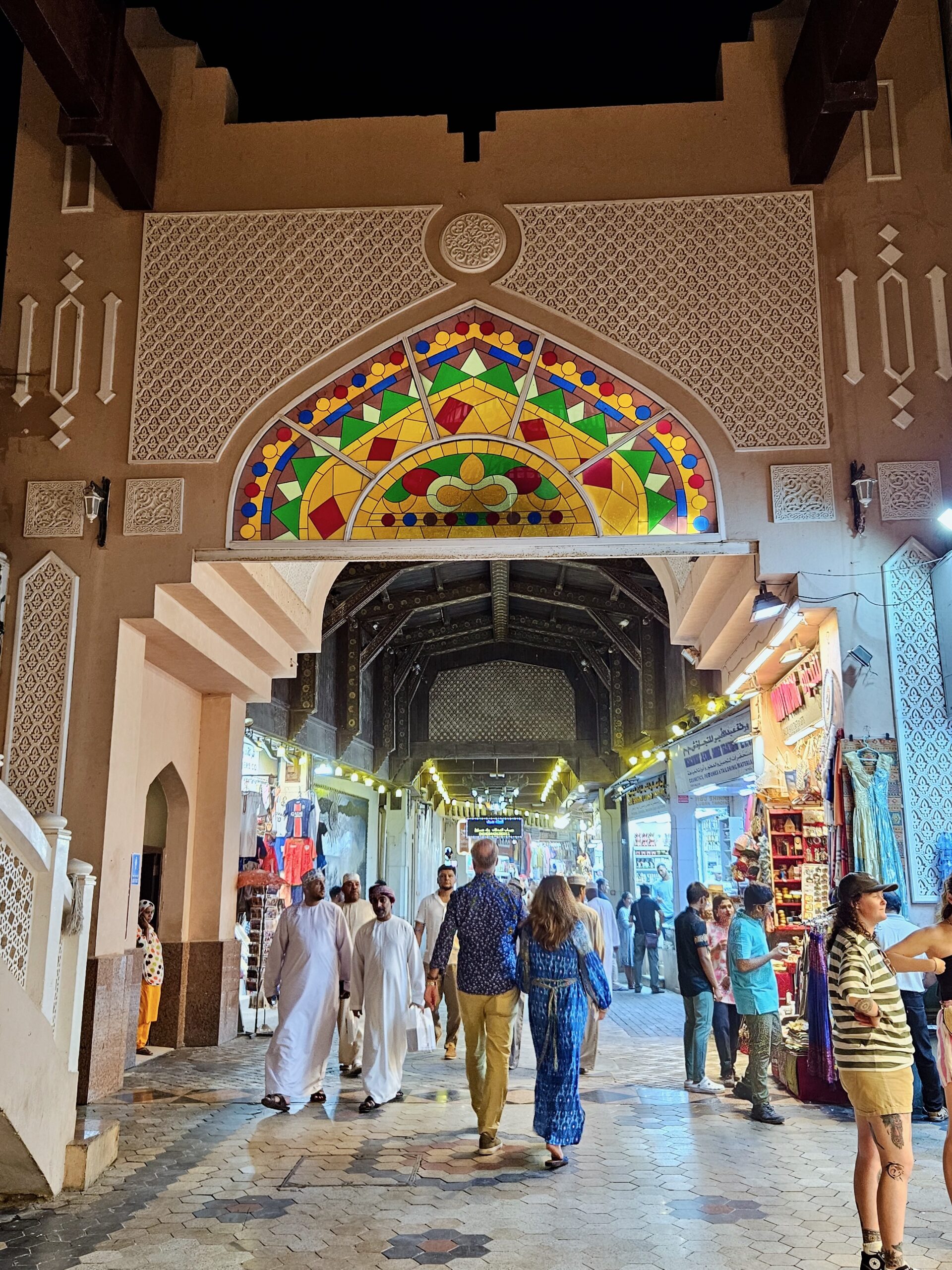
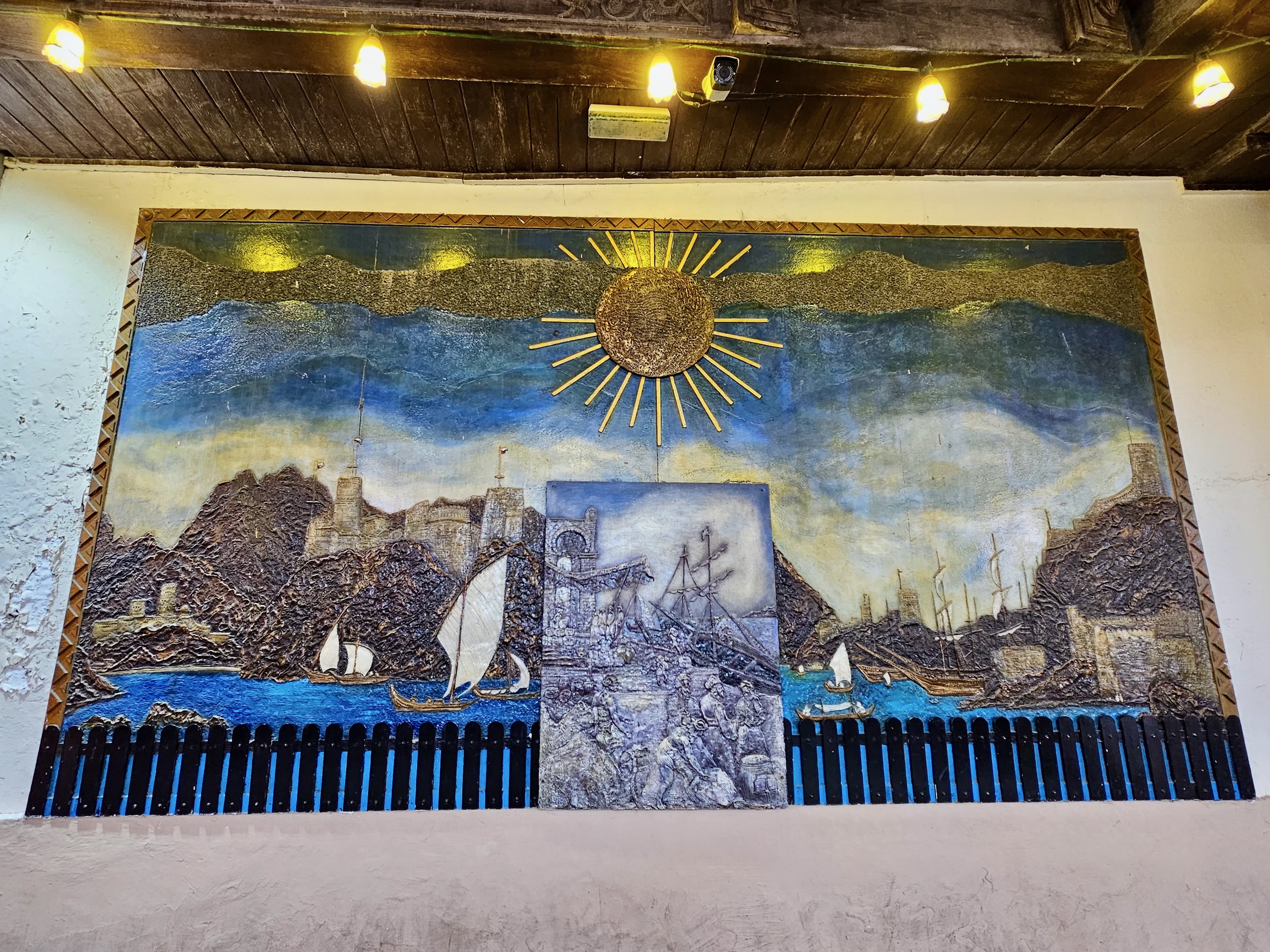
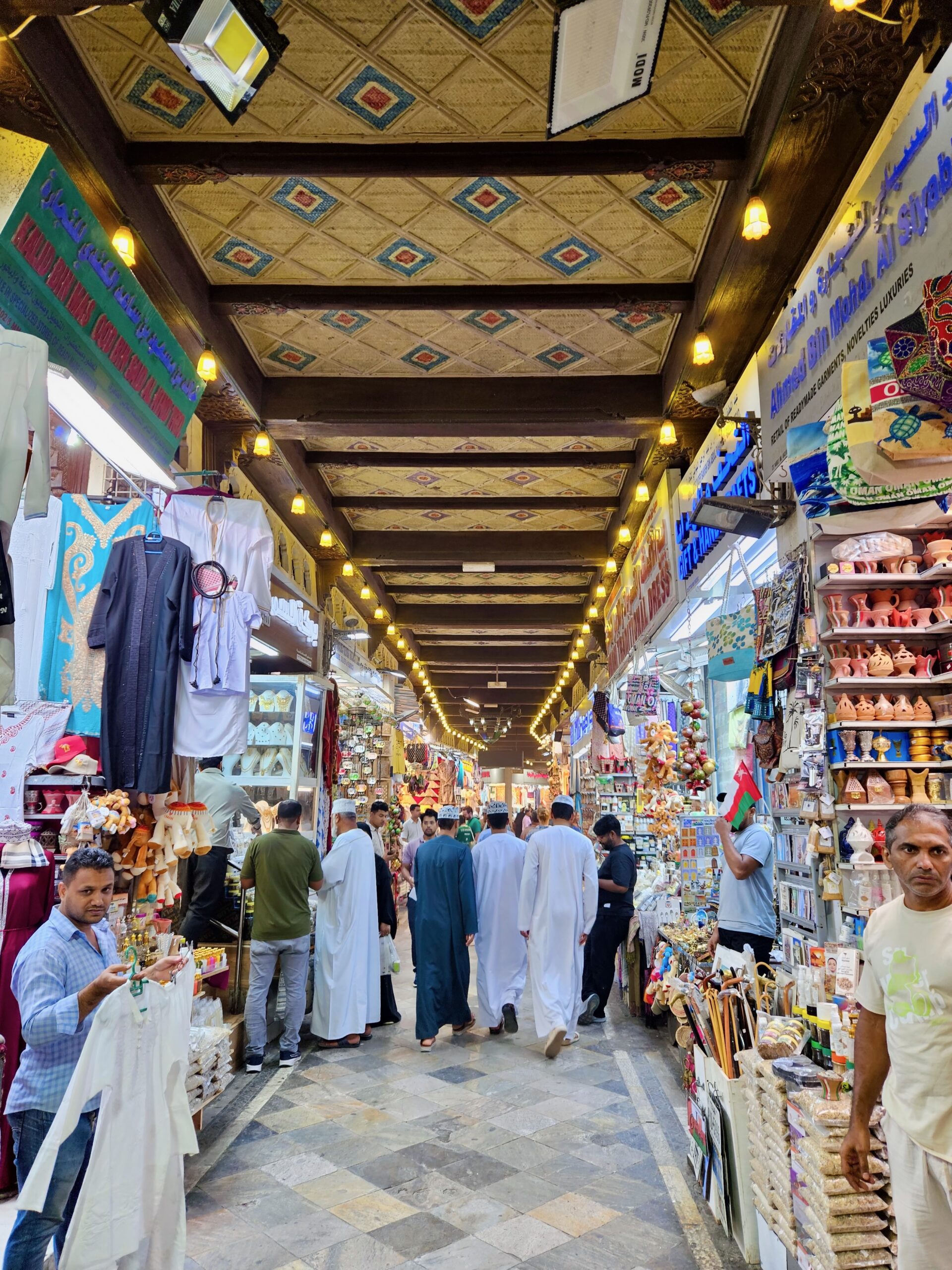
Mutrah Souq has that classic “Arab bazaar” vibe: narrow alleys, the smell of incense, and hundreds of little things that suddenly feel like the perfect souvenir, even if you have zero space for them back home. It’s one of the oldest markets in the region, and for centuries it worked as the trading heart of Muscat’s port, with goods coming in from places like India, China, and Europe.
What can you buy here? The Omani classics: frankincense, perfumes and oils, jewellery, textiles, local souvenirs, handicrafts, pottery, and spices. If you enjoy places like this, it’s very easy to spend more time here than you planned.
Mutrah Corniche
Pin on Google Maps – click here.
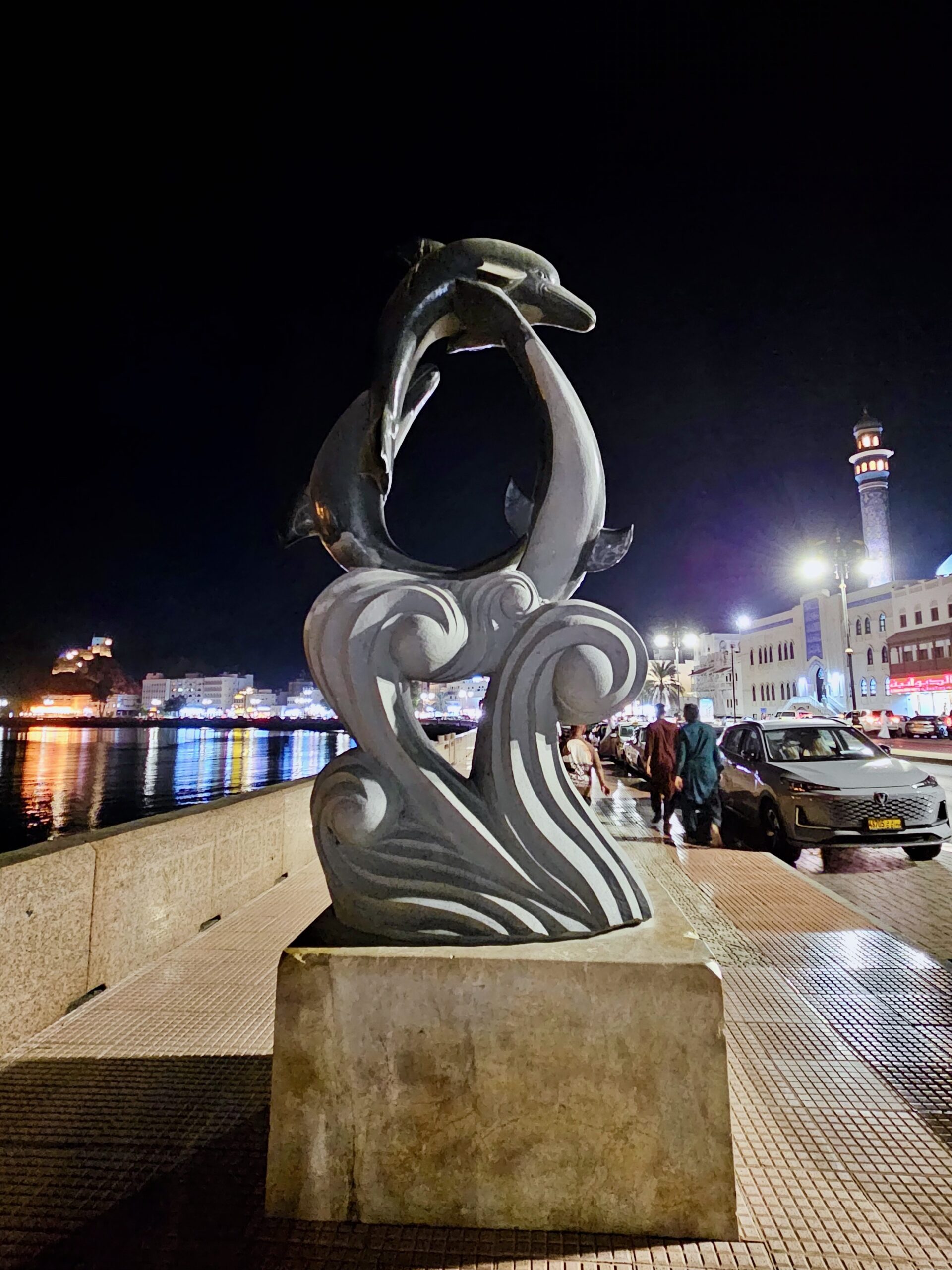
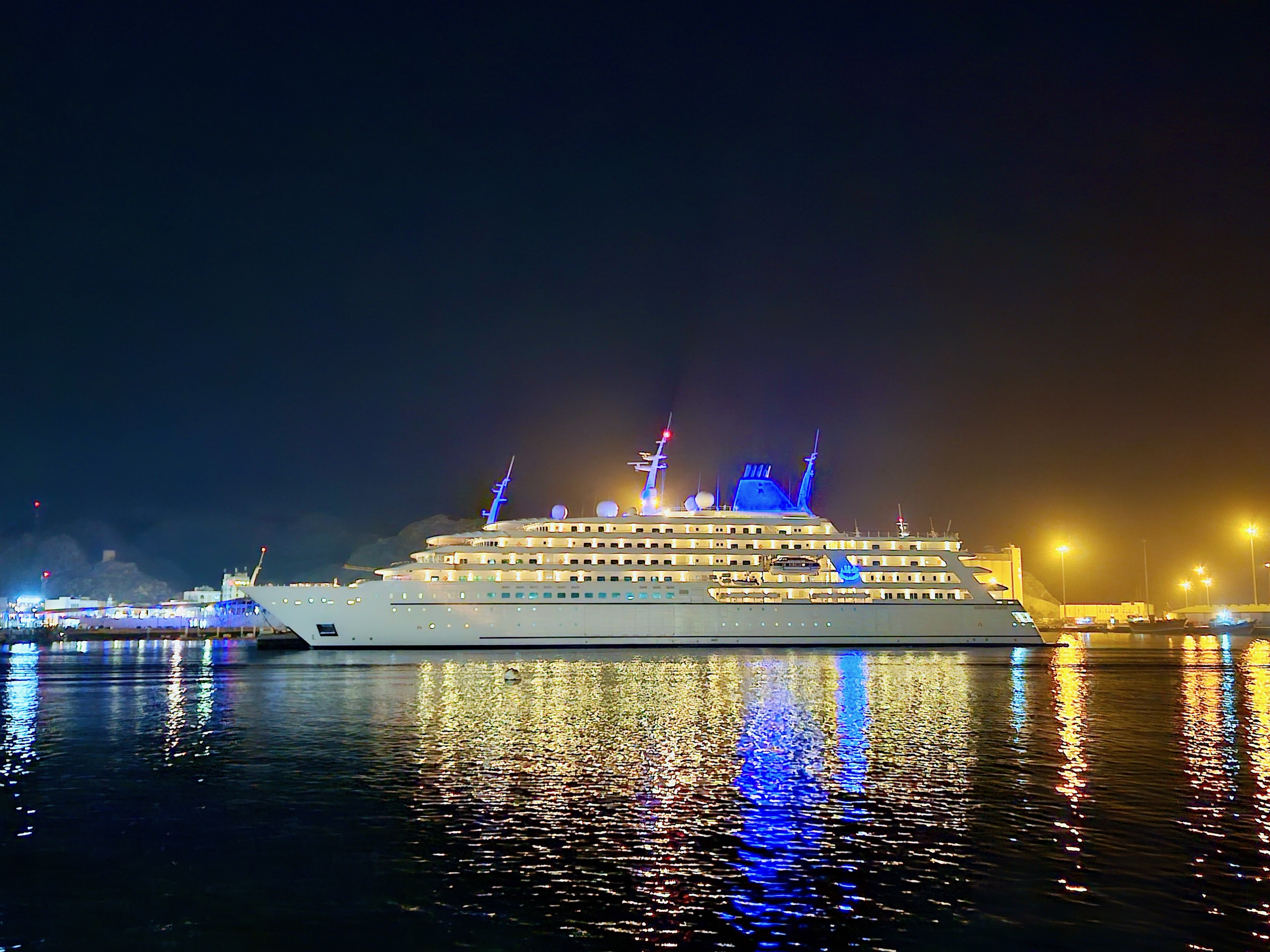
It’s a great stretch for a relaxed walk by the water, especially if you’re already near the souq. In the Arab world, “corniche” simply means a seaside promenade, a walkway along the bay where people go for a stroll, sit on a bench, or watch the harbour. That’s exactly how it works here. You walk along the waterfront with views of boats and Mutrah’s buildings, no pressure, and nothing that feels forced.
Along the way you’ll also pass a fountain, a regular medium-sized one, no need to compare it to Dubai 😄, but it works well as a little landmark on the route. The nicest time to be here is late afternoon or in the evening, when it cools down and the promenade starts to fill up with people.
Bait Al Zubair Museum
Pin on Google Maps – click here.
If you want a taste of Omani history and everyday life without falling into a Wikipedia rabbit hole, this place does the job. Bait Al Zubair Museum opened to visitors in 1998 and has been a private initiative run by the Al Zubair family from the start.
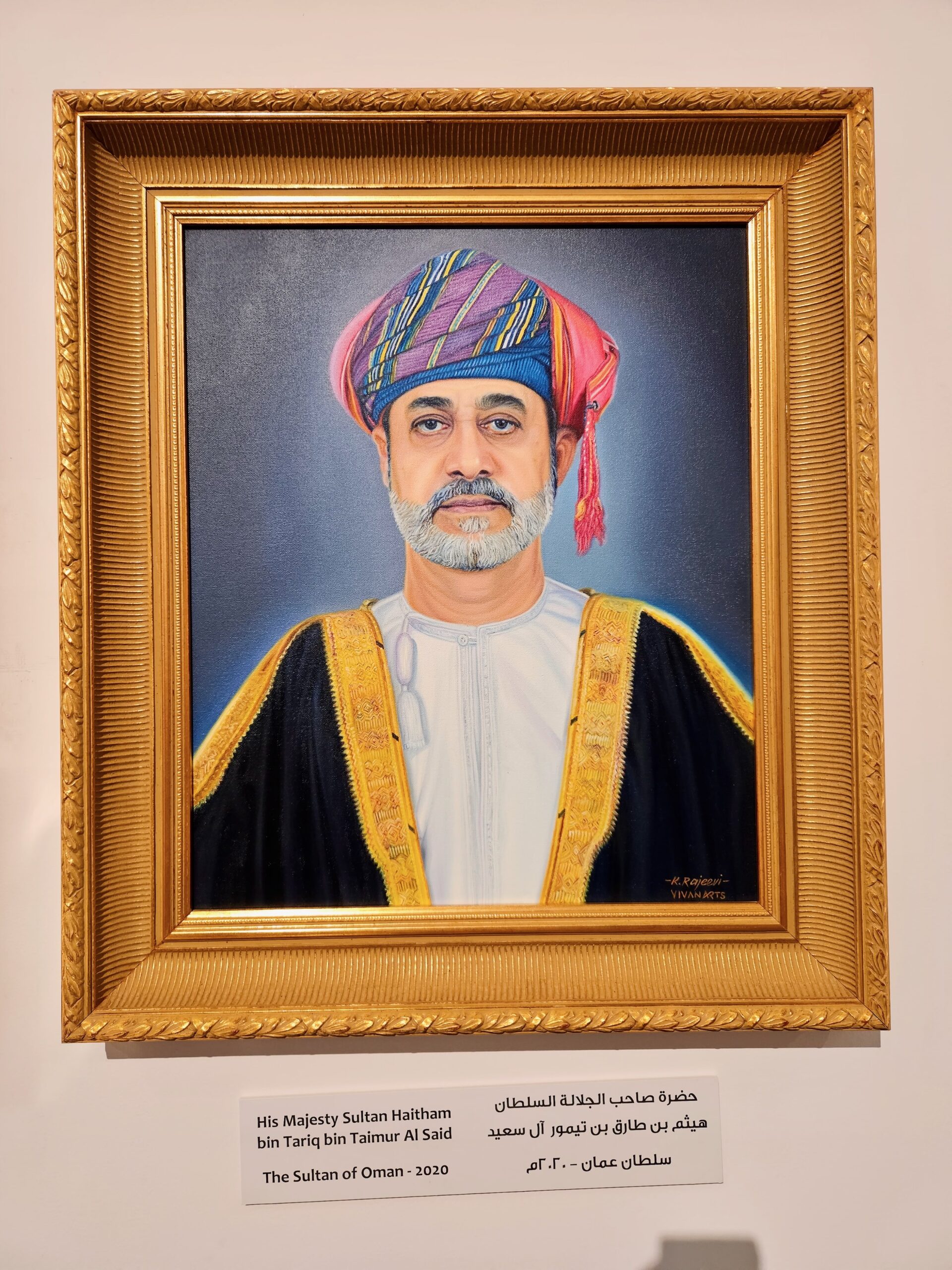
It’s not just one building either. The site is made up of five parts: Bait Al Bagh, Bait Al Oud, Bait Al Dalaleel, Bait Al Nahdhah, and Gallery Sarah, plus a garden, a café, and a small gift shop. One more fun fact: in 1999 the complex received the Sultan Qaboos’ Award for Architectural Excellence.
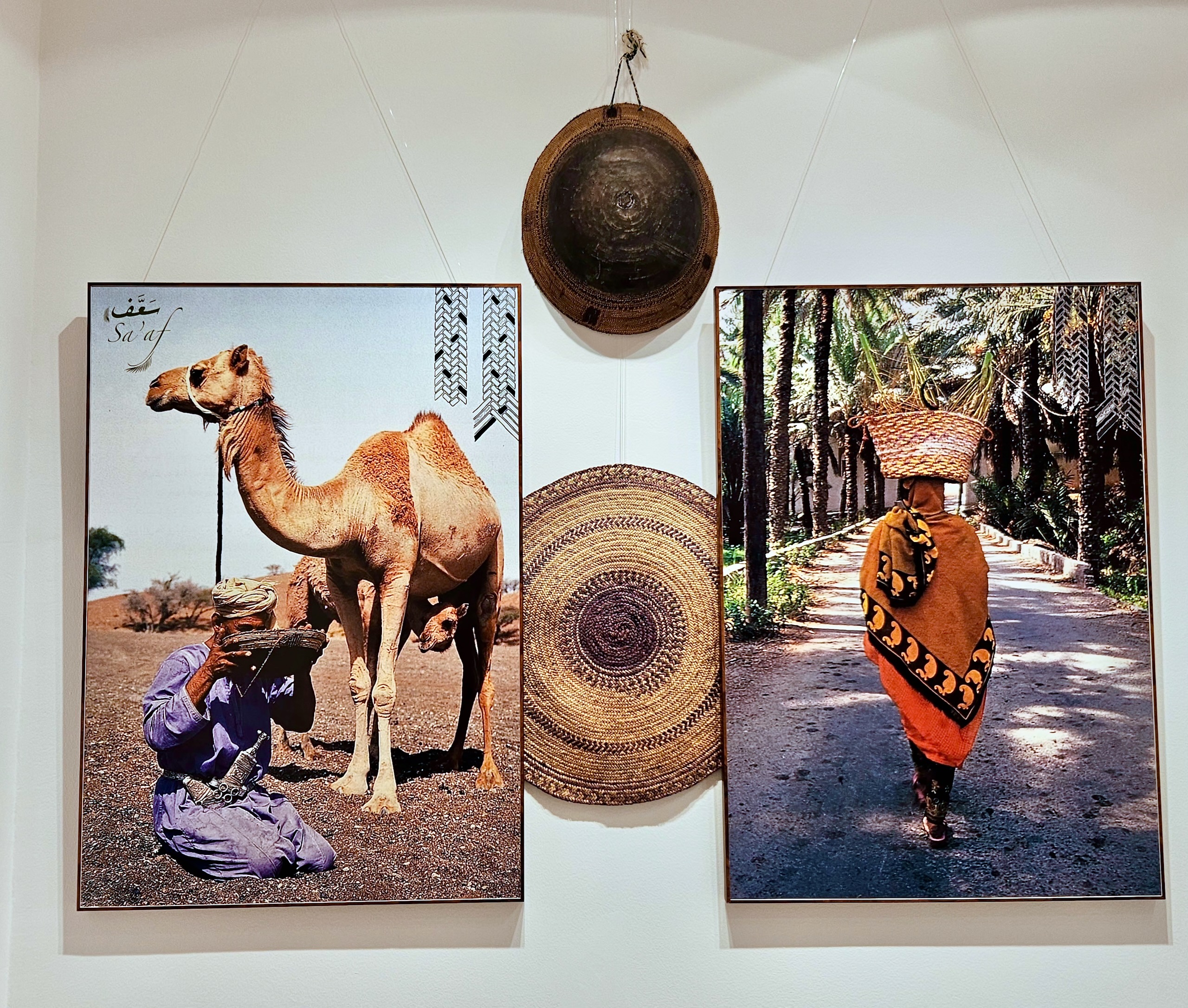
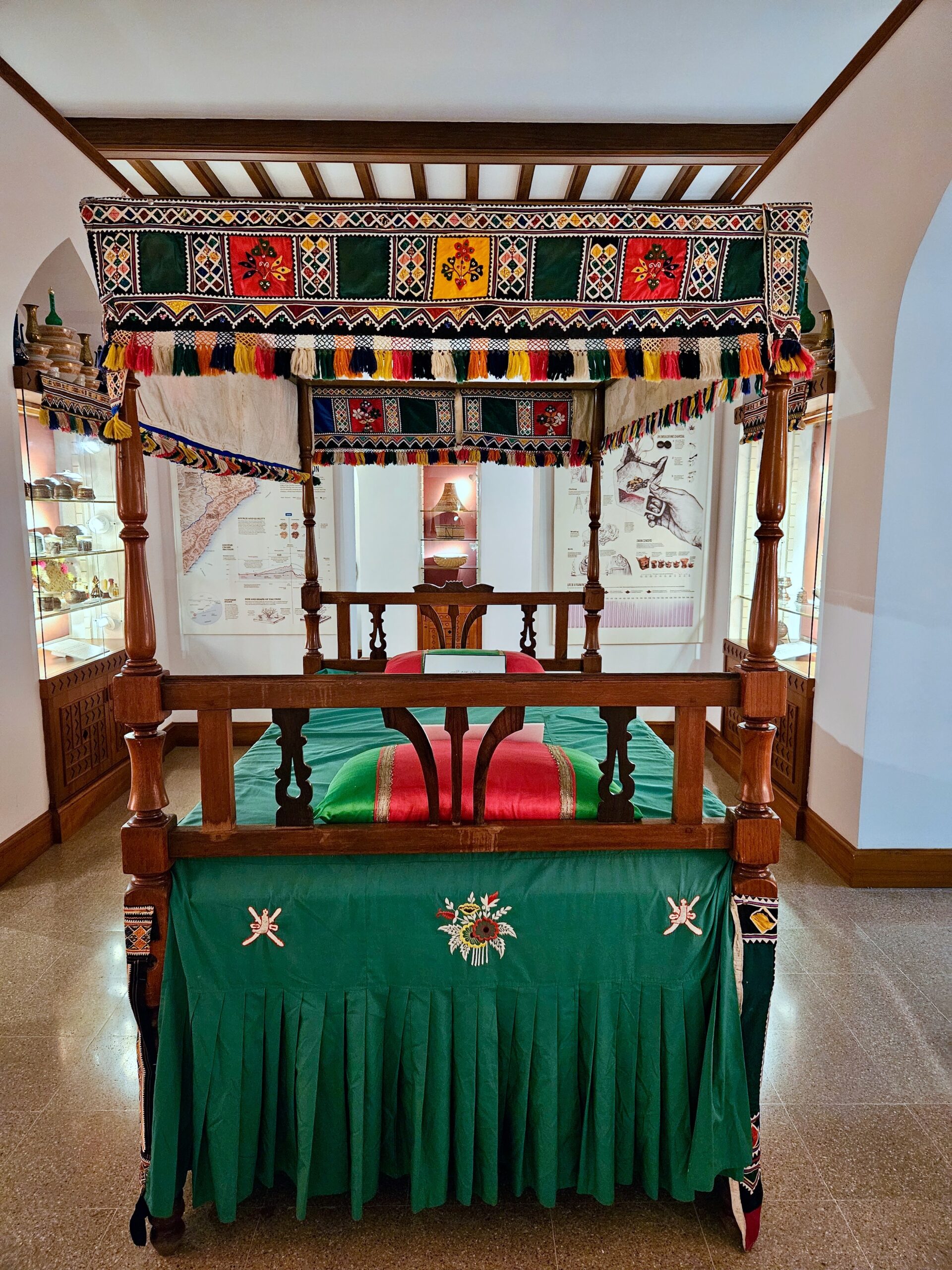
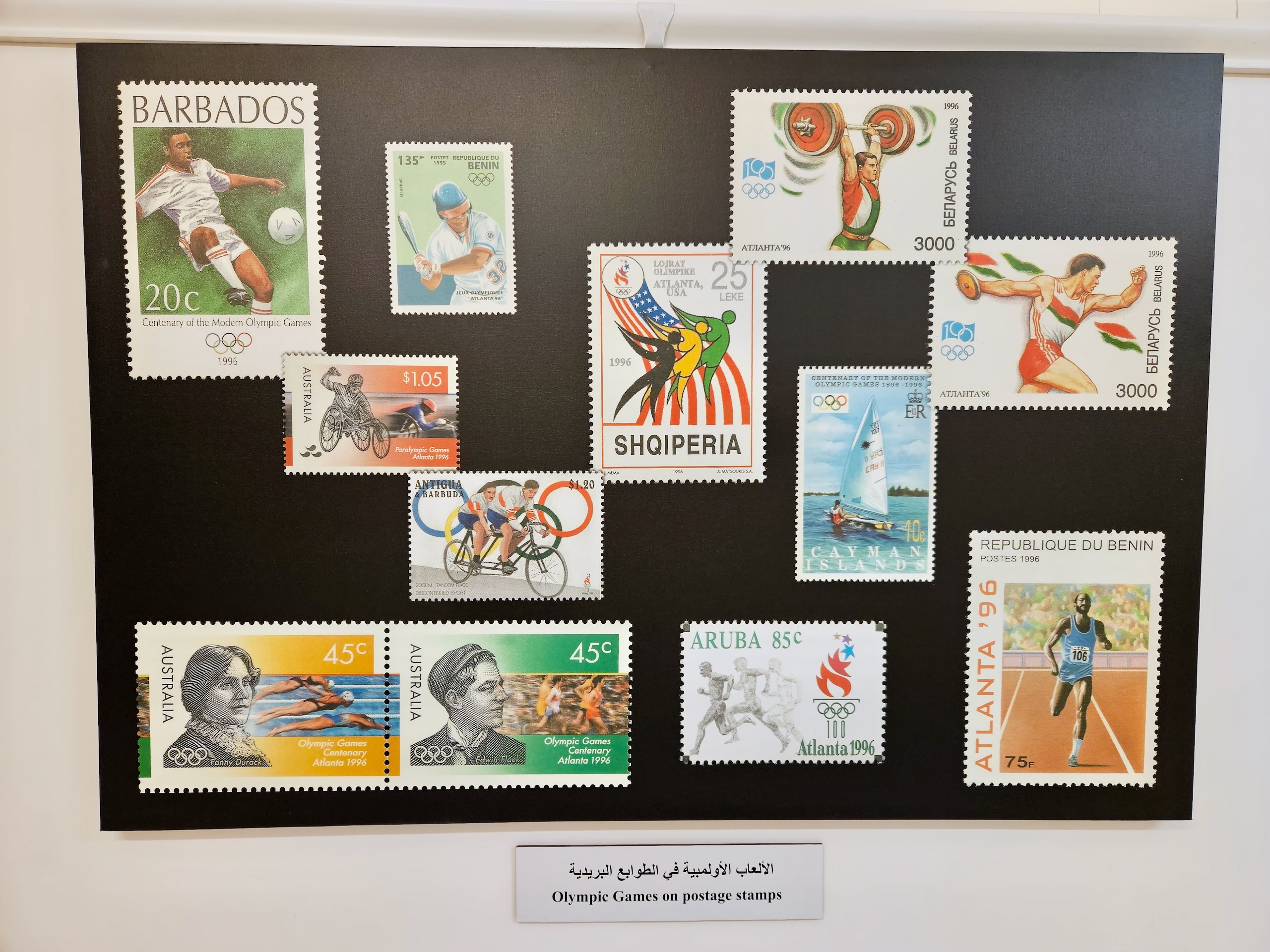
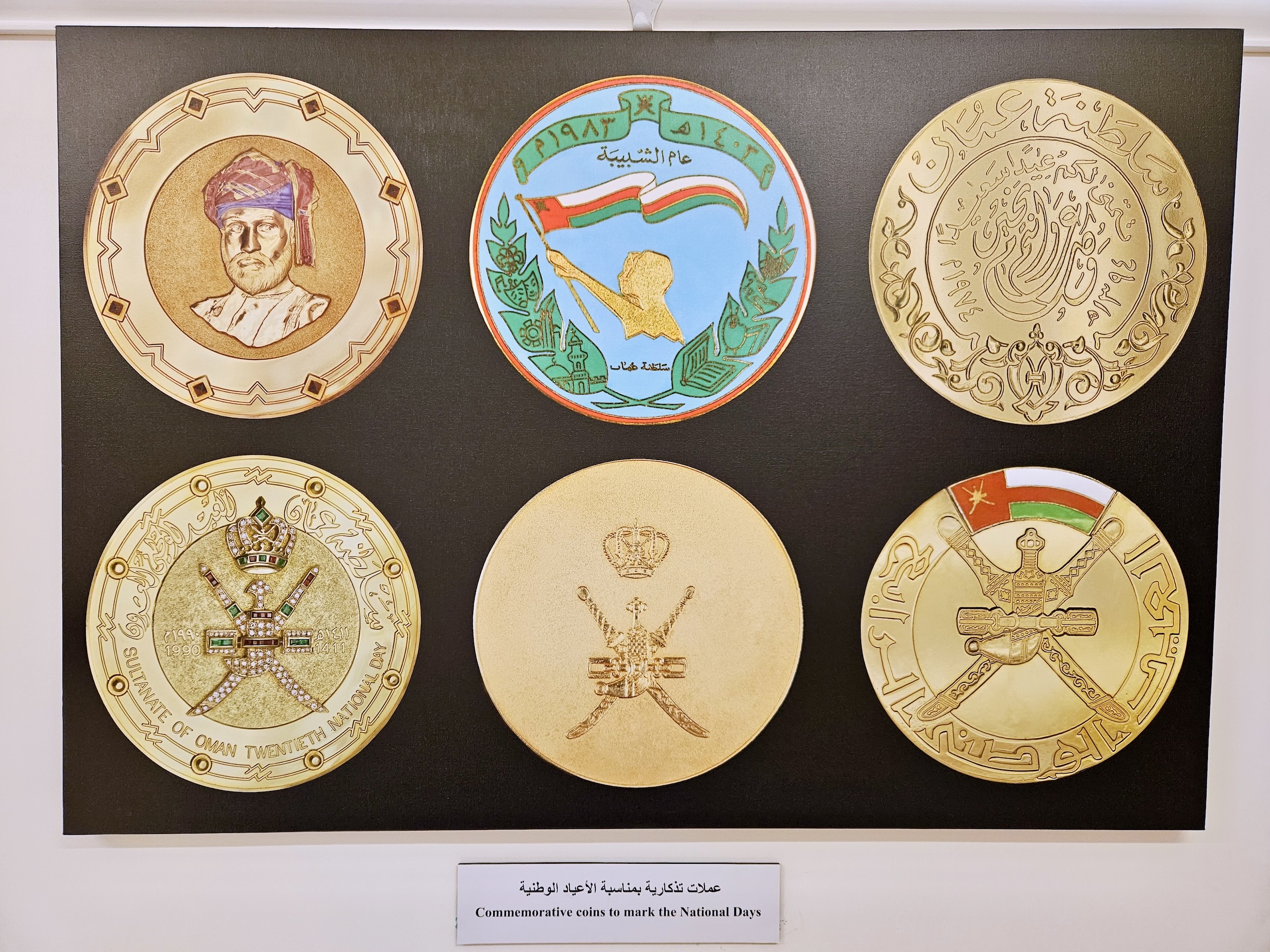
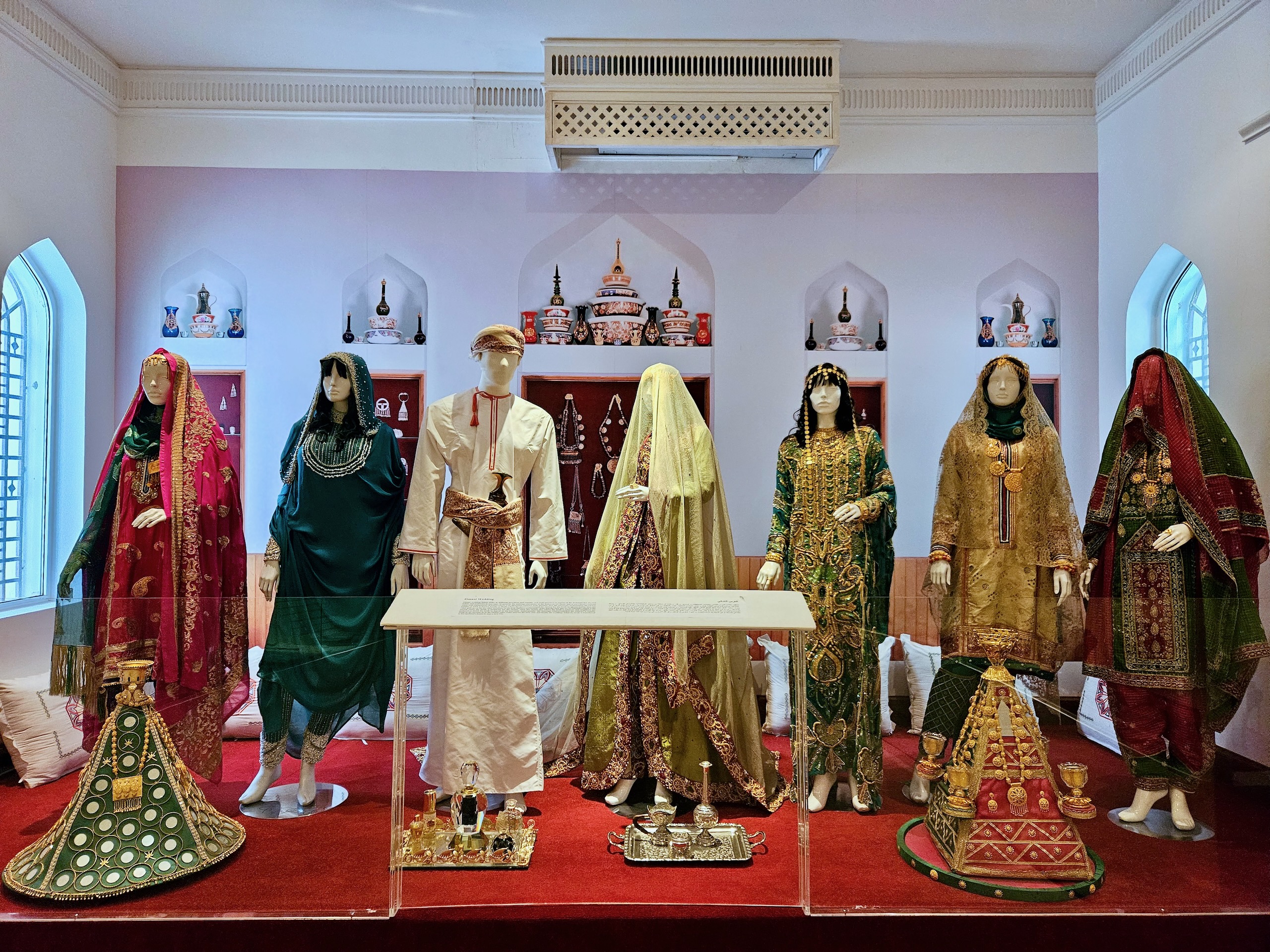
The most “classic museum” feel is in Bait Al Bagh, the main building that originally started as a family home in 1914. Today it holds the core exhibition, from the Al Bu Sa’id dynasty, through khanjars (Omani daggers), traditional clothing, weapons, jewellery, and everyday objects, all the way to a wedding scene display. Upstairs they’ve added stamps, coins, and manuscripts dating back to the 16th century.
Bait Al Oud was designed as a three-storey “memory” of the family’s former residence from the 19th and early 20th century, a house that no longer exists. It was demolished in the 1940s to make way for access to the palace. On the ground floor you’ll find a large temporary exhibition hall and the reception area. Upstairs it becomes more archival: maps of the Arabian Peninsula, traditional Muscat furniture, old prints, photographs, and a really interesting collection of vintage cameras.
Al-Mirani Fortress
Pin on Google Maps – click here.
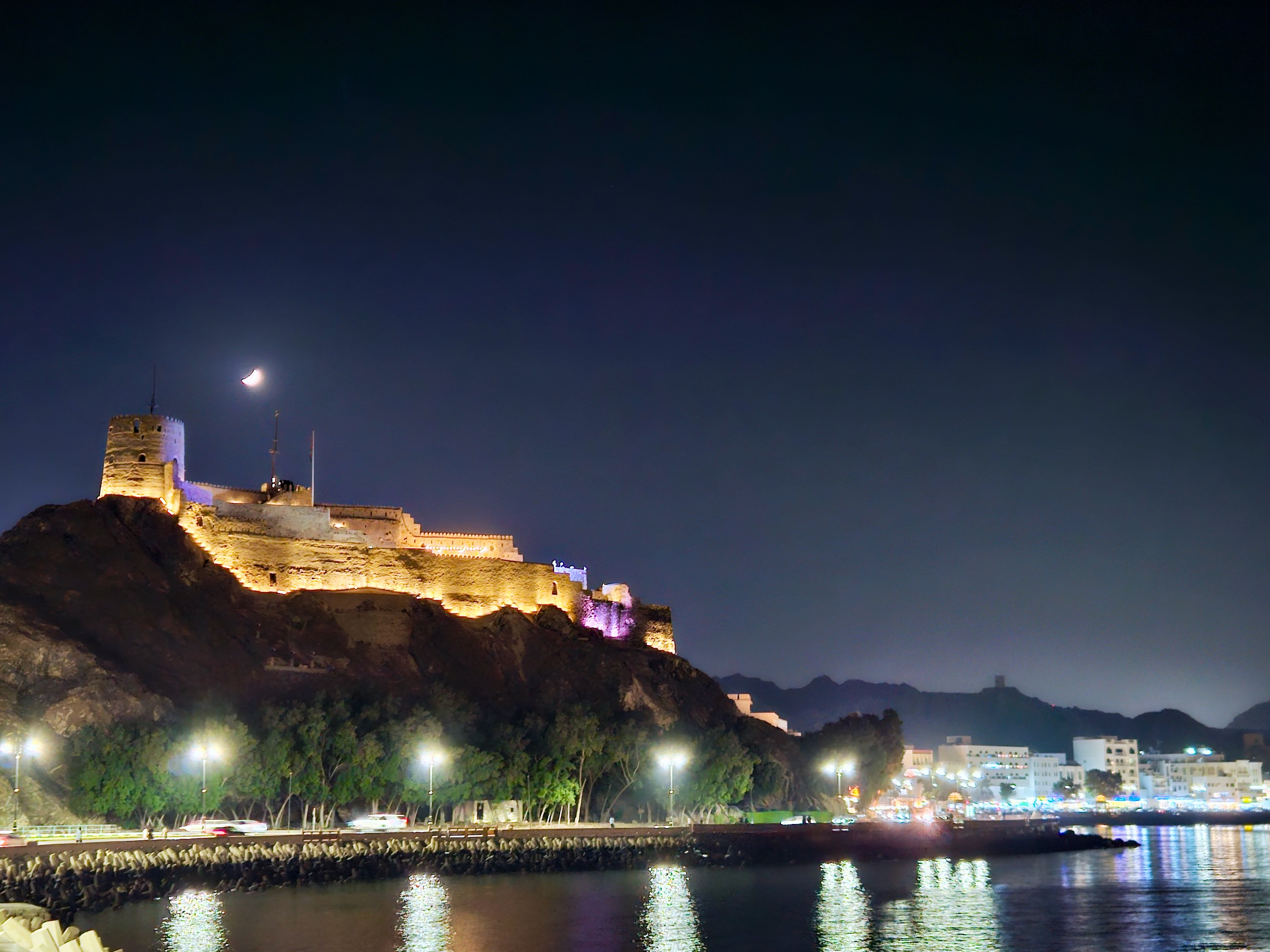
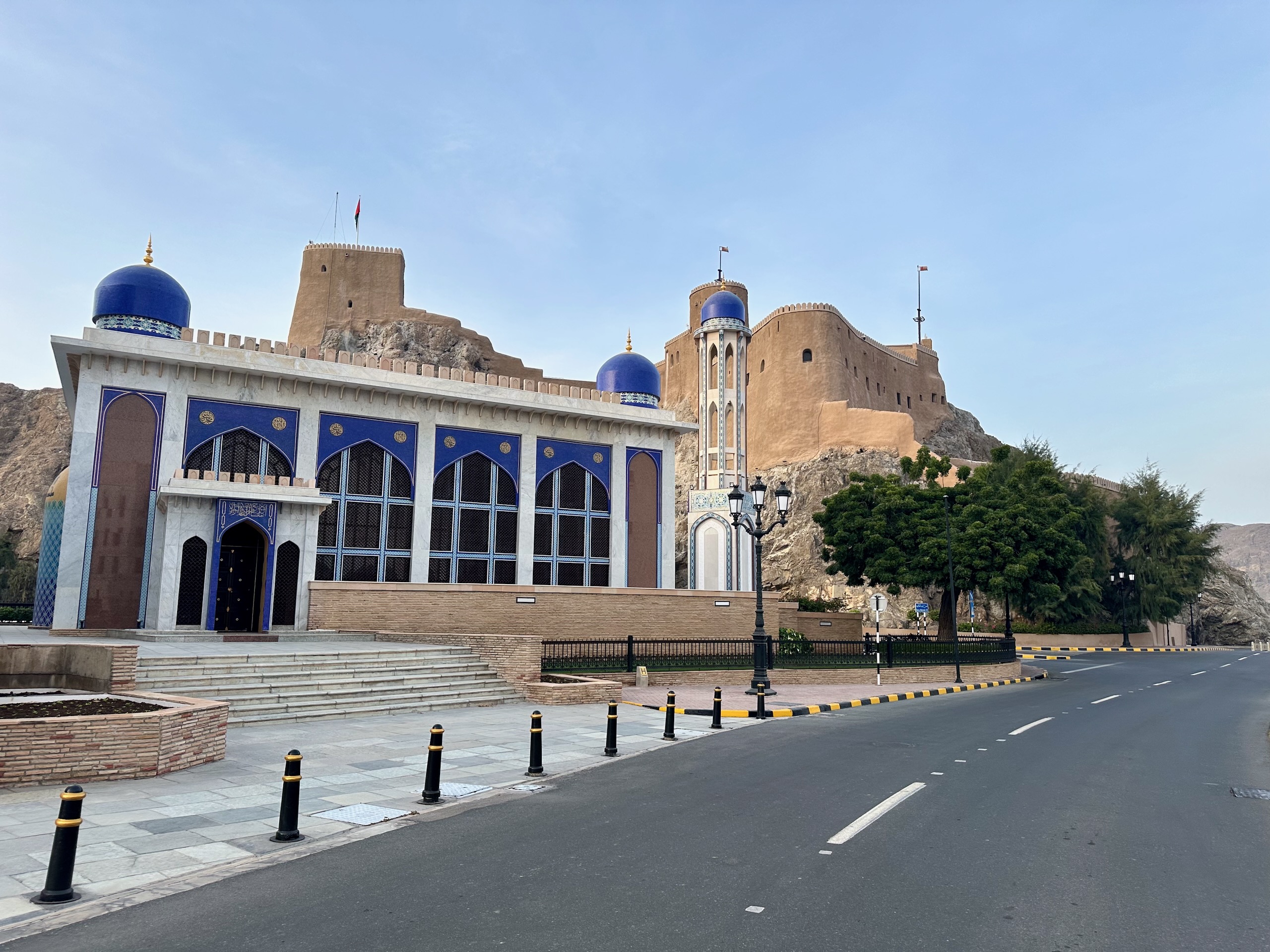
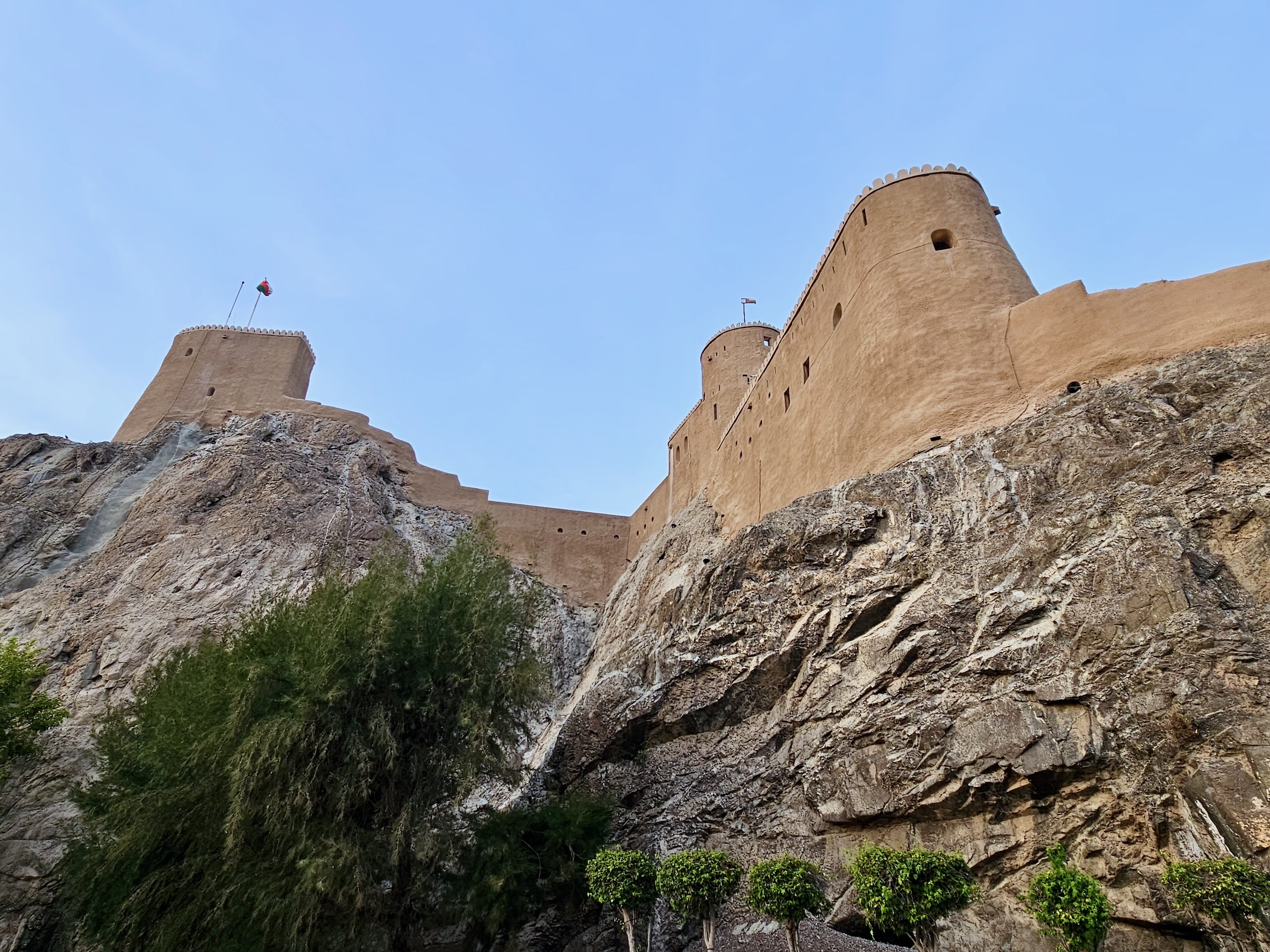
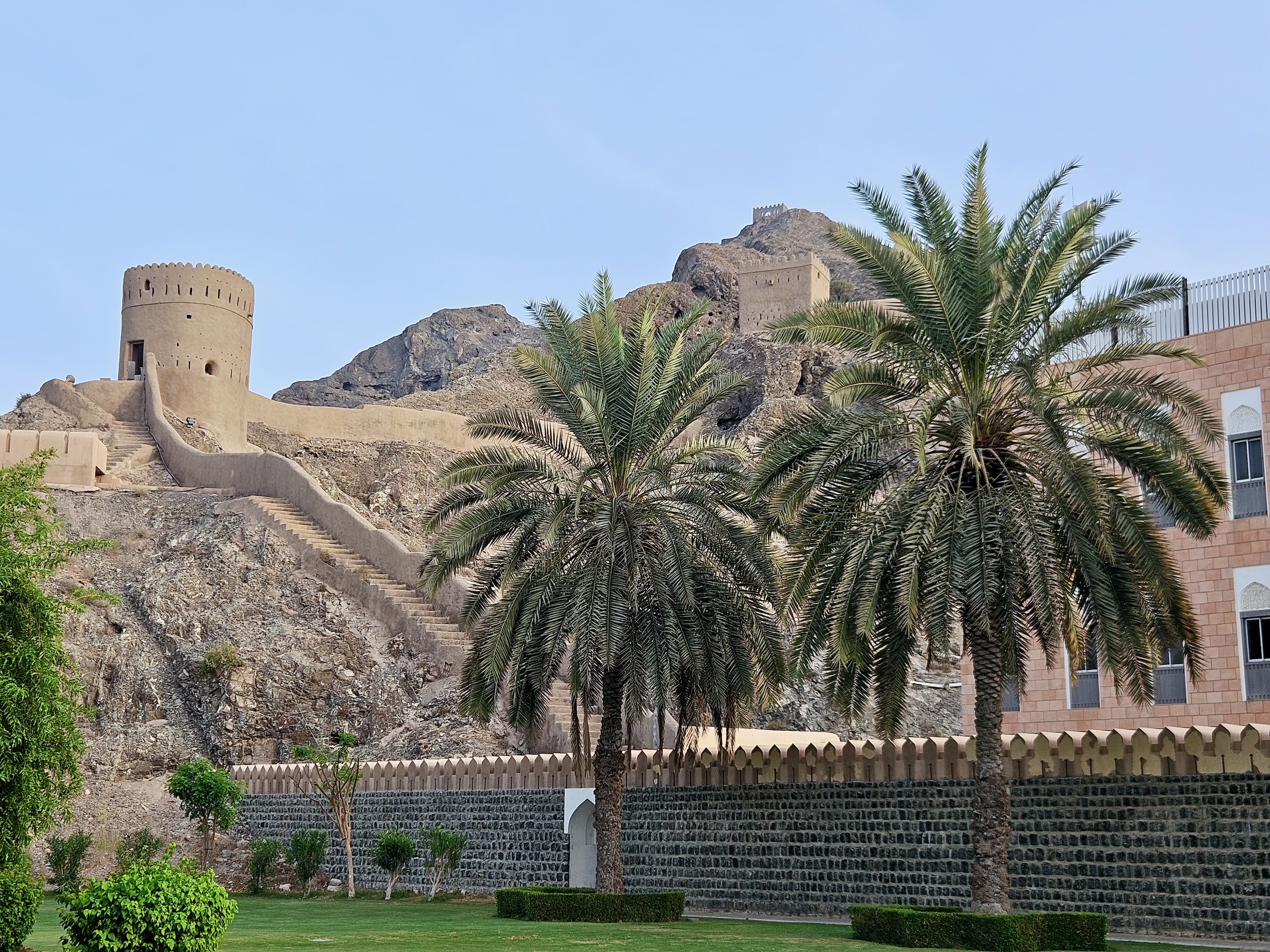
Oman is full of forts, but this one has a clear advantage: you can see it almost “by accident,” without dedicating half a day to it. Just being around Old Muscat, the Al Alam Palace area, or the National Museum is enough, because Al-Mirani sits right above the bay and guards the western side of the harbour entrance.
The fort existed even before the Portuguese arrived, but they later rebuilt and reinforced it, with many sources pointing to 1587. It’s also often mentioned as one of the first places in Oman where artillery started being used. It also comes with a “twin” fort on the other side of the bay, Al Jalali, and together they create that classic Old Muscat postcard view.
Going inside… well. We skipped it. On one hand, we’d read that a lot of people walk out with a “meh” reaction. On the other, it was closed anyway. And third, after a full day out I honestly couldn’t face another set of stairs. Just imagine Jadzia’s face when I said that 😄.
And honestly, it still makes sense even without going in, because the best part of Al-Mirani is the outside view. The rough stone mass on the rocks, the bay below, the palace nearby, and the second fort across the water all come together in one scene. It’s worth walking up for a few photos and treating it as a quick stop between the museums and the palace.
Al-Alam Palace
Pin on Google Maps – click here.
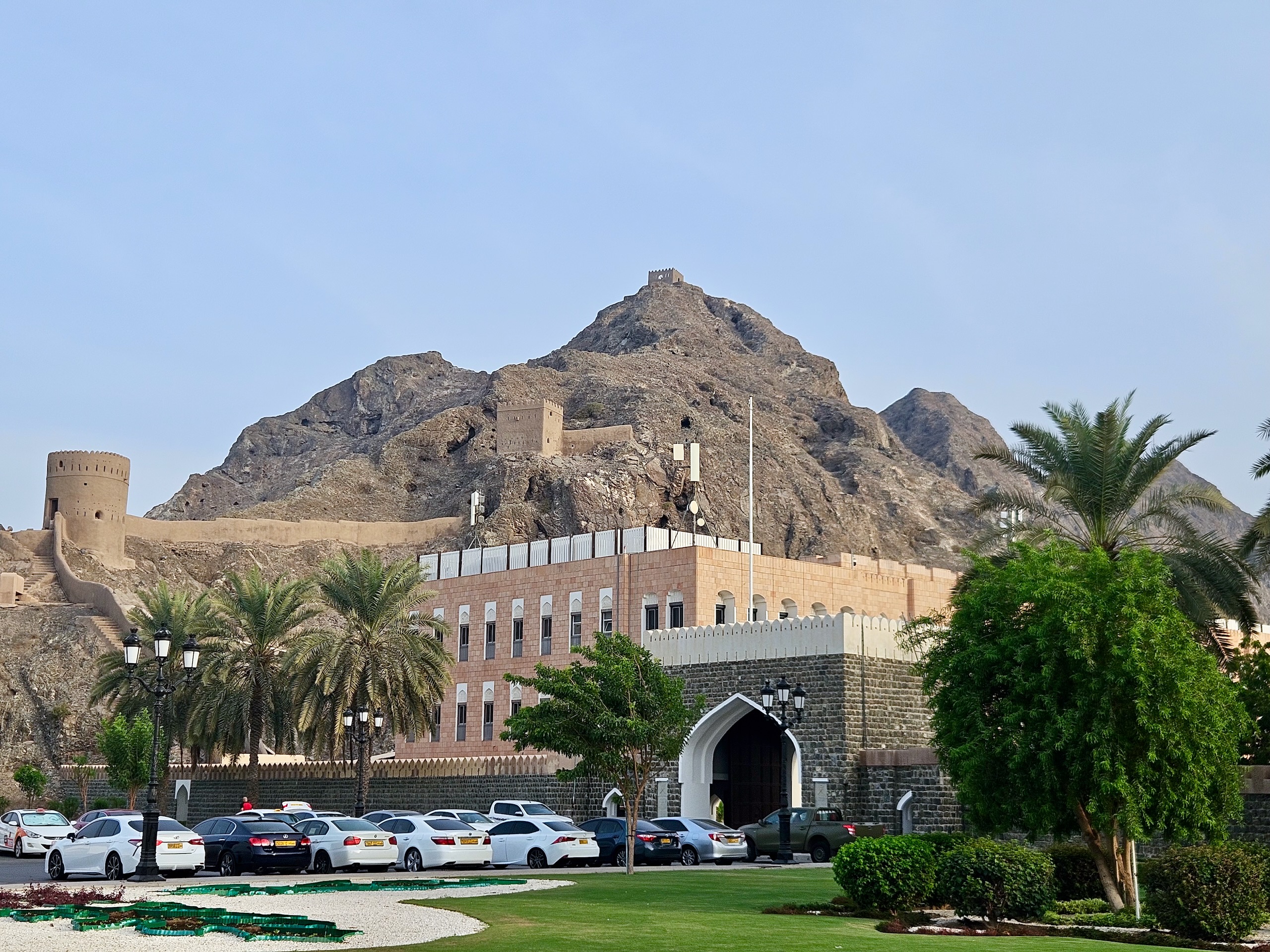
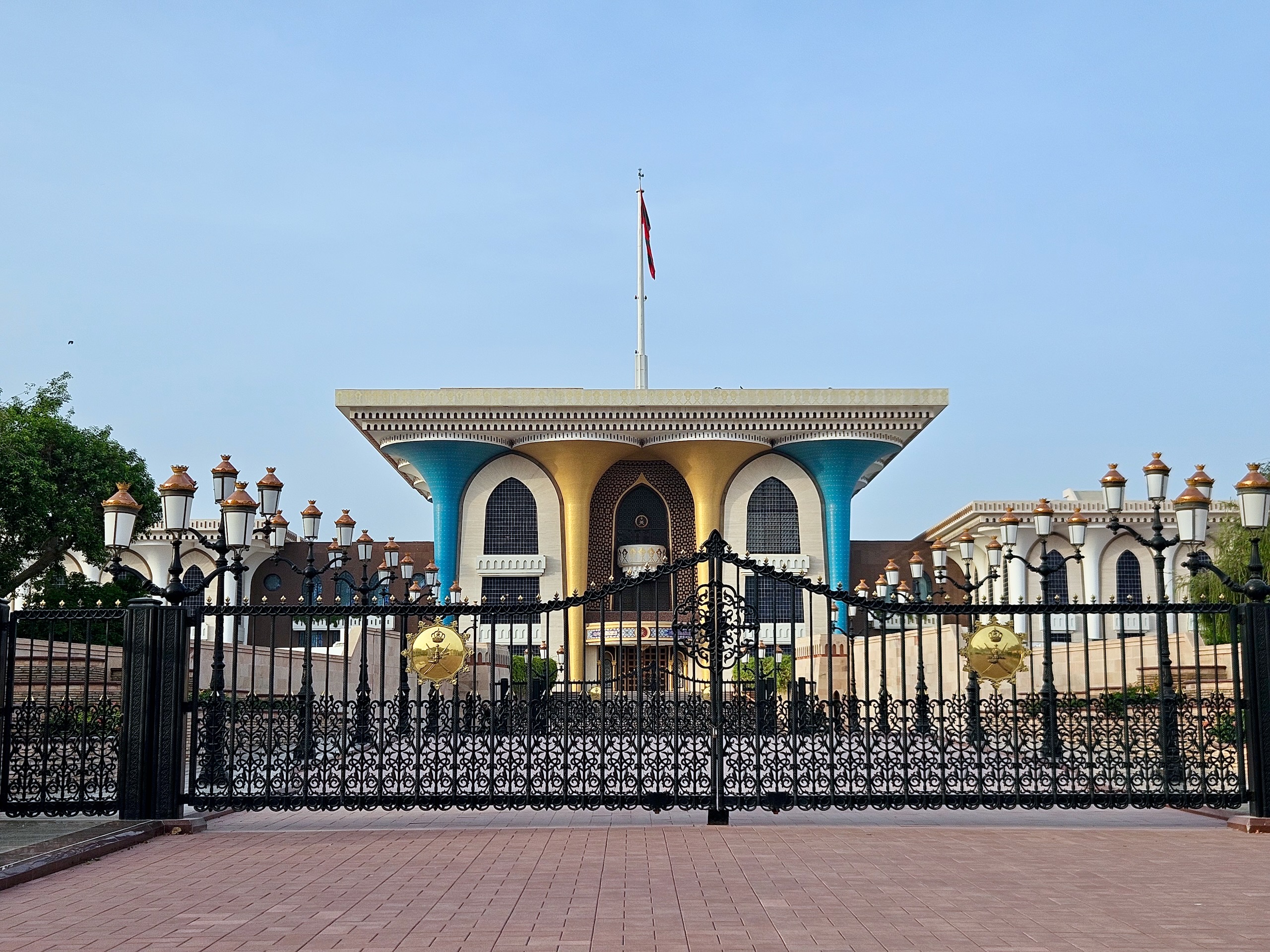
One of the best things about Oman is how normal everything feels around important places. You can walk up to the Sultan’s palace, take photos, and nobody looks at you like you’re suspicious just because you pulled out a camera. You can’t go inside, of course, but from the outside it’s distinctive enough that many people come mainly for the photos and the atmosphere in the area.
Al Alam really is the Sultan’s palace, and it’s mainly used for official, ceremonial purposes (events and receiving state guests), not as an everyday residence. The current version was commissioned by Sultan Qaboos, designed by the Indian company Shapoorji Pallonji, and completed in 1972. That’s why it has that fairly modern blue-and-gold look that stands out so much against the old forts around it.
It sits in Old Muscat, right between Al Jalali and Al Mirani forts, so even if you’re not going inside anything, the area is still worth it for a short walk and a solid “views plus history” stop.

Muscat Viewpoint
Pin on Google Maps – click here.
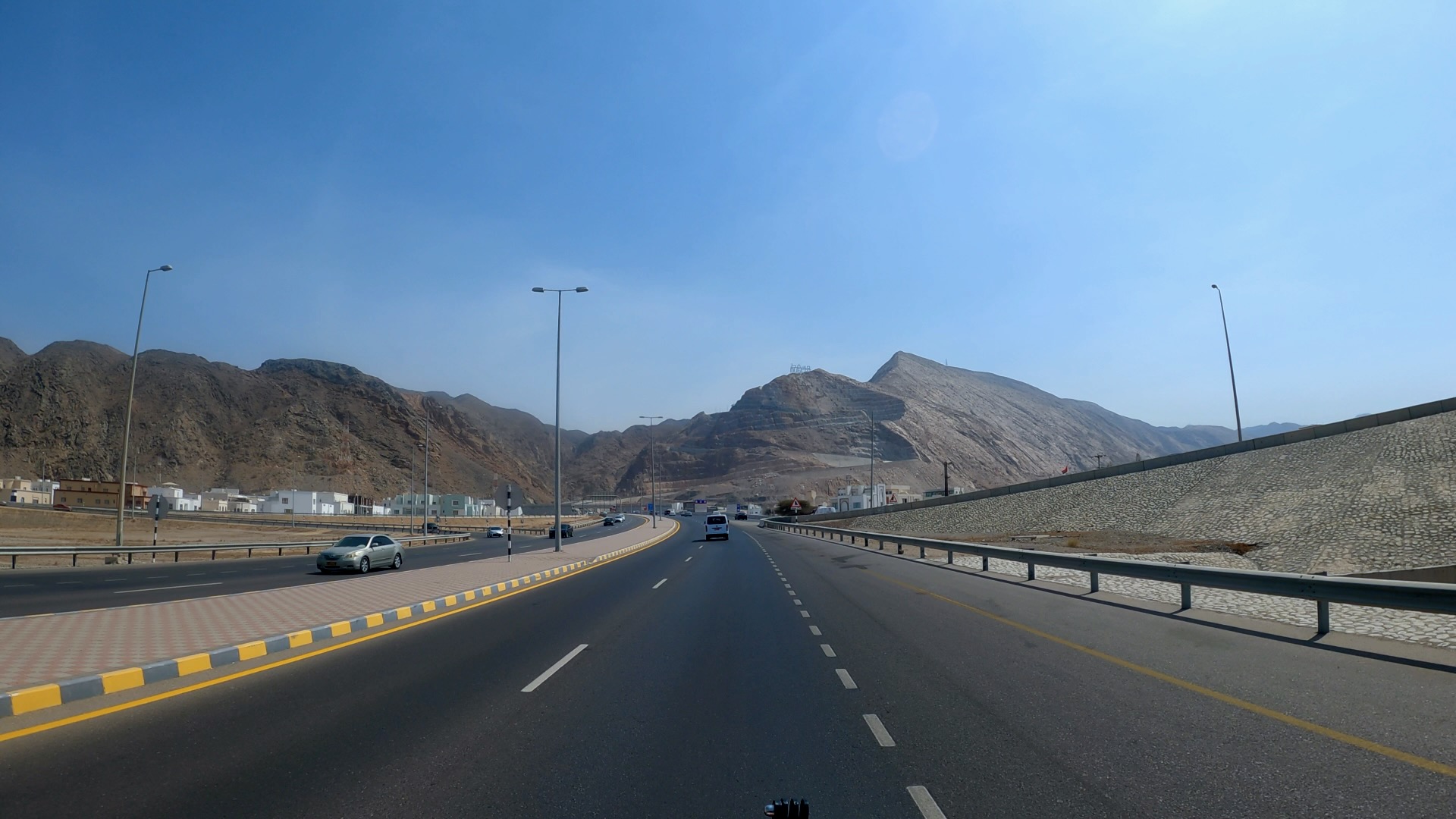
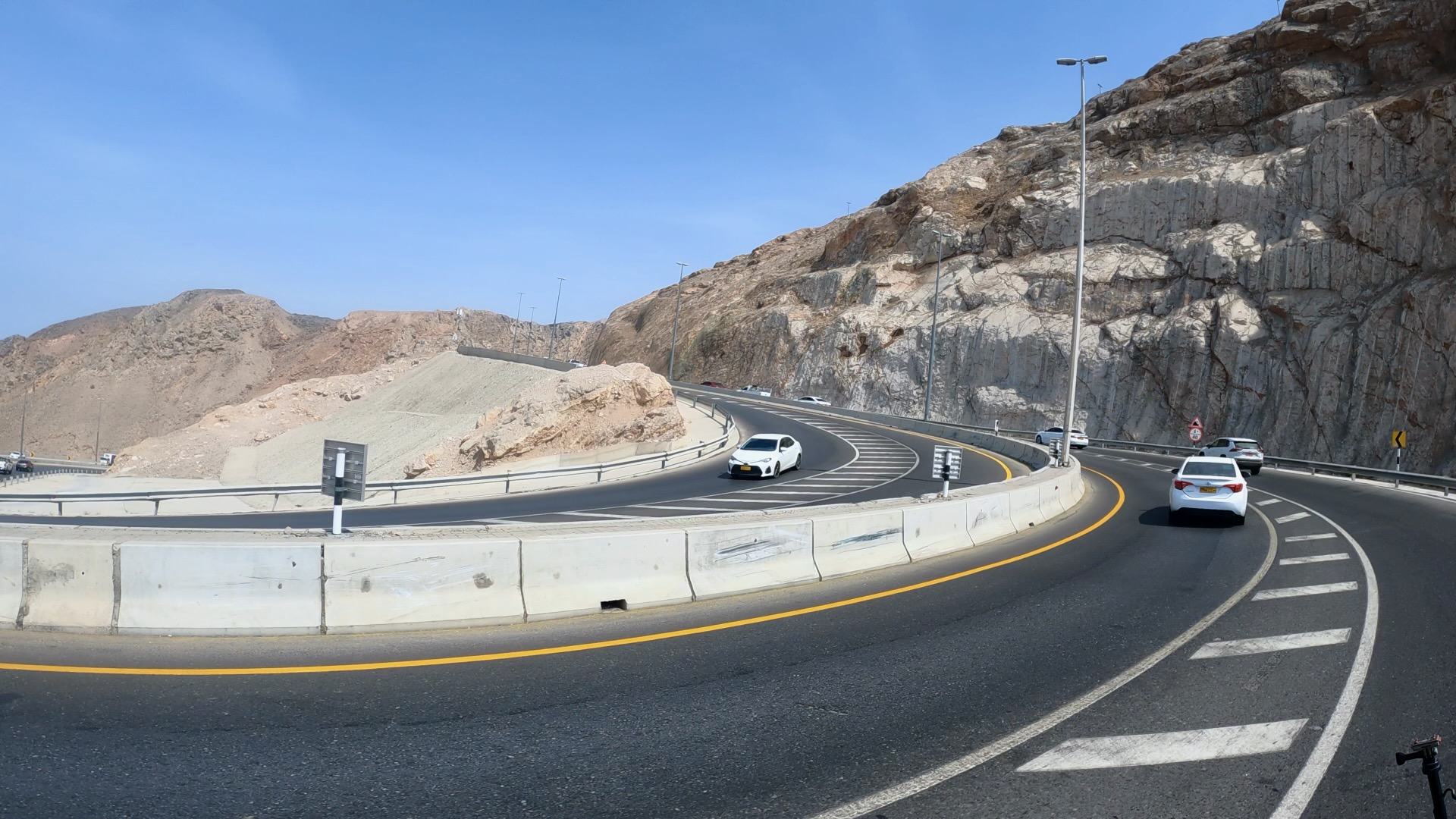
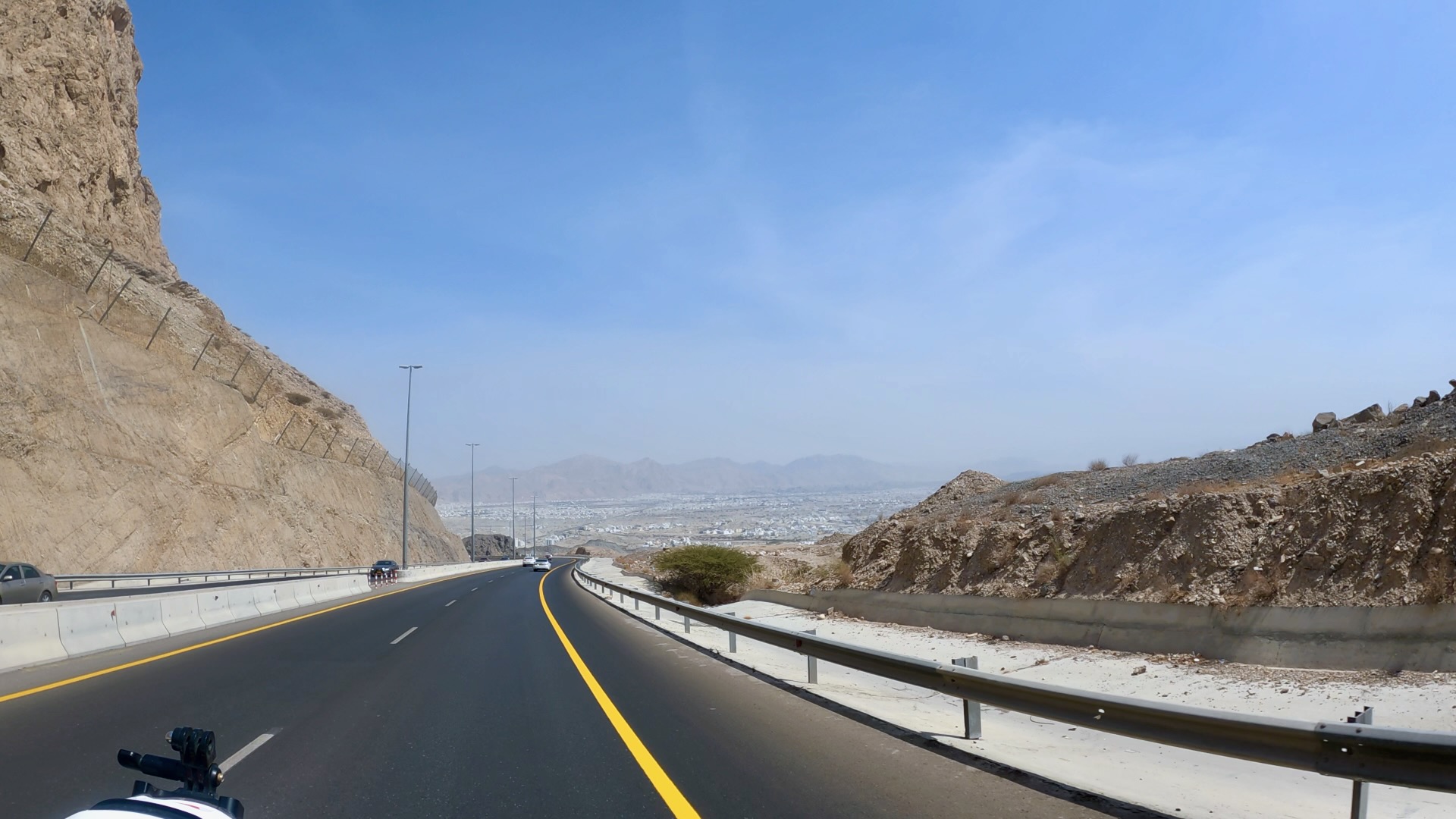
A little gem for anyone who loves a proper set of twisties 😅. You get a handful of great bends one after another, decent tarmac, and as a bonus a view over Muscat from above. Even doing a quick loop up and back down can be more fun than half the “must-see” pins on a typical list.
There’s just one thing to know before you go: there’s basically nowhere to stop legally. It’s a normal road with no pavement and no proper pull-offs, so we didn’t force it. The best option is to film the ride on a GoPro or have your passenger grab a few shots while you’re moving. And honestly, for this spot the rolling footage looks the best anyway.
Bimmah Sinkhole
Pin on Google Maps – click here.
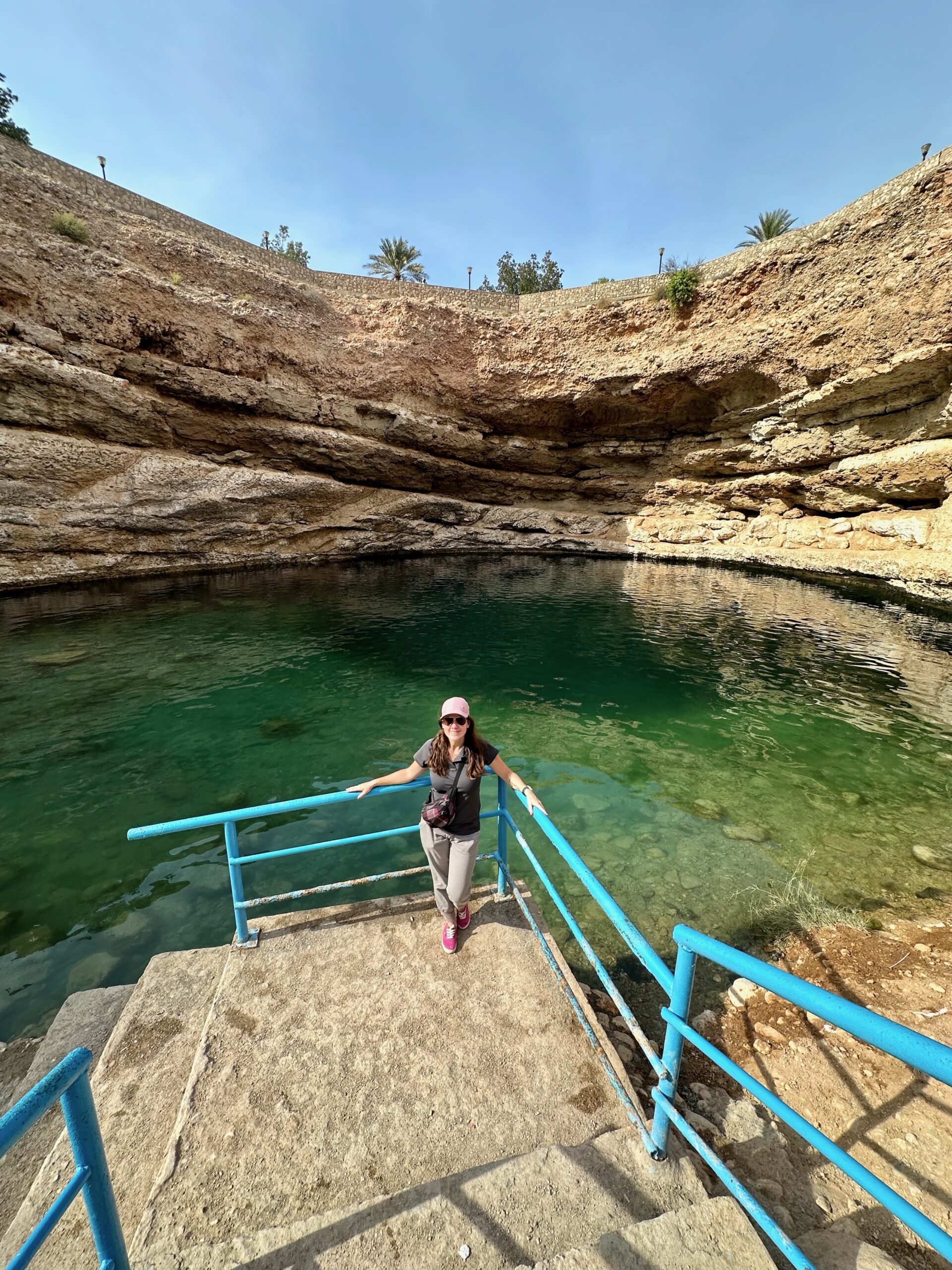
Getting out of Muscat for half a day really makes sense, because once you’re just a bit outside the city, the scenery starts to feel completely different. Bimmah Sinkhole (you’ll also see it called Hawiyat Najm Park) sits on the route towards Sur, about 125 km from Muscat, so roughly a 1.5–2 hour drive depending on where you start and what traffic looks like.
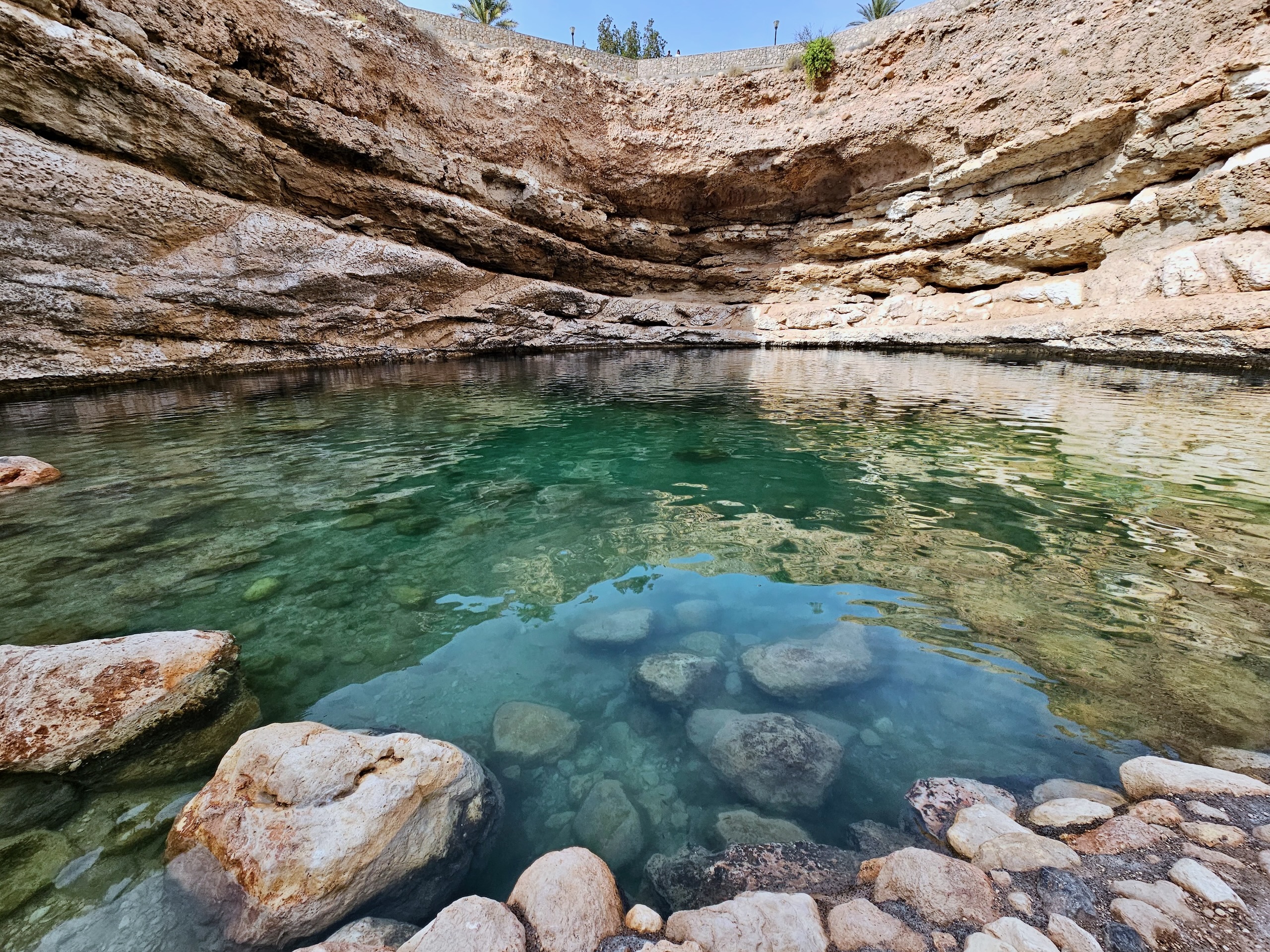
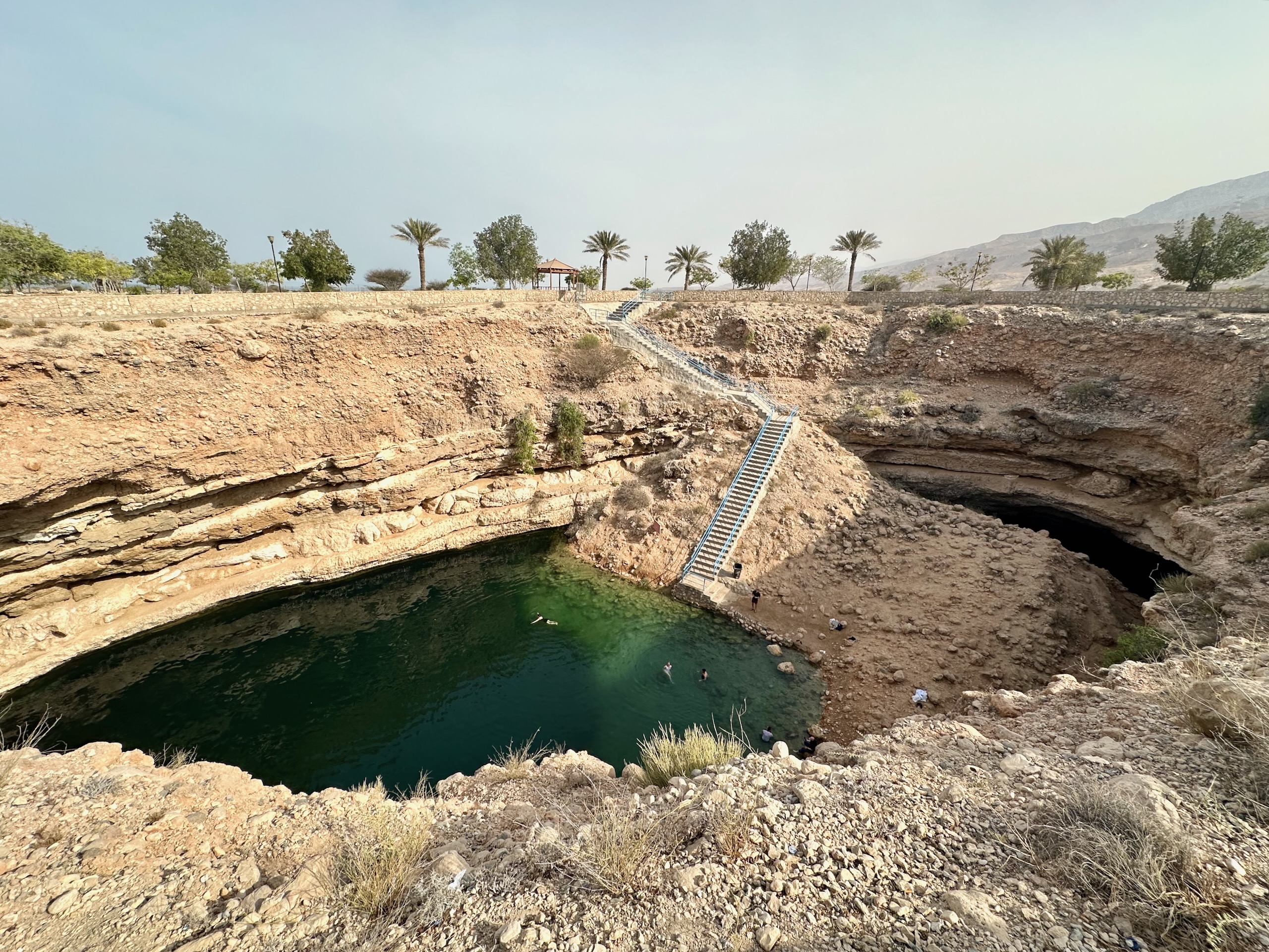
This place isn’t popular because someone built a fancy tourist attraction around it. It’s popular because nature does the wow-factor for free. One moment you’re standing over a huge rocky crater, and down below the water is glowing turquoise like it’s been lit from underneath. The walk down is easy, the area is set up as a park, and you can jump in for a swim, so lots of people treat it as a quick, satisfying stop on the way from Muscat towards Sur, Wadi Shab, or Wadi Tiwi.
So where did the “hole” come from? The geology is less cinematic than the local stories, but it’s still pretty interesting. The sinkhole formed through a karst process: water slowly dissolved the limestone underground over time, until the roof collapsed and created what you see today. Local legend says it was a meteorite, which is where the Arabic name Hawiyat Najm comes from, often translated as “the well of the falling star”.
Admission is free of charge. Opening hours are approximately 8:00 AM to 8:00 PM
If you don’t feel like dealing with a rental car and the logistics, you can also join a day trip from Muscat, often bundled with Wadi Shab.
Wadi Shab
Pin on Google Maps – click here.
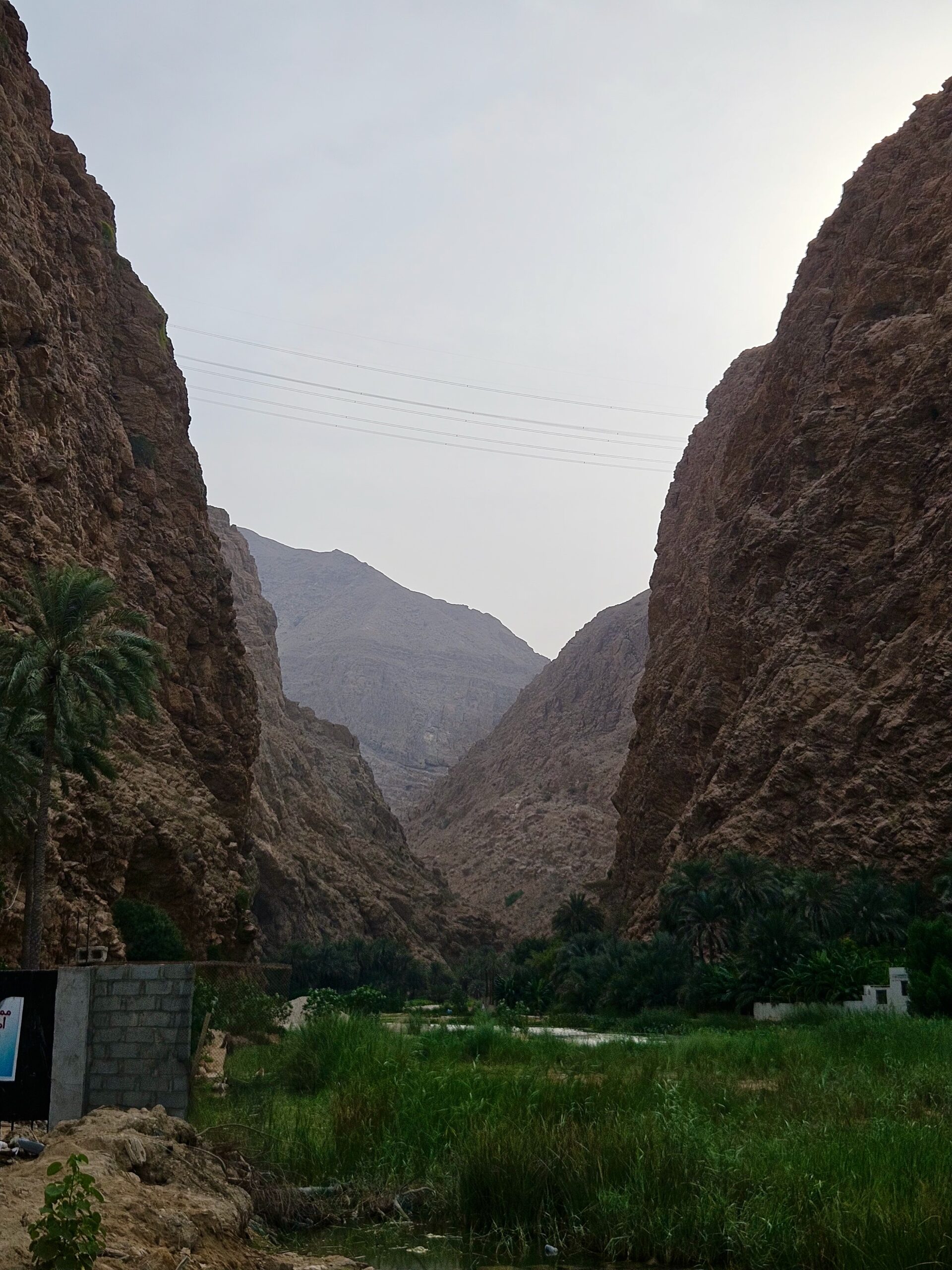
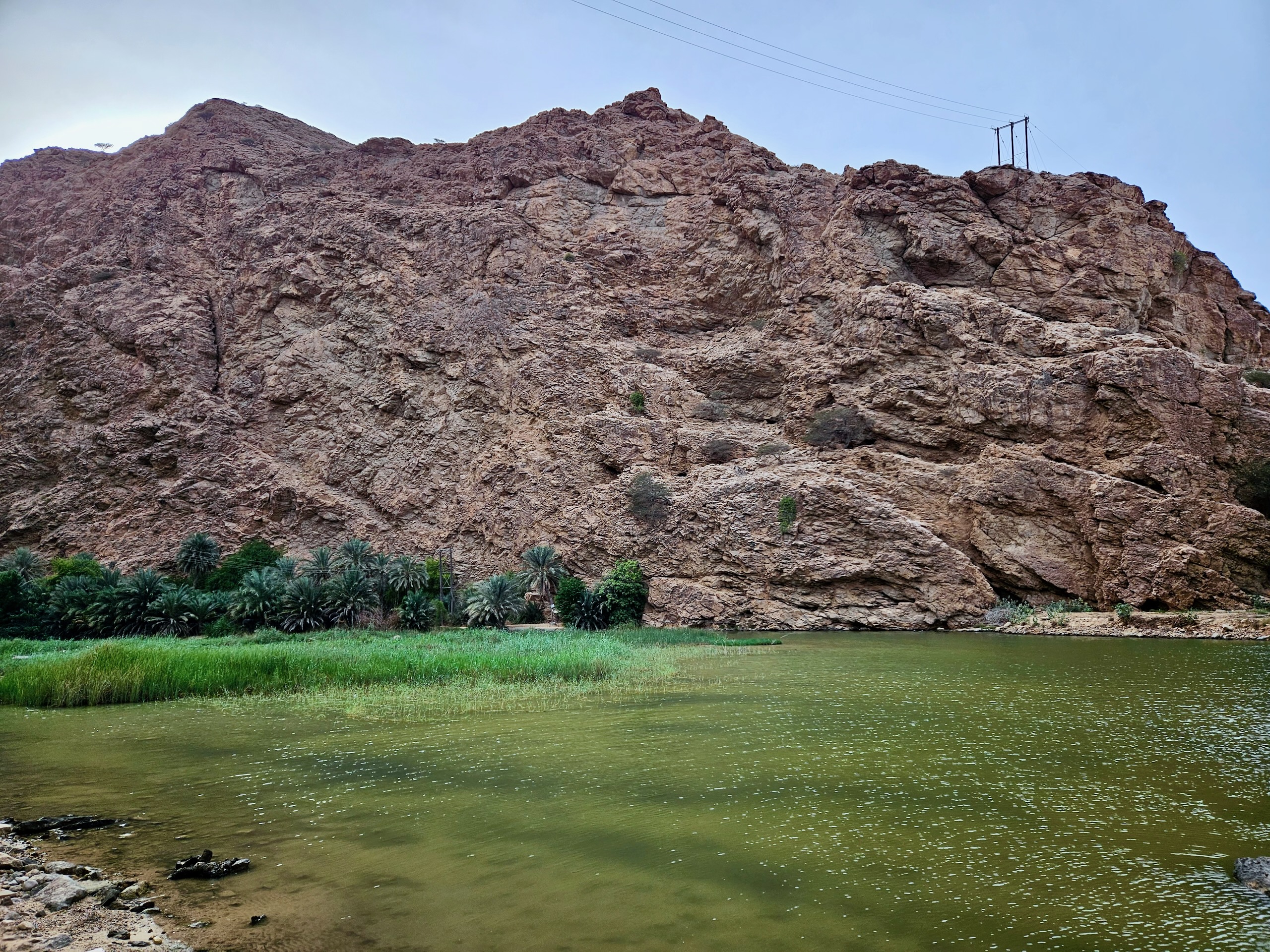
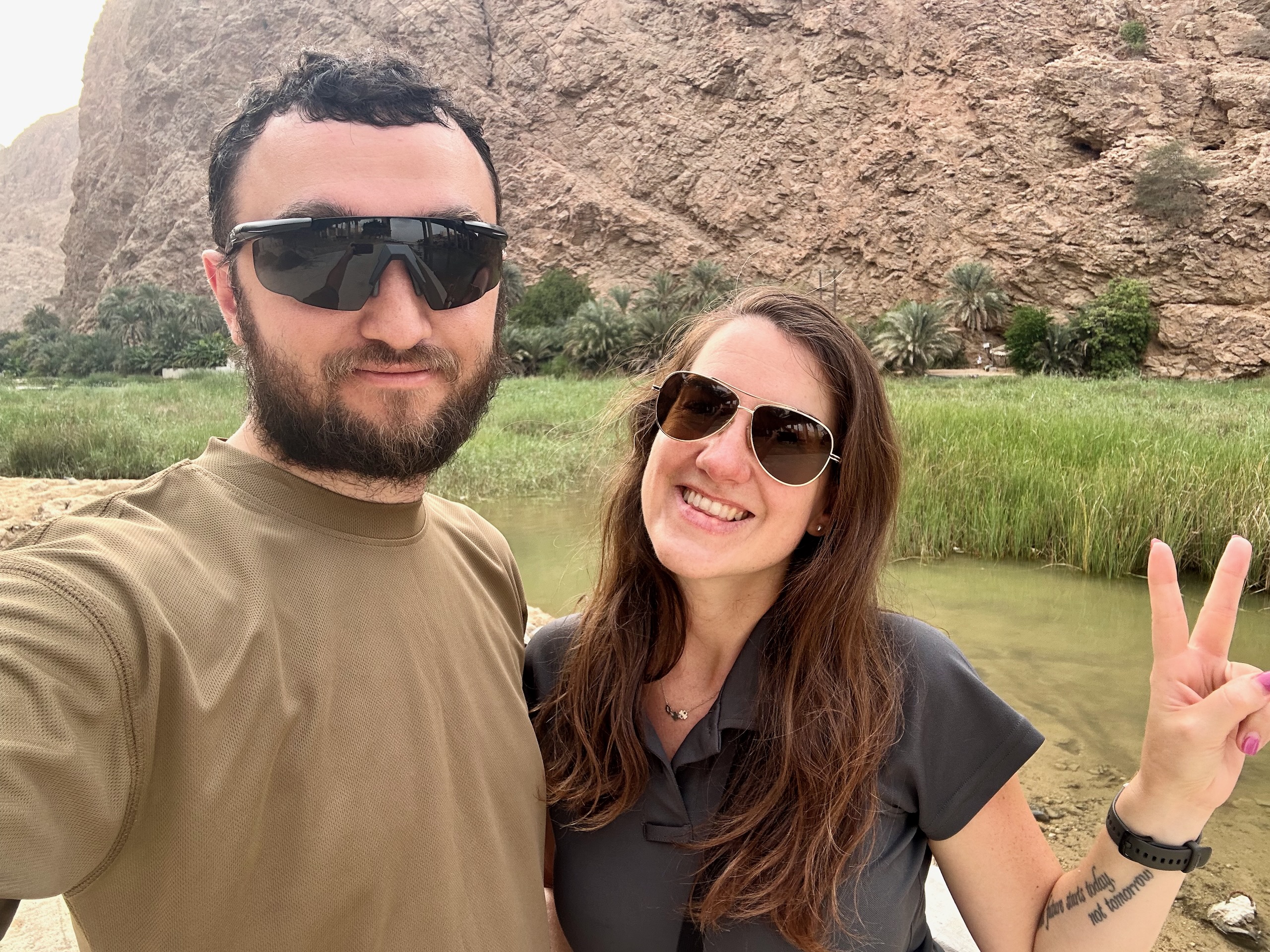
It looks like a ready-made set for an “Oman in a nutshell” ad: rocks, a canyon, greenish water, and that final spot most people come for. Wadi Shab isn’t a “town” at all. The word wadi refers to a valley or riverbed that’s dry most of the time, with water showing up mainly after rainfall. Oman has plenty of wadis, but this one comes in a great, easy day-trip format.
If you’re already stopping by Bimmah Sinkhole, Wadi Shab is only about 15 minutes further down the road. At the start there’s a short boat crossing, literally a minute and you’re on the other side. The ride is usually 1 OMR per person, and it’s cash only.