
Ten wpis jest również dostępny w języku:
 Polski
Hello! 👋
We finally rolled into Muscat on our own wheels and honestly—what a relief. We hit a few bumps at the UAE–Oman border, so that “okay, we made it” moment felt twice as good. If you want the day-by-day story with all the emotions and border drama, we’ve written it up in our trip diary – check it out here 😊. You’ll also find links to the other stages of our journey there.
Interestingly, Oman had already popped up on our map earlier, because we crossed into it during a ride through Wadi Madha, an Omani enclave sitting inside the UAE. That little detour has its own post, so if you’re curious about enclaves and the whole border mind-bender in this region, click here.
Muscat had been on our radar for ages, but the usual “let’s just go” plan never quite happened. Flights from the UAE tend to be pricey, and the bus from Dubai takes around nine hours, so it feels more like a challenge than a chilled weekend trip. When we were mapping out the Desert Horizons route, it simply made the most sense to end the ride right here.
In this post, we’re sharing our take on Muscat and Oman from the perspective of two people who arrived by motorcycle and wanted to slow down, not race through a checklist. If you’re wondering what it feels like on the ground, what surprised us, and whether it’s the kind of place you’d want to come back to, keep reading.
Where is Muscat located?
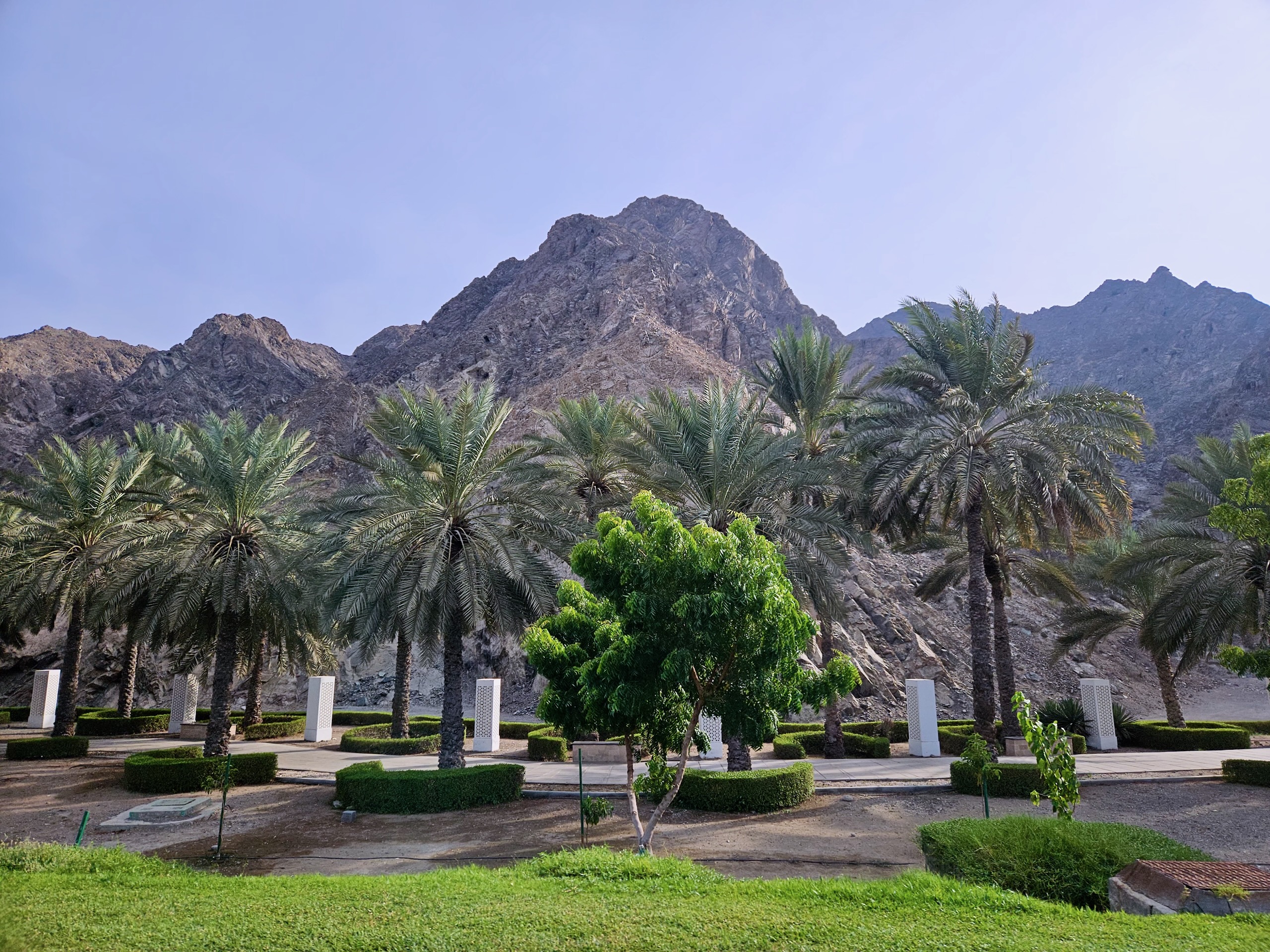
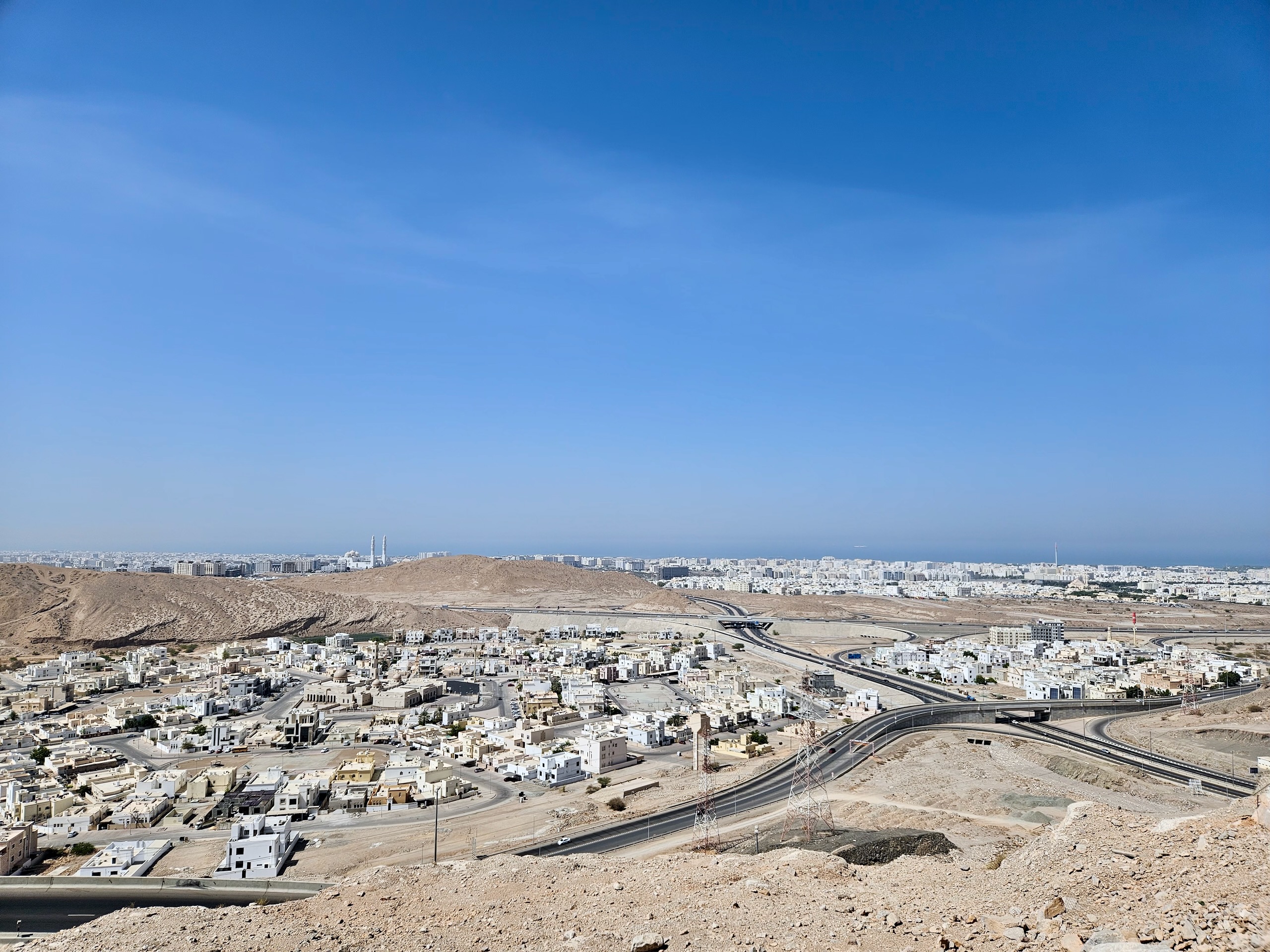
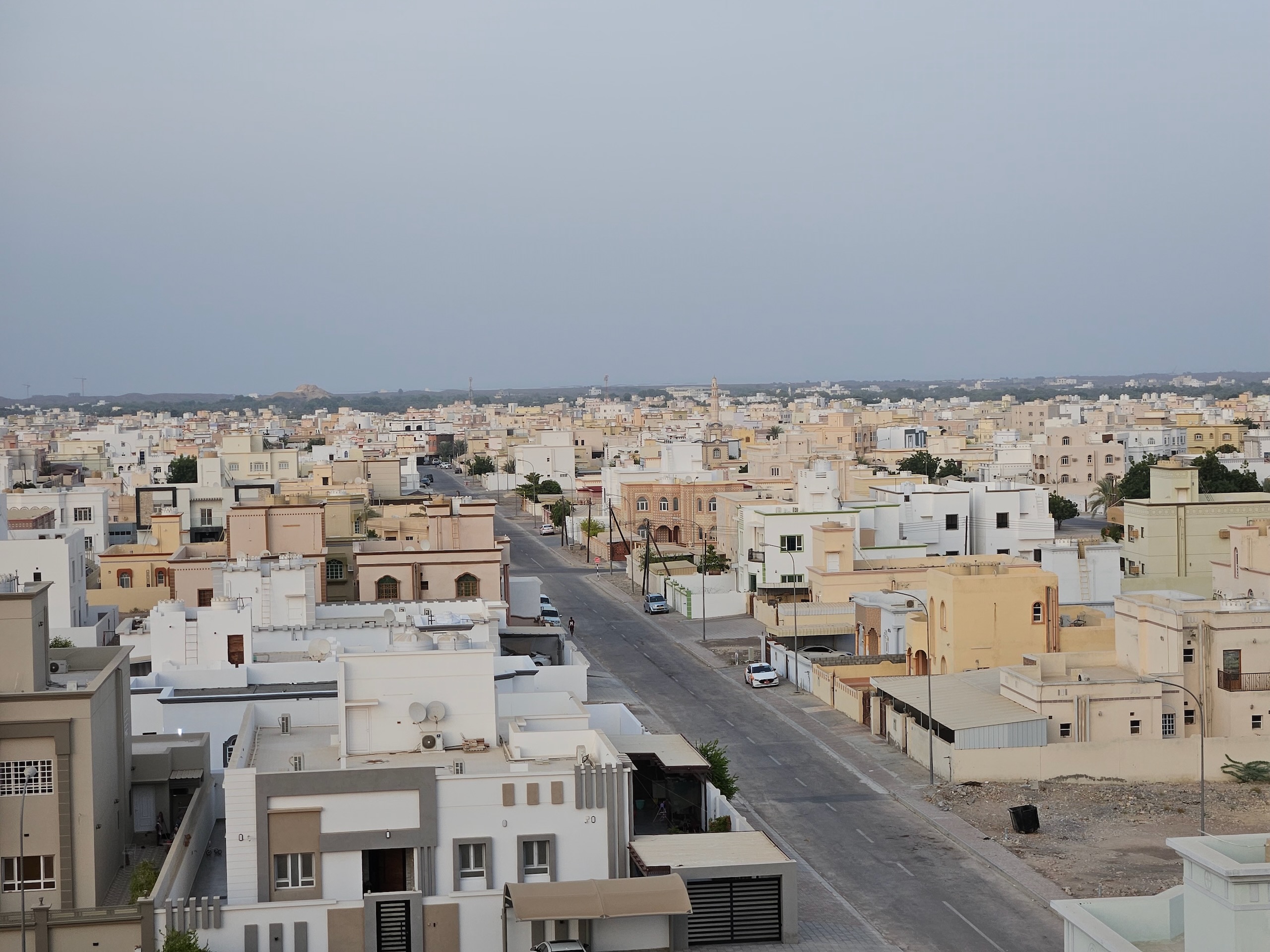
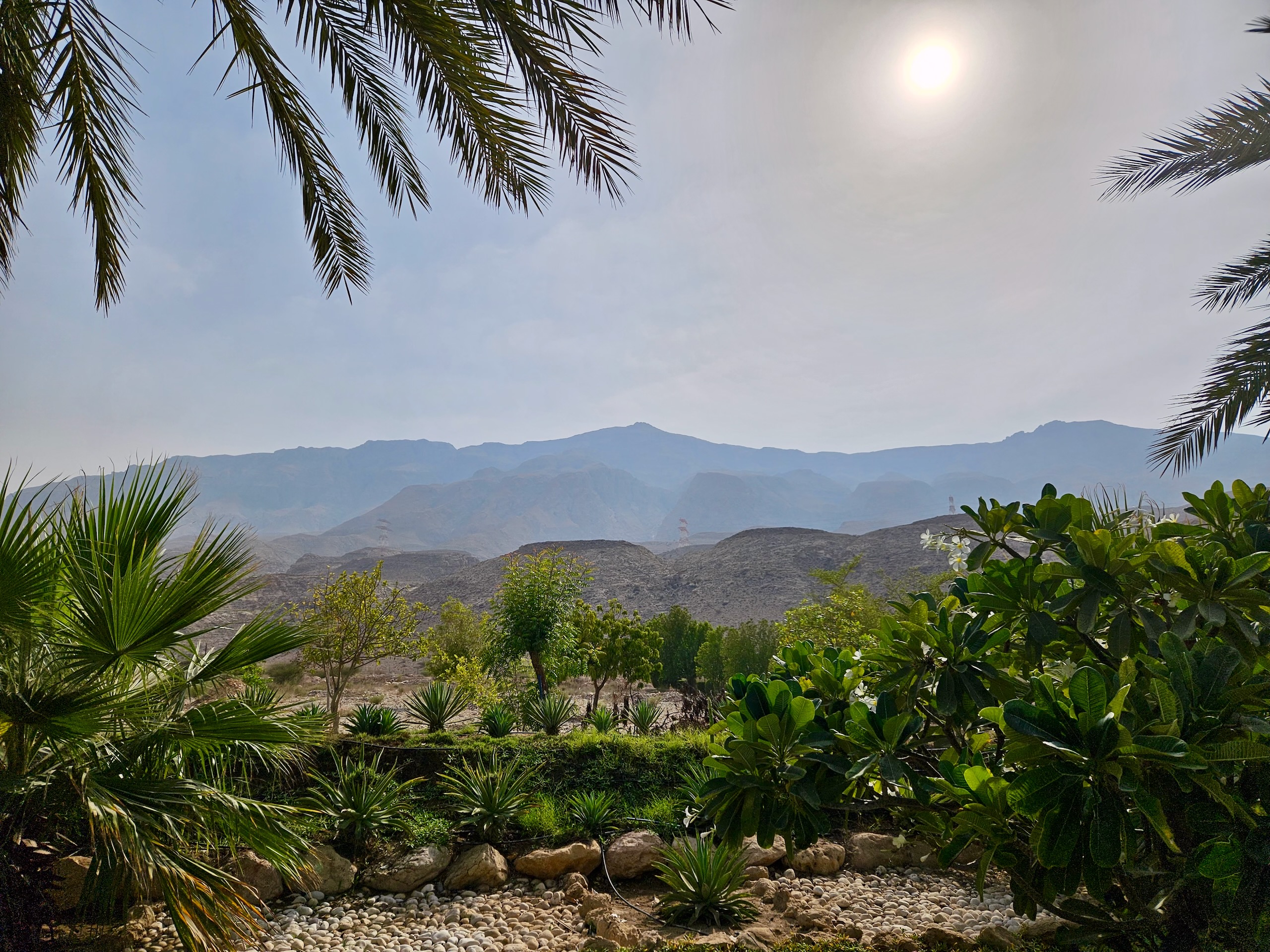
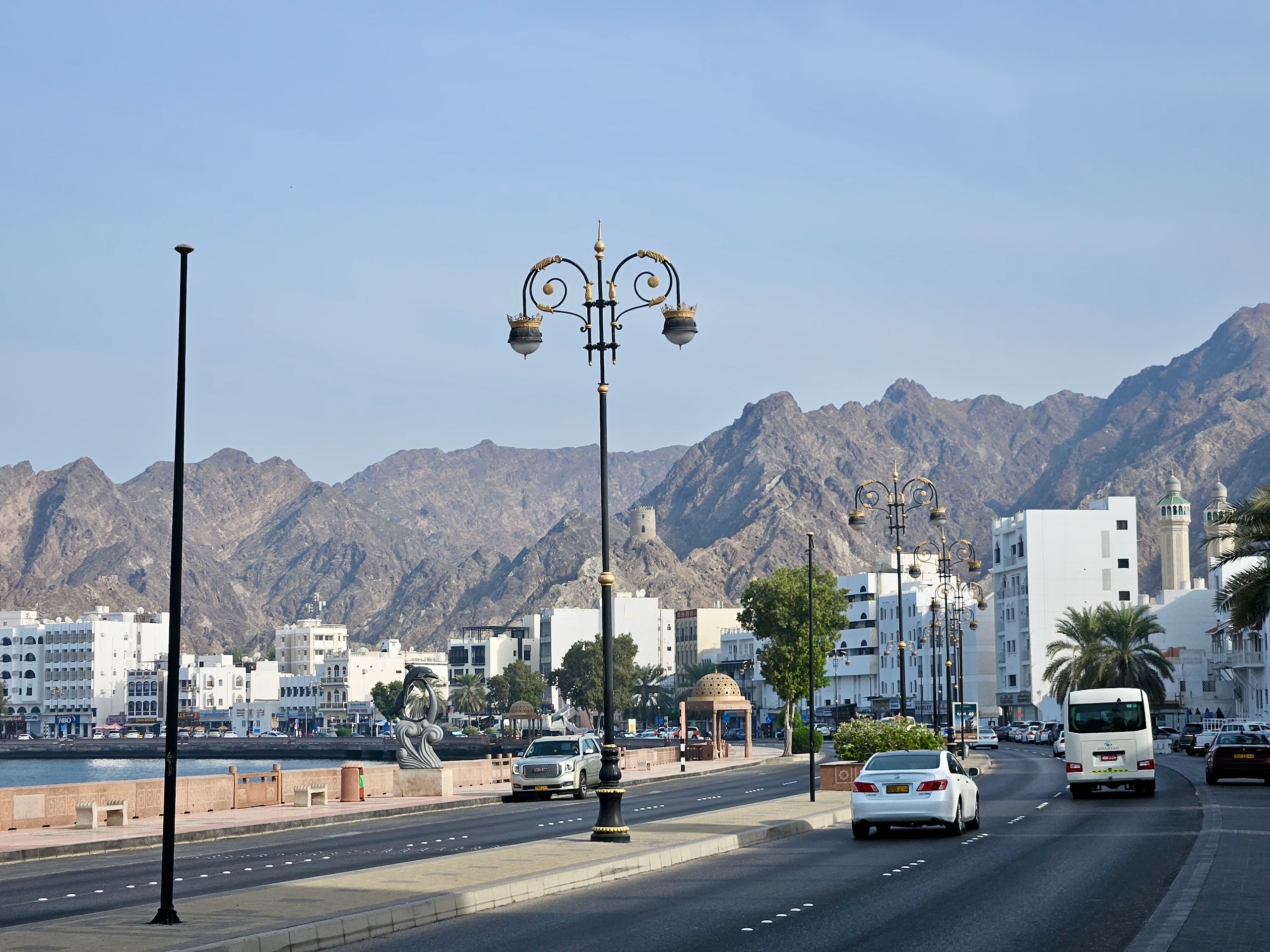
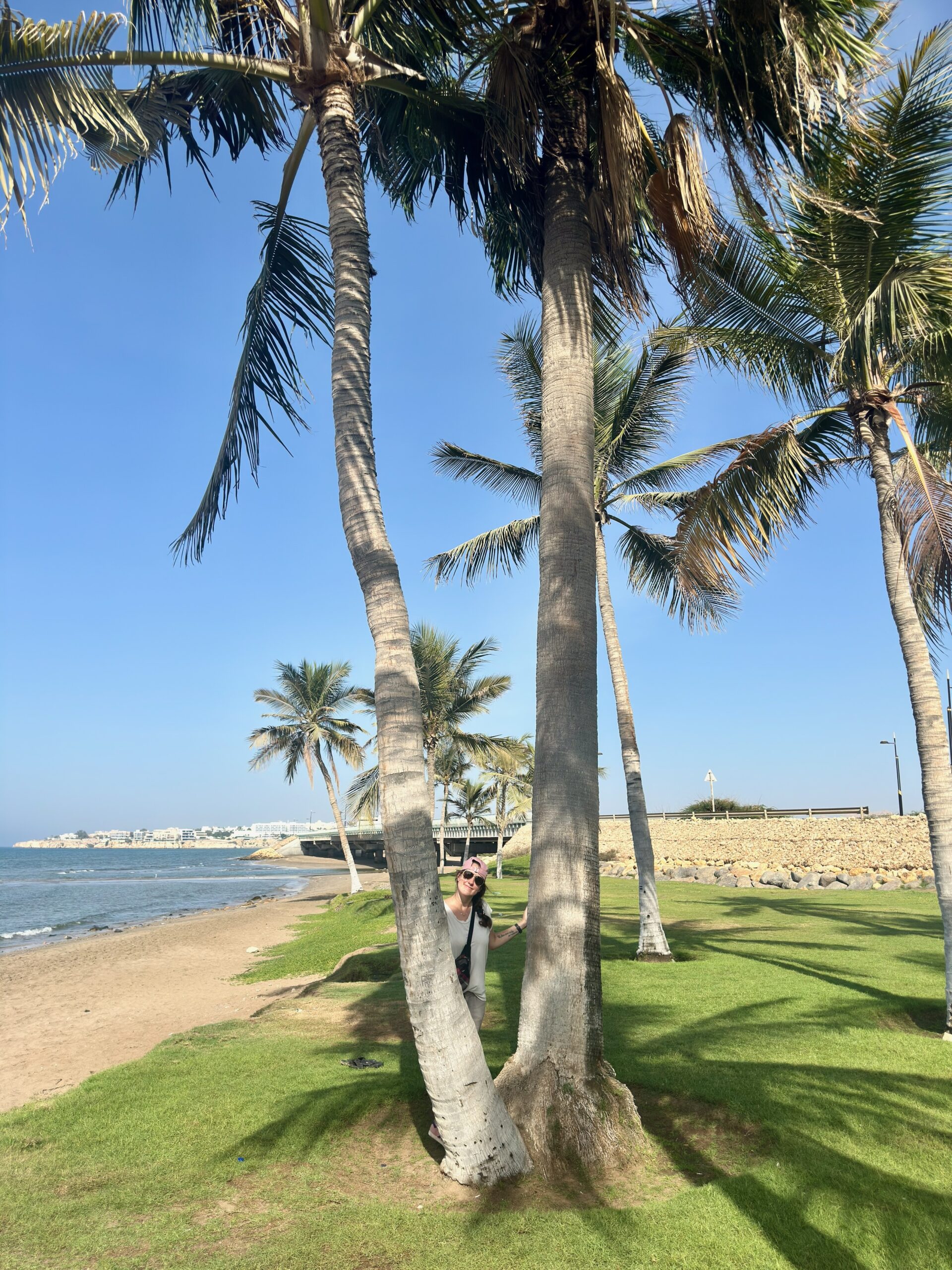
Muscat sits on Oman’s north-eastern coast, right on the Gulf of Oman. From the first minutes in town you can feel how much geography shapes the place: the sea is basically within reach, and the Al Hajar mountains rise almost straight behind it. That’s why Muscat doesn’t feel like one compact city with a single centre, but more like a long chain of neighbourhoods stretched along the coastline.
In practice, you explore Muscat in chunks. One moment you’re by the harbour and the souq, later you’re around beaches and parks, and then you’re in the more “official” parts of town. Getting from one area to another is just part of the day, because there isn’t one single spot where everything sits side by side.
One thing worth clearing up, because it trips people up all the time: Oman is a sultanate. That simply means the head of state is a sultan, just like a kingdom has a king. The current sultan, Haitham bin Tarik, took power on 11 January 2020. A quick comparison helps here too: Dubai isn’t a country, it’s one of the emirates within the United Arab Emirates. Oman is a separate country with its own vibe and a slightly different idea of what a capital city should look like.
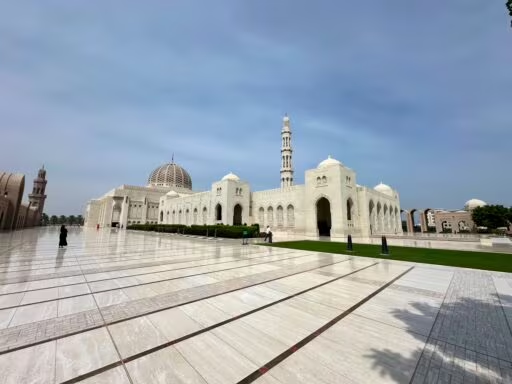
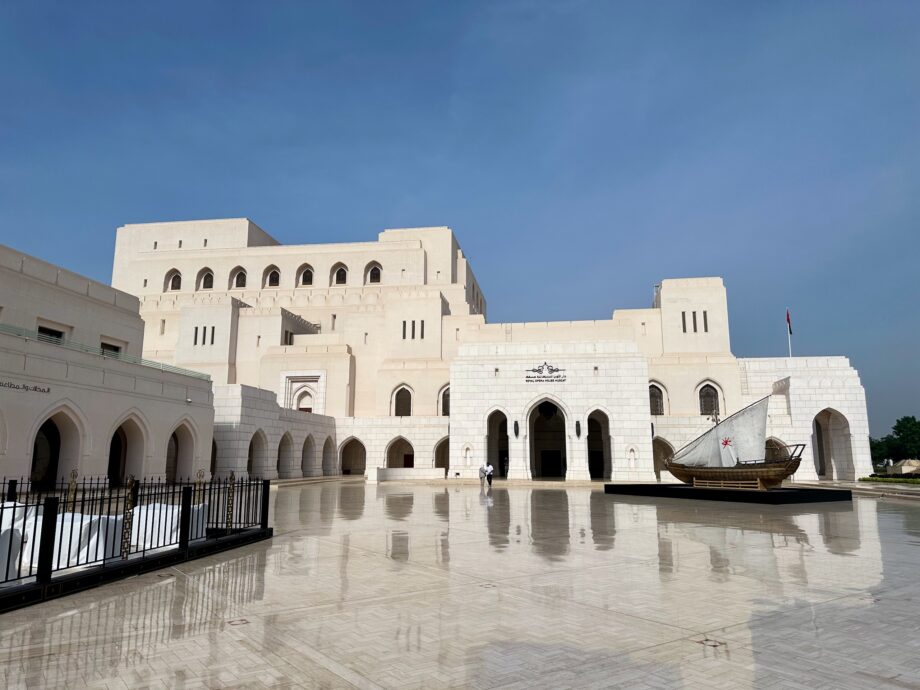
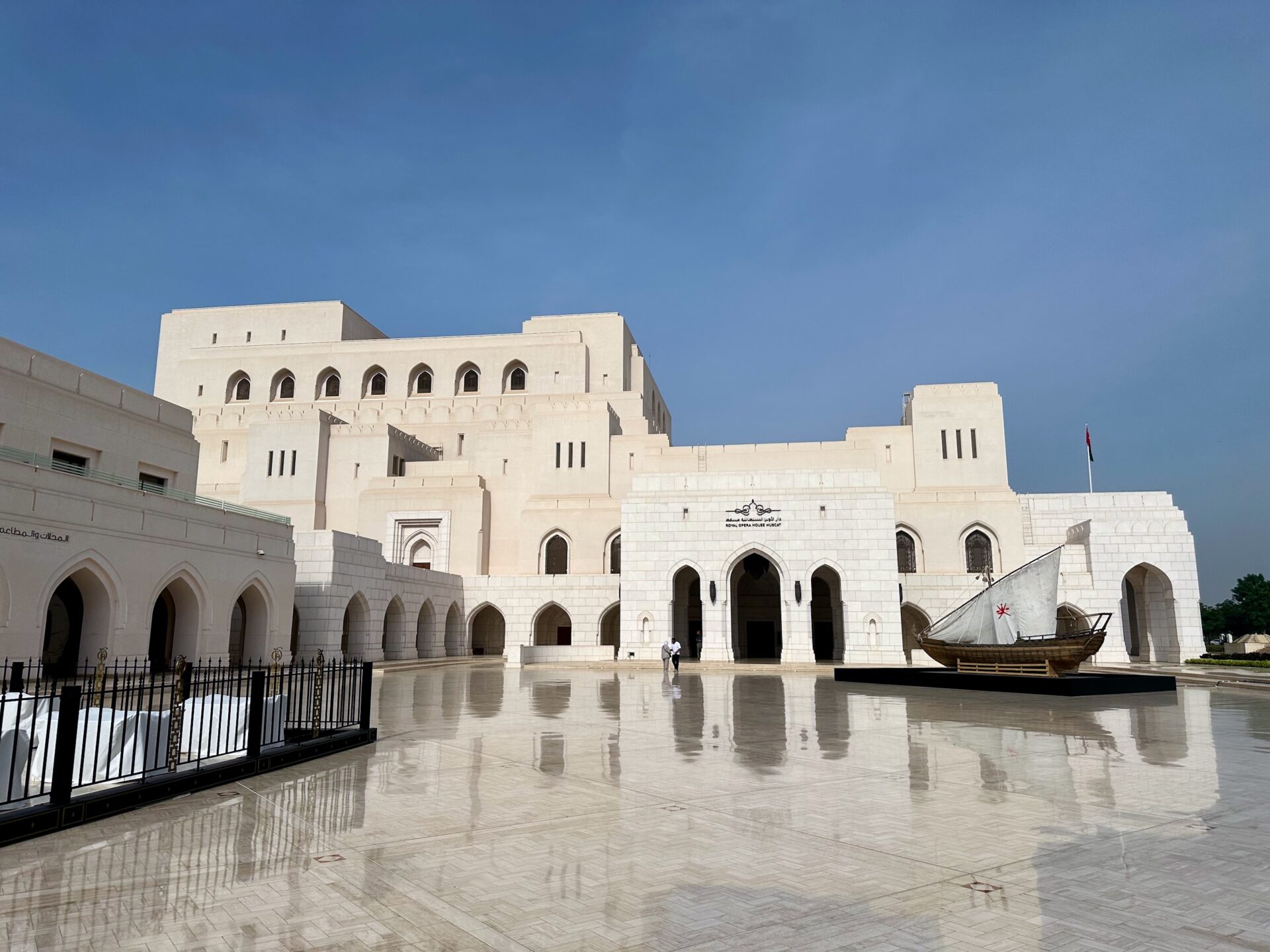
The difference is obvious right away. Muscat doesn’t have that wall of skyscrapers or the race to build the tallest one. Architectural Digest notes that the city keeps a low-rise profile, with no building taller than 14 storeys. Thanks to that, the mountains and the sea still steal the show instead of fading into the background.
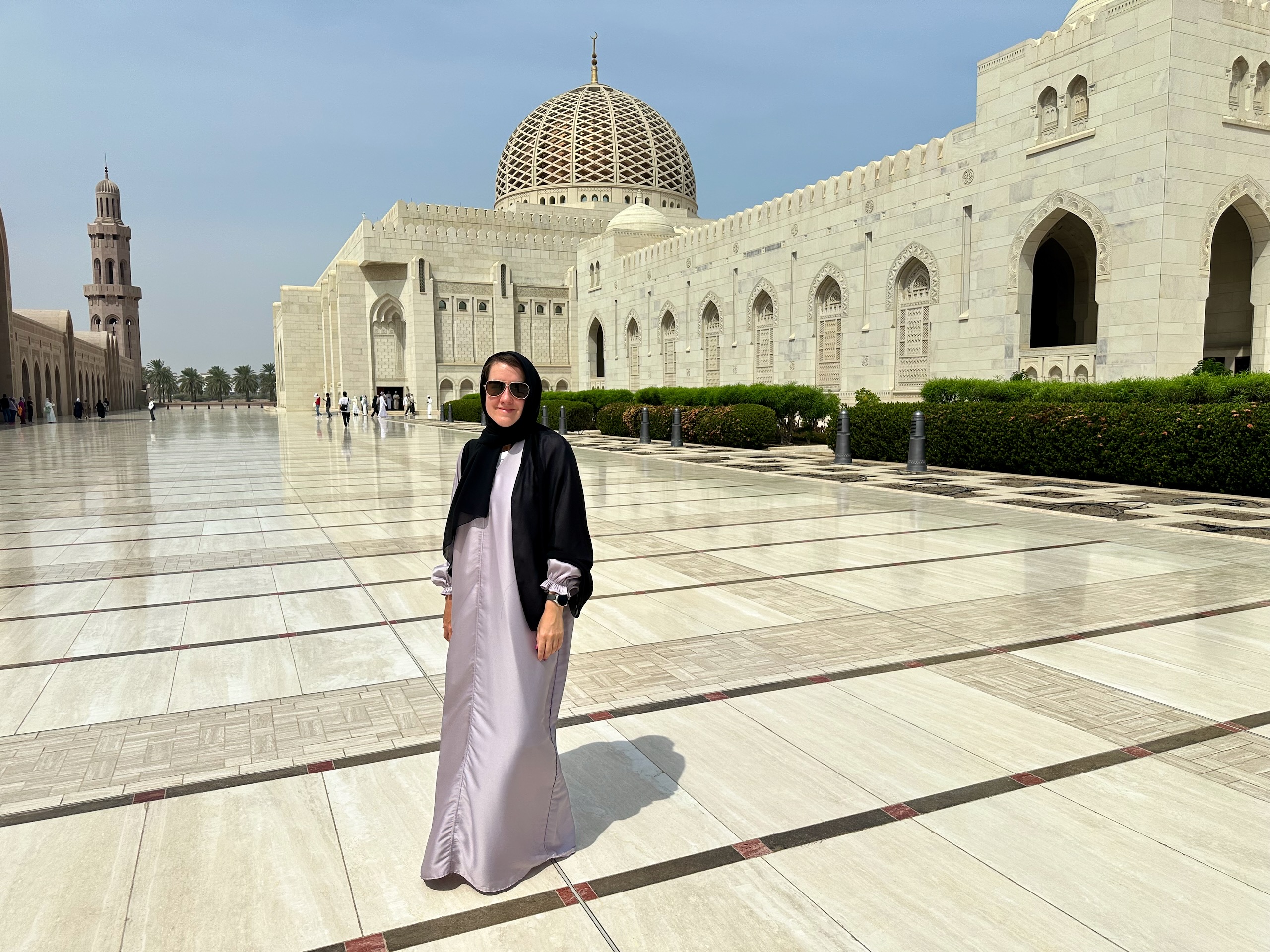
You’ll notice that Omani “difference” in everyday life too, especially in how people dress. Men often wear the traditional dishdasha and a kumma, which is an embroidered cap, and on more formal occasions you might also spot a khanjar, the distinctive dagger worn as part of the outfit. Visitors don’t need to dress the same way, but it’s worth sticking to a simple modest-dress rule in public: cover your shoulders and keep your legs below the knee, especially in malls and regular city spaces.
How to get to Muscat?
Getting to Muscat is pretty straightforward, but it depends a lot on where you’re coming from and what passport you hold. We arrived on our own wheels, so let’s start with the road options, then move on to flights and buses.
By car or motorcycle
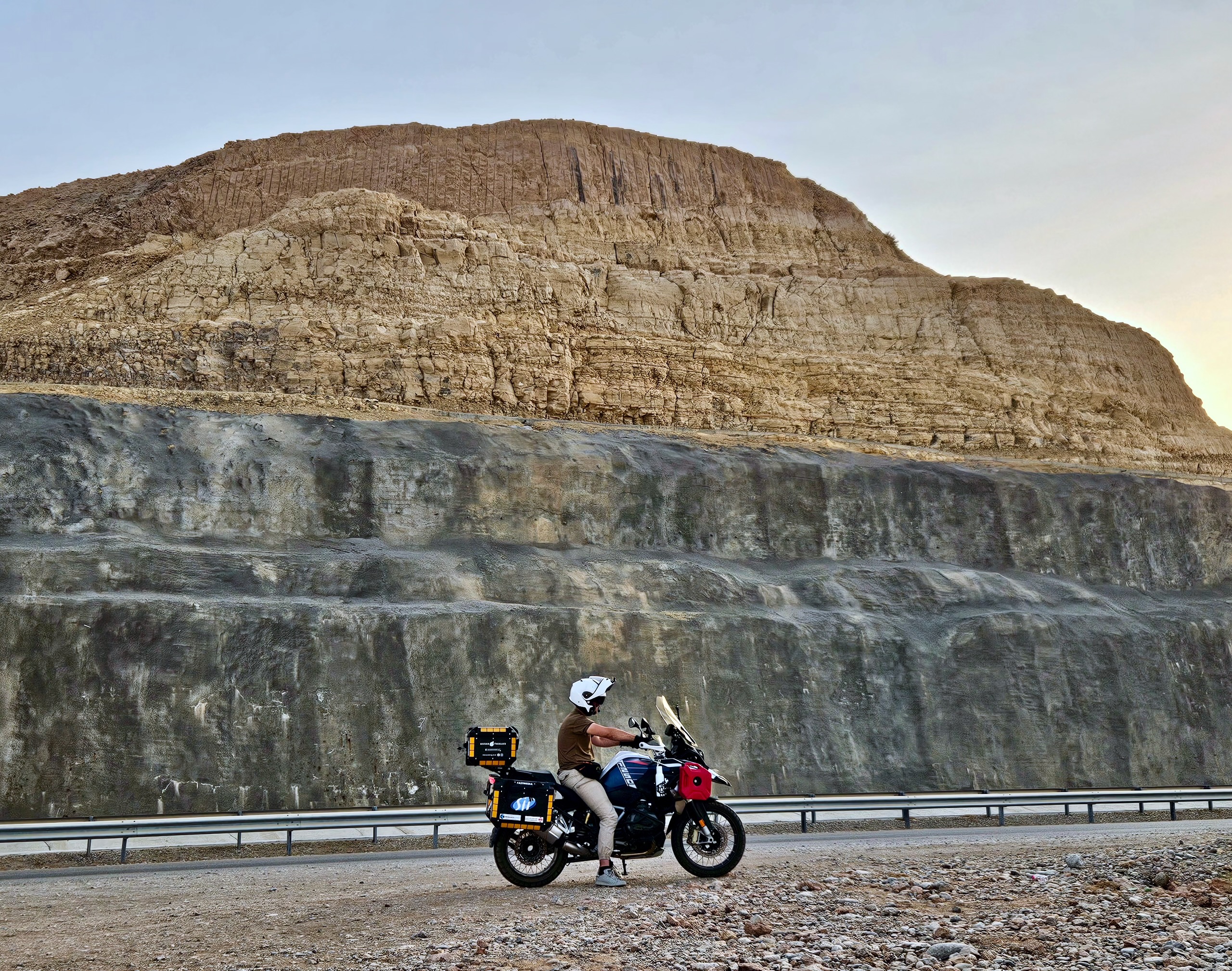
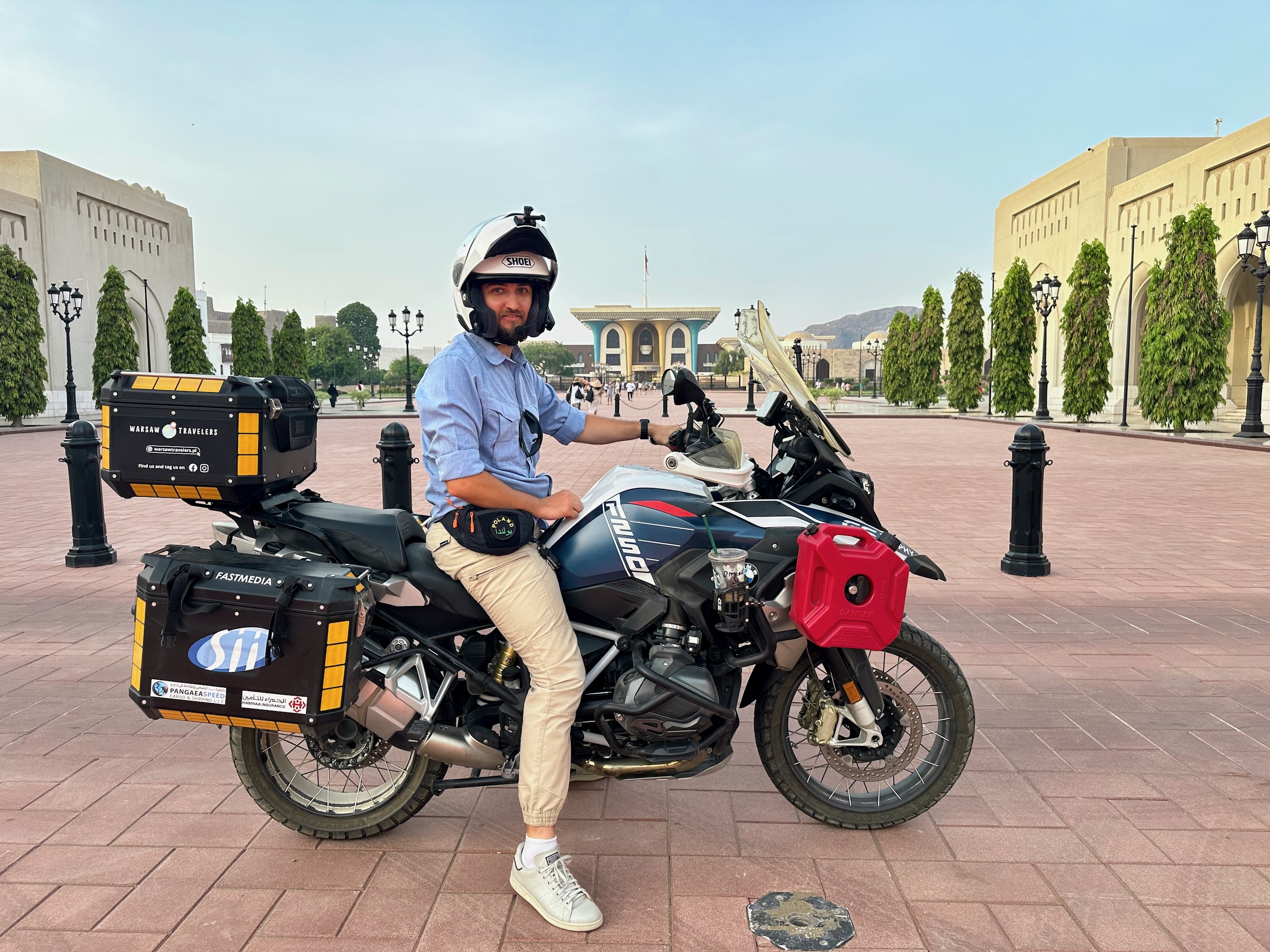
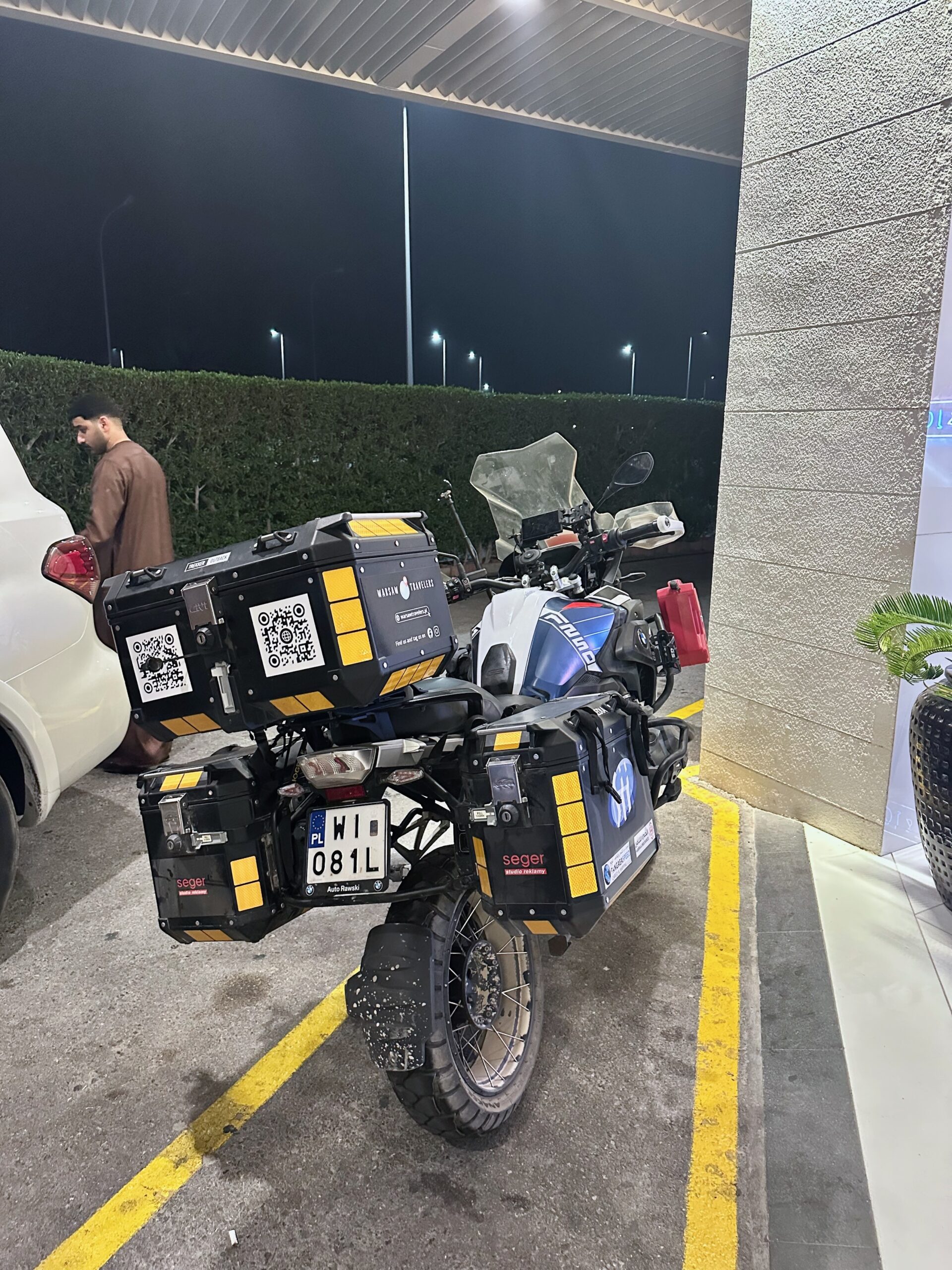
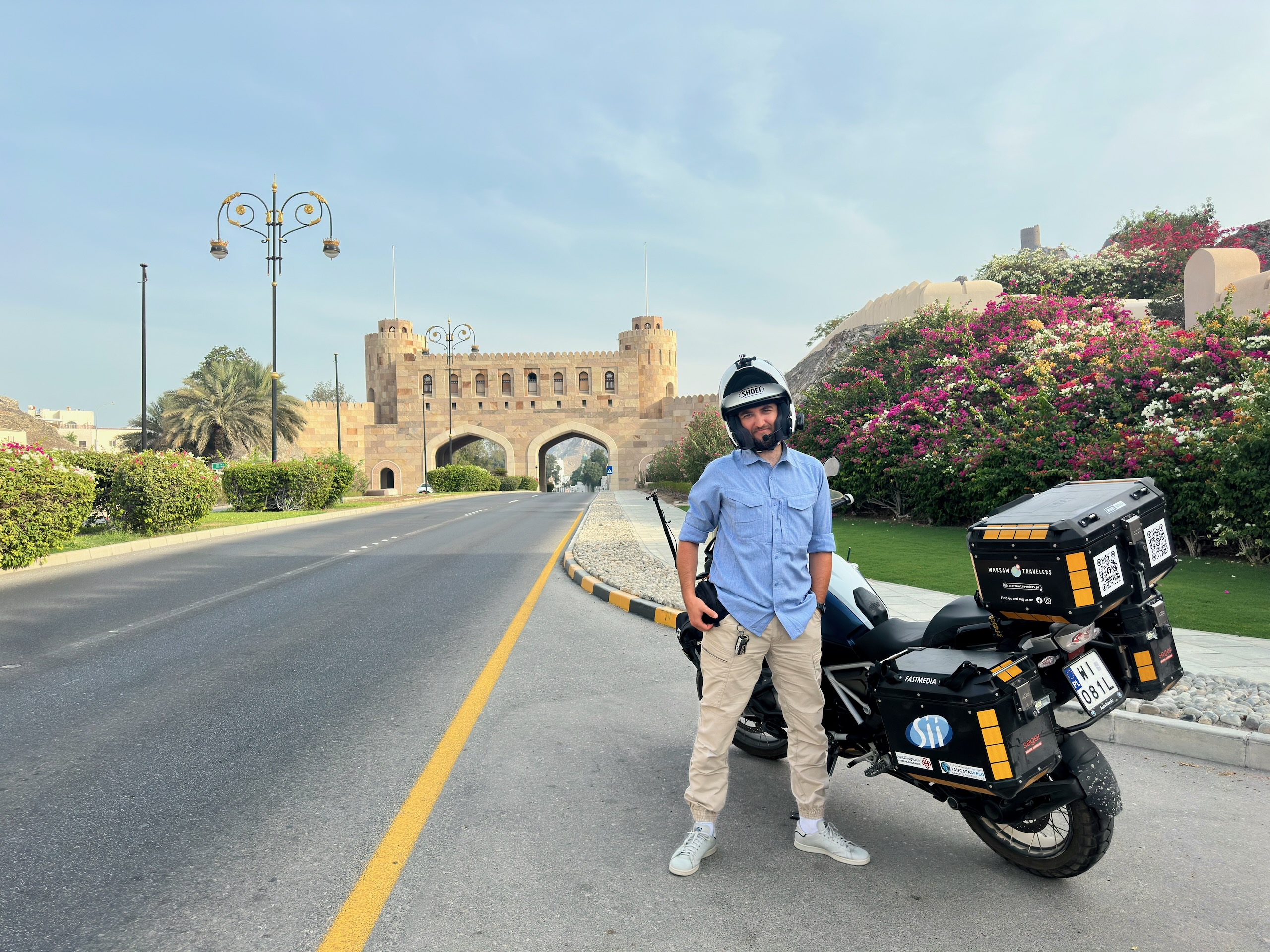
We reached Muscat on our own wheels as part of Desert Horizons 2025, coming in from the United Arab Emirates. It wasn’t a “just because” choice, it was pure logistics. At that time of year, approaching from Saudi Arabia would have meant long stretches near the border in serious heat, and without a sensible overnight stop it would have been a real grind. Oman may look “next door” on the map, but on the Arabian Peninsula distances and weather quickly put you back in your place.
There are basically three overland ways into Oman: from the United Arab Emirates, from Saudi Arabia, or from Yemen. On the map it looks simple, but in real life the border crossings can be the stressful part, mainly because not every crossing works equally well for travelers outside the GCC. The easiest approach is to stick to the big, well-known crossings, since that’s where surprises are least likely.
- 🇦🇪 From the UAE, the most common route is via the Khatmat border crossing. It’s the classic Dubai–Muscat run, and it’s open to tourists, UAE residents, and GCC nationals, so it usually involves the least hassle. The Al Ain / Buraimi area is another popular way in, especially if you’re coming from Abu Dhabi. In our case we entered Oman near Al Ain / Buraimi on the way to Muscat, and on the way back towards Dubai we used Khatmat.
- 🇸🇦 Coming in from Saudi Arabia is a different story. Since late 2021 there’s a new link across Rub’ al Khali, the Empty Quarter, via the Al-Rub’ Al-Khali border crossing. This is the hot route: long, empty, and unforgiving if you’re running on a half-baked plan. For desert-road fans it sounds like the trip of a lifetime, but you really need to think it through. Fuel, water, signal, tyres, heat, and the fact that “the next anything” can be very far away.
- 🇾🇪 The Yemen option exists on the map, but for tourism it can be tricky. We saw that the U.S. Embassy in Oman states that tourist visas are not issued at the Oman–Yemen land borders at Mazoonah and Sarfait. Add the security situation and the realities of travelling in Yemen, and for most people it’s better to treat this route as a curiosity rather than a realistic way to get in.
Samolotem lub autokarem
If you’re not driving your own vehicle or a rental, flying into Muscat is the easiest option. Muscat International Airport is a proper, full-size airport, and you’ll most often see two home-based airlines in search results: Oman Air (the national carrier) and SalamAir (Oman’s low-cost airline). From around the Gulf, carriers like flydubai and Etihad also fly in regularly, along with a few others, so connections are usually easy to sort out.
Prices vary a lot depending on the date and how early you book, but you can still get a realistic ballpark. Oman Air sometimes runs Dubai–Muscat deals from around 320 AED one way, while flydubai often lists its cheapest one-way fares closer to 500 AED for specific dates. Search engines like Skyscanner can occasionally show even lower deals, around 263 AED one way, but that’s very much “right day, right luck”. Bottom line: last minute and peak season can sting, but booking ahead usually gets you a fair price.
A coach from the UAE is a good option if you want to travel overland without driving or dealing with a car. The route you’ll see most often is the Dubai–Muscat service run by Al Khanjry Transport. In practice, buses leave from Dubai (Deira area, around Abu Hail), go via Hatta, and enter Oman through Al Wajajah. The price we found was about 100 AED for a one-way ticket, plus the UAE exit fee, which is often listed as 35 AED.
Visas and documents
For Poles (and plenty of other nationalities), a 14-day tourist stay in Oman is visa-free. In practice, you get passport stamps at the border and that’s it, no fees and no online forms, as long as you stay within those 14 days.
It only gets messy when someone decides to “double-check” on the official Oman eVisa site (ROP) and starts clicking through visa types. First you see a few big categories, and once you open the tourist section you get another list of sub-types with codes like 26A, 26B, 26C. Some are for 10 days, some for 30, some depend on nationality, and others come with extra conditions for family members of someone holding a different visa.
On top of that, the same table can include an option called “Free Entry for 14 Days”, so it’s easy to go down the rabbit hole: do I need to buy something, is it free, and if I do need a visa then which code is actually mine? That’s where the “this is chaos” feeling comes from, even though for most people it ends with a simple stamp.
Whether you enter visa-free for 14 days or stay longer and apply for an e-visa, one thing stays the same: your passport should be valid for at least six months. It’s also smart to have your accommodation booking, travel insurance, and a return ticket or onward travel plan ready. You might not be asked for it, but it’s better not to rely on luck if you get a more thorough officer.
Vehicle documents
If you’re entering with your own vehicle (car or motorcycle), there’s a second layer of paperwork. First, you’ll need the registration document and insurance that covers Oman (and if it doesn’t, you can usually sort that at the border). Second, if you’re doing an overland trip from outside the region, a Carnet de Passages (CDP) is very handy. It makes the temporary import process smoother and shows that the vehicle isn’t being left in the country. In short, your passport covers you as a person, while the vehicle papers cover the bike or car as something you bring in and later take back out.
Traffic conditions
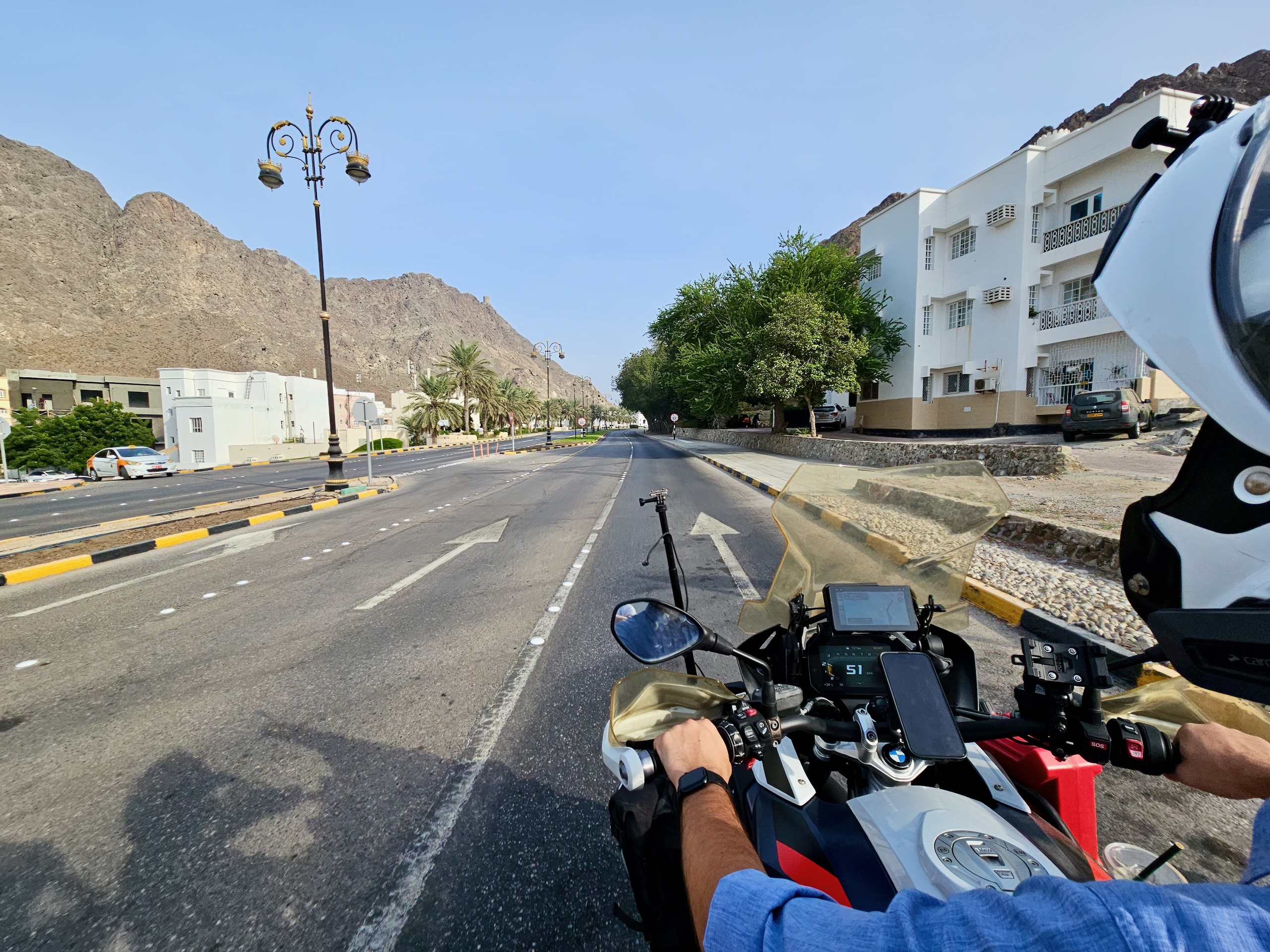
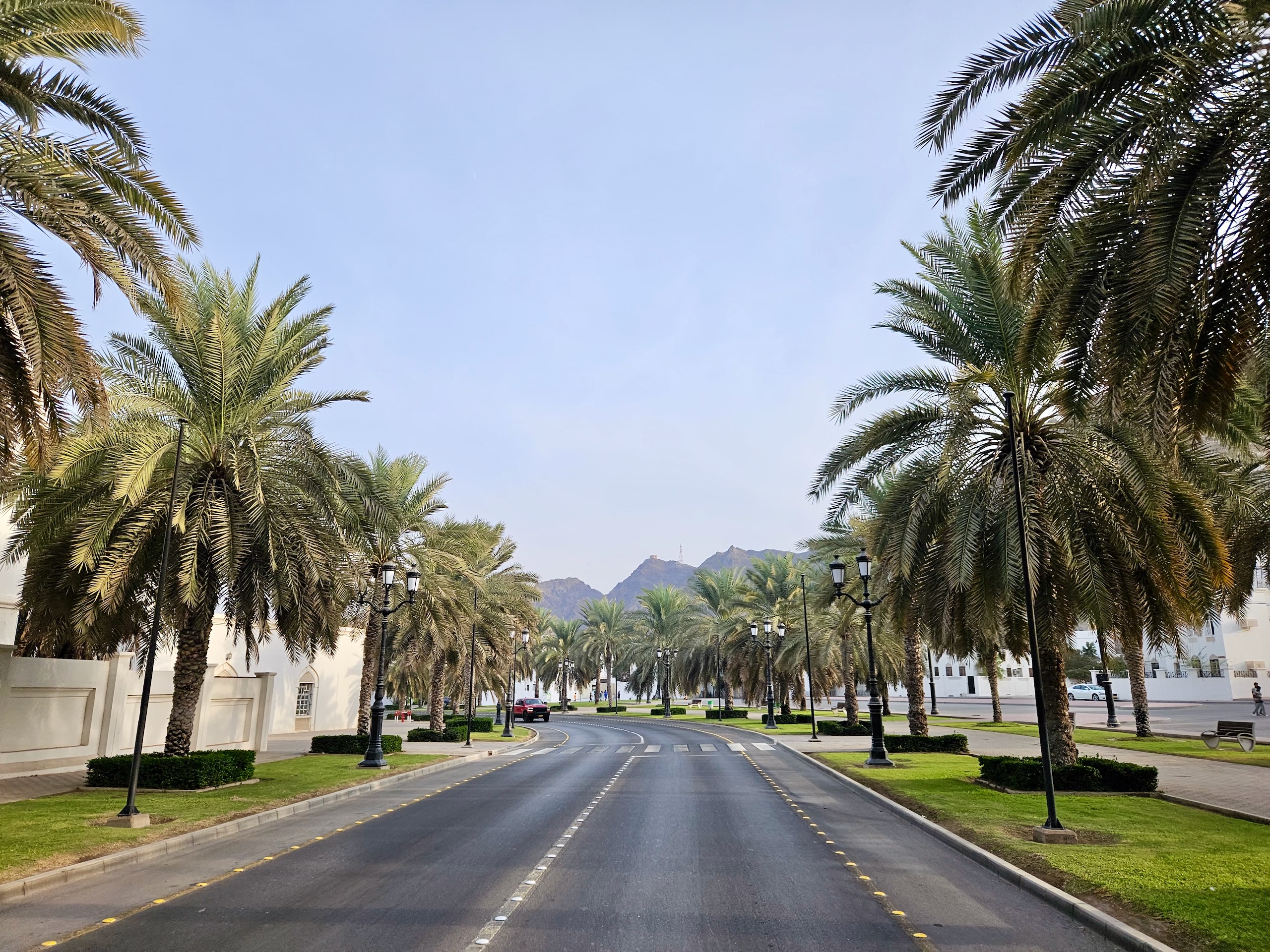
From the northern part of Oman that we managed to cover, driving was genuinely enjoyable. The roads are smooth, well-marked, and simply easy to handle, even if you’ve never driven on the Arabian Peninsula before. Muscat is a great starting point too, because you can get into the country’s rhythm without jumping straight into hardcore routes. And since we’re already tempted to come back and ride down to Salalah one day, we’ve covered the driving side of Oman in a separate, dedicated post for motorists 🚗.
In Muscat itself, the main thing to remember is how spread out the city is. You tend to do things in sections: a fast, wide road for a while, then a turn into neighbourhood streets where everything slows down. Rush hour is a thing too, so it’s worth building some buffer into your day for traffic. There are plenty of speed cameras as well, so wide lanes aren’t an invitation to floor it. If you do get a fine, you can check and pay it online through the Royal Oman Police portal.
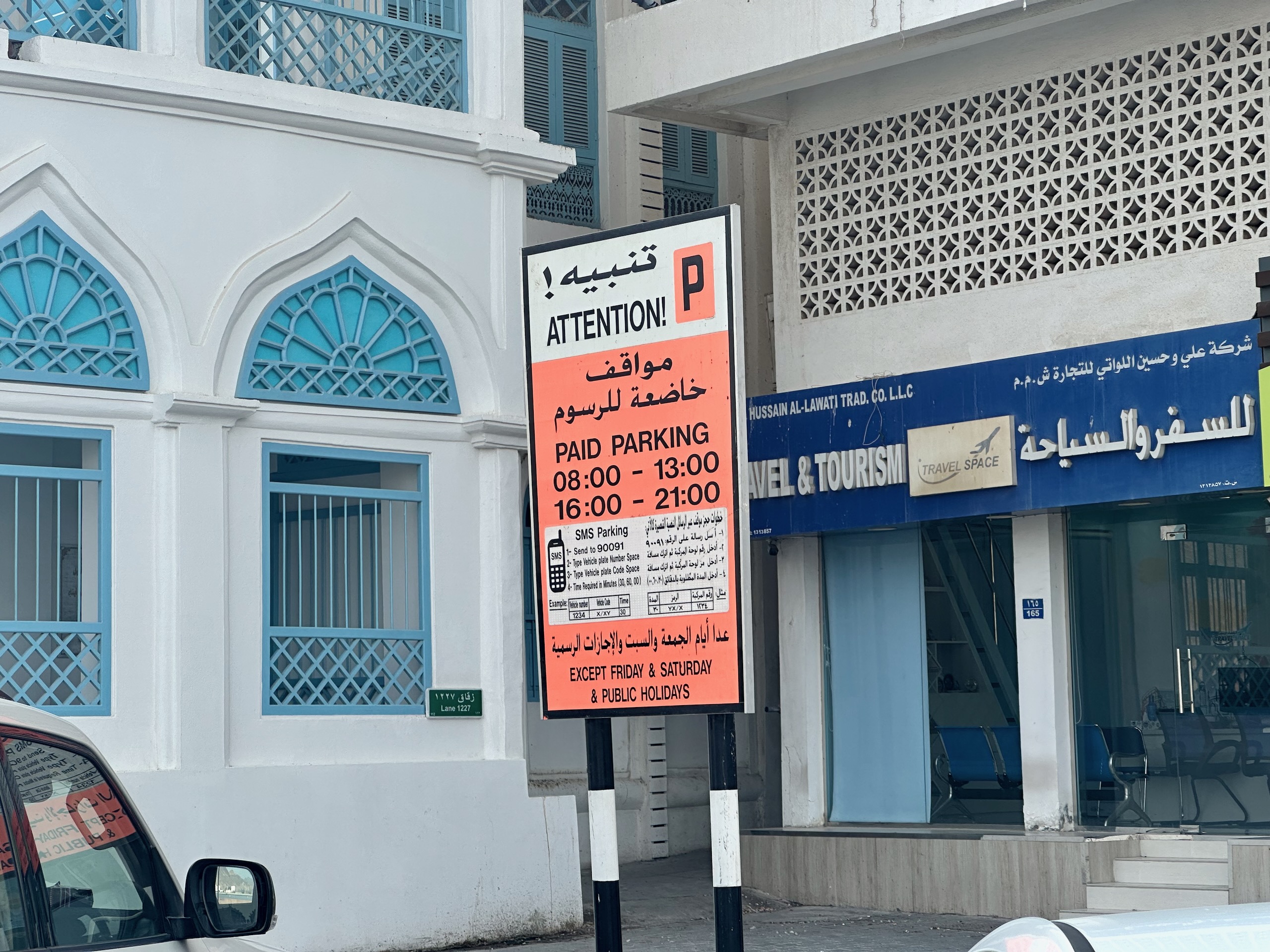
The most practical thing to know in the capital is parking. In many places you can park for free, but there are also paid zones, and it’s worth playing by the rules because tickets show up faster than you can say “just a minute”. Muscat Municipality has been pushing electronic payments for a while now: you book parking by time (from 30 minutes up) through the Baladiyeti app or the municipality website, and in some areas you can also pay by SMS.
Simple rule on the ground: check the signs by the parking spot. If it’s a paid zone, it will be clearly marked, so there’s no guessing game.
SIM card
In our case, we had internet sorted before we even hit the land border, because we used an eSIM from a third-party provider and picked an “unlimited” plan. It sounds great on paper, but it’s worth remembering that “unlimited” almost always comes with a fair-use policy (FUP). Once you cross a certain threshold, speeds can drop or your traffic gets deprioritised. For a short trip it’s fine, but for longer rides around the country and uploading content from the road, a local SIM often ends up being the more reliable choice. We’re learning as we go too 🥲.
If you want to keep internet costs down (prepaid SIMs in the Middle East are fairly pricey compared with much of Asia) and avoid overpaying resellers, Oman’s local tourist packs can actually be a pleasant surprise. Ooredoo is a good example: their official “Tourist Pack” comes in three simple options. The first costs 5 OMR (+ 5% VAT) and gives you 8 GB for 10 days, the second is 10 OMR (+ 5% VAT) for 18 GB over 15 days, and the third is 20 OMR (+ 5% VAT) with unlimited data for 20 days (they also include minutes and SMS in the bundle).
And this is where you start to see why eSIMs from “global” providers often cost more. For example, Breeze lists Oman data-only packages like 30 days / 5 GB for 115 PLN and 30 days / 10 GB for 207 PLN, while SimSolo can charge around 155 PLN for 10 GB. With prices like that, a local Ooredoo SIM at 10 OMR for 18 GB simply looks like the sensible option, especially if you’re online all the time (maps, navigation, sending photos, reels, backups).
The difference isn’t just price, convenience plays a role too. With a reseller eSIM, you buy it before you leave, install it via a QR code, and it works as soon as you turn data on in Oman. A local SIM can be a bit more “procedural” because you’ll need your passport for registration, but in return you get a package built for the local network and usually a much better GB-to-price ratio.
Where did we stay in the capital of Oman?
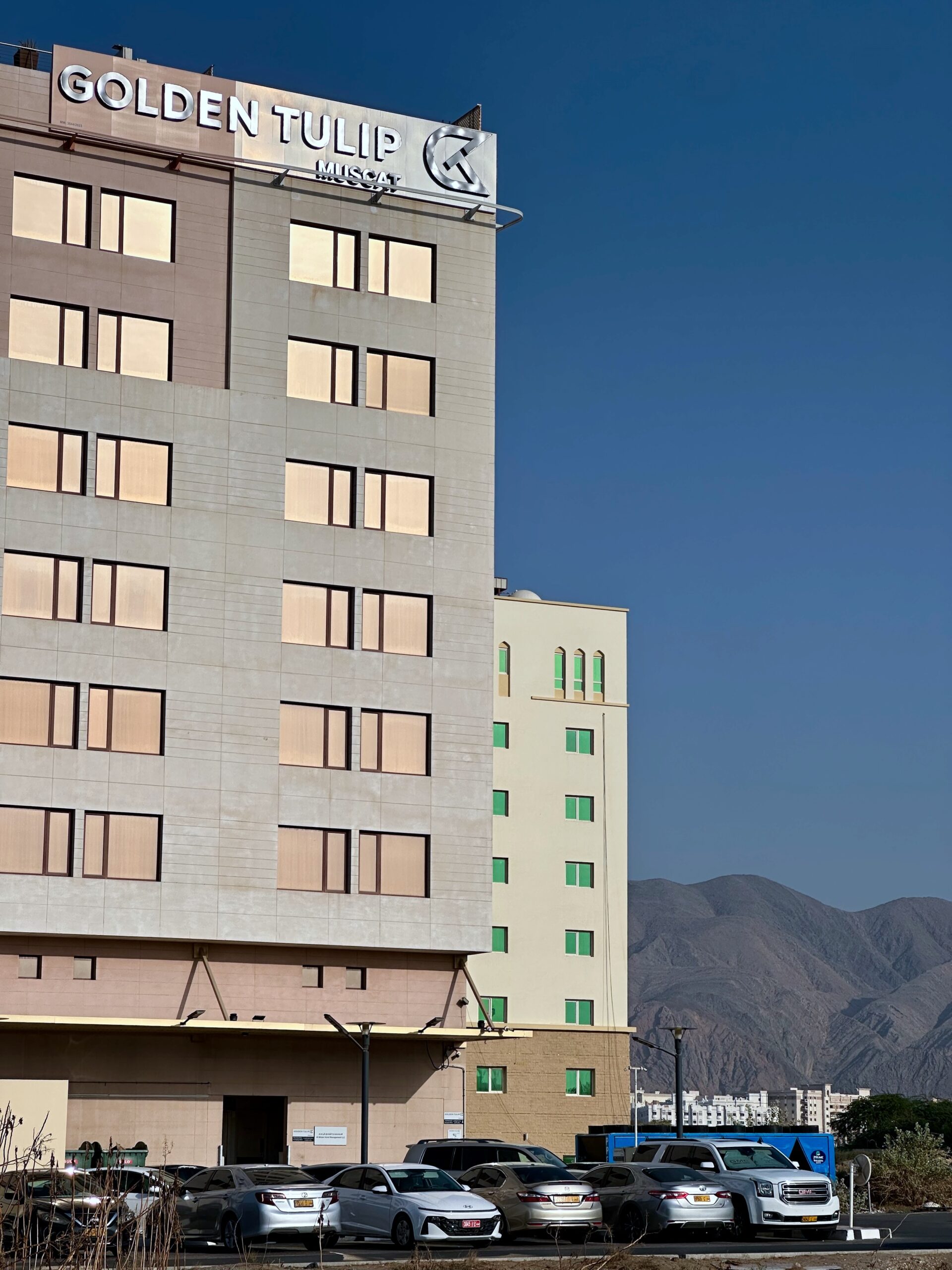
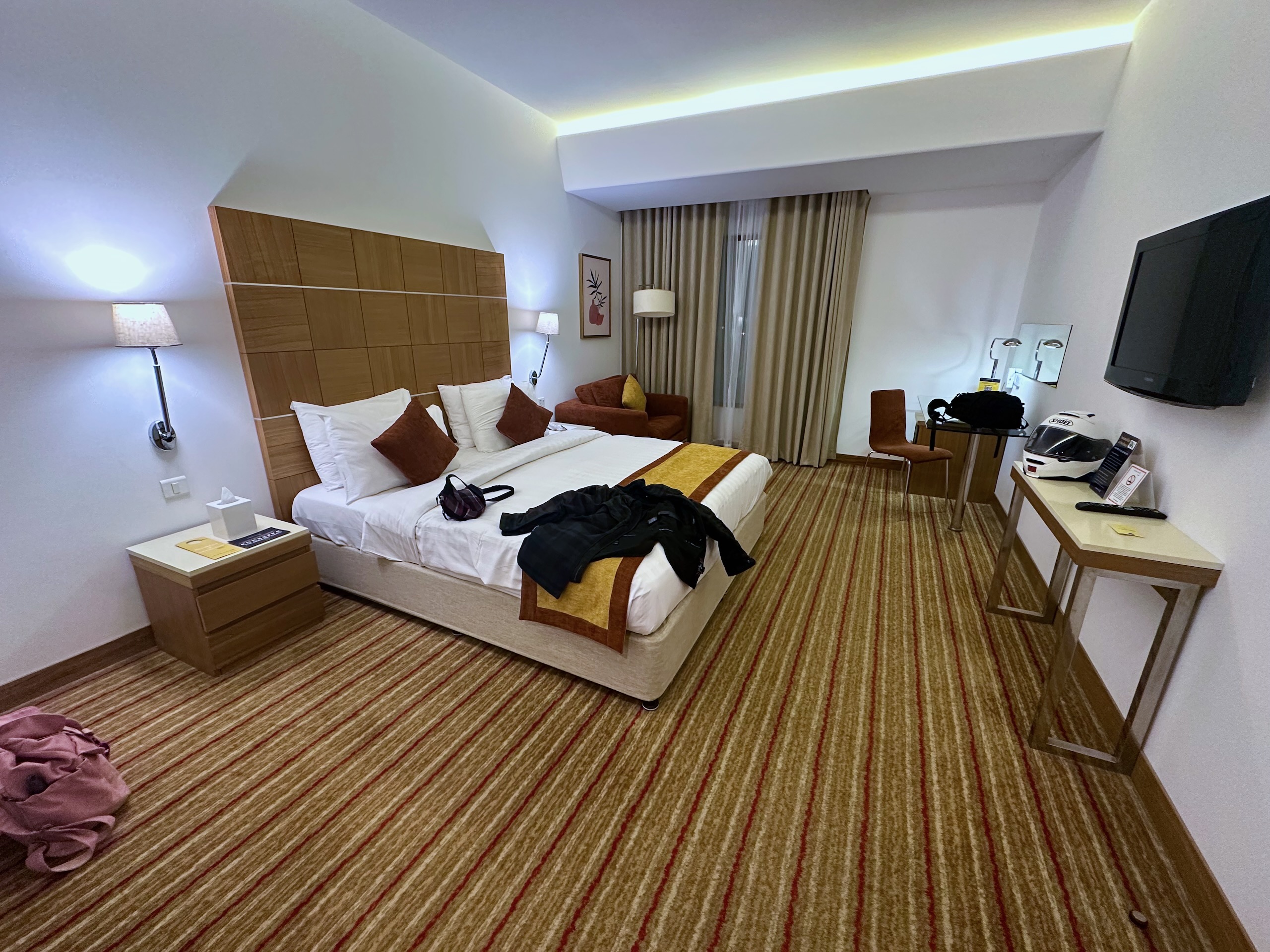
We stayed at Golden Tulip Muscat and after a few days there we can confidently say it was a great base. We paid 1213 PLN for 5 nights with breakfast, booking about a month and a half in advance. For the hotel’s standard and for a capital city in this part of the world, that price felt genuinely good.
The location helps too, since the hotel is close to Avenues Mall. If you need to sort out the basics on the go, quick groceries, a pharmacy, water, a few things for the road, it’s all nearby and you don’t have to criss-cross the whole city. And yes, it’s not the Avenues you know from Kuwait 😆, but for regular shopping it’s more than enough.
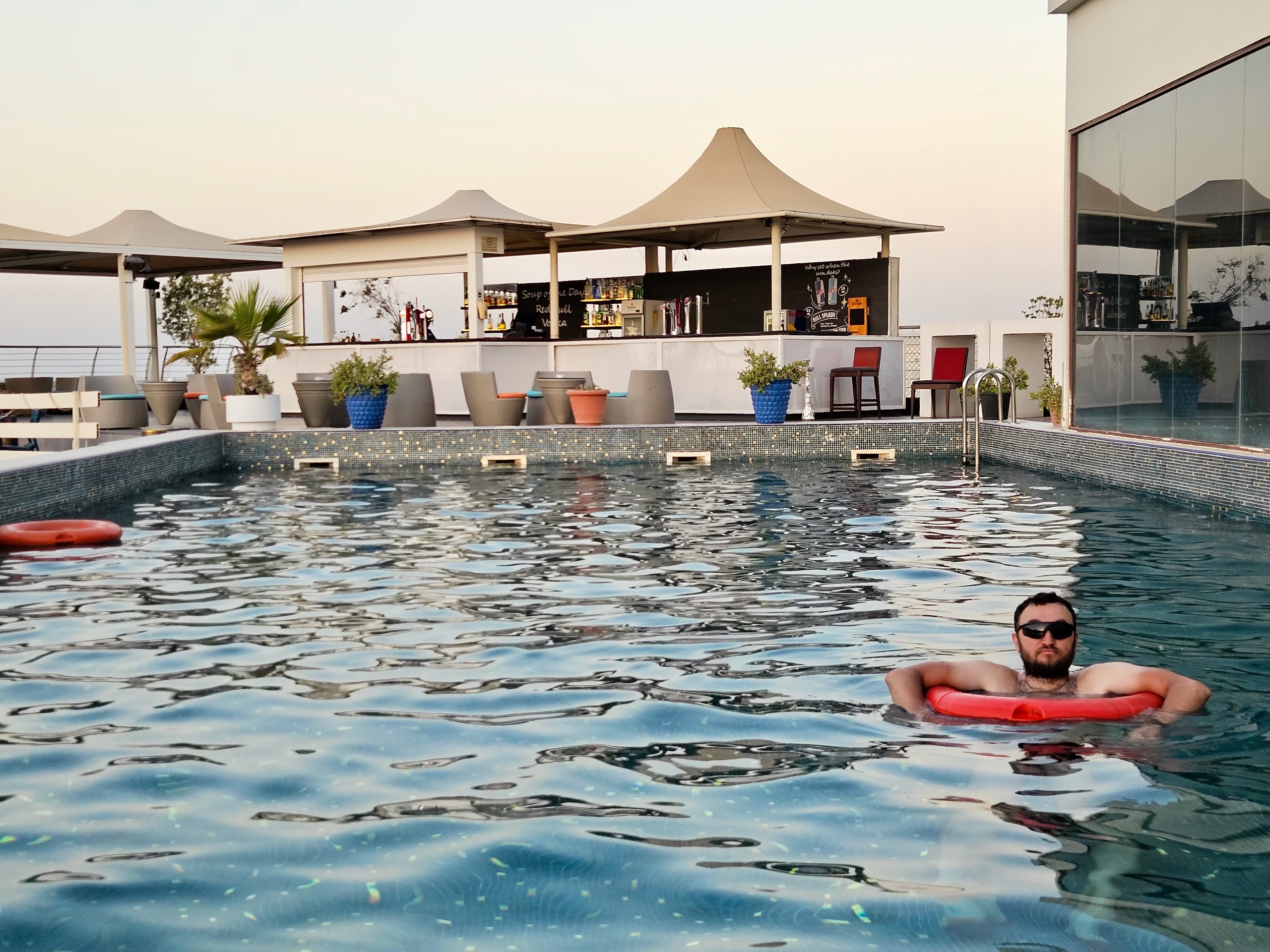
The rooftop is another win. There’s a pool, so after a full day out you can catch your breath and do a quick reset. You can also order alcohol up there, but fair warning: the prices are brutal.
The biggest positive surprise? Breakfast. Really good, plenty of choice, and it didn’t feel like something they were just ticking off.
Co jedliśmy?
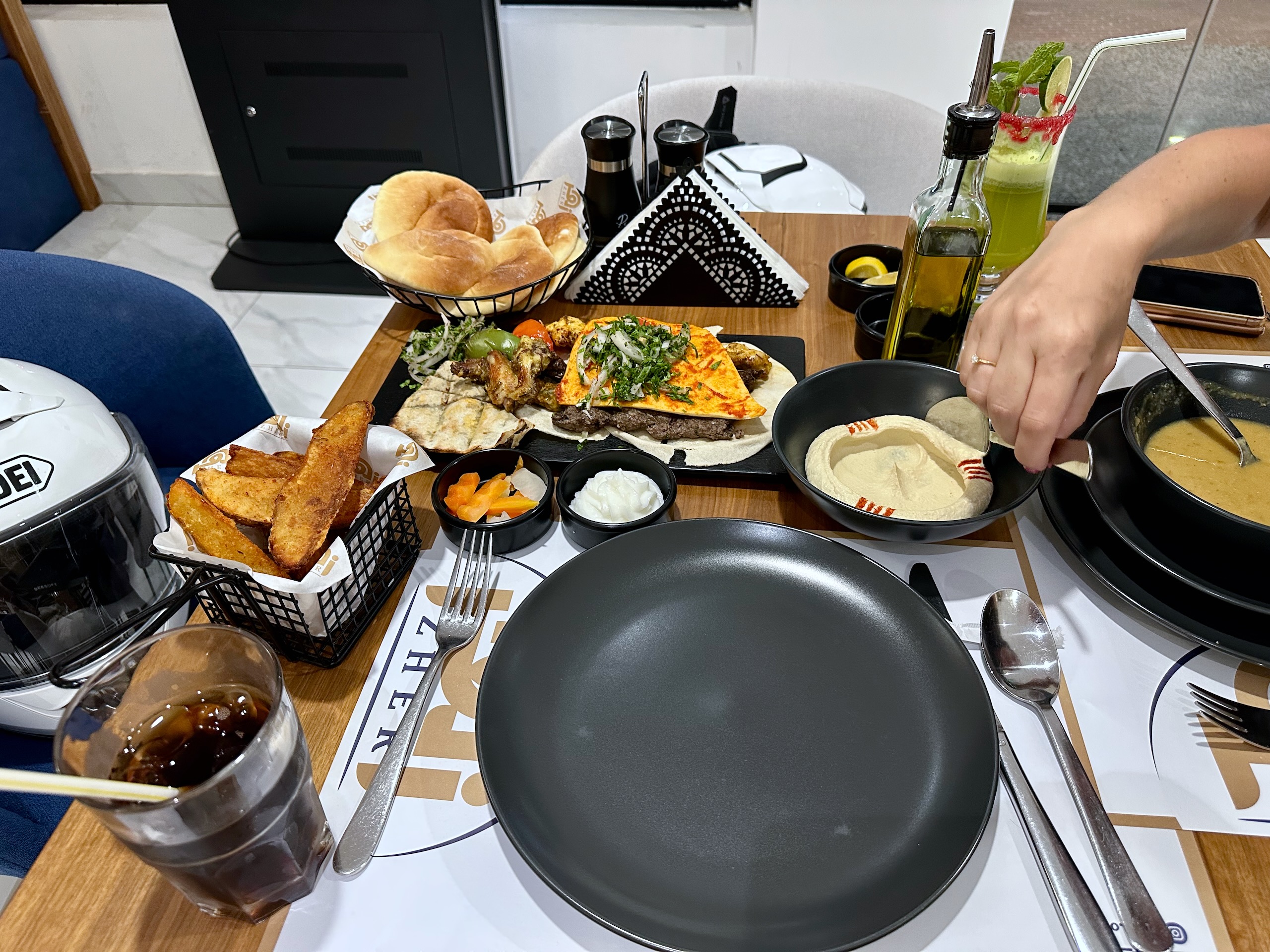
We kept food in Muscat pretty local, no fine-dining hunting. Most days it came down to classics like shawarma and different kinds of grilled meat, because with this kind of travel rhythm one thing matters most: quick, tasty, and no fuss.
If you want to try something more Omani than just shawarma (which is a safe bet pretty much anywhere in the region), it helps to know what to look for on the menu. In Oman you’ll often see dishes like shuwa (slow-cooked meat, usually for special occasions), majboos or machboos (spiced rice with meat), harees (a thick wheat-and-meat porridge), or qabooli. For something sweet, Omani halwa is a common pick, and you’ll also come across qahwa, Arabic coffee served as a sign of hospitality, often with dates.
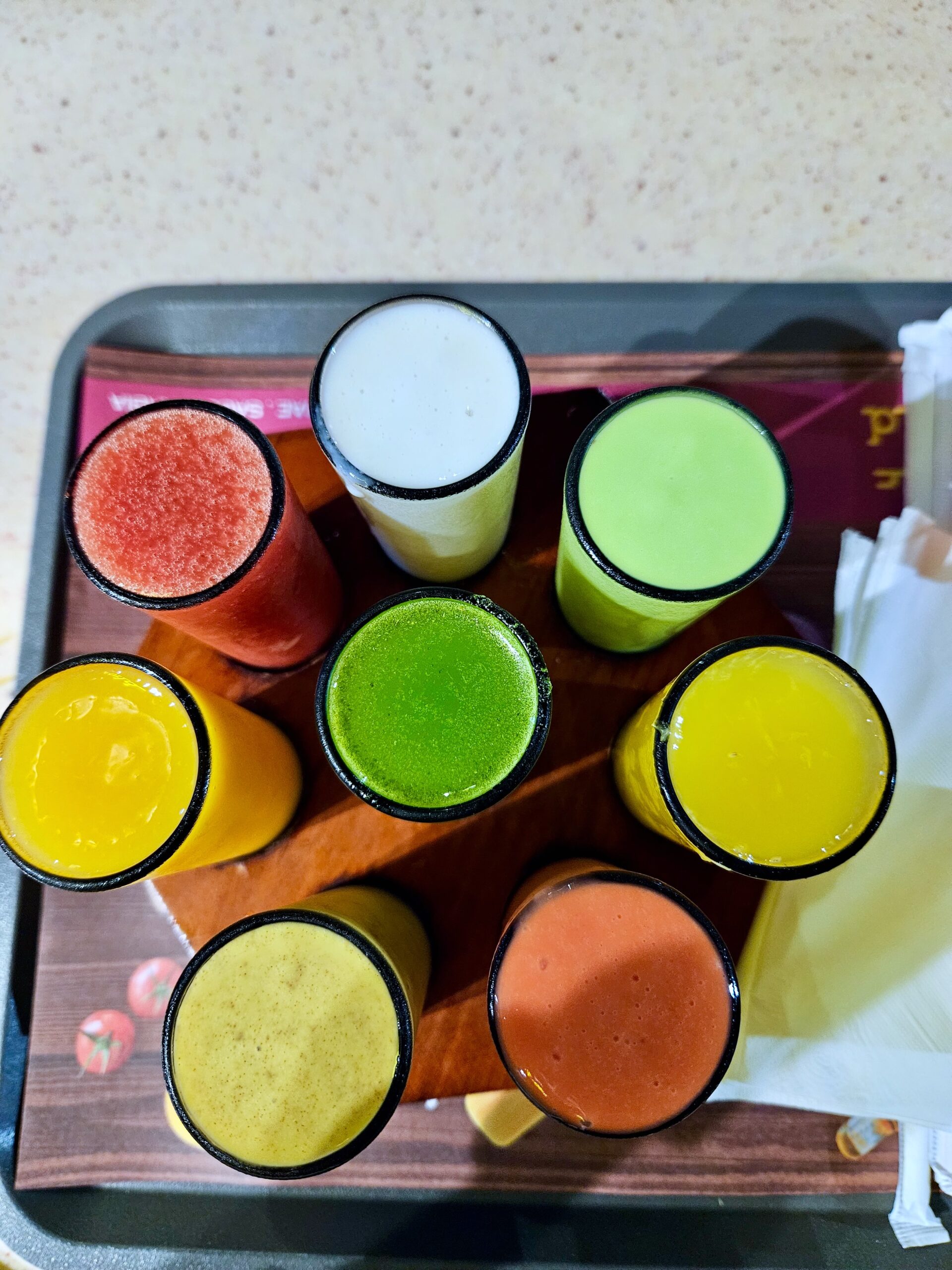
We also got really into fresh juices. In the heat, after a full day out, a juice does a better job than another iced cola, and in the capital you can find them pretty much everywhere.
We ordered a lot through Talabat too, simply because it was nice to get back to the hotel and not go anywhere again. The app works in Muscat like a regular food delivery platform. One small logistics quirk: in our case the pin wouldn’t stick right at the hotel entrance, so we dropped it on the street next door and added a note saying it was Golden Tulip Muscat.
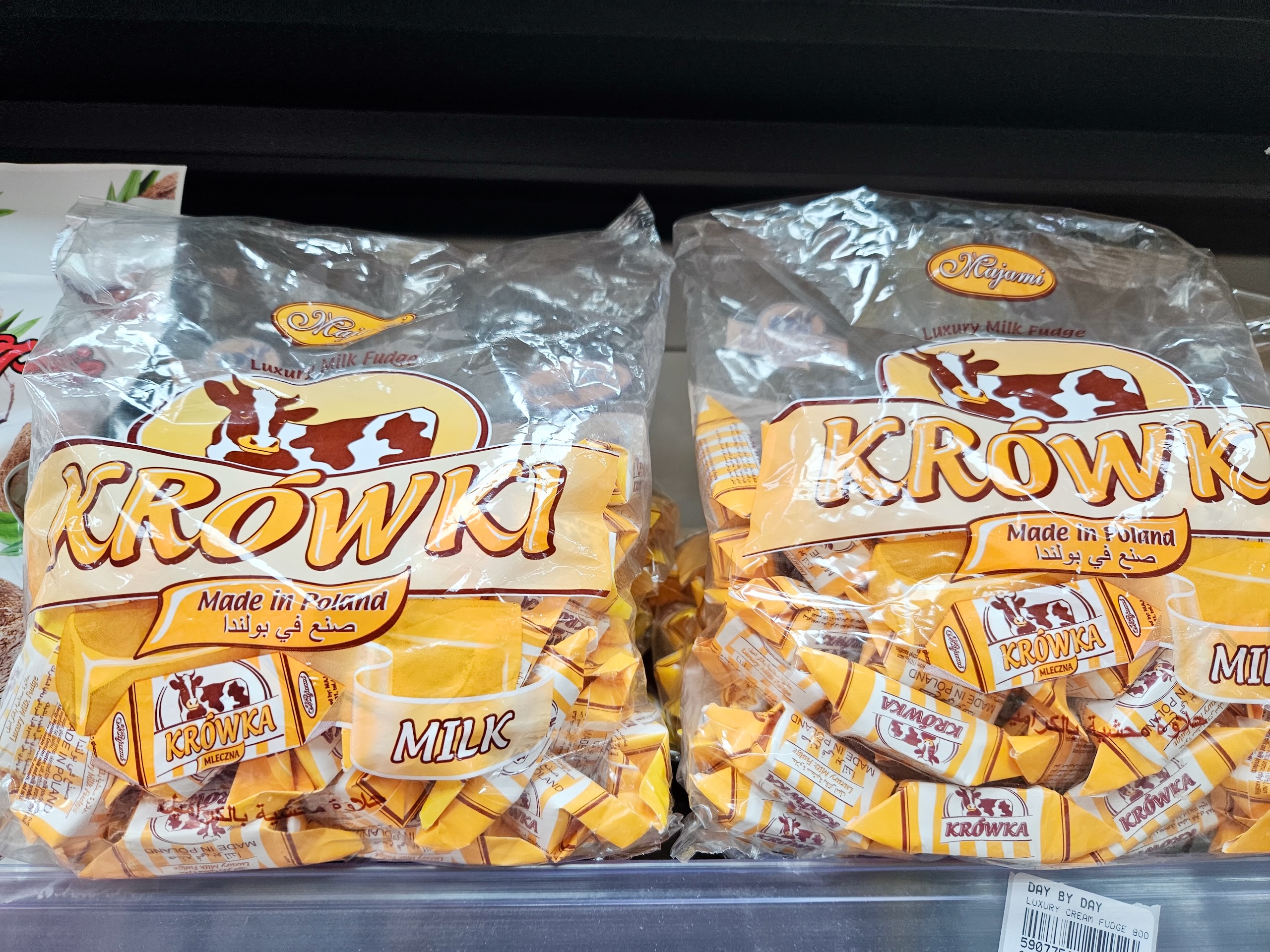
Yes, those sweets you can see below are Polish “krówki”, classic milk fudge candies from back home. We randomly spotted them in a small grocery shop near our hotel 😅.
Exchange office or ATM?
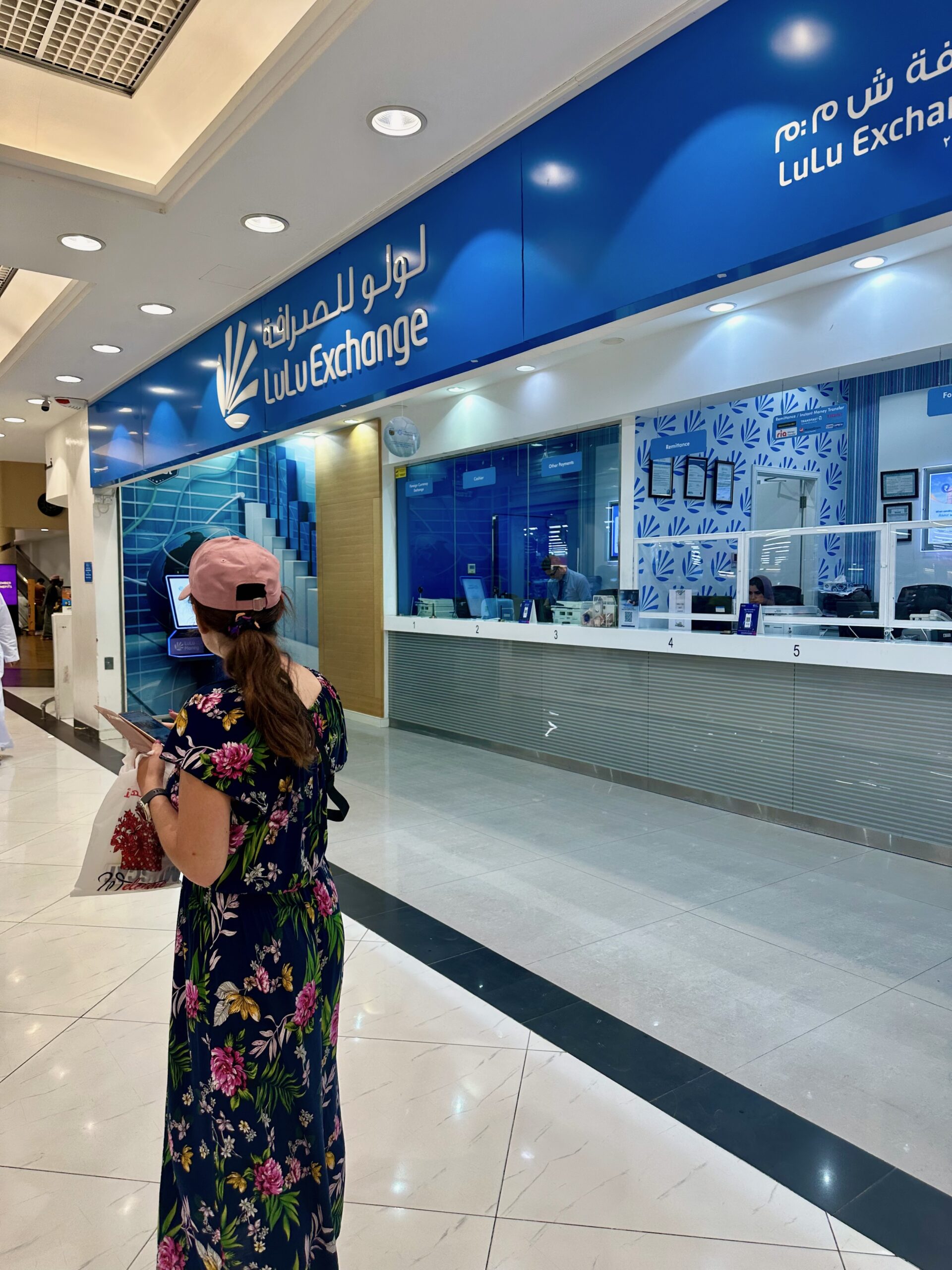
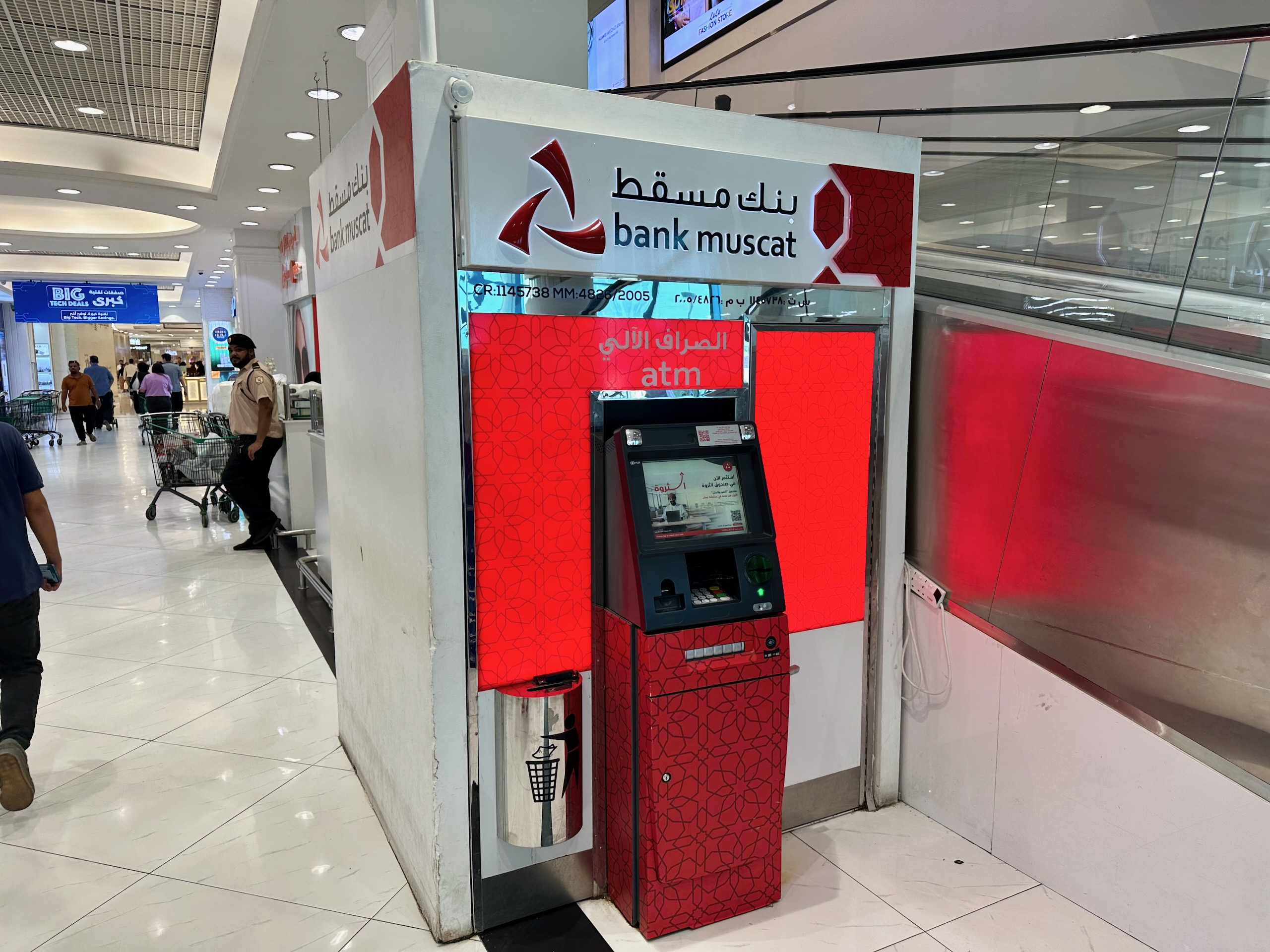
Overall, money was a complete non-issue for us in Oman. We didn’t need to withdraw cash even once, we didn’t look for exchange offices, and we never did any “just in case” currency swaps. We paid by card for everything: fuel, vehicle insurance, and even small stuff like magnets at Mutrah Souq. Oman feels very well set up for this, and everyday card payments are simply the norm.
That’s exactly why travel-friendly cards make so much sense here. Think Revolut, Wise, or a bank card with fair exchange rates. First, you avoid swapping cash at a terrible rate. Second, you don’t get hit with poor bank conversions plus a “mystery” fee, since these cards usually let you hold currencies or give you much better exchange rates.
Safety
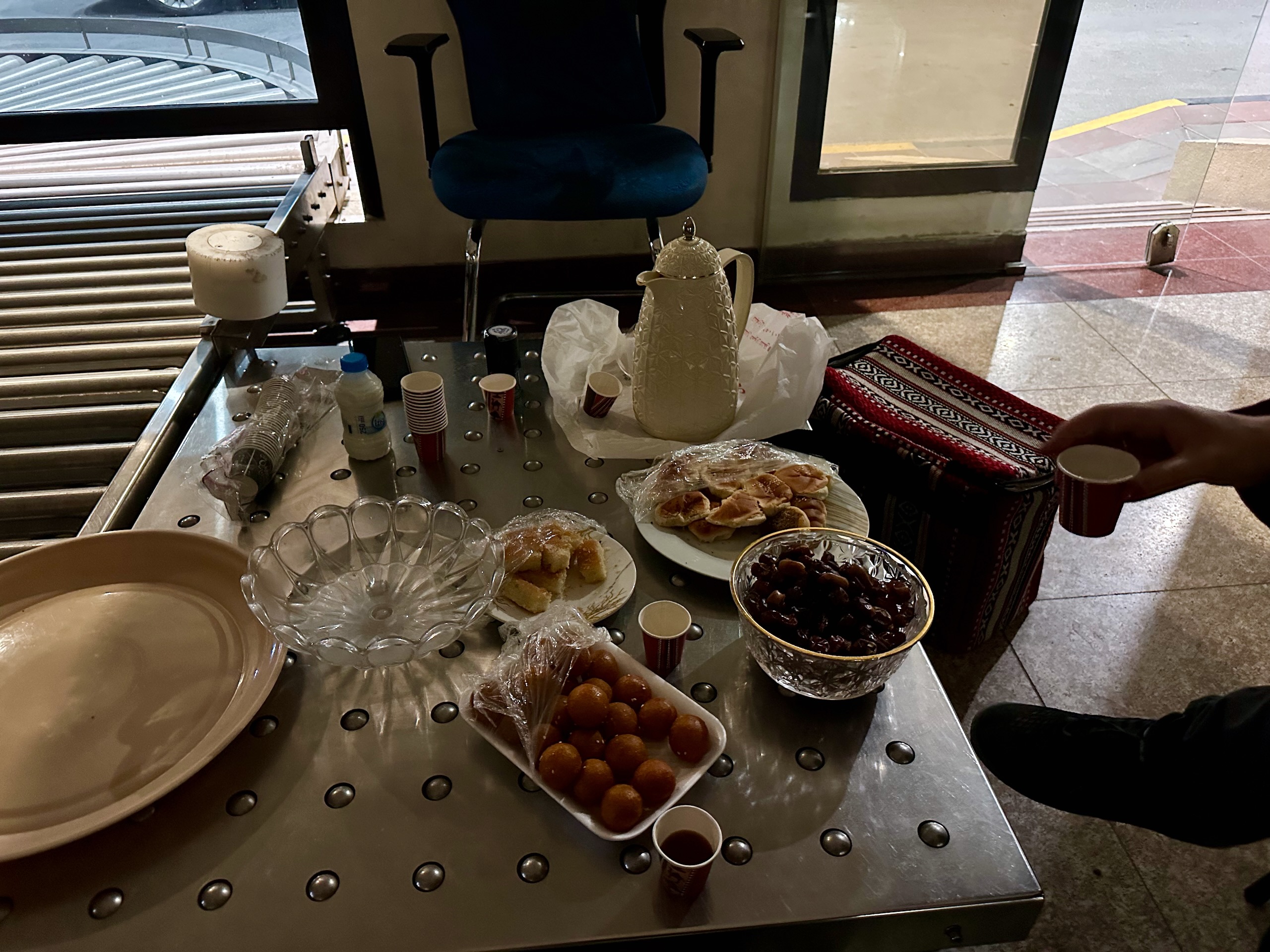
Danger? Not really 😉. We walked around the city without any stress, and on a motorcycle with plates from outside the region we were more of a curiosity than a target. People waved, asked where we were riding from, and just seemed genuinely interested. The Omani side at the border was also top class. While we were waiting for stamps on our documents, the officers offered us sweets and even gave us a contact number in case we needed anything. Little gestures like that go a long way, because you immediately feel like a guest, not someone suspicious.
City riding even gave us a few laughs, because someone tried to warn us that drivers don’t always notice motorcyclists. Our minds immediately went to Riyadh. People in Saudi can be friendly too, but on the roads it sometimes feels like an extreme sport. In Muscat we never felt like anyone was out to take us out in a lane change, but the usual rules still apply: keep extra space, anticipate moves, and don’t put too much faith in indicators.
For the sake of clarity, it is worth adding what this looks like “on paper”. Polish Ministry of Foreign Affairs website of Oman it also points out the current, unpredictable situation in the Middle East and suggests considering postponing travel, mainly due to the risk of air travel disruptions such as delays, cancellations, or temporary airspace closures. So it’s not that Muscat itself feels unsafe. The bigger point is that the region can change quickly, and logistics, especially flights, can be sensitive to the political situation.
On a day-to-day level, the usual common-sense rules work best, the same ones you’d follow anywhere. Don’t leave valuables in plain sight in the car, don’t wander around flashing your phone like a torch in dark alleys (we never felt the need here, to be honest), and keep your documents and cash in separate places.
Payments are worth a quick mention too, because we used cards for almost everything. It helps to have your card in your phone wallet (Apple Pay or Google Pay) and to set up quick freezes and spending limits in your banking app. Even if your card details ever get compromised, it’s not the end of the world. You lock the card in the app, order a replacement, and in many cases you can add a digital version to your phone wallet straight away and keep paying as normal while you wait for the physical card.
Climate and weather conditions
By late September, Muscat can surprise you with something you won’t see in the temperature alone. On paper it looks fine, because daytime highs can be “only” 35–38°C, lower than the 40+ you get in other parts of the region. The catch is humidity, which does all the damage here. Step outside in the evening and it can feel like you’re breathing warm mist.
We felt it straight away when we entered Oman at night. Total WTF moment: our helmet visors fogged up, our glasses fogged up, everything steamed over, and the air felt like a damp towel. Only later did it click that this is just normal here 😆 At times it honestly felt like someone had turned on a sauna inside the helmet.
As for the best time to visit, northern Oman and Muscat are at their most comfortable from October to April. It’s still warm, but you can function normally: explore, drive, spend time on the beach, and not melt in your own clothes.
Summer (roughly June to August) can be tough. It’s hot, and near the sea the humidity piles on, so even evenings don’t always bring real relief. September sits somewhere in between. It’s still warm, but it slowly starts to feel more manageable.
And if Salalah is on your list one day, there’s one more exception worth knowing about: khareef. From late June to early September, southern Oman gets mist and monsoon rains, turns green, and feels noticeably cooler than the rest of the Gulf (often around 20–27°C). It’s a completely different Oman compared with the “northern” one.
What is worth seeing in Muscat?
We’re not doing a full attractions list here, because this post is about Muscat and Oman through our eyes, not another “tick off 10 places” checklist. If you’re spending a few days in the capital and want a clear, practical sightseeing plan, 👉 we’ve put together a separate post 👈.
Inside, we’ve gathered what we actually managed to see ourselves, plus the places we’d happily recommend for 2–4 days in Muscat. No rushing from pin to pin, no pressure to “do it all”.
The easiest way to get around is with a rental car, because you can go wherever you feel like without overthinking routes or waiting around. If you’d rather not rent anything, taxis work just fine too.
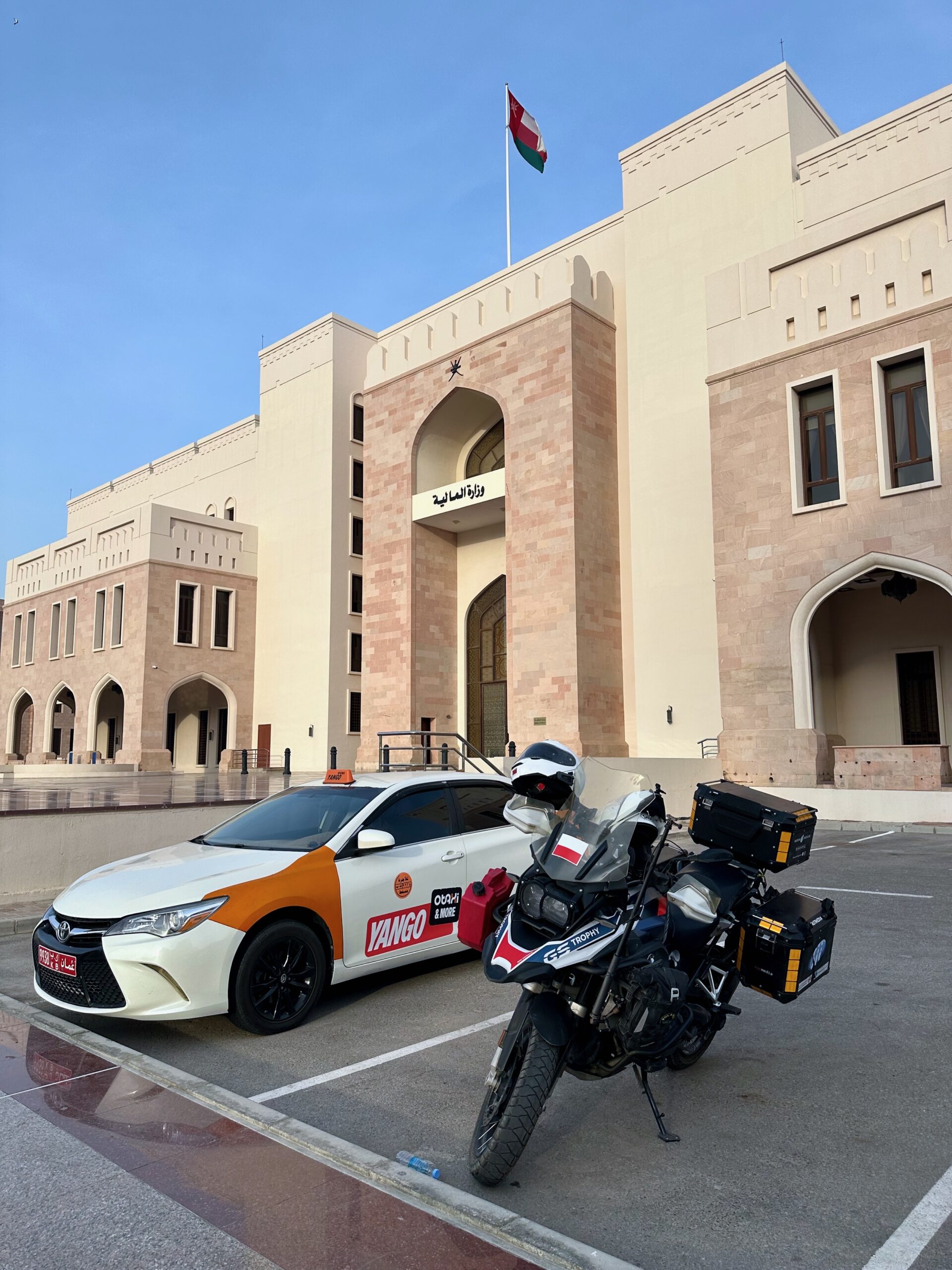
One thing to know: the ride-hailing apps many people use in the region don’t always work in Oman. Careem doesn’t list Oman as an available country, and in Muscat you generally won’t be using the classic Uber or Bolt either. In practice, Yango is the go-to app here (it operates locally as OTaxi). You can download it on 📱 Apple iOS and 📱 Android, and it works like any other ride app: set your pickup point, choose your destination, then wait for a driver.
Our summary
Muscat genuinely left a great impression on us. Maybe timing played a part too, because we arrived after a month on the road with more than 10,000 kilometres behind us, so the simple thought of “we made it” already felt like a reward.
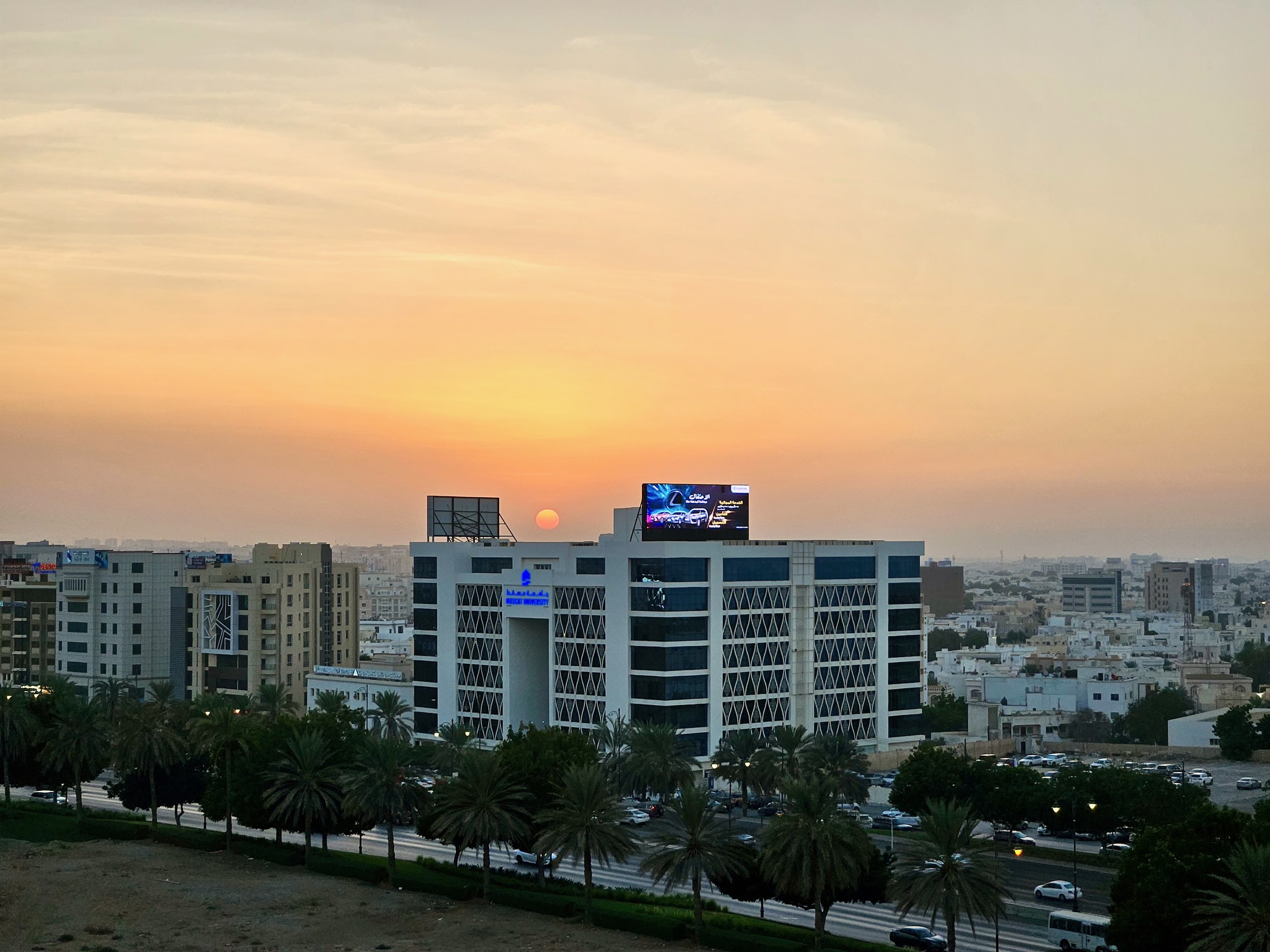
What won us over most is the setting. The mountains are right there, the sea is right there too, and in the evening, with the sun going down, the rocky slopes and the whole landscape look fantastic. And even though it’s the capital, the pace feels calmer than in many of the Gulf’s flashy cities. You can actually breathe here, not just rush from one spot to the next.
We’d come back without hesitation, just with a wider plan next time. Muscat works well as a base, but it really makes you want to add more places beyond the capital. And yes, anyone who’s been to Oman will sooner or later tell you the same thing: Salalah. We’ve heard it too, it’s on our radar, and we’ll make it down there one day for sure.