
Ten wpis jest również dostępny w języku:
 Polski
Hello! 👋
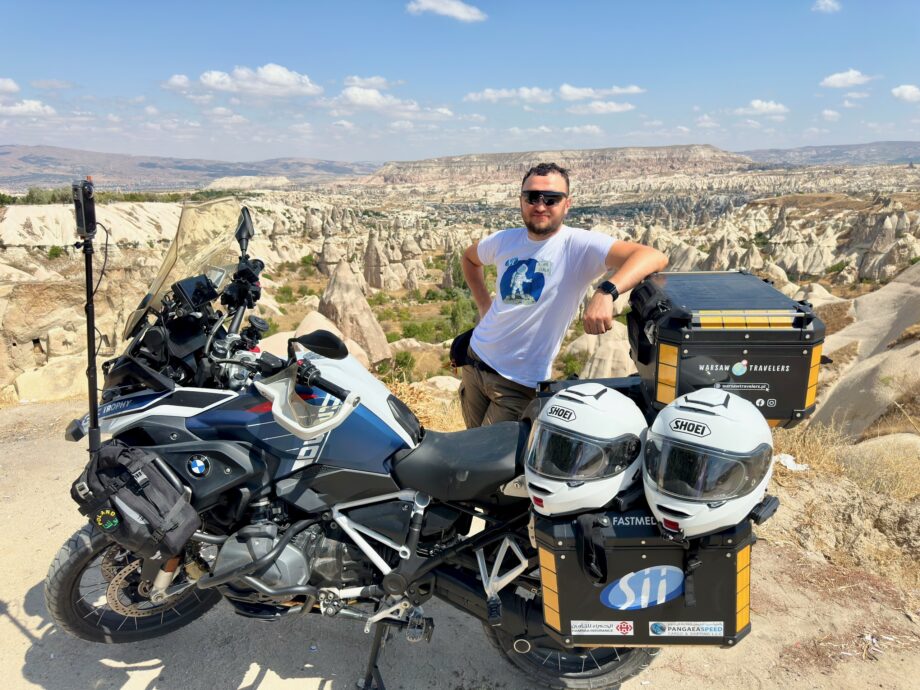
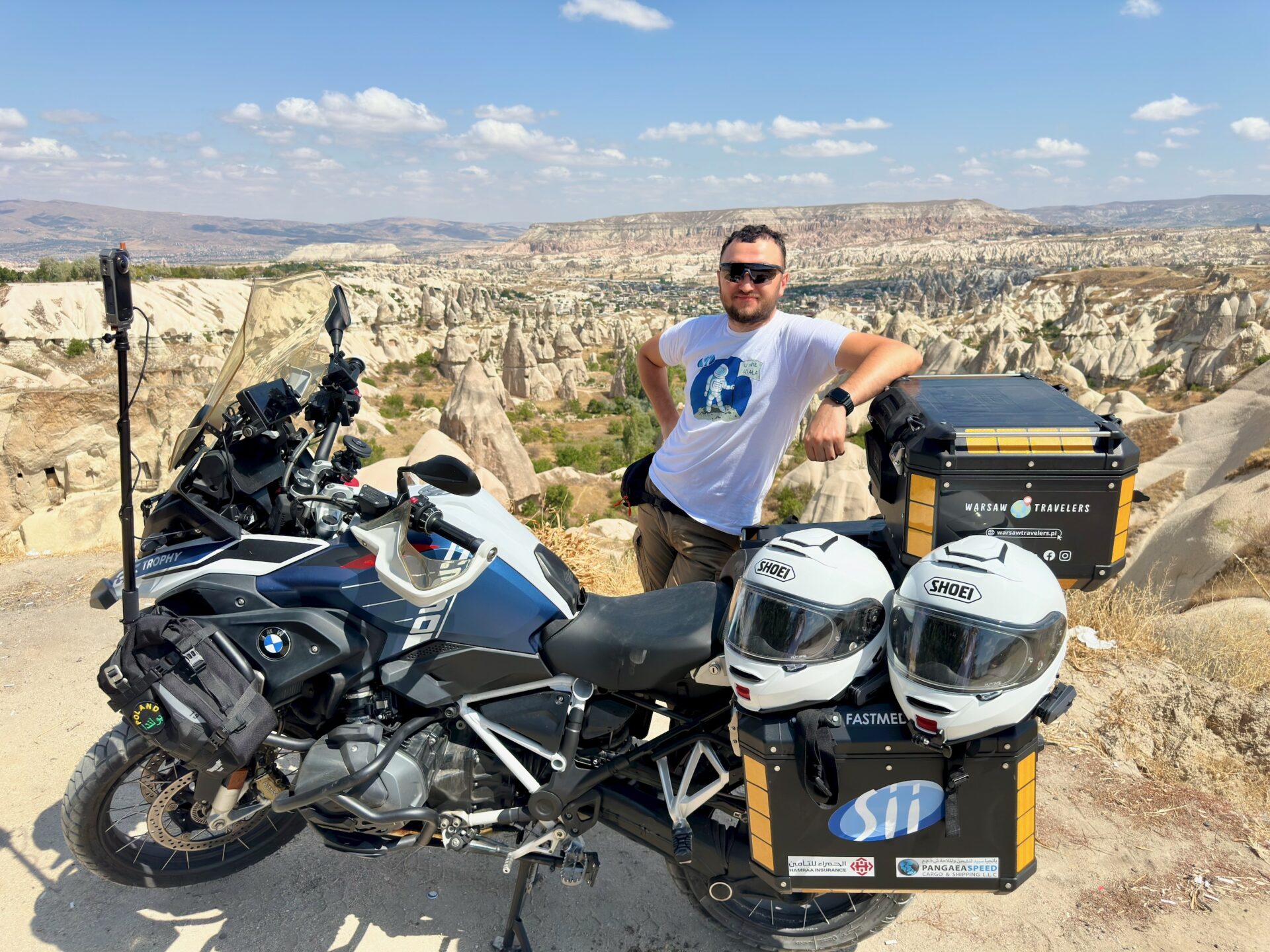
Cappadocia had been on Jadzia’s list for a long time. For me – not at all 😂. In photos it looked like one of those “Instagram must-see” spots, the kind everyone praises because they’re supposed to, but that might turn out to be a total tourist trap in real life. But when we were planning our motorcycle trip this year, Cappadocia came back on the table. Since we were already riding across Turkey, we decided to see for ourselves whether all those sunrise balloons are really worth the hype or just look good in travel agency ads.
We stopped in Göreme just for a bit, with a clear goal in mind – to do the balloon ride, soak up the atmosphere, and answer one simple question: is it really worth the effort, the money, and the ride into the middle of nowhere.
Where is Cappadocia located?
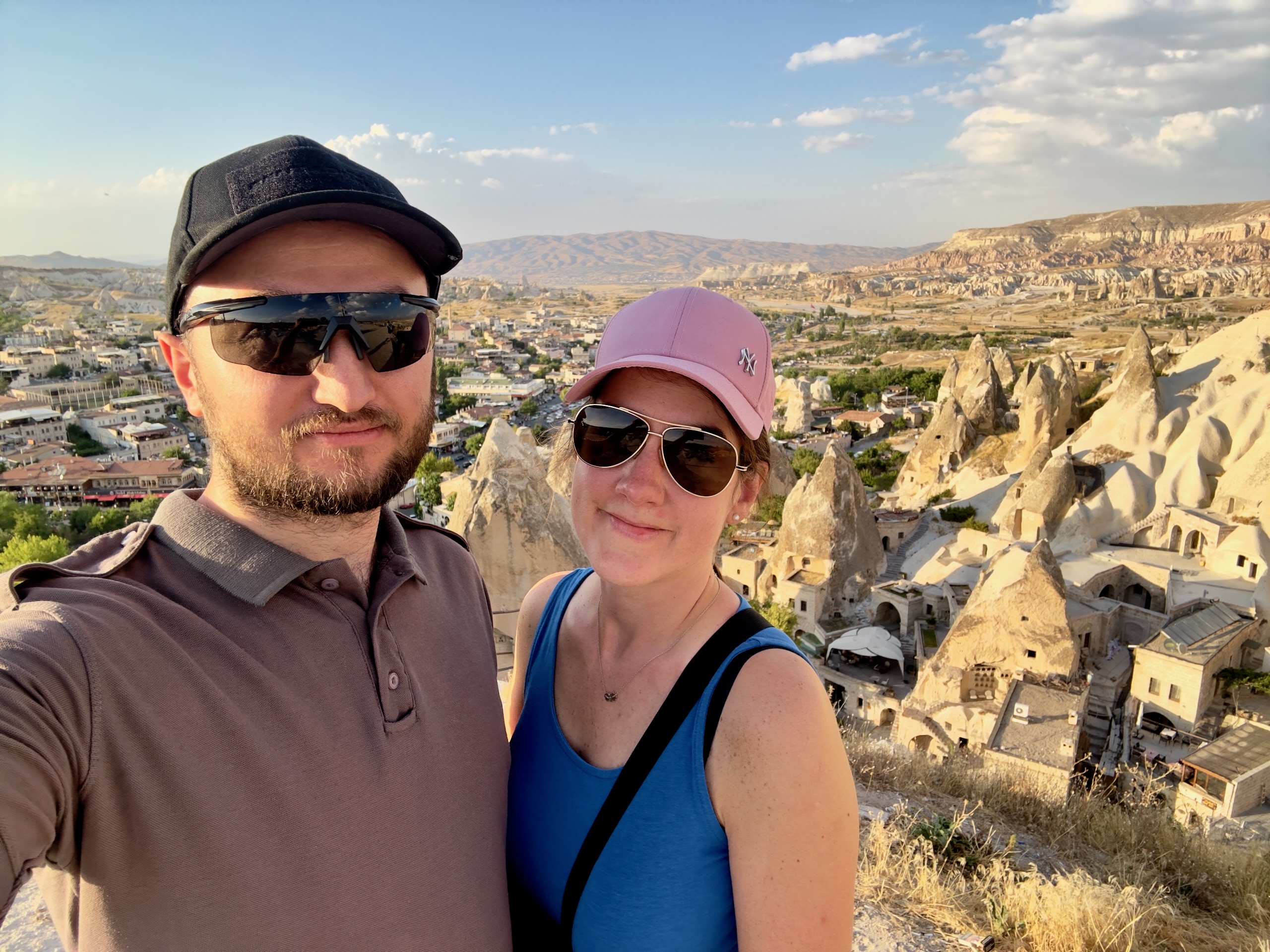
Cappadocia isn’t just one “balloon town” — it’s an entire region in central Turkey, historically much larger than what most people know from Instagram shots. Traditionally, it refers to an area in Central Anatolia that, according to modern Turkish administrative divisions, covers parts of the Nevşehir, Aksaray, Niğde, Kayseri, and Kırşehir provinces.
What most people picture when they think of “Cappadocia” is actually just a smaller, tourist-friendly part of the region — the area around Göreme, Uçhisar, Ürgüp, Avanos, Çavuşin, and a few nearby valleys. This is where you’ll find the famous fairy chimneys, rock-cut churches carved into soft tuff stone, ancient cave homes and monasteries, and underground cities. The whole surreal landscape is the result of volcanic eruptions (mainly from Mount Erciyes and Hasan Dağı) and thousands of years of erosion that shaped what everyone now uses as their desktop wallpaper.
The heart of the region is the Göreme National Park and the Rock Sites of Cappadocia, which was inscribed on the UNESCO World Heritage List in 1985. The park covers about 9,884 hectares — nearly 100 square kilometers — and includes valleys filled with rock-cut churches, extensive cave dwellings, and the remains of ancient settlements. That’s the “officially protected” part of Cappadocia, but tourism naturally spreads much wider across the whole region.
The most popular bases for exploring the area are Göreme, Ürgüp, Uçhisar, and Avanos — each with its own vibe, prices, and balloon views. We chose Göreme. For us, it was the most practical spot for a first encounter with Cappadocia and to organize the balloon flight. It’s not the only good option, but it fit perfectly into our route and travel logistics.
How to get to Cappadocia?
If you’ve been following our travel diary from the motorcycle trip across Turkey toward Iraq, you already know that Cappadocia wasn’t some separate “balloon getaway” — it was just another logical stop along the route. First a breather in Istanbul, then some cardio in Ankara, and further east came Göreme — the place where we’d finally see what all the balloon fuss was about. We weren’t aiming to “see everything”. It was just a stop: a night’s rest, a bit of atmosphere, a balloon flight, and then back on the road. Time was tight anyway — the road ahead was long, and we were a bit greedy to see as much as we could 🤣.
Our motorcycle route from Poland to Göreme
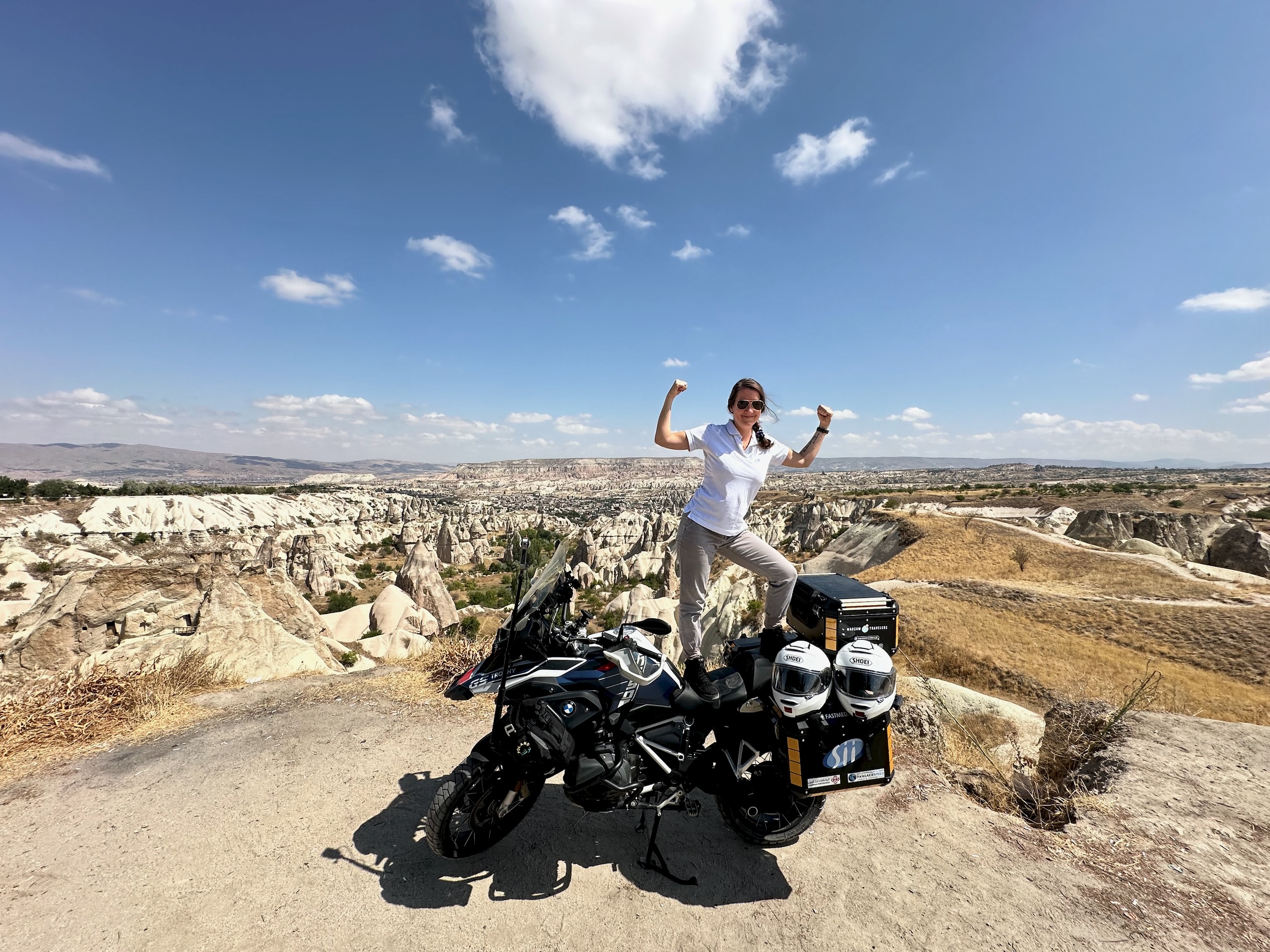
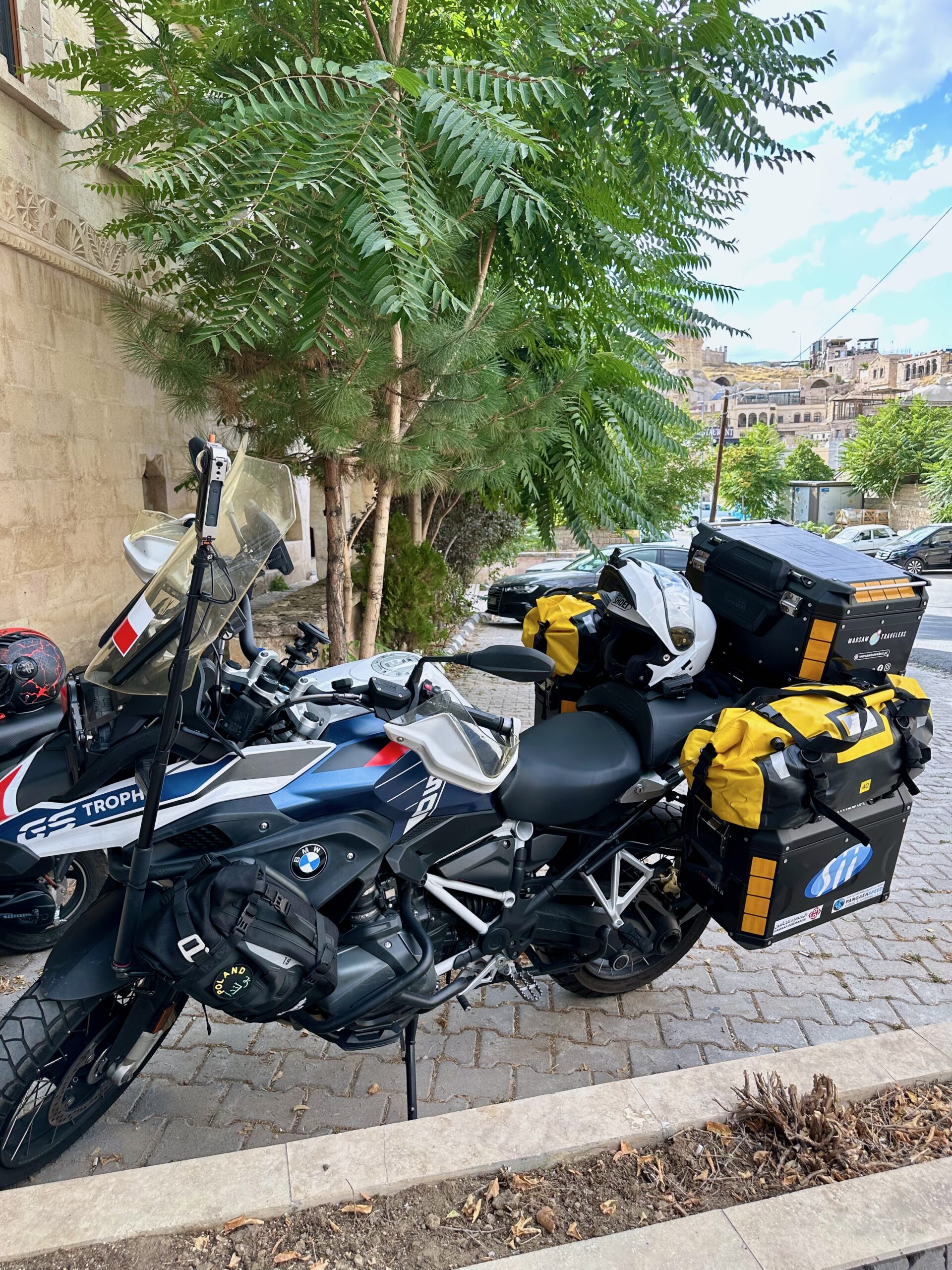
We started in Poland, rode through the Balkans and Istanbul, and then continued deeper into the country. We entered Cappadocia from the direction of Ankara — and if you’re staying in the capital, that’s honestly a very reasonable route.
From Ankara to the Göreme area, the main route is the O-21 highway toward Süleymanhüyüğü, where you turn onto the D300 road heading toward Göreme. In practice, it’s about a 3.5–4 hour ride depending on your pace and stops. The road is paved, wide, and pretty straightforward — a typical transit route with no off-road drama. Perfectly fine for both cars and motorcycles. When we were there (September 2025), there were some roadworks closer to Nevşehir, but nothing serious.
Options for those without a motorcycle
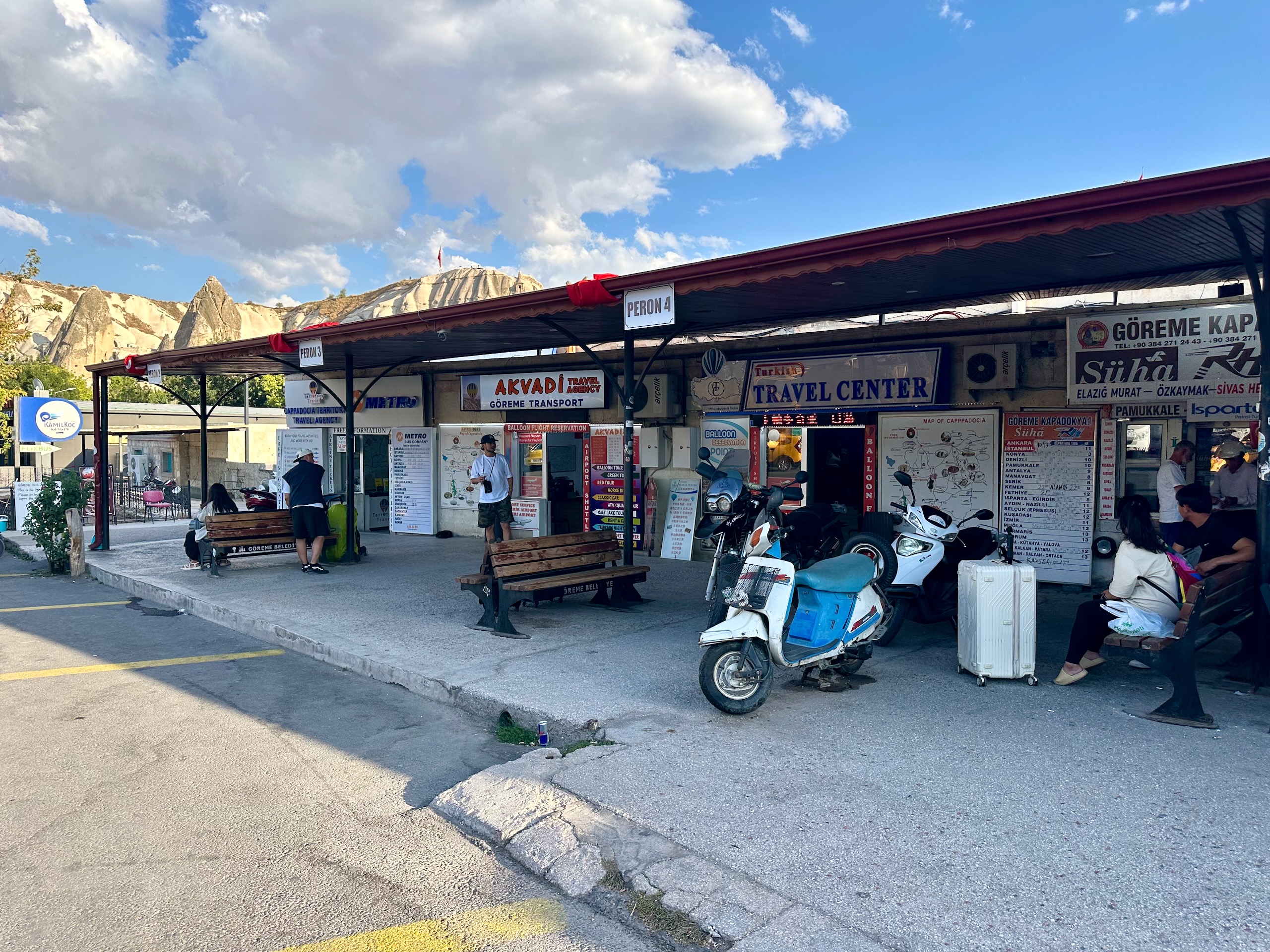
If you are not traveling by motorcycle or car, there are three main ways to get to Cappadocia:
- Plane + transfer (the easiest option). The region is served by two airports: Nevşehir Kapadokya (NAV) and Kayseri Erkilet (ASR). Flights operate here from major Turkish cities, including Istanbul (IST and SAW), via Turkish Airlines, AnadoluJet, and Pegasus. The flight from Istanbul takes around 1 hour and 10–20 minutes. From both airports, you can catch shuttle buses or arrange private transfers to Göreme, Uçhisar, Ürgüp, Avanos, and other nearby towns. The ride usually takes between 40 and 80 minutes, depending on your destination. It’s by far the quickest and most hassle-free option if you’re flying in just for Cappadocia.
- Long-distance bus (budget, but long). There are direct buses from Ankara to Göreme or Nevşehir, taking roughly 4–5 hours. From Istanbul, you can catch overnight buses to Nevşehir or Göreme — usually around 10–12 hours, depending on the operator and route. The details vary slightly between companies, but these connections are well-documented in current travel guides and planners. The upside is the low price and the convenience of not having to drive yourself; the downside is, of course, the long ride and less flexibility in reaching smaller towns.
- A car from a rental company. Istanbul → Göreme: around 725–760 km, which means over 8 hours of driving in practice, depending on your route and how long it takes to escape Istanbul’s traffic. Ankara → Göreme: about 3.5–4 hours, as mentioned above.
There’s no classic “city-style” public transport here — no metro, no dense network of tourist buses. So you’ll end up relying on airport shuttles, small local minibuses between towns, organized tours (often door-to-door from your hotel), or your own set of wheels.
Accommodation
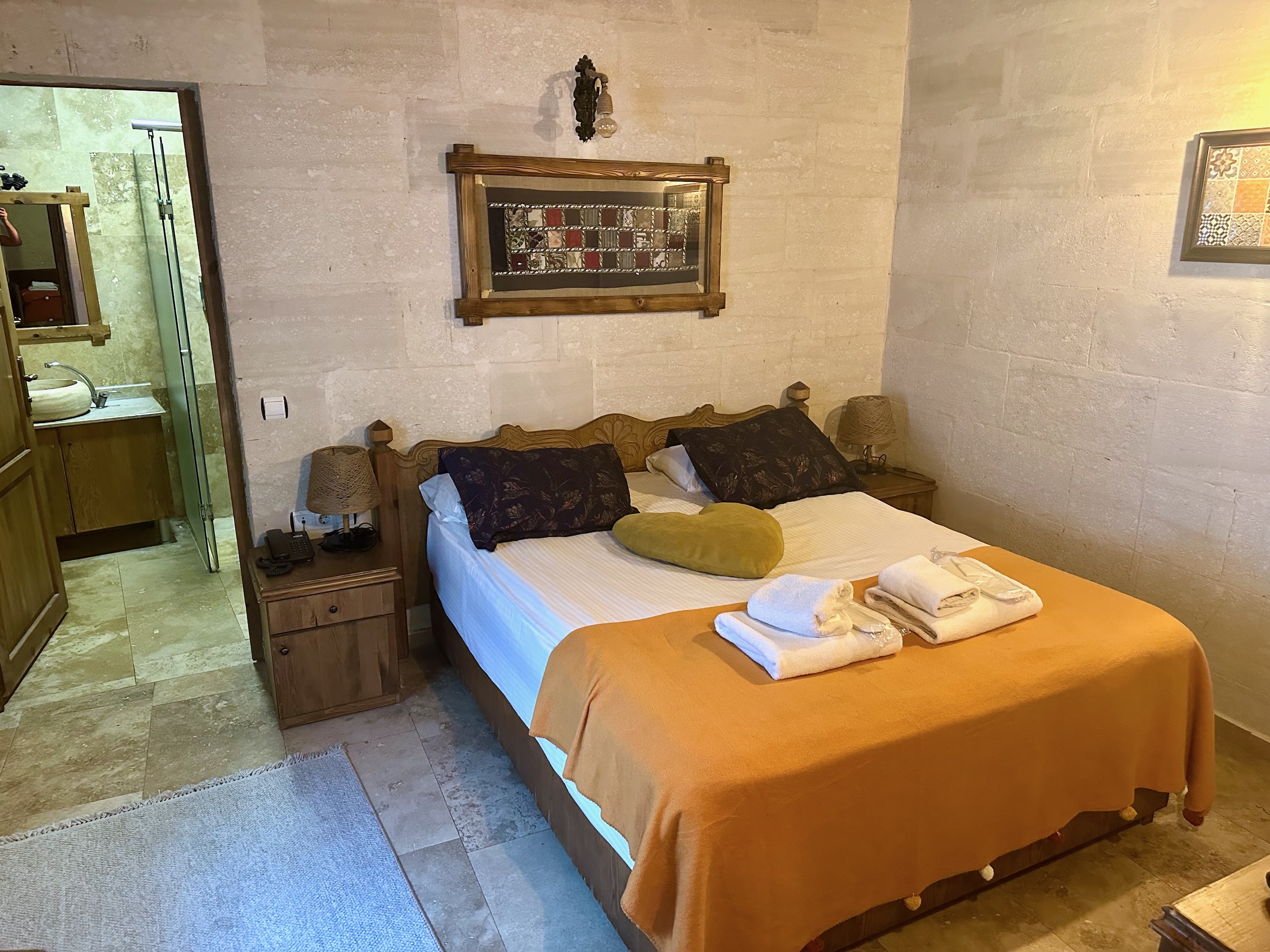
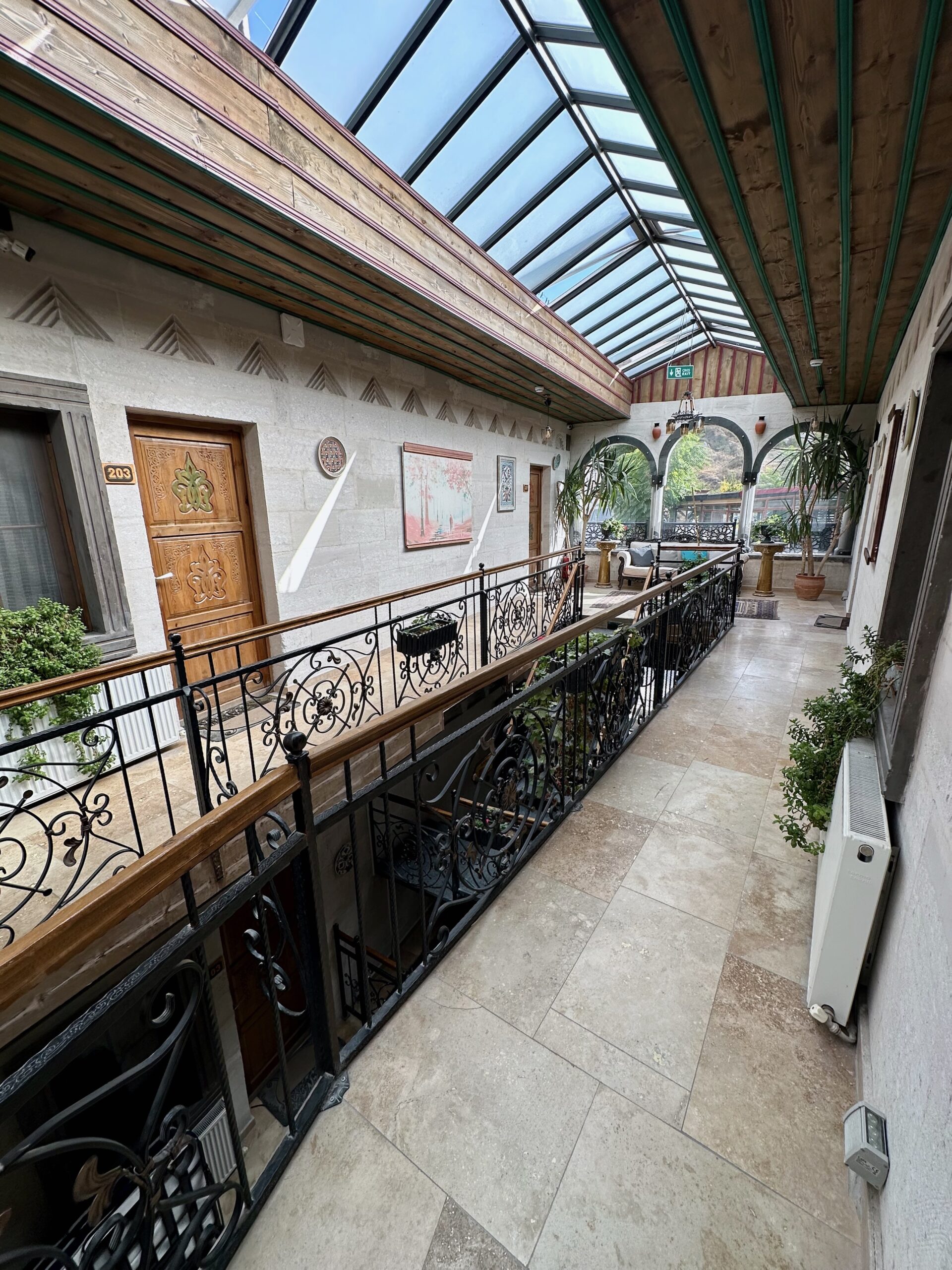
We were pretty cautious when it came to choosing accommodation in Cappadocia. While browsing places in and around Göreme on Booking or Agoda, we noticed quite a few “new” listings — no reviews or just a handful posted within a short time, with glossy, picture-perfect photos and suspiciously good prices. Sometimes that really does mean a newly opened place, but often it’s just the same property reopening under a new name after wiping an old account with poor ratings. That is why it is worth establishing a simple rule: we do not make blind reservations just because something is “new and cheap”.
We stayed at Grand Elite Cave Suites. The hotel is about a 5–7 minute walk from the center, easy to reach, and with on-site parking — a big plus for us since we could park the motorcycle right by the reception with zero issues. Free Wi-Fi was included, and the whole “sleeping inside a rock” vibe definitely delivered. Perfect material for a Facebook photo, haha.
Roads and traffic: is Cappadocia wheel-friendly?
This region is fairly compact, but not to the point where you can cover everything on foot. The valleys are intertwined, the towns are scattered across hills, and the distances between Göreme, Uçhisar, Ürgüp, Avanos, or Çavuşin are usually just a few to a dozen kilometers apart. Sounds close, but under the Turkish sun, with elevation changes and dusty side roads, walking everywhere quickly stops being romantic. Cappadocia works best in two modes: trekking through specific valleys or driving between spots by car or motorcycle.
The main roads in the region are paved, single-lane in each direction, with speed limits of around 50 km/h in built-up areas and 80–90 km/h outside towns. Driving between the larger towns is easy — the roads are well-marked, traffic is moderate, and the overall experience is pretty relaxed.
Food
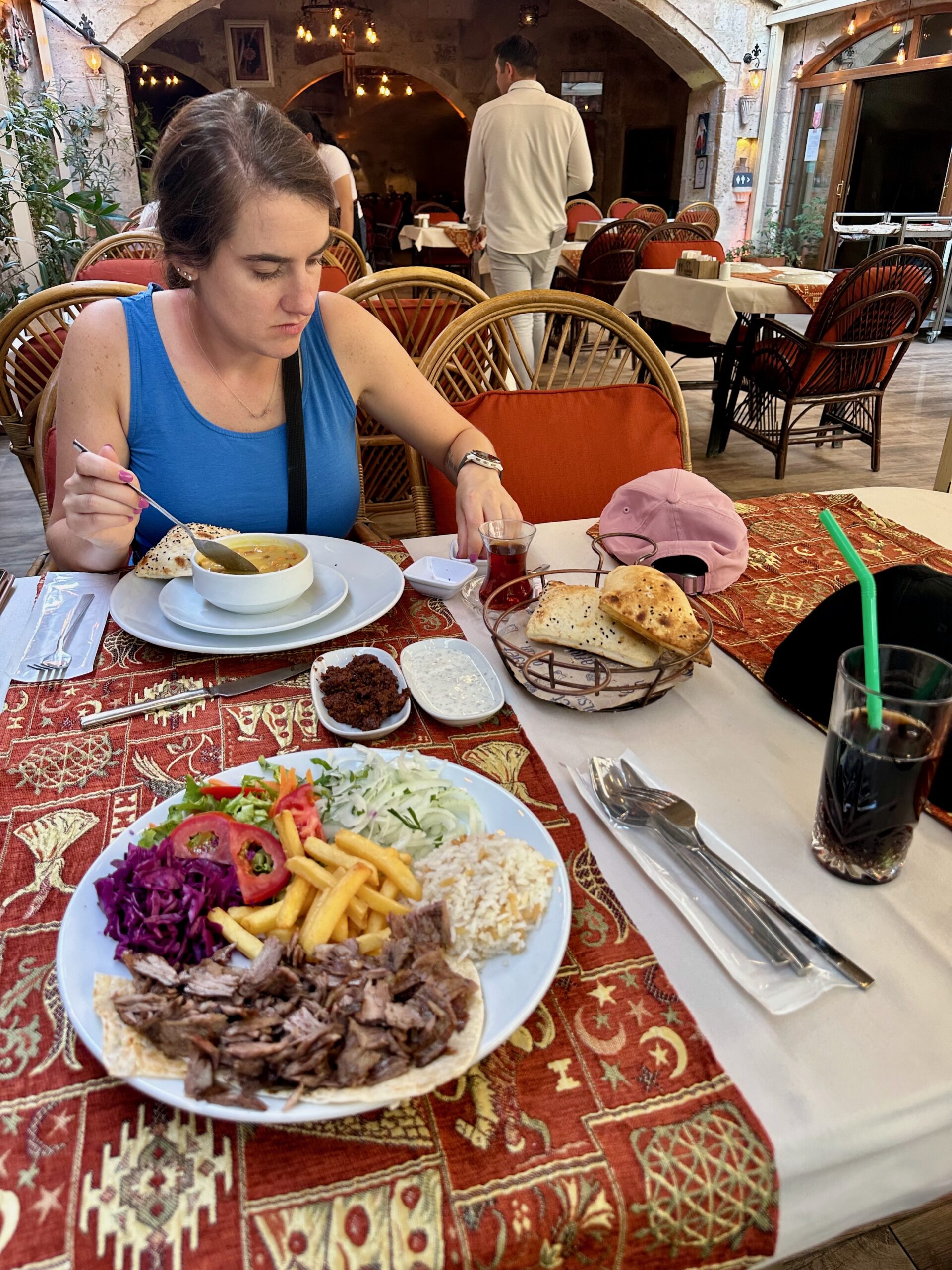
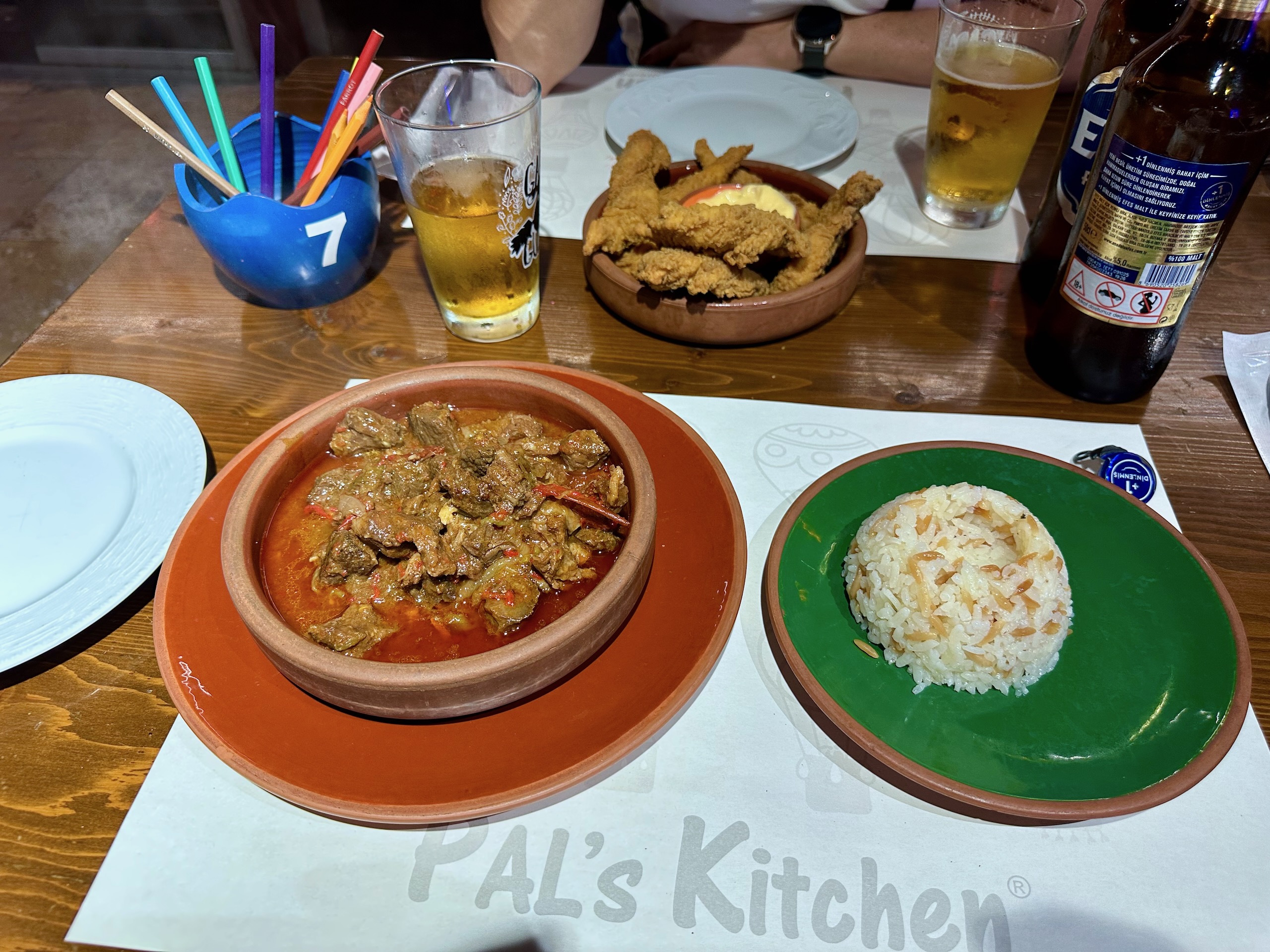
If you already know Turkey from its “normal” side — places like Ankara, non-touristy parts of Istanbul, or small roadside eateries — you probably have a clear picture in mind: good food, generous portions, and prices that still feel friendly for a Polish wallet. Local lokantas, kebabs, pide, soups, breakfasts — you can eat well without breaking the bank. That’s pretty much what Turkish cuisine is all about: plenty of bread, vegetables, grilled meat, meze, and desserts like baklava — simple, hearty, and rooted in tradition.
And now Göreme enters, all “touristy”.
In the center of Göreme, restaurant prices can easily be two to three times higher than what you’d pay elsewhere in Turkey for pretty much the same food. And we’re definitely not the only ones who noticed it — other travelers and vloggers often mention the same thing. The most “scenic” and “Instagram-worthy” spots in Göreme run on tourist pricing, so it’s smarter to look for food a bit away from the main street and those rooftop places with balloon views.
What to eat (and where to find normality):
- Turkish classics — kebab (in all its variations), mantı (dumplings with yogurt), gözleme, soups like mercimek or ezogelin, pide, meze, those endless breakfast spreads with a dozen tiny bowls, ayran, and tea by the liter — they’re all still here, still delicious, and often still fairly priced.
- to avoid overpaying:
- go down a block or two from the main pedestrian street with rooftop bars,
- Check reviews based on their content, not just the star ratings (real photos from people, price information).
- Compare 2–3 places instead of going for the first “best view in Cappadocia”.
Climate and weather conditions
Cappadocia sits in central Anatolia at around 1,000 meters above sea level and has a typical continental climate — hot, dry summers, cold (often snowy) winters, and big temperature swings between day and night. This isn’t the Riviera; it’s a high, dry plateau in the middle of the country. Official climate data for the Göreme/Nevşehir area shows average daytime temperatures in summer around 26–30°C, while nights can drop below 15°C. In winter, daytime temperatures hover around zero, and freezing nights with snow are completely normal.
It is this altitude and dry climate that have two key effects:
The daily temperature range here is huge — in practice, from late spring to early autumn you can walk around in a T-shirt during the day. But at sunrise, when the balloons take off, it gets properly chilly, even if the forecast says “hot day ahead”. A hoodie, softshell, or light jacket with long sleeves isn’t overkill, it’s just common sense. The balloon companies are pretty upfront about this — flights happen at sunrise, when the air is at its calmest and also at its coldest.
Weather and balloon flights – why there is so much talk about cancellations:
- Flights are strictly dependent on weather conditions and supervised by the Turkish Civil Aviation Authority — without their approval, nothing takes off.
- The usual reasons for cancellations include strong winds, gusts, storms, rain, poor visibility, or unstable air conditions.
- Various analyses and data from balloon operators show that flights take place on about 250–260 days a year, which means roughly 30–35% of days are canceled annually. The difference between seasons is huge — summer has very few cancellations, while winter months like January can see most days grounded.
For us, it worked out textbook-style: we happened to fly on a day with perfect conditions, and the very next morning, as we were packing to leave, the region was already getting rain and no balloons took off. A perfect example of rule number one.
On-site safety
It’s a calm place. We didn’t have a single moment where we felt unsafe — not on the streets, not in the hotel, not while riding the motorcycle. Göreme and its surroundings feel like a small tourist town that lives off people coming for balloons and trekking, so it’s really not in anyone’s interest to cause trouble here.
That also matches what we found online: Cappadocia is considered one of the safer regions in Turkey, with low crime rates and mostly minor issues like pickpocketing or small tourist scams. Serious crimes against visitors are rare. Of course, official travel advisories for Turkey in general still mention the risk of terrorism or protests in major cities and border areas, but Cappadocia isn’t part of those high-risk zones.
What’s really worth paying attention to isn’t whether it’s dangerous, but whether someone’s trying to rip you off as a tourist:
- inflated “tourist prices”, especially in restaurants, view bars, and so-called luxury services;
- payment in euros or dollars with a ridiculous exchange rate instead of in Turkish lira;
- tours or transfers sold without a clear price list;
- classic tourist traps found all over Turkey — pushy touts, “special prices”, and random surprise surcharges.
Balloon flight over Cappadocia: what it’s really like
Let’s start with the most important thing — hot air balloon flights in Cappadocia aren’t some backyard operation. It’s a properly regulated industry: flights can only take place with approval from the Turkish Civil Aviation Authority (DGCA/SHGM), operators need valid licenses, pilots must be certified, and all equipment goes through regular inspections. If the weather conditions aren’t right, the flight simply gets canceled — end of story, no “we’ll risk it anyway”.
For us, it went like this: we booked our flight in August for September through GetYourGuide — a regular “standard flight”, nothing VIP or fancy. Prices during the season can sting a bit — we paid around 500 PLN per person for a standard basket, which felt fair at the time. Looking at current data and offers for 2025, standard flights usually range between 150 and 250 euros per person, depending on the season, basket size, and whether you book directly or through a third party. There are also pricier options — deluxe packages, smaller baskets, or private flights.
If you want to book the same option we did – ➡️ here’s our affiliate link to GetYourGuide ⬅️. We flew with this operator and can genuinely recommend them. If you use the link, a few coins will land in our fuel or coffee fund, and the price stays exactly the same for you. 😉
Here is a step-by-step overview of the logistics:
- Booking: You pick a date and time slot, provide your insurance details and the name of your hotel or guesthouse in Cappadocia — that’s important because they use it to arrange your pickup. In standard packages, the flight takes place at sunrise, lasts about an hour in the air, and the whole experience (including transfers) takes roughly 2.5 to 3 hours.
- Wake-up and pickup: Expect to be collected around 4:00–5:00 a.m., depending on the season and where you’re staying. At the meeting point, there’s usually a small breakfast — tea, coffee, and something to nibble on. Nothing fancy, just enough to remind your body that it’s awake.
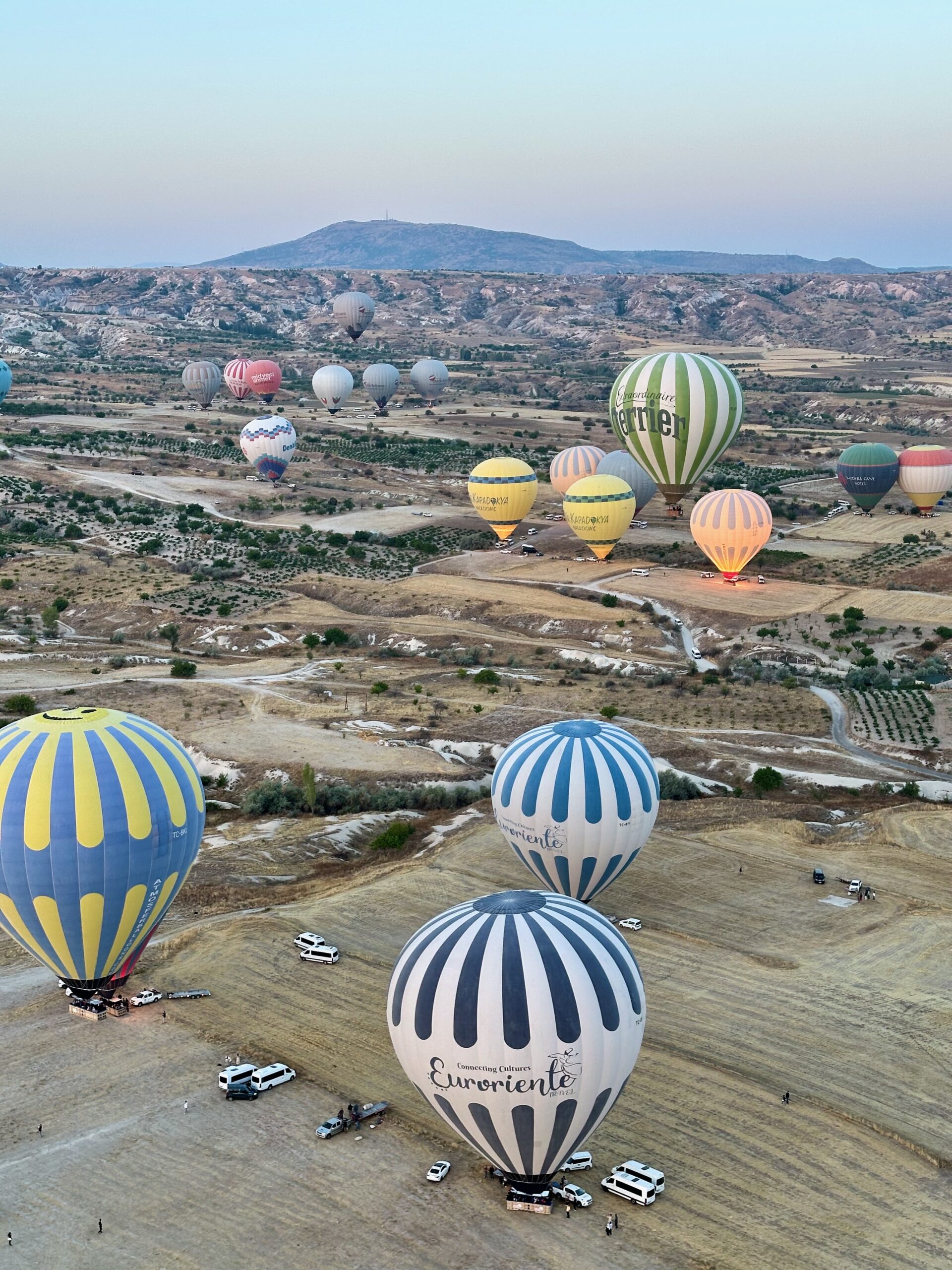
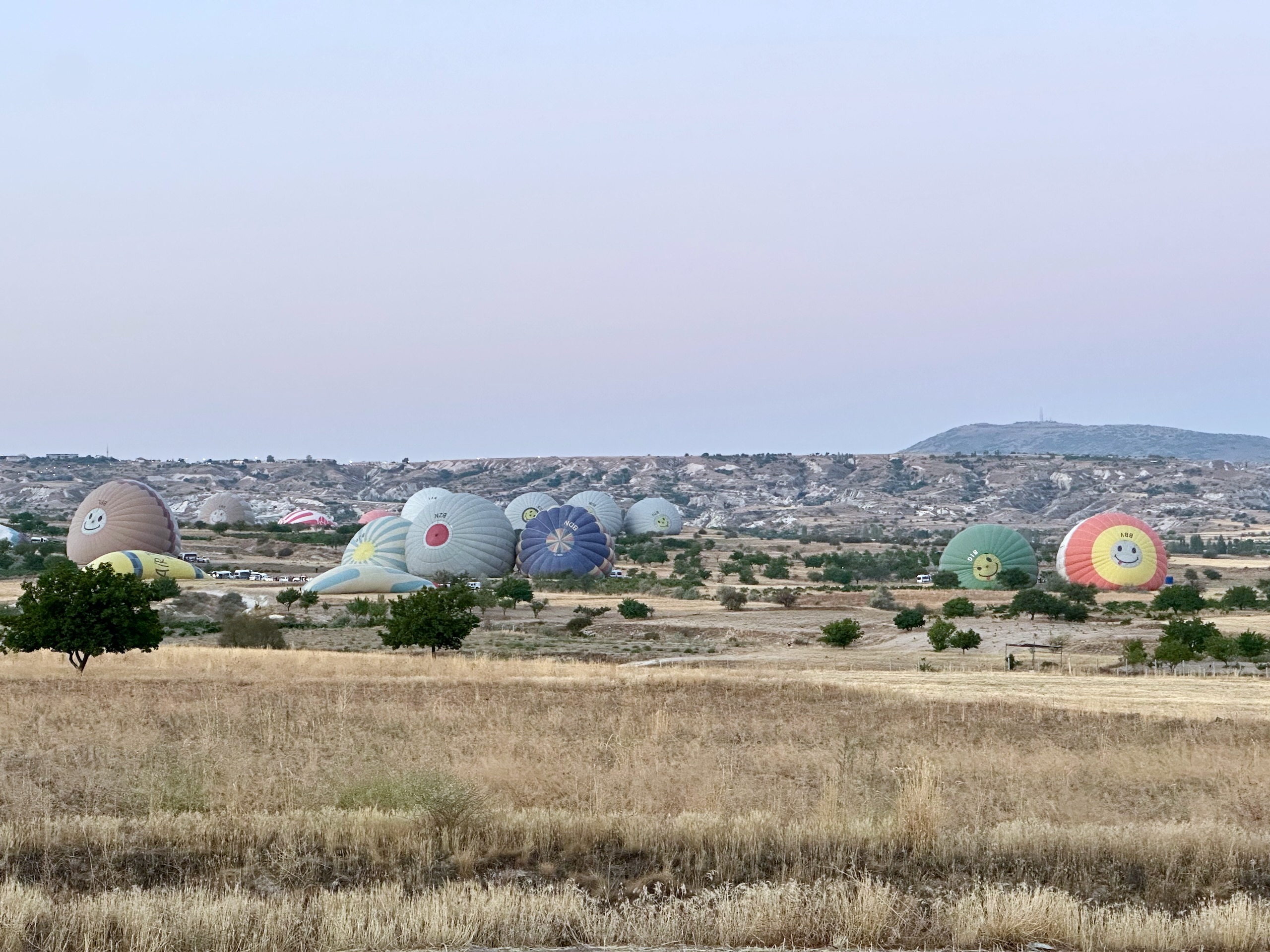
- Takeoff: You’re driven by bus to the launch site, where the balloon is laid out, filled with air, and fired up with the burners. The baskets are usually divided into sections, with typical operators fitting around 16–28 people depending on the flight type. You climb in from the side, grab the handles, and listen to a short safety briefing — which turns out to be quite important during landing.
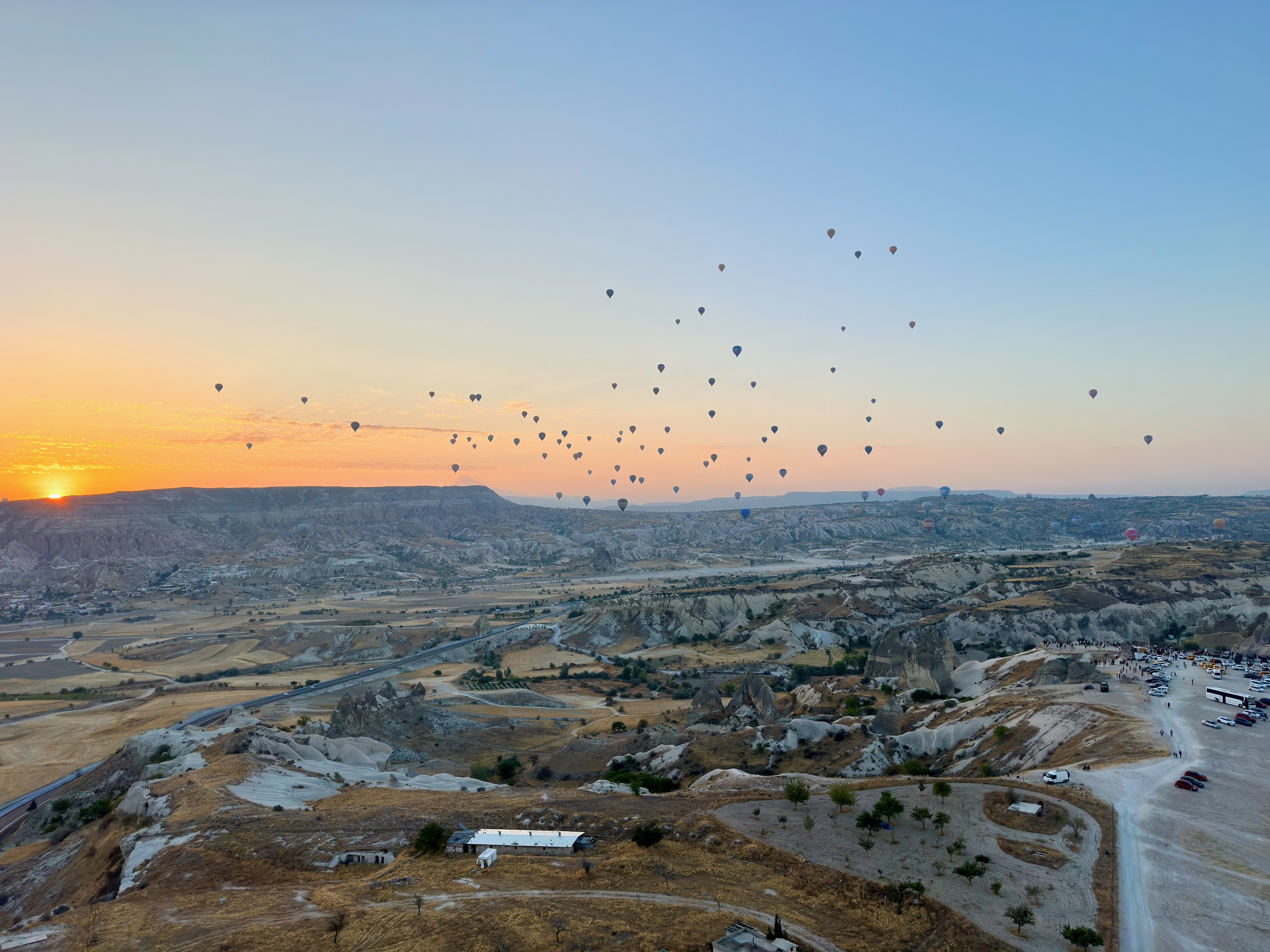
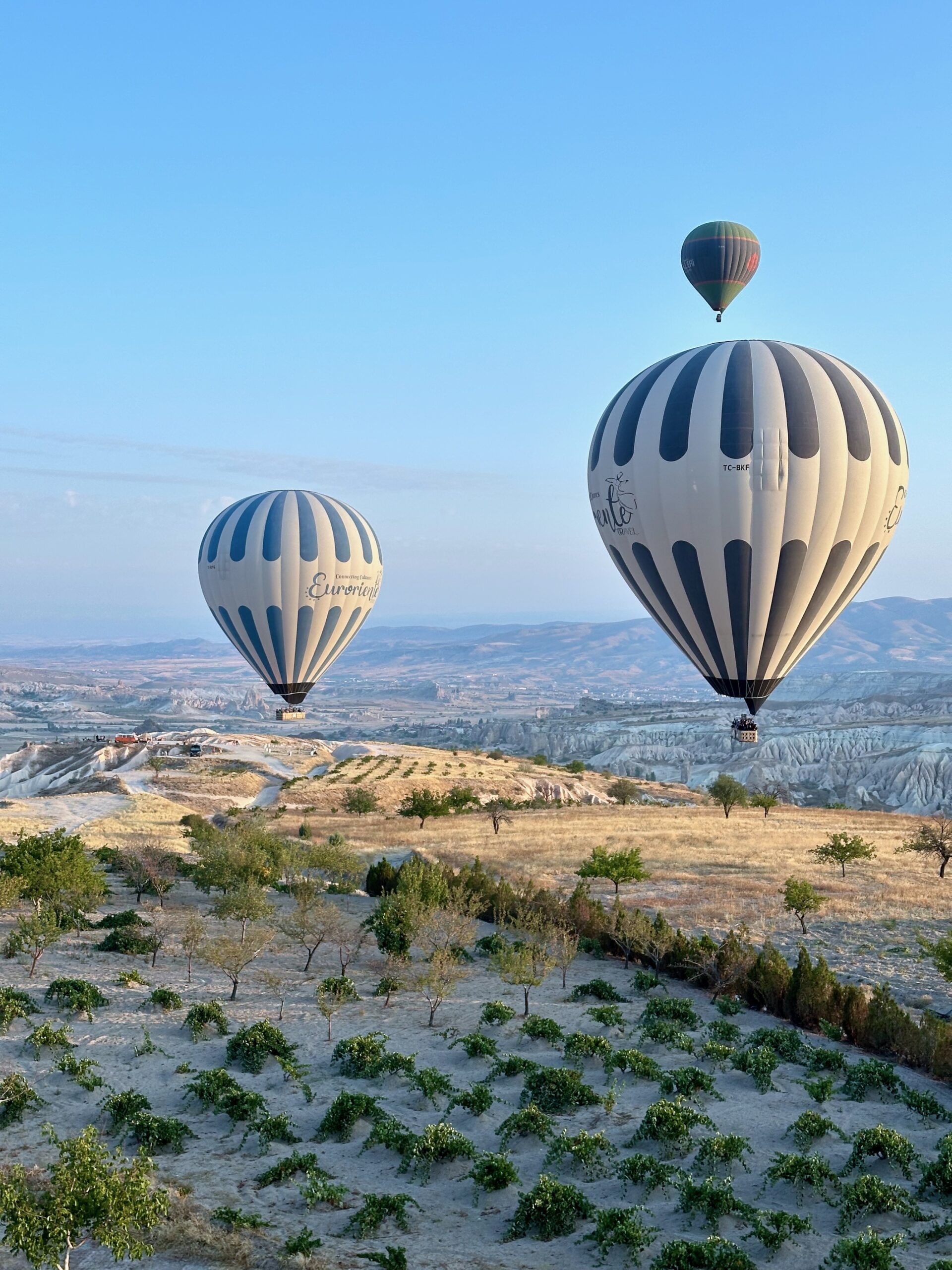
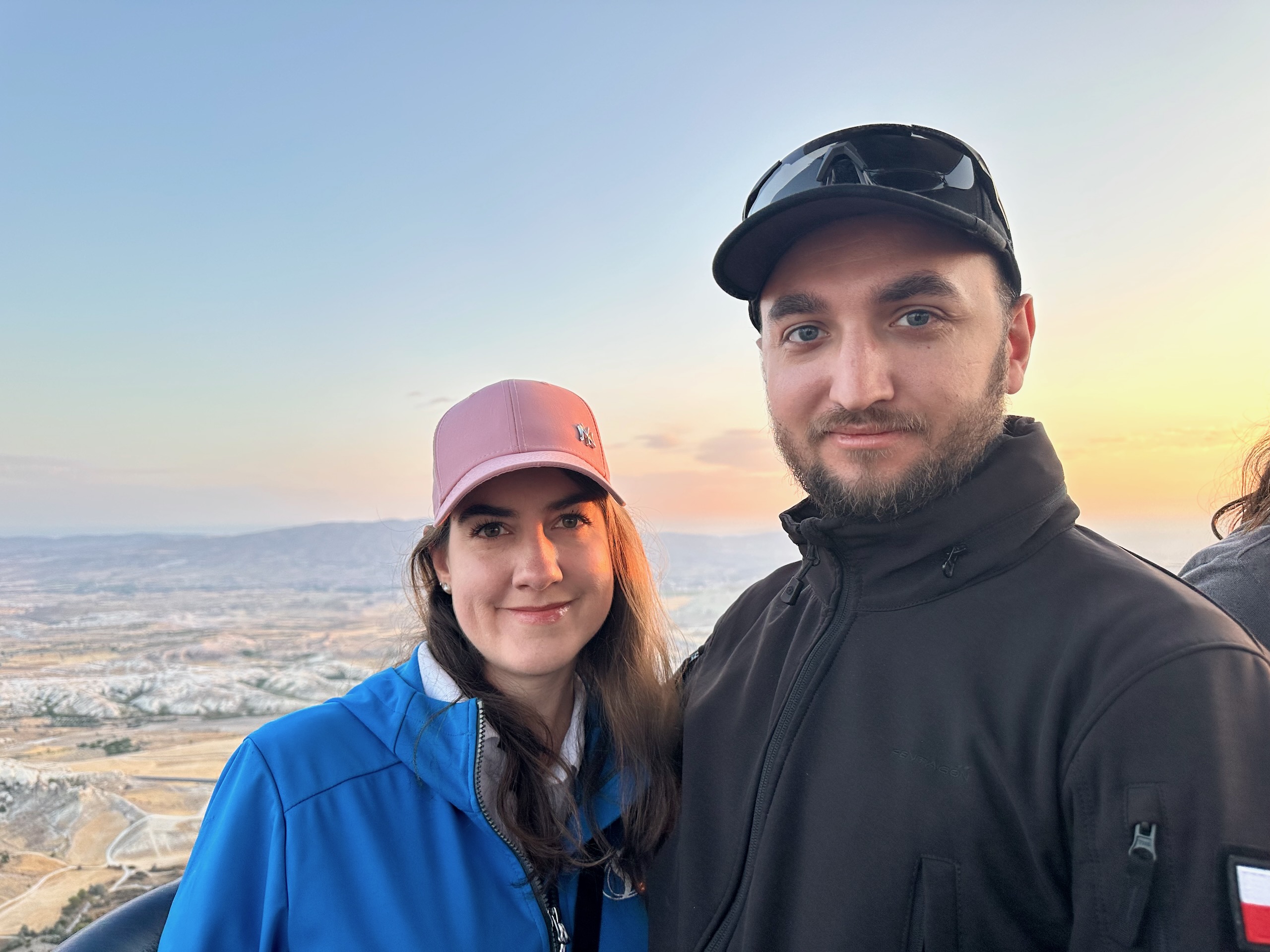
- The flight itself – what it feels like and what to expect: Takeoff is surprisingly smooth. There’s no elevator effect or sudden jolt. The balloon doesn’t “fly” so much as it drifts gently with the wind — it’s a calm float, not a thrill ride.
Altitude-wise, most operators say standard flights reach around 500–800 meters above the ground, sometimes closer to 1,000 if conditions allow. You’ll also spend part of the time lower down, gliding quietly over valleys and rock formations. In practice, you see the sunrise, other balloons all around, valleys below, towns reduced to tiny dots — and even if you’re not into Instagram moments, it’s genuinely impressive.
For anyone afraid of heights: it’s much easier than you’d think. The basket feels stable and solid, the sides are high, and it doesn’t feel like looking down from a 30th-floor balcony. It’s more like standing in a wooden box and watching the landscape unfold. - Landing and return: Landings range from perfectly soft to pretty rough, which is why that pre-flight briefing isn’t just for show. On the ground, the crew is already waiting with vehicles, packing up the balloon, a glass of “champagne” (sometimes non-alcoholic), and a little medal or certificate. They’ll then drive you back to your hotel — usually just in time for a proper breakfast.
What to see in Cappadocia besides hot air ballooning?
The balloon ride already gives you a full aerial tour of most of the “postcard” spots — Love Valley, the various valleys around Göreme, those iconic rock formations and fairy chimneys. And honestly, from above, a lot of it looks quite similar. That’s not a complaint, just a fact — the landscape is cohesive, so unless you’re planning to write a PhD on every individual valley, there’s no need to stress about checking off every name.
If you want to add something else and you have more time than we do:
- Valleys like Love, Rose, Red, Pigeon, and Pasabag offer scenic hiking trails among the rock formations — some spots are pure Instagram material, while others are quiet and peaceful.
- Uçhisar (castle) – another classic with a panoramic view of the region.
From our side: we didn’t make a complete list of attractions, but there are two things we can safely suggest.
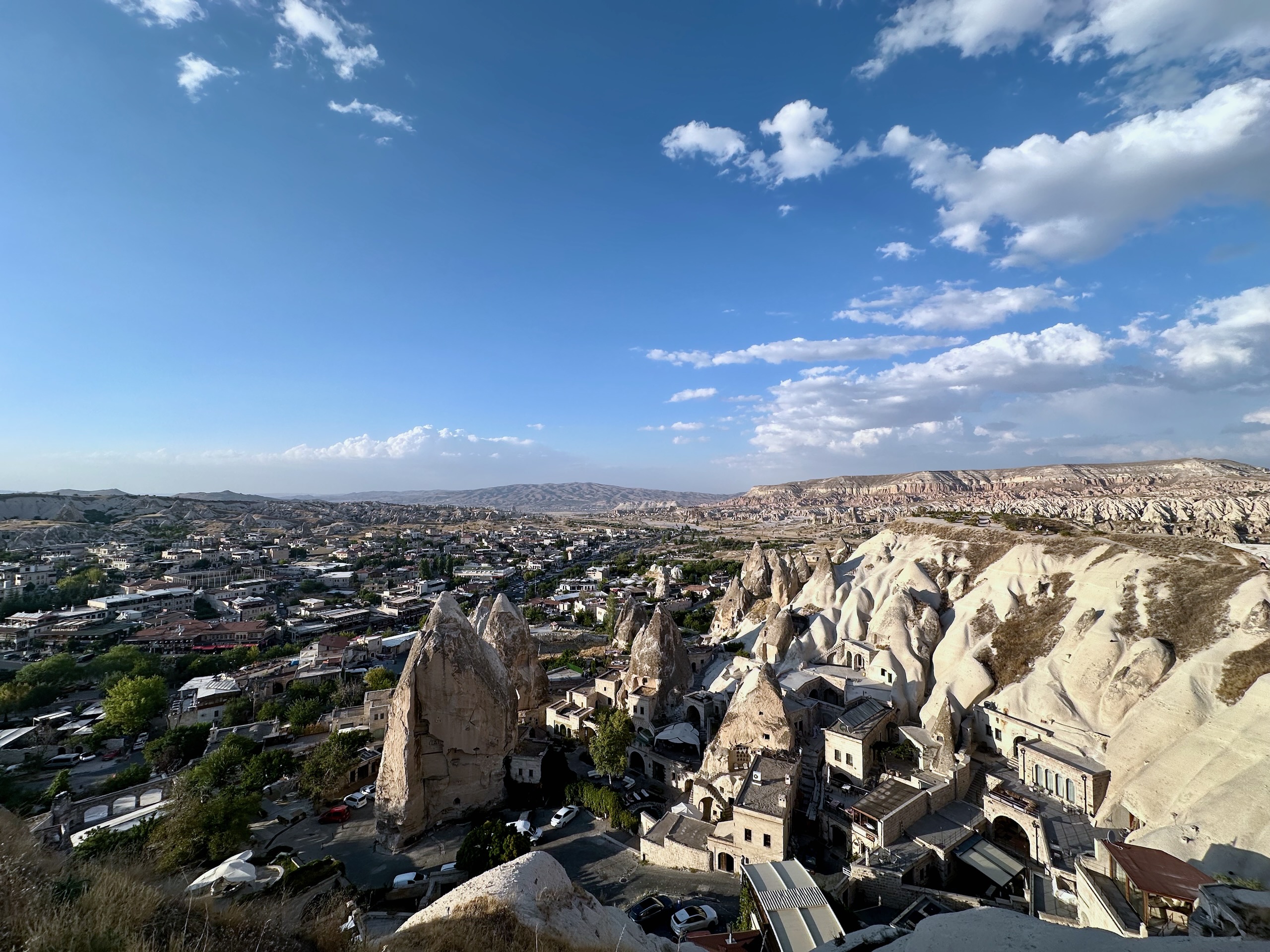
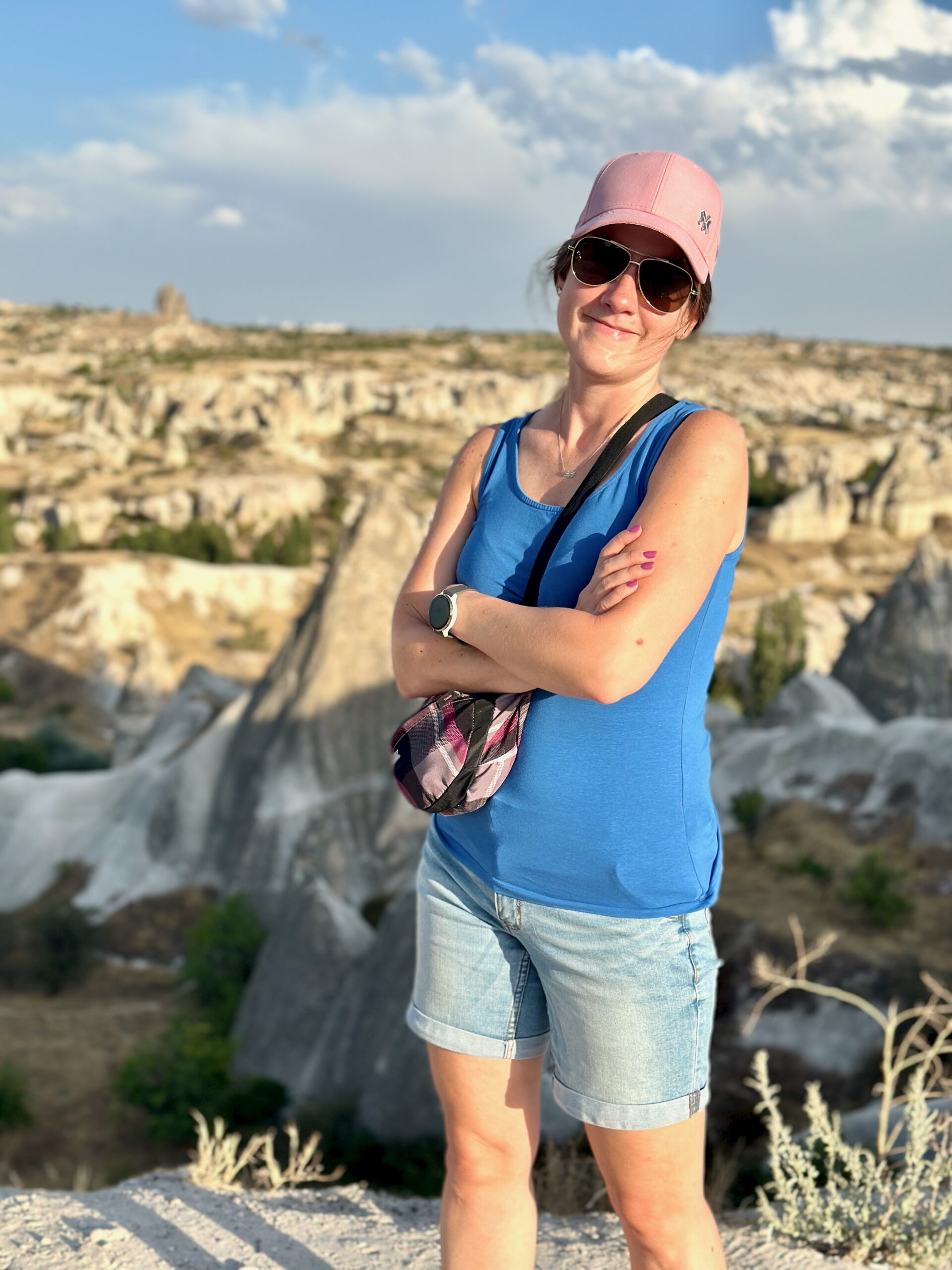
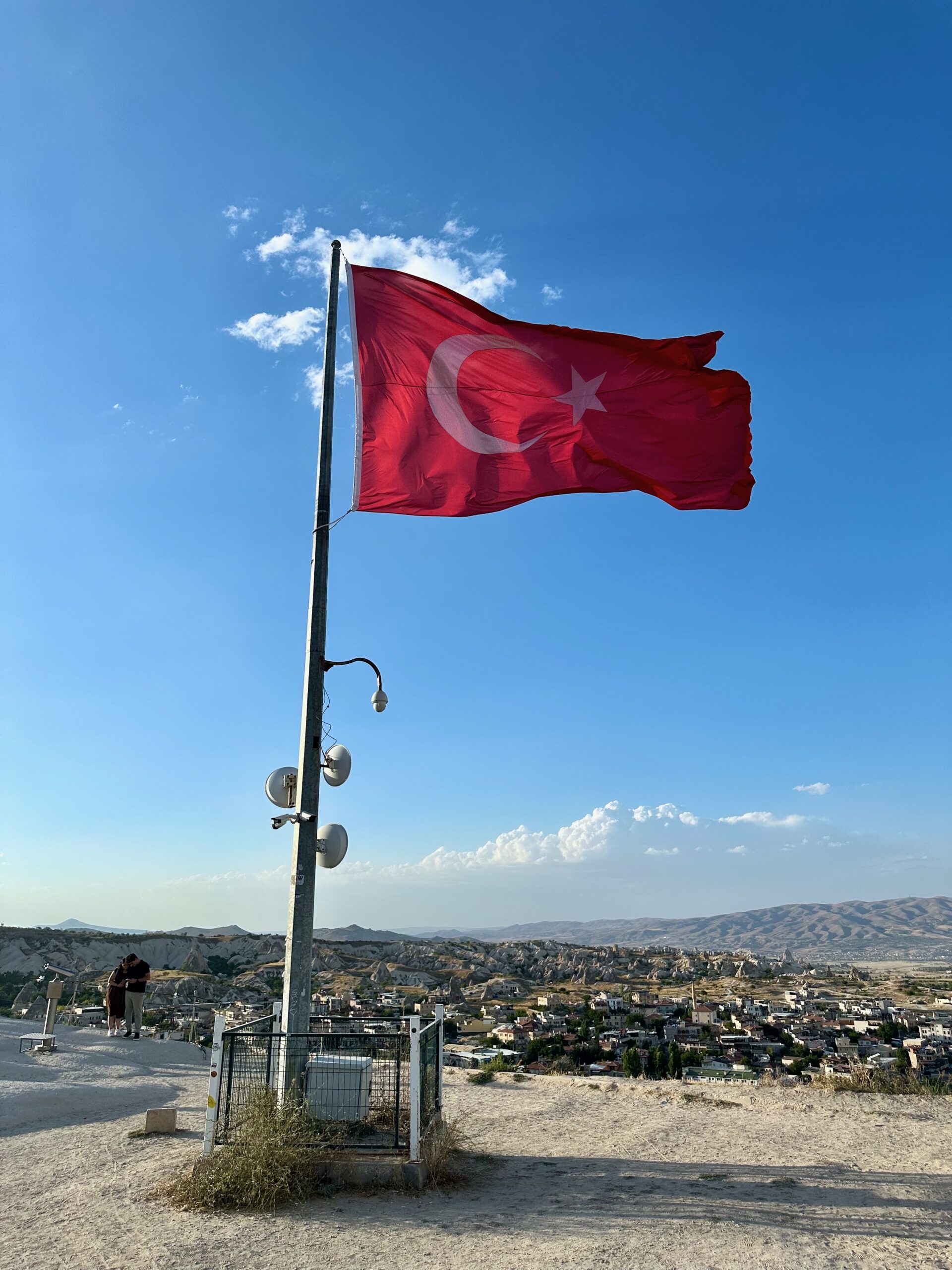
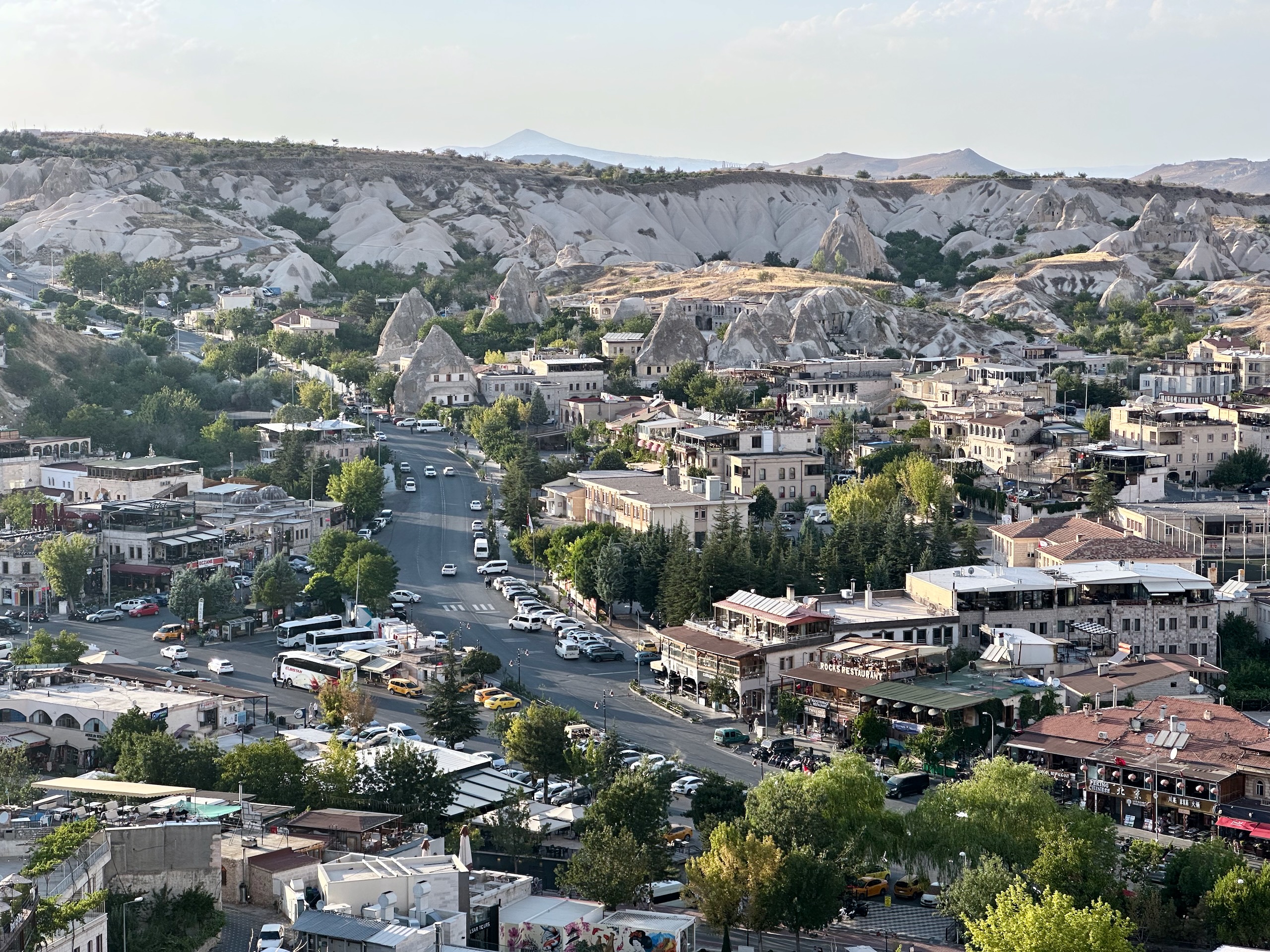
Observation Deck
📌 Pin on Google Maps – click here.
It’s the viewpoint hill above the town, often marked on maps as Sunset Point or Aydın Kırağı. The entrance fee is small — somewhere around 10–30 TRY depending on the source and current rates — basically symbolic.
The climb is short and uphill, but easy enough for anyone who can handle a regular incline. At the top, you get a panoramic view of Göreme, the valleys, and the fairy chimneys — a great spot for sunrise or sunset, and for watching the balloons.
Zelve Open Air Museum
📌 Pin on Google Maps – click here.
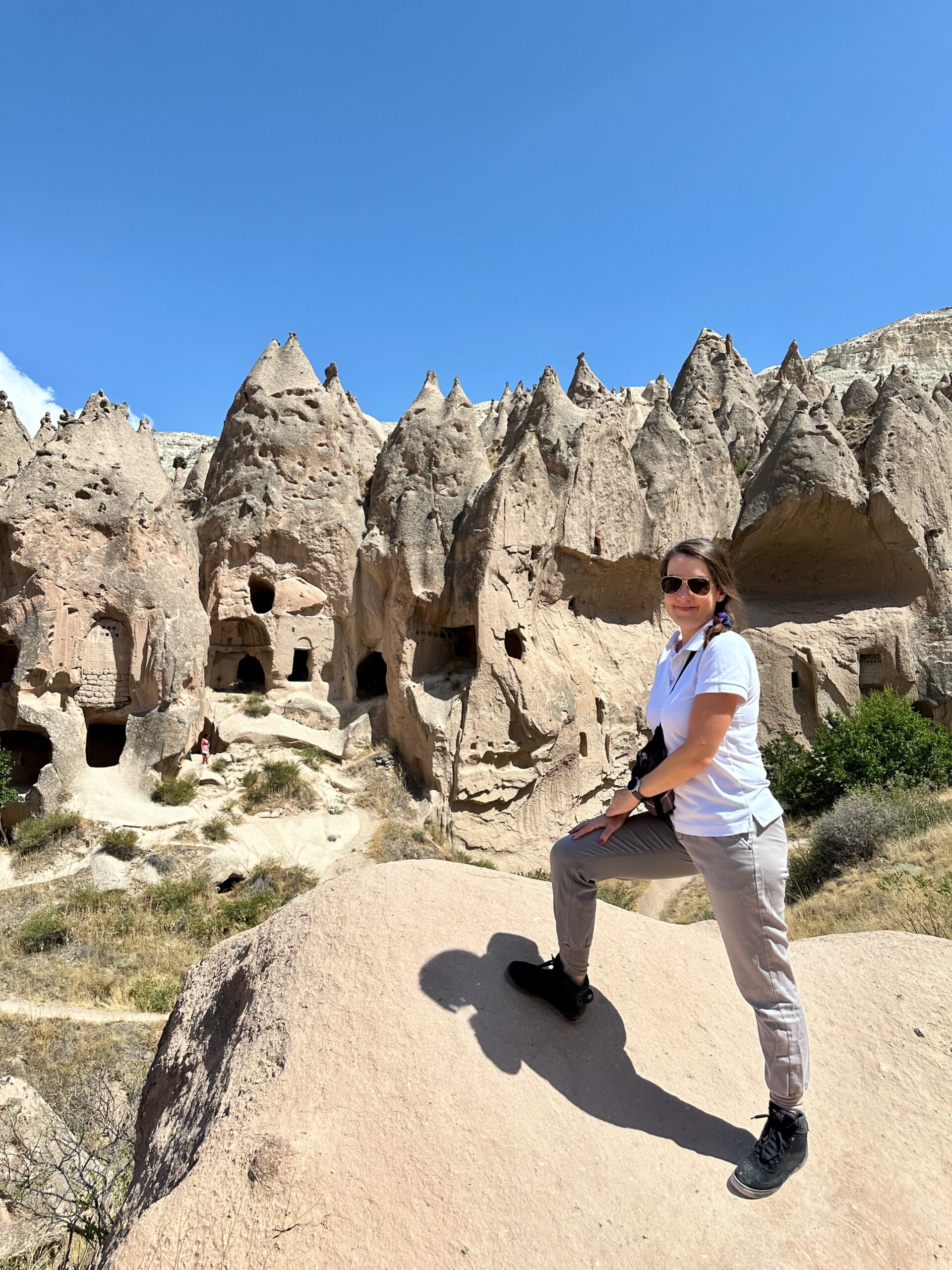
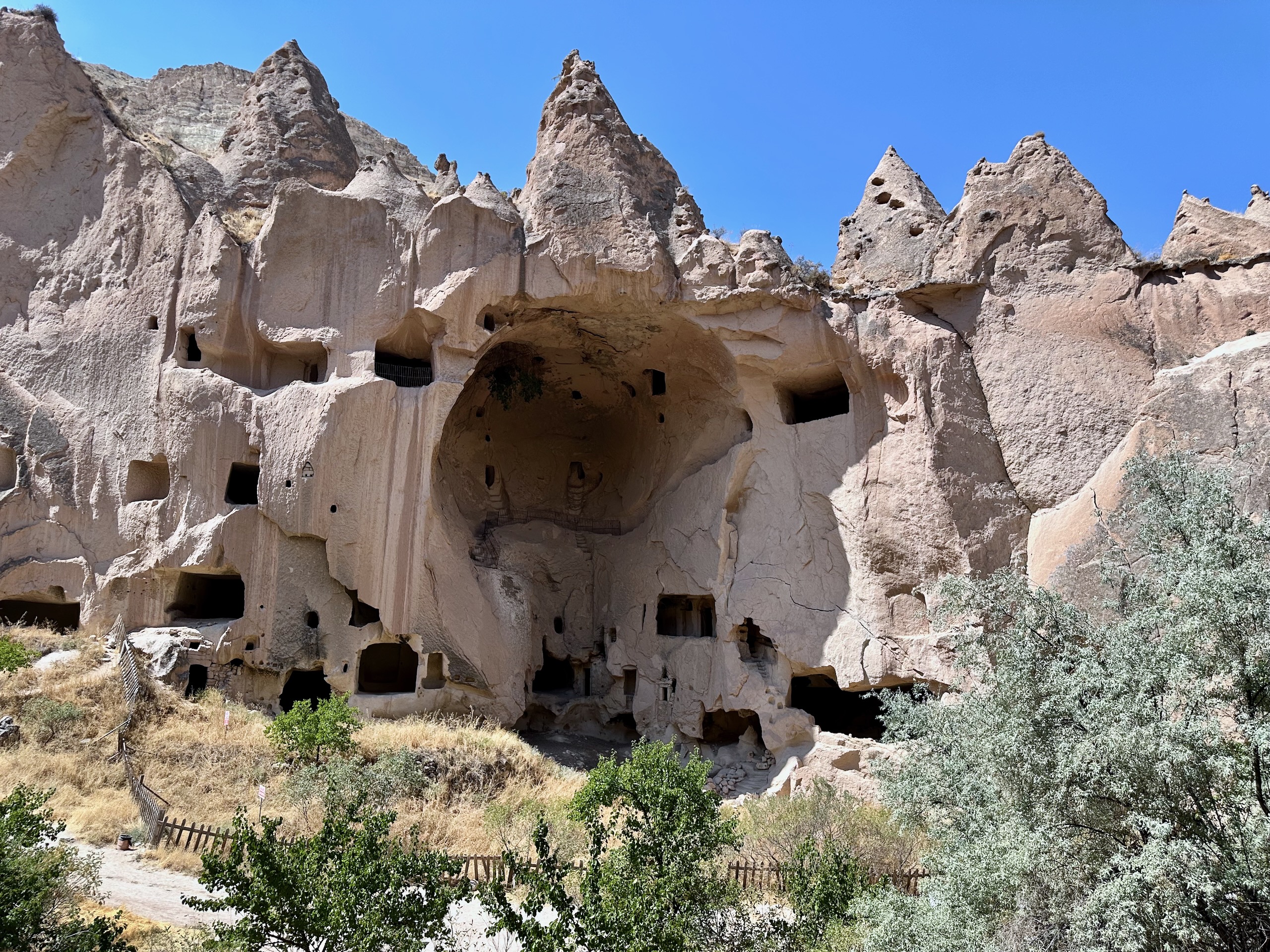
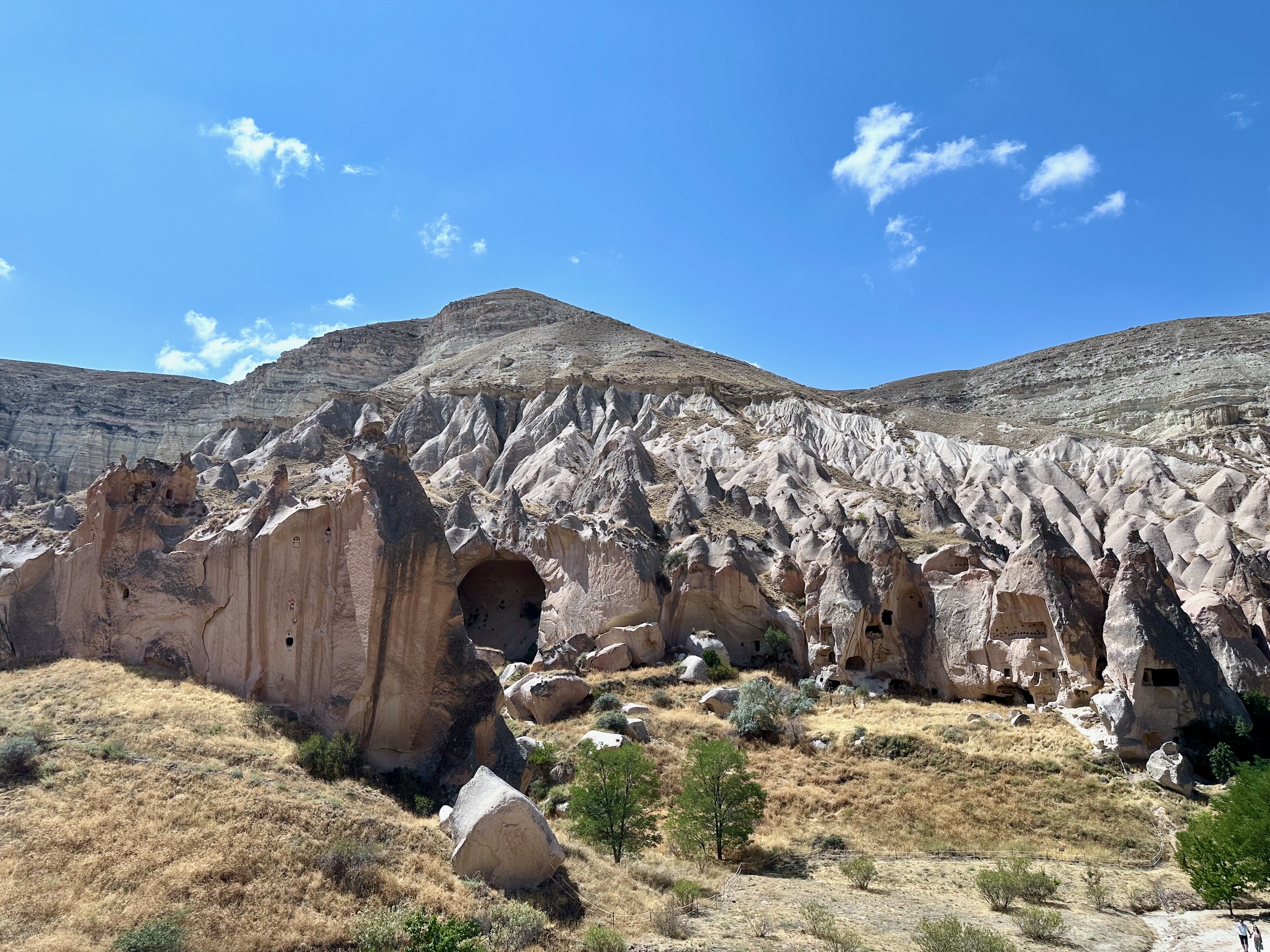
If you have some time and want something beyond just “a nice view from a terrace”, Zelve is a great choice. It’s a complex of three valleys located between Göreme, Avanos, and Ürgüp, filled with rock-carved homes, monasteries, churches, and those signature “fairy chimneys” — geologically speaking, hoodoos made of volcanic tuff, shaped by erosion, often with carved interiors.
It’s more of a “walk-through” place than a single viewpoint — you can wander among the formations and get a real sense of how people once lived inside these rocks. The tickets are official, the site is managed by the national museum system, and you can pay by card.
Is it worth it? Our conclusions after the visit
Yes, Cappadocia is worth seeing – but with one small caveat.
First, the landscape. That whole otherworldly look of the region comes from ancient volcanic eruptions that covered the area in ash. Over time, the ash turned into tuff — a soft, erosion-prone rock that wind and rain sculpted into all those cones, towers, and chimneys, while people carved homes, churches, and storage rooms right into them. Seeing it in person really hits different. The sunrise panorama, the view over the valleys, the balloons floating above it all — it’s one of those moments you want to keep in both your memory and your camera.
Second, the downsides. The biggest one — food prices in Göreme. The region itself is fascinating and we don’t regret coming here, but the local “tourist pricing” stands out compared to the rest of Turkey. You can get around it by heading a bit out of town to less touristy spots, but it’s clear that the center lives off people who come for one night and a balloon ride.
Third, time. This isn’t the kind of place we’d stay for a week. For our kind of trip, 1–2 nights in Göreme felt just right — a balloon flight, one or two viewpoints, and some exploring around by car or motorcycle. One extra day would’ve been nice, just to walk through a valley at an easy pace instead of rushing everything.
After this stop, we packed up and kept going — a night near the Syrian border, then onward to Iraq. If you want to see what the rest of that route looked like, check out the 🇮🇶 Iraq section of our travel diary. As for Cappadocia — we’d say “yes, it’s worth it”, just go in with your eyes open.