
Ten wpis jest również dostępny w języku:
 Polski
Hello! 👋
If you’re stopping in Istanbul for a short stay or have a Turkish Airlines stopover, you’ve come to the right place. We’ve been here a few times — once just in transit, another time on our motorcycle trip — and gathered the essentials: how to make the most of 1–2 days in the city and see its essence without trying to do everything at once.
In this guide, we’ll show you how to make the most of your layover in Istanbul: where to stay with easy transport access, how to use public transit, what to know about visas and SIM cards, where to withdraw or exchange money, and how to stay safe while exploring.
Ready? Let’s go.
Where is Istanbul located?
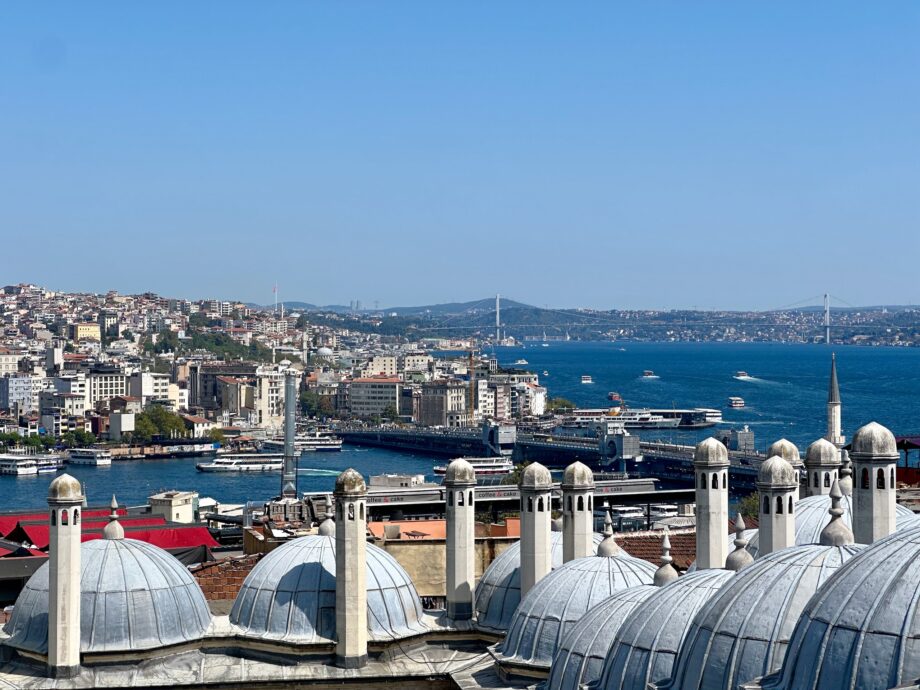
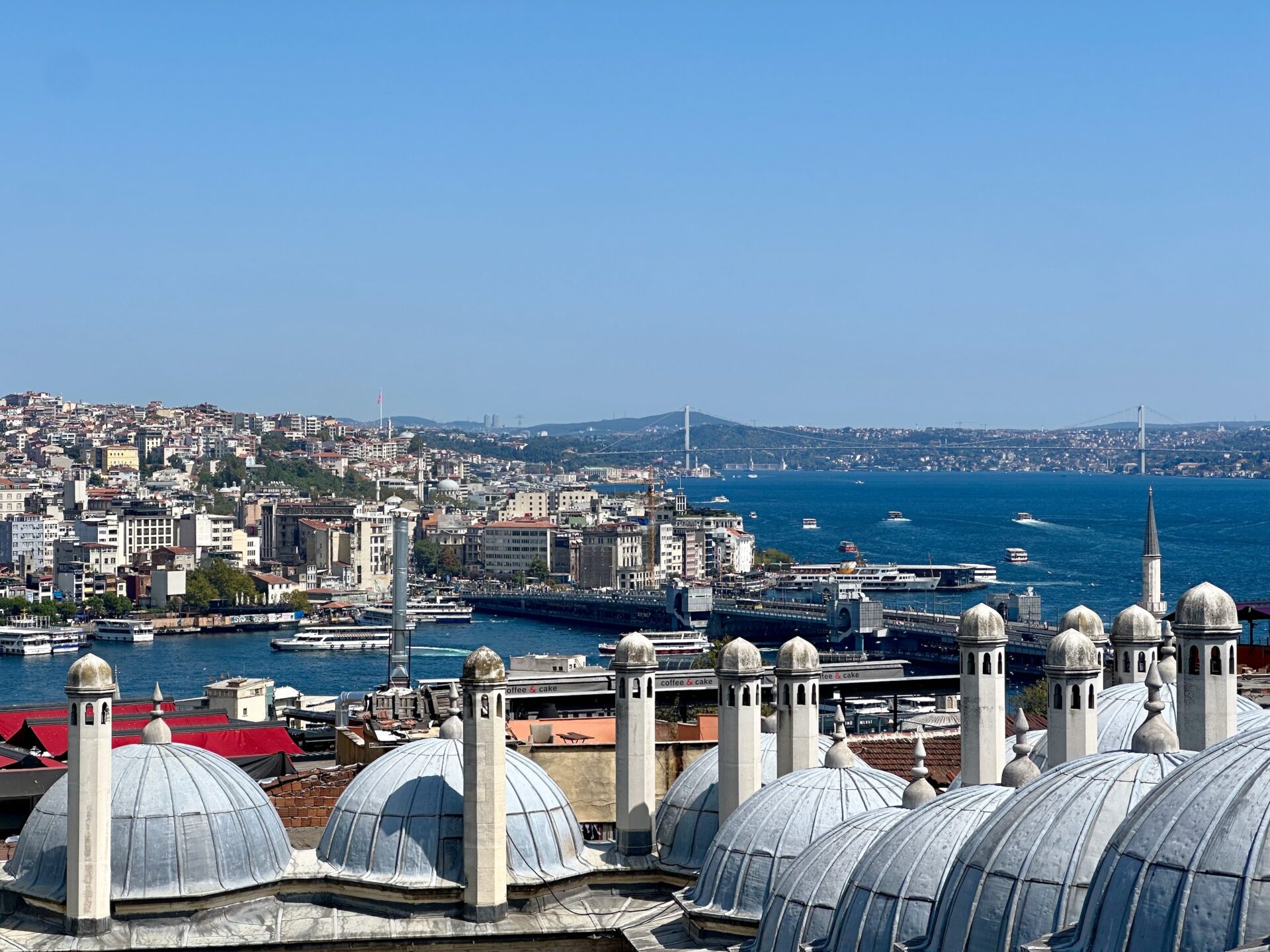
On the map, Istanbul sits at the crossroads of two continents. The Bosphorus Strait — about 30 km long — divides the European and Asian sides, linking the Black Sea with the Sea of Marmara. On the European side, the Golden Horn (Haliç) separates the Old City from the rest. In short: one city, two continents, three bodies of water — all within view.
It’s also Turkey’s largest metropolis, home to 15.7 million people as of December 2024 (according to TÜİK). Administratively, Istanbul is divided into 39 districts — most on the European side, with the rest spread across Asia.
If you’re flying in, Istanbul has two main gateways: Istanbul Airport (IST) – about 35 km from the city center on the European side, Sabiha Gökçen Airport (SAW) – on the Asian side, roughly 40 km from Kadıköy and 50 km from Taksim.
So where did this metropolis come from? It all started as the Greek colony of Byzantion. In 330 AD, Emperor Constantine made it the “New Rome” — Constantinople, the capital of the Eastern Roman (Byzantine) Empire. On May 29, 1453, the Ottomans captured the city, making it the heart of their empire for centuries. The modern name “İstanbul” became official internationally in the 20th century, following the republican reforms — more on that in the practical sections later on.
Our journeys
We’ll walk you through two of our own trips: first, our overland ride through Turkey on the way to Oman, and later, a stopover in Istanbul we took with Turkish Airlines — because honestly, it’s one of the best ways to get a quick but meaningful taste of the city.
We are traveling from Poland to Oman via Turkey.
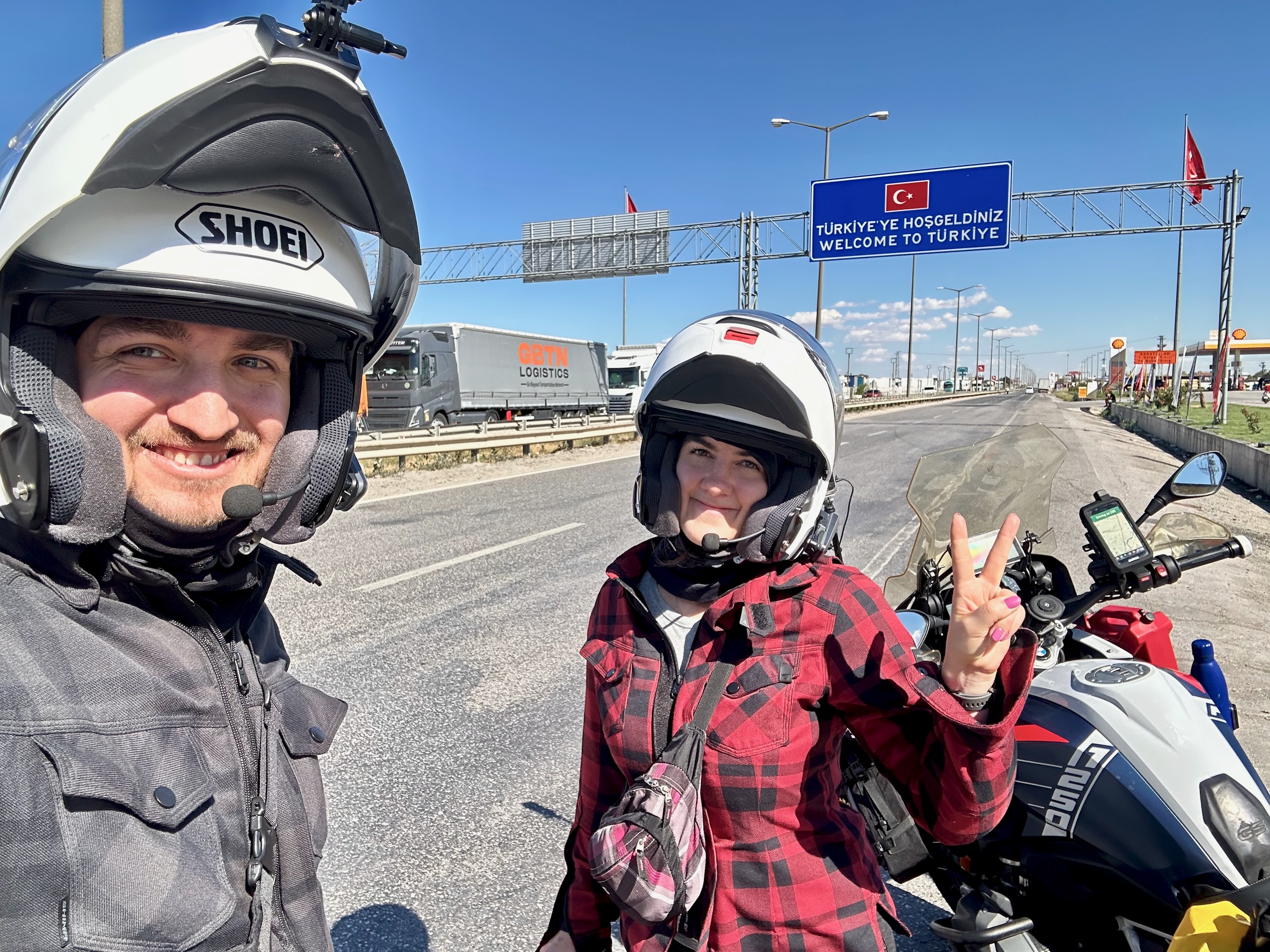
We dropped by Istanbul on our way from Poland, entering Turkey from the Bulgarian border. The city was a natural stop on our Desert Horizons expedition — a quick chance to revisit a few spots we’d missed before, grab a coffee at Starbucks (yes, the mugs are already in our collection 😄), and then continue east, all the way to the Iraqi border. If you enjoy these kinds of on-the-road travel diaries, check out our expedition page and trip log — we’ve covered everything from entering Turkey to what driving there is really like.
Stopover with Turkish Airlines
The second option — and in our opinion, a great one — is a stopover in Istanbul. When flying with Turkish Airlines, you can get a free hotel stay during a longer layover. The rules are simple: your connection must be at least 20 hours, both flights must be on the same round-trip booking, and your ticket number has to start with 235 (that’s how you know it’s issued by Turkish Airlines).
With an economy class ticket, you’re entitled to one night in a 4-star hotel, while business class passengers get two nights in a 5-star stay. For some long-haul routes — like the US, Japan, or Australia — the stopover package is even more generous, with upgraded hotels and extended options.
You need to apply at least 72 hours before your flight, and note that the stopover program can’t be combined with Touristanbul — that’s a separate option for shorter layovers. If your booking qualifies for Touristanbul, it will be clearly marked in your reservation, meaning you can join a guided city tour instead of an overnight stay.
In our case, we went for the free hotel stay during our Asia-bound flight (we wrote more about it in our post about our one day in Malaysia). The application website works smoothly, and you shouldn’t run into any issues — well, let’s just say it’s definitely better organized than Air China’s system 😄.
Accommodation
Istanbul is huge, so when you’re short on time, logistics are everything — stay near the metro, Metrobus, or Marmaray, and make sure you’ve got an easy airport connection. Below are our recommended areas with a quick “what & where” — plus who each one works best for.
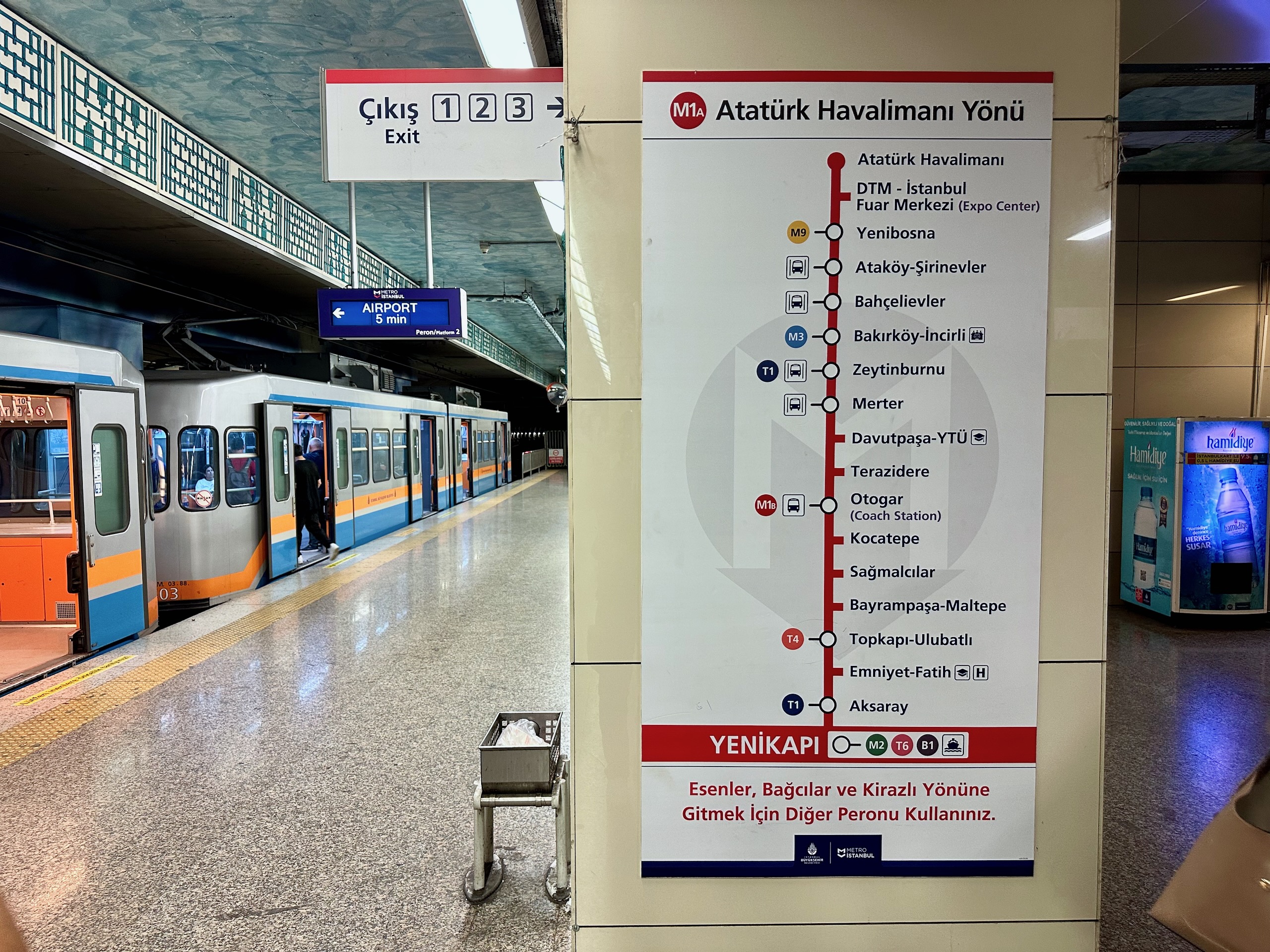
- Wish More Hotel Istanbul – Bayrampaşa, right next to Forum shopping mall and just a few steps from Kocatepe metro station (M1 line). A solid pick if you want quick, no-transfer access to the city center. We stayed here back in the COVID days — room quality was great, and the price back then was ridiculously low.
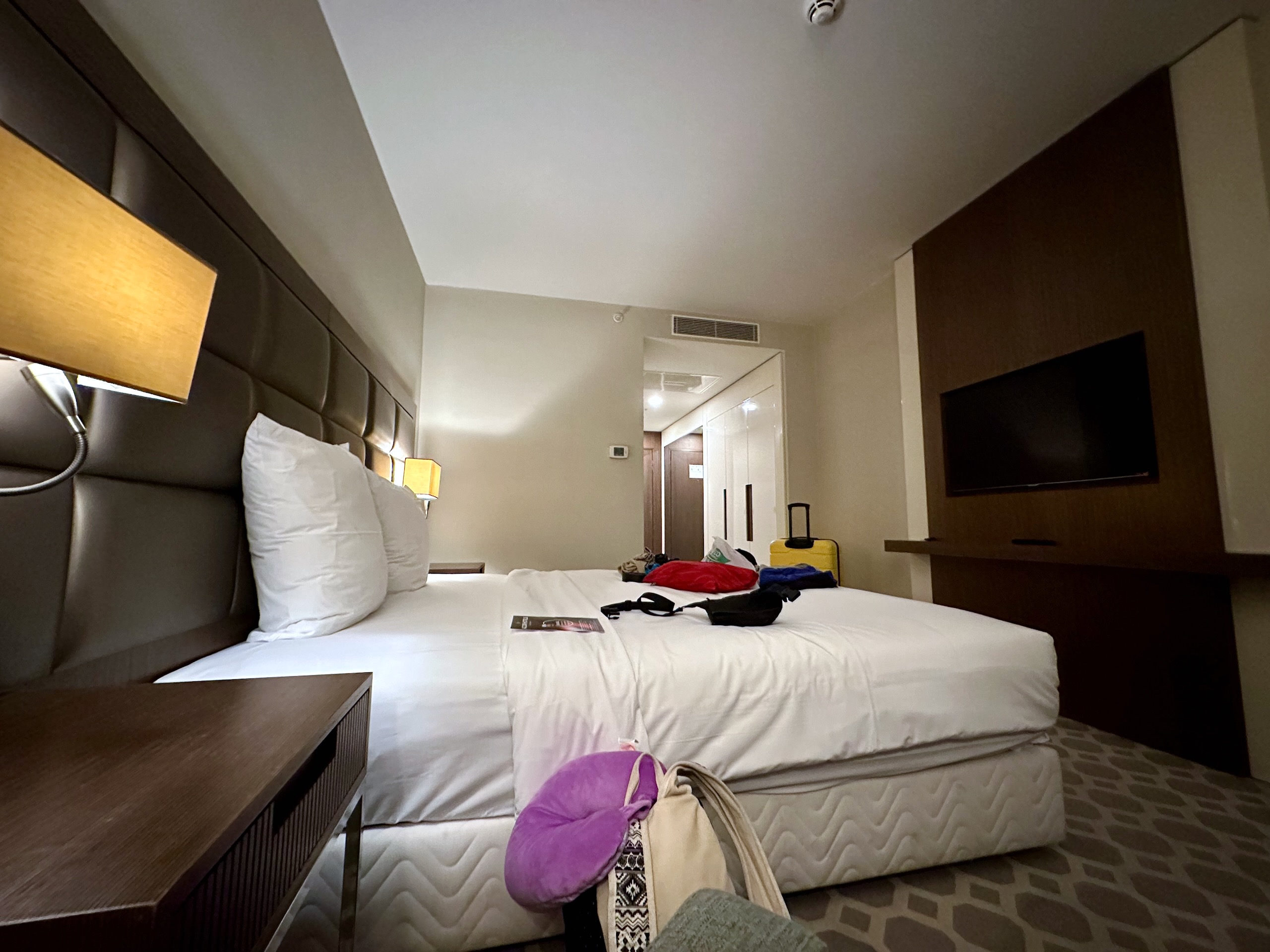
- Mercure Istanbul West Hotel & Convention Center – located in Yenibosna/Bahçelievler, along the Basın Ekspres corridor. It’s more of a spot for those renting a car, since getting here by public transport can be a bit of a hassle (but hey, fortune favors the brave 😄). This was our stopover hotel — huge building, spacious rooms, and honestly, we couldn’t find any flaws. When it’s free, that’s a fair price 😅.
- Güneş Hotel Merter – located in Merter/Güngören, just a 5-minute walk from Merter station (M1A). We stayed here during our motorcycle trip — logistically a great spot if you’re planning to move around the European side of Istanbul.
Visas and documents
Good news to start with: Polish citizens can enter Turkey visa-free for up to 90 days within a 180-day period for tourism. Entry is allowed with either a passport or a national ID card (for tourism and transit purposes). If you enter with your ID, you’ll receive a printed entry slip at the border — keep it safe, as you’ll need to show it again when leaving the country.
A few practical tips that will save you stress:
- Is your child traveling with someone other than a parent? Carry a notarized parental consent form (in English or Turkish) with you—Turkish border guards may ask to see it.
- Are you staying longer than 90 days (studies, work)? This is no longer considered “visa-free tourism” – you will need a residence permit (ikamet) or an appropriate visa.
- Want to buy a local SIM card? Take your passport with you – the operator will copy your details, as card registration is mandatory.
And if you are traveling by car or motorcycle, you should take everything that “proves” the legality of the vehicle and your right to drive it.
- In our case, the vehicle documents are the registration certificate. At the border, you will also need a Green Card confirming the validity of your civil liability insurance in Turkey; without it, you may be required to purchase border insurance on the spot.
- If you are not the owner (lease, parent’s/company car): take a notarized authorization from the owner to export and use the vehicle abroad, preferably with a translation into Turkish/English. In practice, without this, you may be turned back at the border. Not sure how to handle it? Check out our separate post—we walked this health trail ourselves during a motorcycle trip.
- Who can drive? Driving “on your behalf” means that you are the person authorized to use the car in Turkey (registered in the customs system). Others can generally only drive when you are sitting inside.
- Driver’s license: a Polish license is sufficient — as a tourist, you can drive for up to 6 months after entering the country.
Traffic conditions
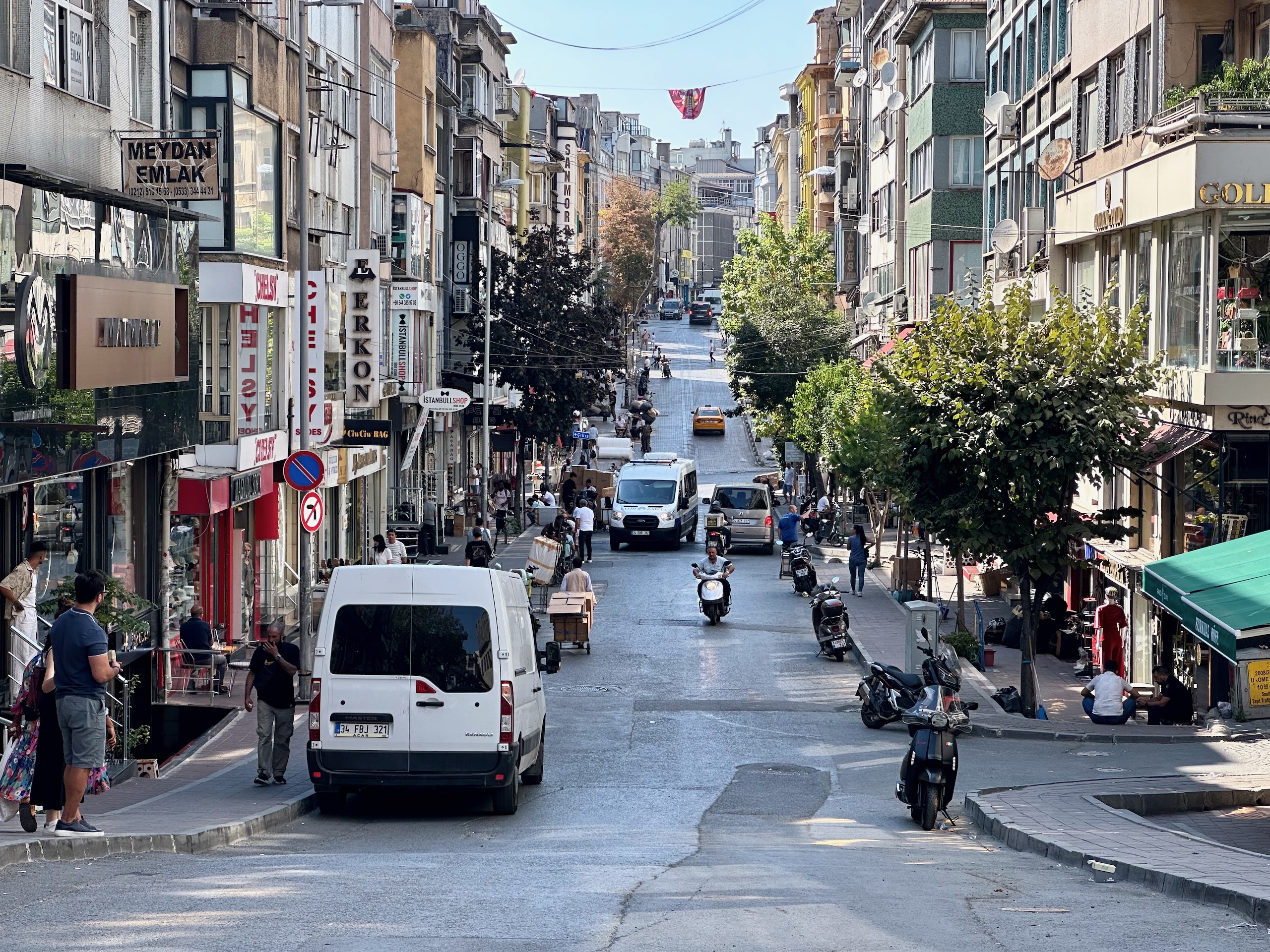
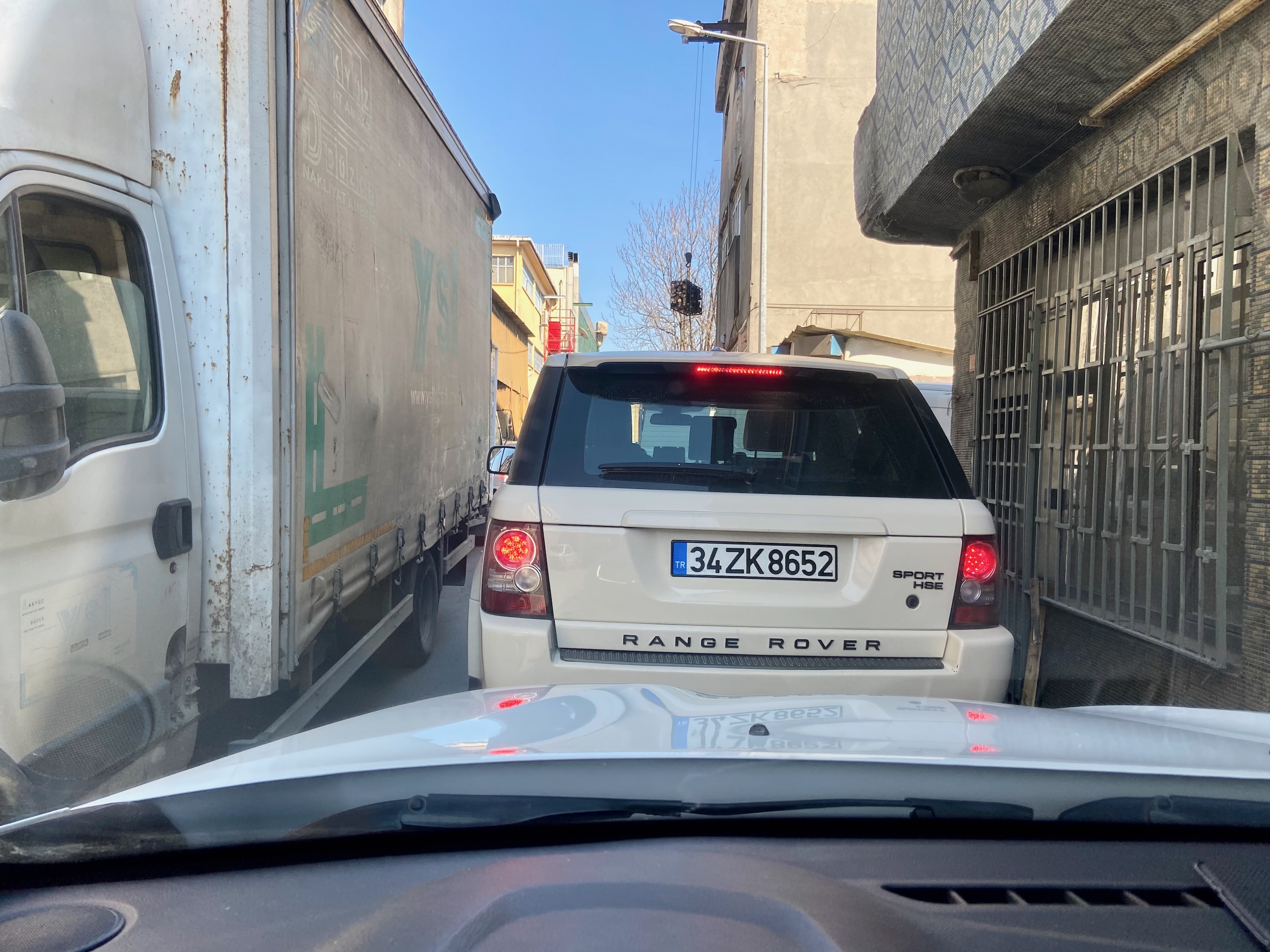
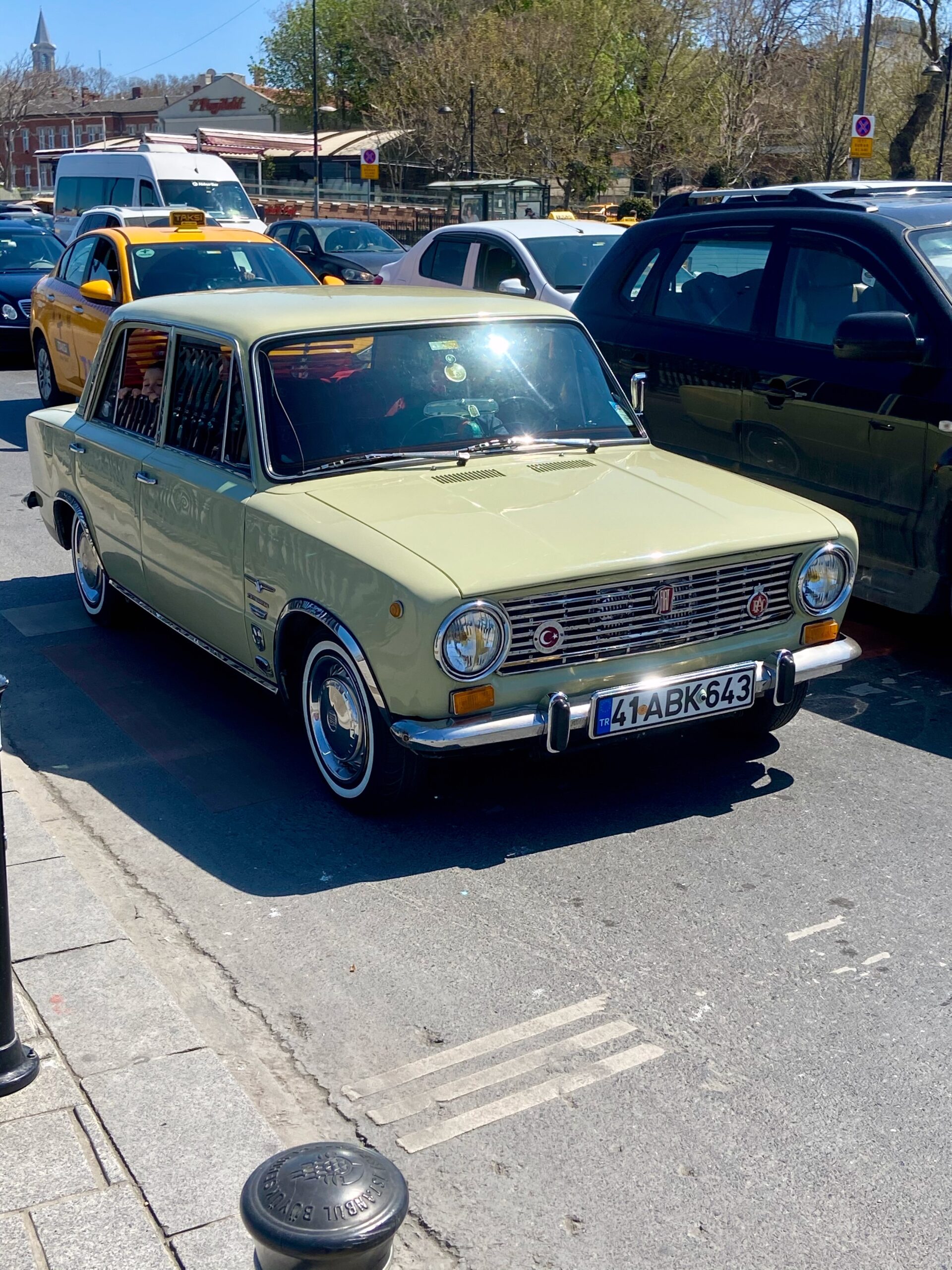
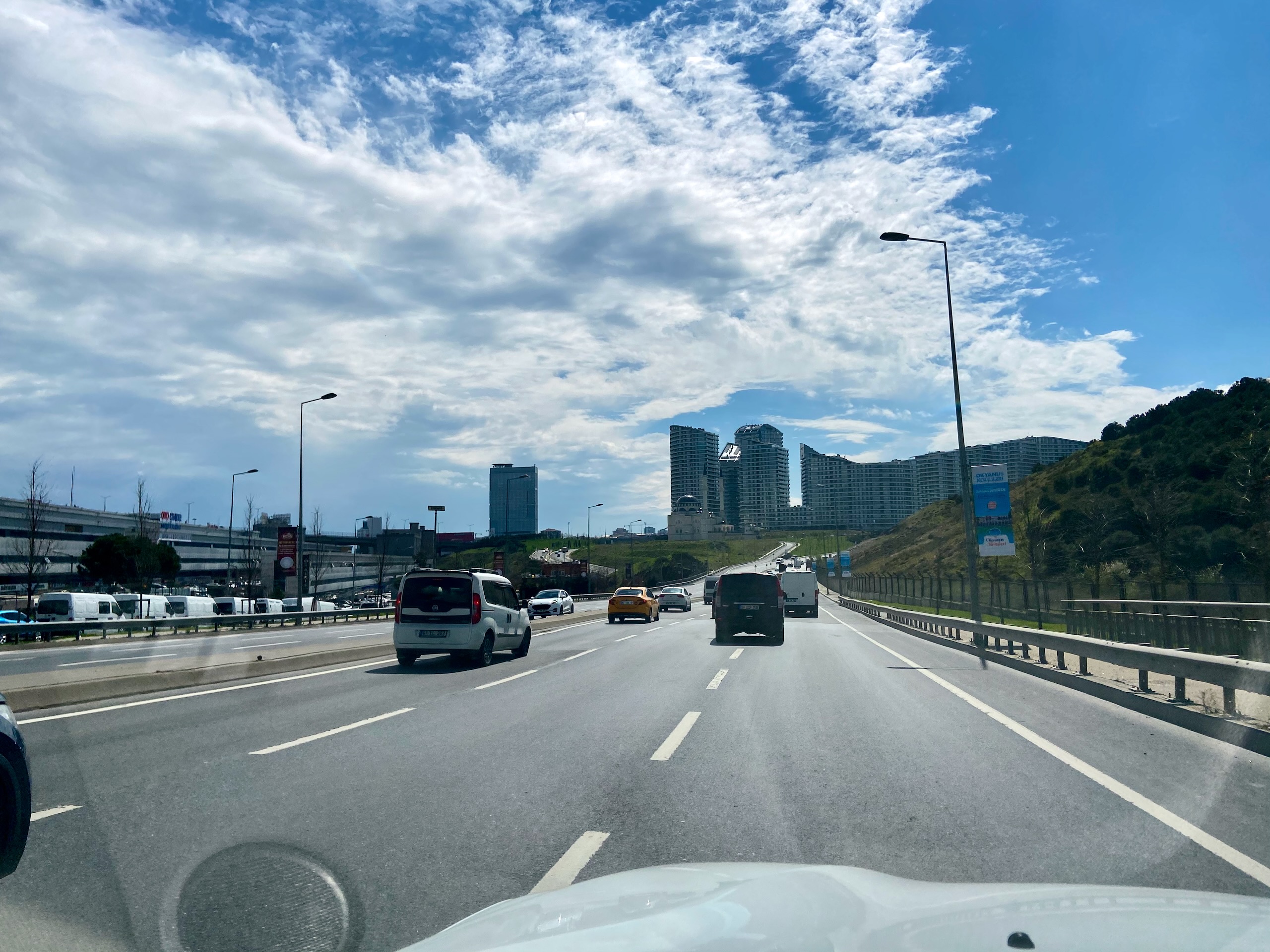
Before we get into tolls and limits, a few words about what you’ll actually see on the road. Driving in Istanbul is dynamic — expect frequent lane changes, short distances between cars, and plenty of honking, usually meaning “heads up, I’m coming” rather than aggression. In practice, it’s best to keep a safety buffer, avoid blocking intersections, and read the traffic ahead — it really helps you blend into the city’s rhythm.
The city can get seriously congested — according to TomTom, the average travel time for 10 km in 2024 was 22 minutes and 25 seconds; around 25 minutes during the morning rush hour and roughly 32 minutes in the evening.
A few specifics that really help:
- Most highways (otoyol) and major Bosphorus crossings are tolled electronically via HGS (RFID sticker or license plate recognition). You can buy and top up an HGS card at PTT branches or selected gas stations. Rental cars usually already have HGS installed — tolls will be settled with you afterward. Ask for a detailed breakdown of your trips to avoid inflated flat-rate charges.
- For vehicles with foreign plates, the easiest way to settle HGS payments is at the border when leaving Turkey — customs officers won’t let you exit the country until all fines and tolls have been paid.
- The 15 July Martyrs Bridge (First Bosphorus) and Fatih Sultan Mehmet Bridge (Second Bosphorus) charge tolls based on vehicle class — motorcycles fall under Class 6. Current rates are published by KGM (General Directorate of Highways).
- The Eurasia Tunnel (Avrasya Tüneli) charges a toll in both directions — you can pay using your HGS sticker or online after passing through. Motorcycles have been allowed since May 1, 2022, and there’s also a cheaper night-time tariff.
Speed limits:
- For cars, the general speed limits are 50 km/h in cities, 90 km/h outside urban areas, 110 km/h on dual carriageways, and 120 km/h on KGM-operated motorways. On certain concession sections, the limit may be raised by sign to 130–140 km/h.
- For motorcycles, the limits are 50 km/h in cities, 80 km/h outside urban areas, 90 km/h on dual carriageways, and 100 km/h on motorways — unfortunately, slightly lower than for cars.
- EDS/PTS systems = speed and section control cameras — are widely used throughout the country.
And if you’re planning to rent a car in Istanbul, check out our dedicated article where we cover in detail what to look out for before you hit the road. 🚗
Public transport in Istanbul
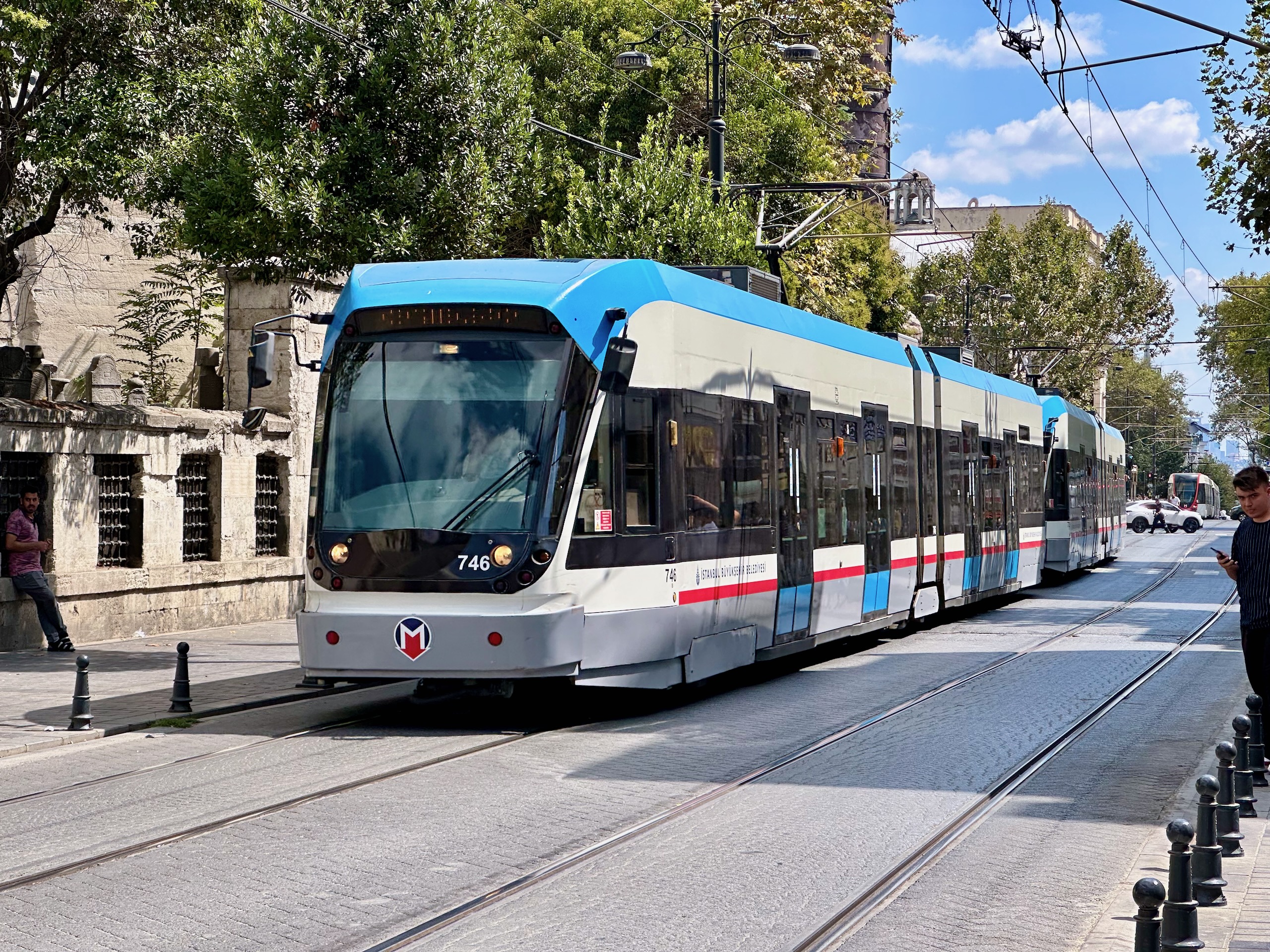
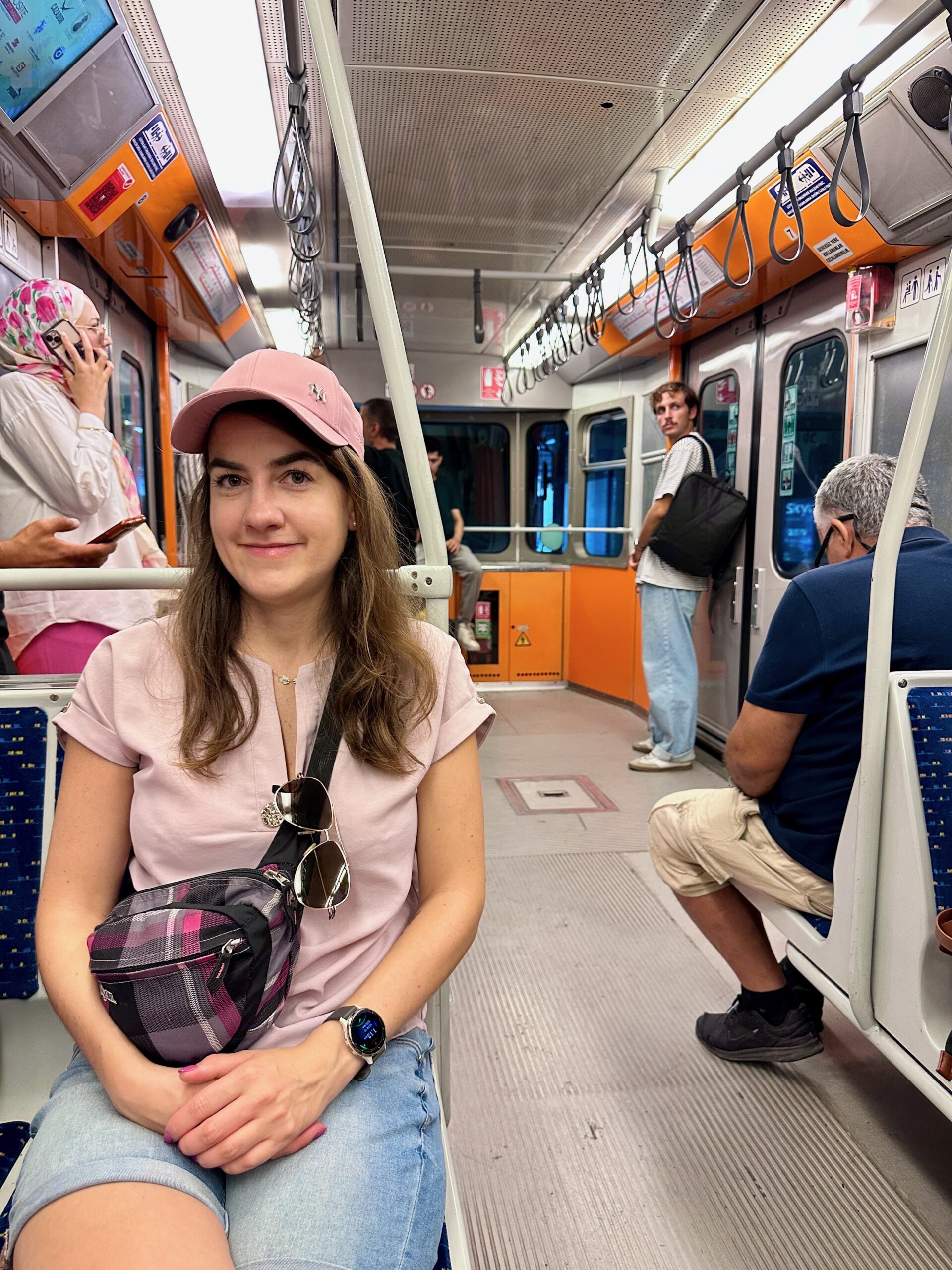
The network is dense and diverse: metro lines, Marmaray (commuter rail through the Bosphorus tunnel), trams, funiculars, IETT buses, the fast Metrobüs running on a dedicated lane, and of course… city ferries. For a short stay, just stick to a few simple rules.
Airports and metro: both airports are connected to the city by rail. From Istanbul Airport (IST), take the M11 line (Istanbul Airport ↔ Gayrettepe/Kağıthane; the extension to Halkalı is still under construction). From Sabiha Gökçen Airport (SAW), the M4 line (Kadıköy ↔ Sabiha Gökçen) takes you directly to the city. It’s usually the fastest and most reliable option during rush hours.
- From IST to the city centre by M11 metro: the fare depends on the number of stations — from the airport to Gayrettepe it’s 14 stops, costing 48.28 TL (the M11 line uses its own fare table). From there, you can transfer to the M2 line to reach Taksim.
- From IST to Kadıköy via Havaist HVİST-14, the fare is 390 TL per person. You can buy the ticket in the app or directly at the stop.
- From IST to Taksim (HVL-9 line), the fare is around 275 TL per person (as of July 2025).
- From SAW to Kadıköy by M4 metro, the standard “tam bilet” fare with an Istanbulkart is 35 TL.
- From SAW to Taksim by Havabus, the fare is 367 TL per person. You pay on board, and buses run every few dozen minutes.
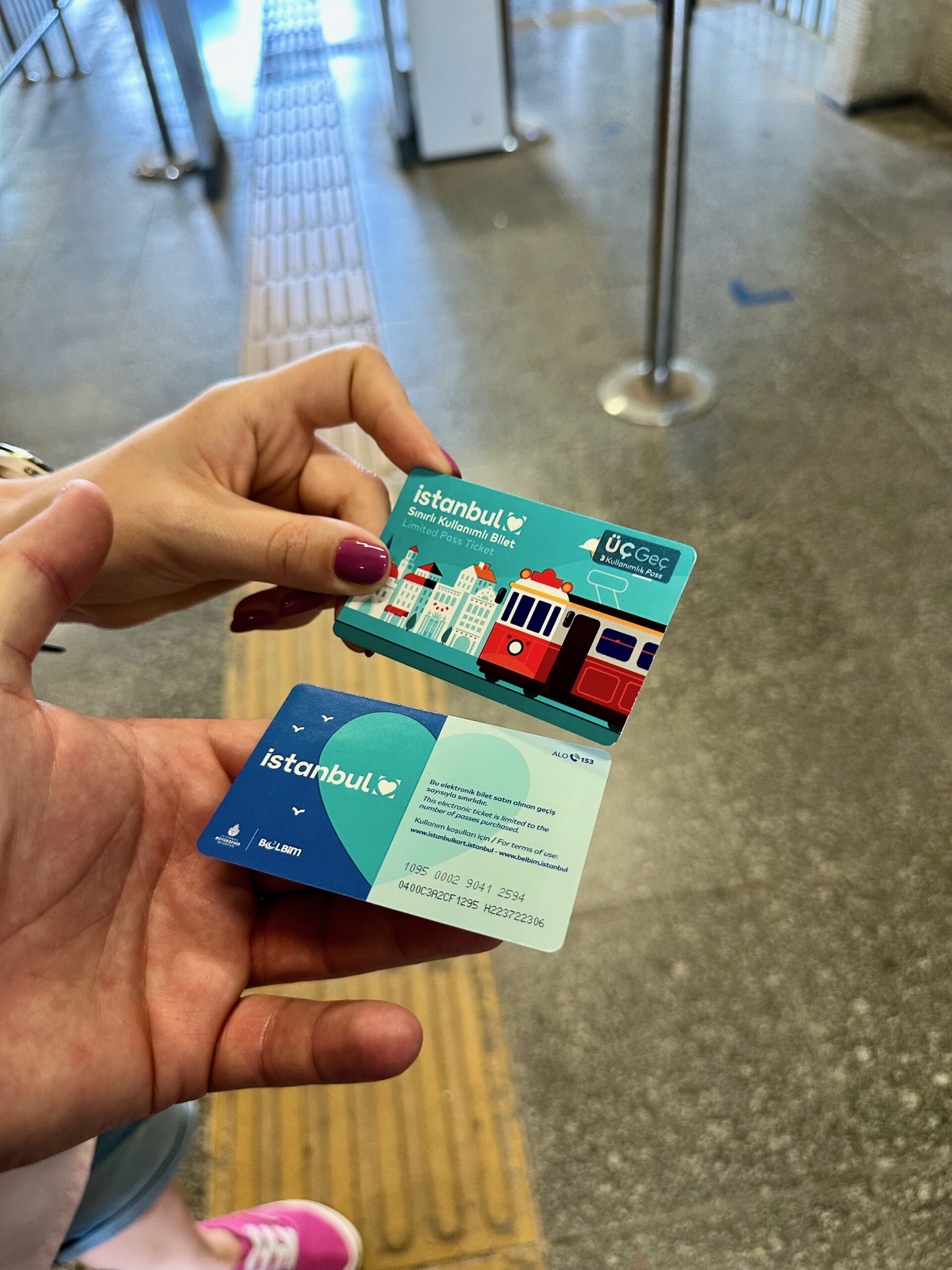
The easiest way to get around is with an Istanbulkart — it works on the metro, trams, buses, Metrobüs, Marmaray, and ferries. You can buy one from the yellow or blue vending machines at stations and both airports, and top it up at machines or via the official app. Note that one card is valid for one person only.
Metrobüs and buses: Metrobüs lines run 24/7 on a dedicated lane (Beylikdüzü ↔ Söğütlüçeşme, about 52 km), making them a great plan B for early mornings or late nights. IETT operates hundreds of daytime routes plus several night lines — you can find timetables and a route planner on the IETT website.
The “Night Metro” operates on Friday and Saturday nights, offering a total of 66 hours of continuous service — from Friday 6:00 a.m. until Sunday 12:00 a.m.
SIM card
In Istanbul, local SIM cards for tourists tend to be quite expensive, especially at the airports. The cheapest and most straightforward option is to buy one at an official operator store in the city (passport required). Turkcell and Vodafone also offer tourist eSIMs, which can be activated remotely after scanning your passport.
How much does it cost (approximately, end of 2025):
- Turkcell Tourist Welcome Pack: 20 GB + 200 min – 1,500 TRY (eSIM or physical SIM).
- Türk Telekom “Welcome / Tourist Mobile”: e.g., 100 GB package – TRY 1,840 (28 days, offer updated on February 6, 2025).
- Vodafone “Welcome to Turkey Pack”: 20 GB + 750 min + 1000 SMS (28 days) – prices depend on the point of sale; the operator does not provide them directly online.
Price tip: avoid airport booths — prices in the city are often 50–70% cheaper for the same data packages. If you do buy at the airport, stick to an official operator store, not a random kiosk.
From our experience, for a short trip it was more cost-effective to buy eSIMs on Allegro from a local seller — they were noticeably cheaper than the popular eSIM stores for Turkey, and in practice worked just the same. Each SIM cost us around 50 PLN for 20 GB.
Food
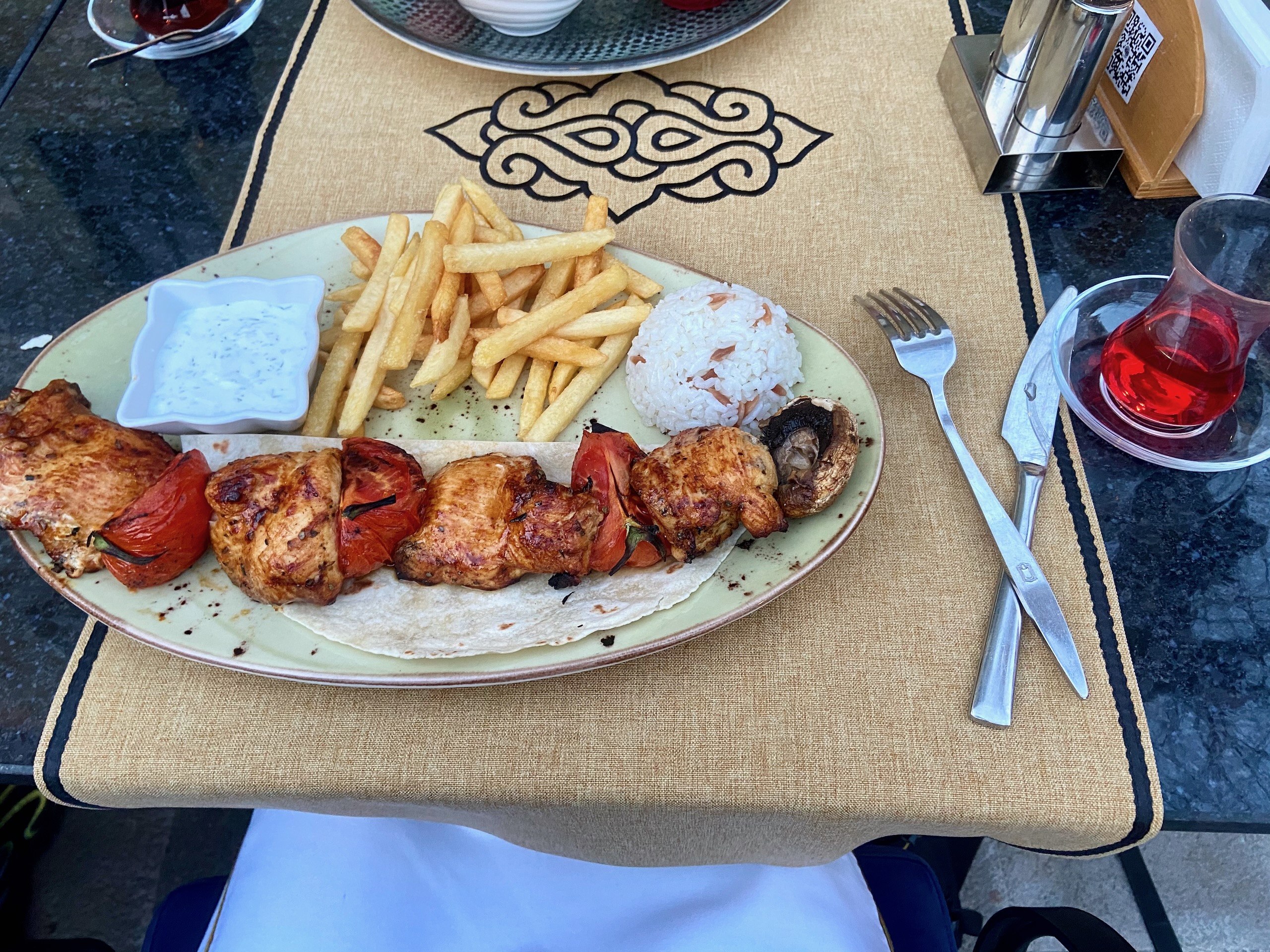
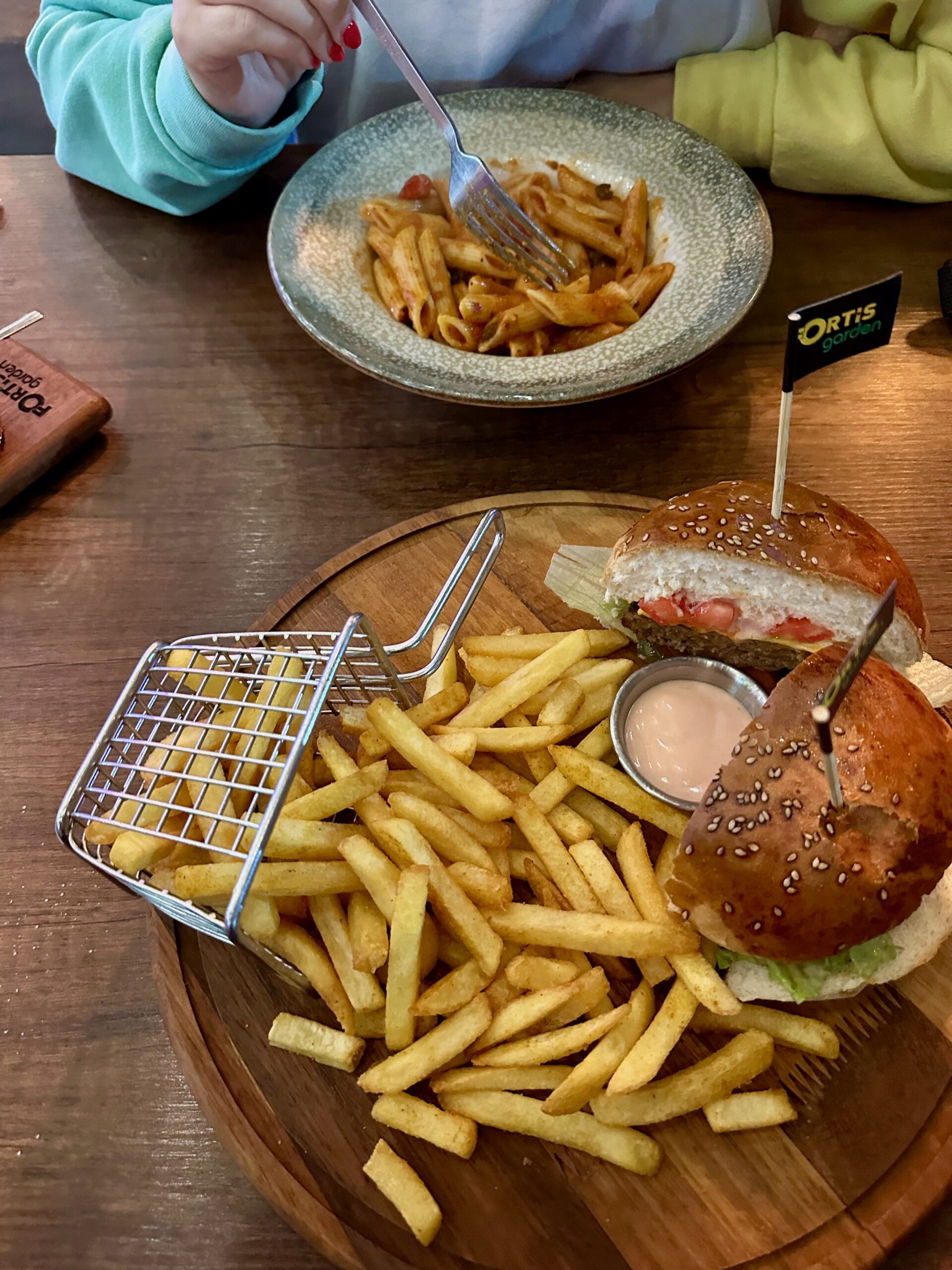
All across Turkey, it’s genuinely hard to find bad food — especially in Istanbul. The cuisine revolves around fresh vegetables, grilled meat, fish, soups, and freshly baked bread. For a short trip, we recommend three simple routes: lokantas (home-style food), ocakbaşı (grill), and meyhanes (meze and hot dishes).
What and where to eat:
- Lokanta / esnaf lokantası: think of it as Turkey’s version of a casual canteen or diner — simple, home-style meals served from a counter. Expect stews, vegetables in olive oil, rice, and soups like mercimek or ezogelin. You walk in, look at what’s on display, and point to what you’d like. It’s cheap, quick, and satisfying — and in many places, you can even pay by card!
- Ocakbaşı: a restaurant with an open grill, where the chef prepares everything right in front of you. Expect classics like Adana or Urfa kebab, köfte, chicken wings (kanat), grilled vegetables, and lavash straight from the oven.
- Meyhane: the perfect spot for the evening — a place for cold and hot meze (like haydari, şakşuka, fava, or roasted eggplant), followed by fish or grilled dishes. And if you drink, it’s traditionally paired with rakı.
- Fish: in season, go for gilthead sea bream (çipura/dorada), sea bass (levrek), or bonito — and if you’re on the go, try a balık ekmek, the famous fish sandwich.
- Breakfasts: the traditional kahvaltı spread — with various spreads, cheeses, olives, menemen (eggs with tomatoes), and fresh bread — is often hearty enough to count as two meals.
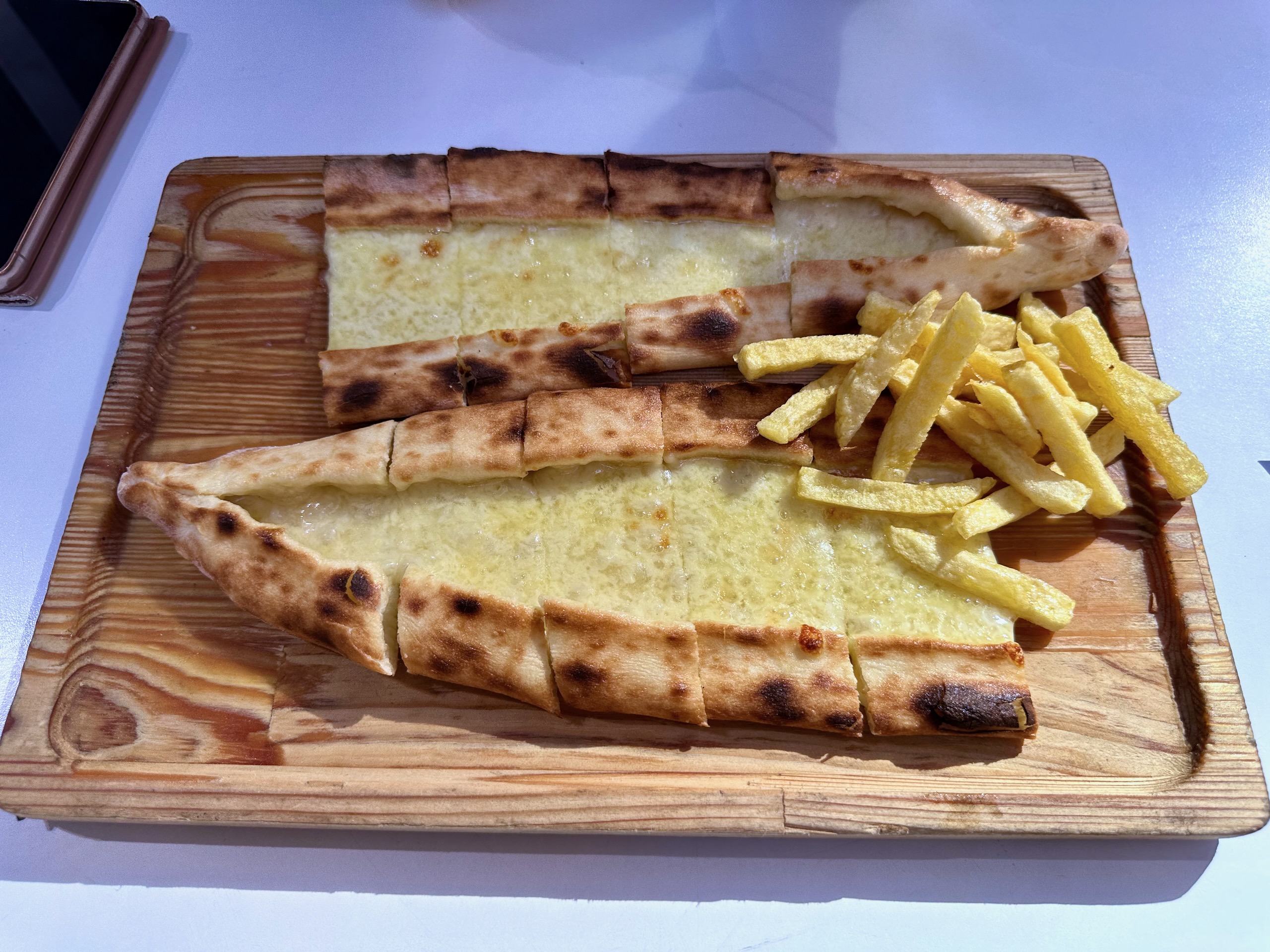
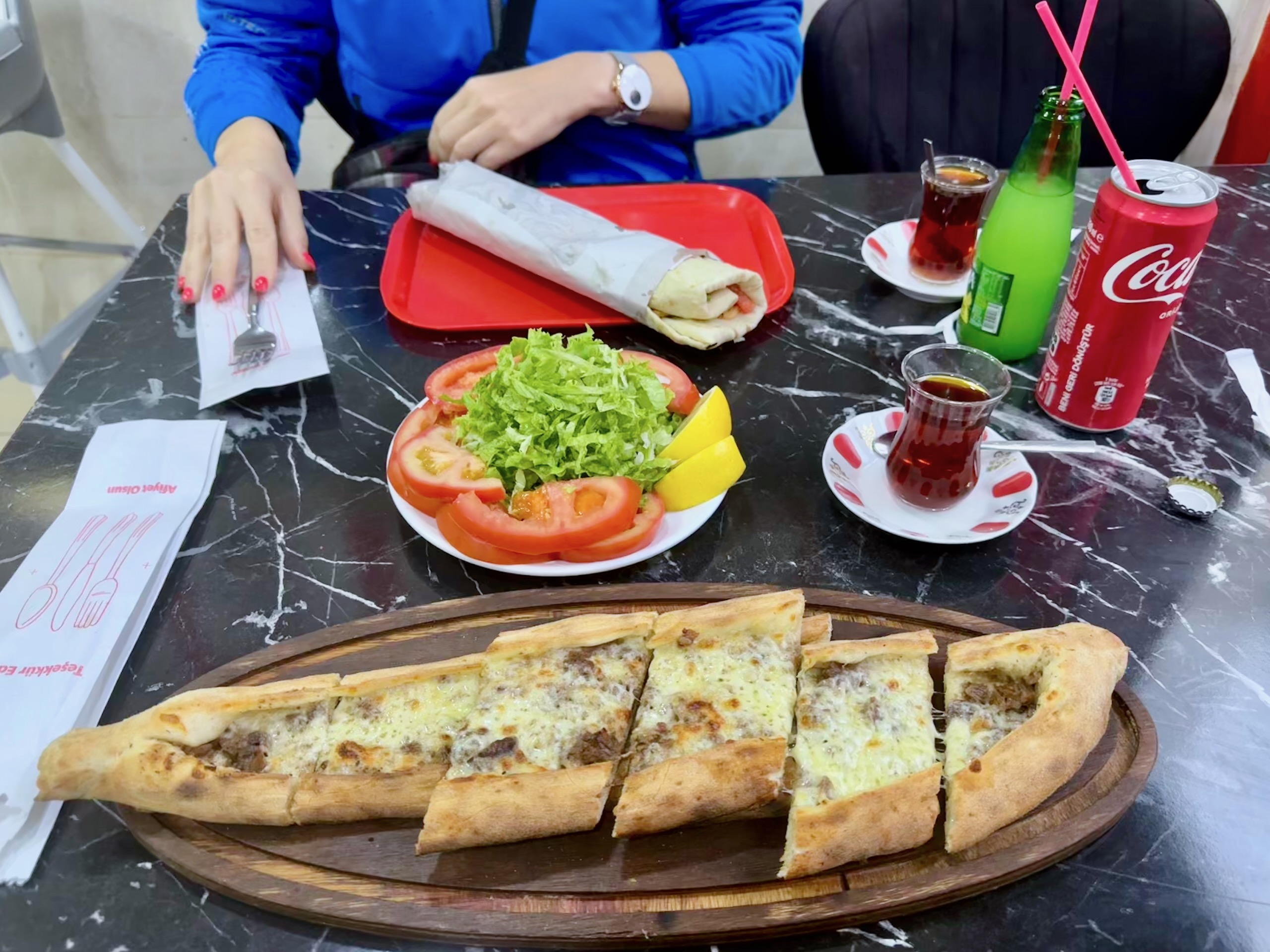
- Street food: try simit (sesame-covered bread rings), börek, lahmacun and pide fresh from the oven, kokoreç (for the brave), or midye dolma (stuffed mussels with rice) — just make sure to buy from places with good turnover.
- Sweets: try baklava, künefe, Maraş ice cream (dondurma), and Turkish delight (lokum) served with coffee. For take-away, buy from proper patisseries, not the souvenir stalls near tourist sites.
Vegetarian? No problem! Go for soups like mercimek, vegetable meze, imam bayıldı (stuffed eggplant), gözleme with spinach or cheese, menemen without meat, or pide topped with cheese and veggies. In a meyhane, you can easily put together a fully plant-based feast.
How to choose a spot among the multitude of options:
- Open the map and sort reviews by “most recent”, not “highest”. Pay attention to Turkish-language reviews — if locals like the place, that’s a good sign.
- Look for places with a visible oven and a menu with prices displayed at the entrance. Avoid touts and menu-less restaurants in overly touristy streets.
- In lively neighbourhoods like Kadıköy Çarşı, Karaköy, Beşiktaş Çarşı, or Balat, it’s hard to go wrong — just pick a spot that’s busy after 7 p.m.
Apps like Yemeksepeti and Getir are very popular, but for a short trip, it’s usually nicer to sit down and eat at a restaurant. Still, if you don’t feel like leaving your hotel, delivery works incredibly well. To order via Yemeksepeti, you’ll need a local phone number — you can’t register without one. Couriers usually call locally or message you on WhatsApp when they arrive.
Exchange office or ATM?
It won’t come as a surprise that paying by card is the easiest option — payment terminals and contactless payments are everywhere, so on a short trip you can easily cover almost all expenses without cash. Turkey has a highly developed card market, something confirmed by both industry reports and data from BKM, the country’s interbank card centre.
If you do need cash (for small shops, tips, or public toilets), it’s usually better to use an ATM in the city rather than an exchange office at the airport. Some ATMs charge an operator fee, which you’ll see on the screen before confirming the transaction. Don’t like it? Cancel and try another machine — that’s perfectly normal practice.
A key rule when withdrawing cash or paying by card: if the terminal or ATM asks whether to charge in PLN/EUR, always choose TRY (Turkish lira) and decline on-the-spot conversion. That option is called Dynamic Currency Conversion (DCC) — the exchange rate is set by the intermediary and is usually worse than your bank’s rate. By paying in TRY, your own bank or card provider handles the conversion, almost always at a better rate.
What about exchange offices? You’ll find plenty of them around the city, often offering much better rates than at the airport. The best deals are usually in the Sirkeci, Spice Bazaar, and Grand Bazaar areas — it’s worth comparing two or three counters, making sure they’re clearly marked “no commission,” and counting your money before you leave. At the airport, rates tend to be significantly worse, though you can still exchange there if needed — you’ll just be paying for convenience.
Climate and weather conditions
Istanbul has two sides: a long, warm, and humid season from late spring to early autumn, and a cooler, rainier half of the year. By November, it usually turns grey and wet — daytime temperatures hover around 15°C (dropping to 9–11°C at night), with around 70–100 mm of rainfall per month, spread over 10–13 rainy days. There’s not much sunshine either (about 4 hours a day), so it’s no surprise that our November stopover came with pretty gloomy weather.
Winters here are humid and windy, and from autumn to spring there can be icy storms from the south — when that happens, the sea gets rough, and ferries or some cruises may be suspended. In contrast, summers are warm (often above 28–30°C) and humid, but spring and early autumn usually offer the most stable weather for short sightseeing trips. If you’re planning a stopover between November and March, pack a light rain jacket, something windproof, and have a backup indoor plan — like visiting museums or bazaars.
Safety
In our view, Istanbul is generally safe for tourists, but it’s still a big, lively city with plenty of character. As in any major city, the most common risk is pickpocketing in crowded tourist areas — though we personally never had any issues here. Keep your phone and camera in front of you, don’t accept food or drinks from strangers, and if someone suddenly offers to take you to a “great place”, just politely decline. That’s exactly the kind of advice you’ll also find in official travel advisories.
Taxis and getting around: always use official cabs — either on a metered fare or booked through an app where you can check the estimated price in advance. Note down or take a photo of the car’s side number, and avoid unmarked taxis that just pull up offering a ride.
Public transport is well monitored, and at metro entrances you’ll often find security gates with bag checks. It’s mainly a safety measure — your job is simply to keep an eye on your belongings in crowded places and remember to tap your card when entering and exiting (especially on the Marmaray line).
Places to see in Istanbul
Suleyman Mosque
🇹🇷 Süleymaniye Mosque / 📌 Pin on Google Maps – click here.
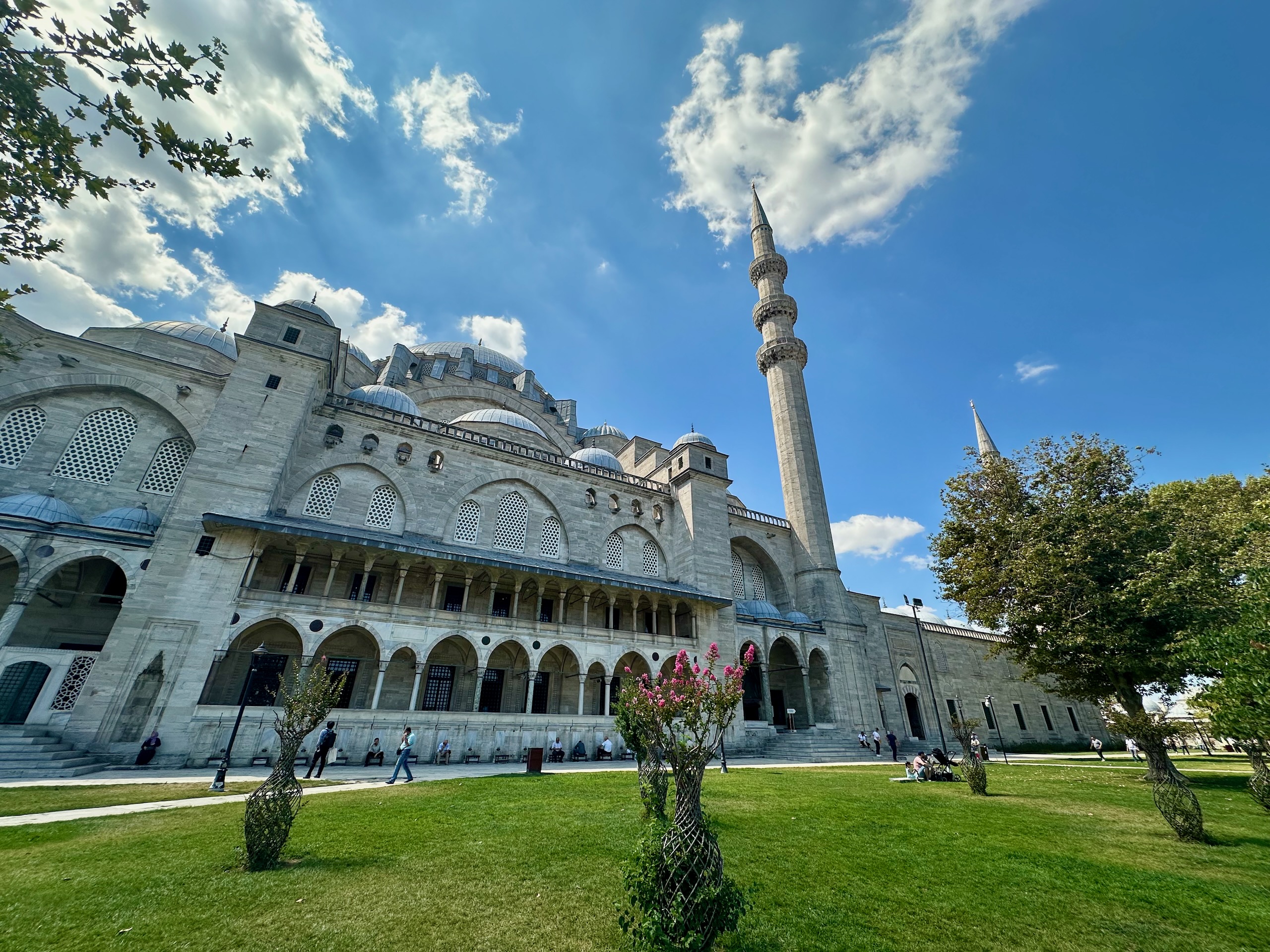
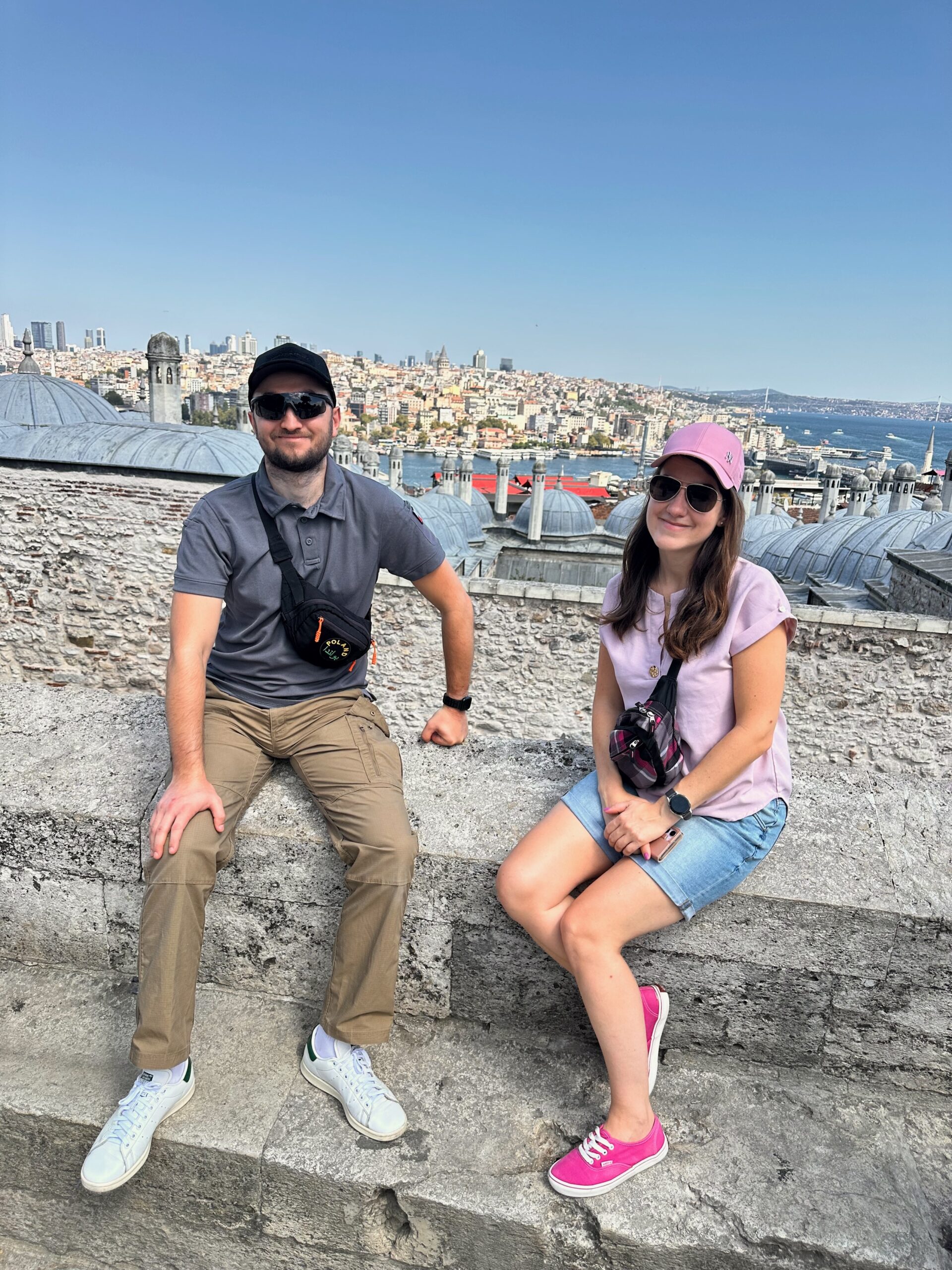
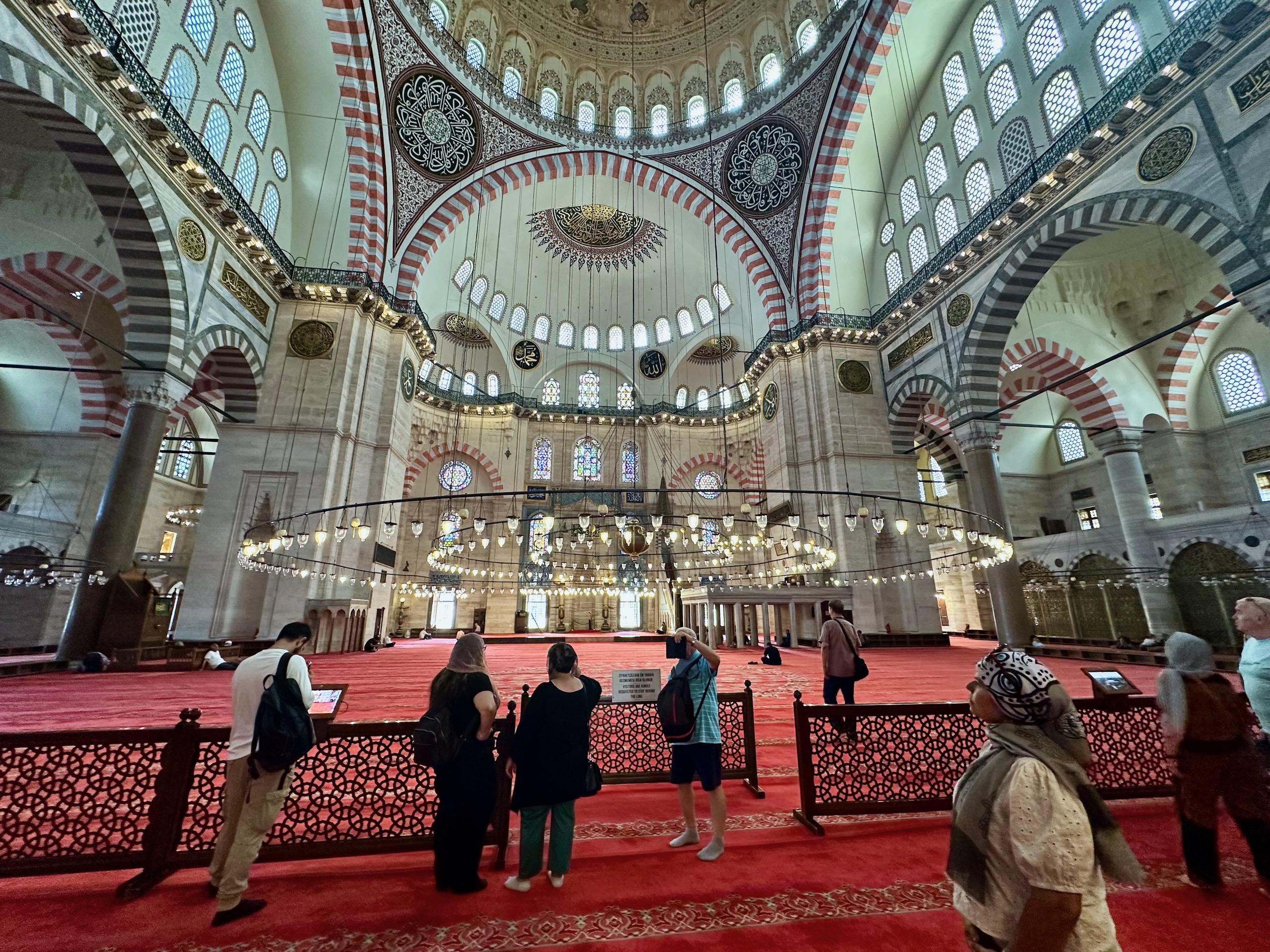
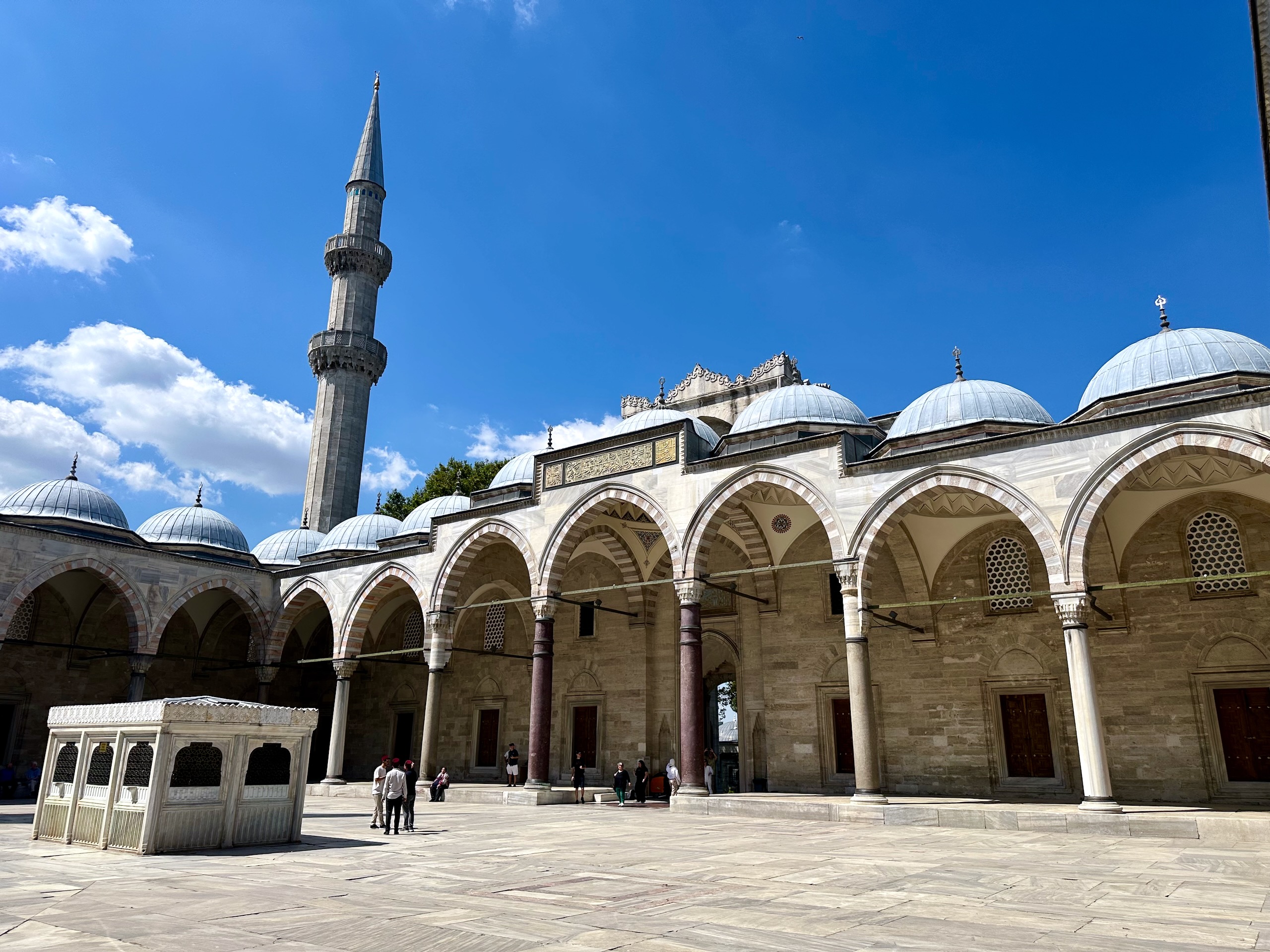
One of the most beautifully located mosques in Istanbul, it stands on the Third Hill, with terraces overlooking the Golden Horn. It was designed by Mimar Sinan for Suleiman the Magnificent, and it’s more than just a mosque — it’s a whole complex (külliye) with a courtyard, madrasas, and mausoleums where Suleiman and Hürrem Sultan are buried. It’s the essence of classical Ottoman architecture and part of the UNESCO World Heritage area. The interior impresses with its proportions and light, while outside you’ll find some of the best city views without the crowds typical of Sultanahmet.
Entry is free — the mosque is still an active place of worship, and visitors are allowed between prayer times. The safest window is roughly 9:00 a.m. to 6:00 p.m., but keep in mind that tourist access is paused during the five daily prayers, especially Friday noon prayers.
The entry rules are simple: dress modestly (shoulders and knees covered), women should cover their hair, and everyone must remove their shoes before entering. It’s a good idea to bring a small bag to carry your shoes with you.
Bajazid Square
🇹🇷 Beyazıt Square / 📌 Pin on Google Maps – click here.
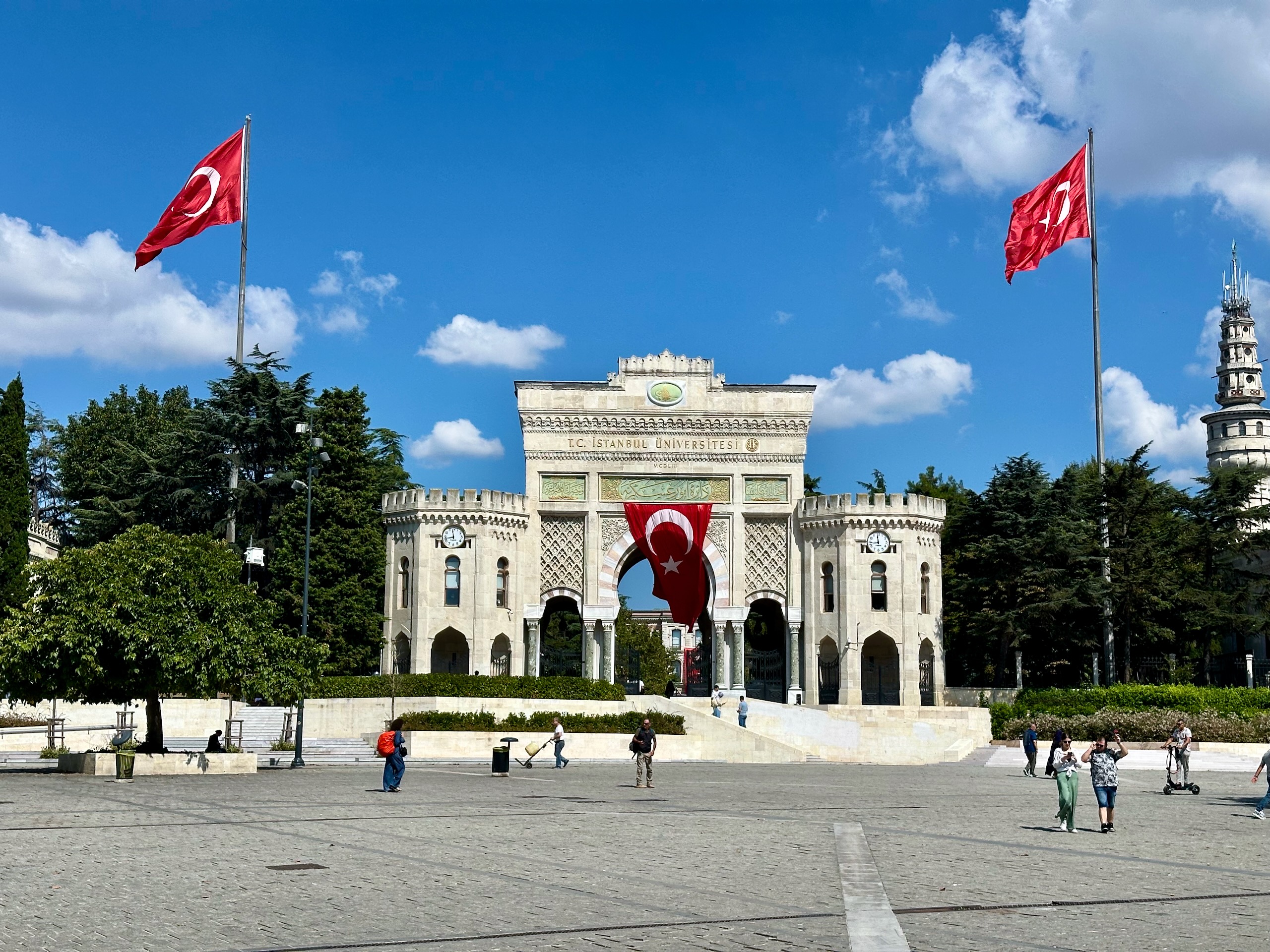
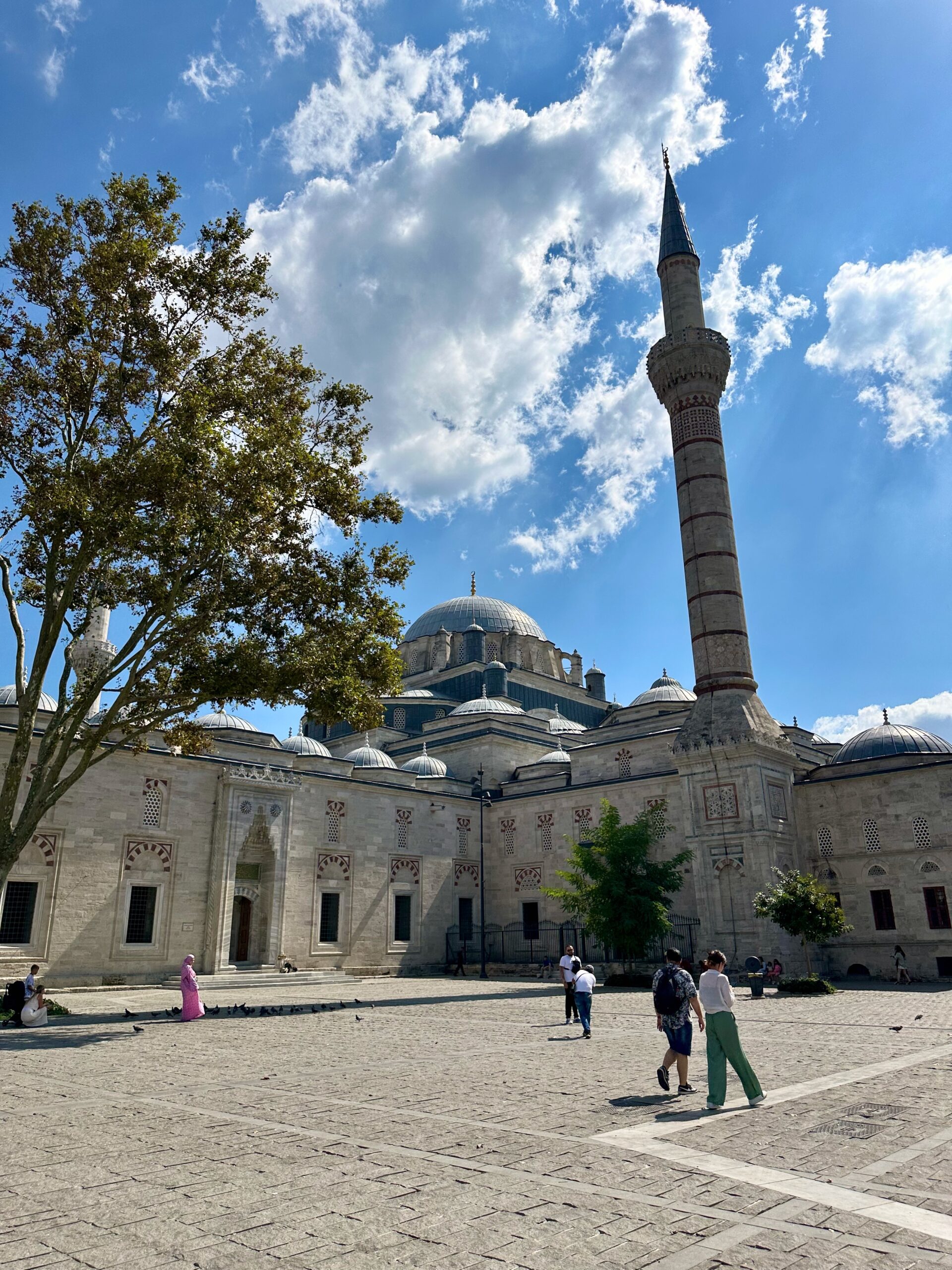
Beyazıt is a perfect snapshot of old Istanbul. The square itself stands on the site of the Roman Forum of Tauri (later the Forum of Theodosius), once one of Constantinople’s grandest forums. Today, its monumental backdrop is formed by three landmarks: the Beyazıt II Mosque from the early 16th century, the main gate of Istanbul University, and the slender Beyazıt Tower — a former fire watchtower, rising 85 metres above the campus.
It’s also super practical — just a stone’s throw from the Grand Bazaar, with the T1 tram offering the easiest access. Simply hop off at Beyazıt–Kapalıçarşı stop and you’re right there.
Entry to the square is, of course, free. If you’re going into the mosque, standard rules apply: shoulders and knees covered, and shoes off at the entrance. Visiting is paused during prayer times. The university gate is a photogenic city symbol, and since 2024, Istanbul University has officially opened the Beyazıt campus to visitors on weekdays (8:30 a.m. – 5:00 p.m.). They now offer limited guided tours, including access to the tower, but advance registration is required. Policies may change, so it’s worth checking the university’s latest announcements before your visit.
You might encounter a bit of “local flavour” on site — like guys offering “instant souvenir photos” with on-the-spot printing. If you’re not interested, a smile and a polite “no, thanks” is usually all it takes.
Hagia Sophia
🇹🇷 Ayasofya-i Kebir Cami-i Şerifi / 📌 Pin on Google Maps – click here.
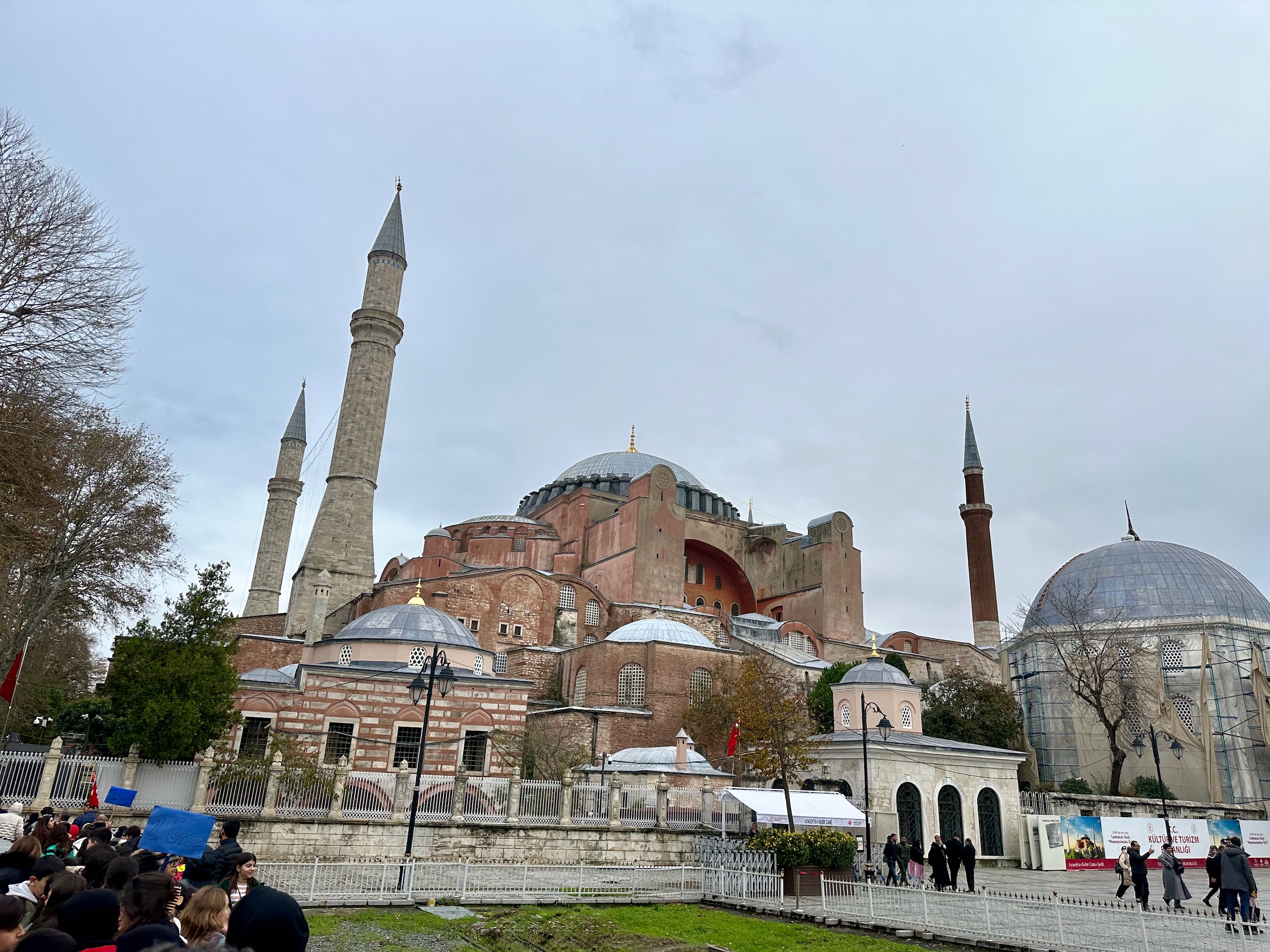
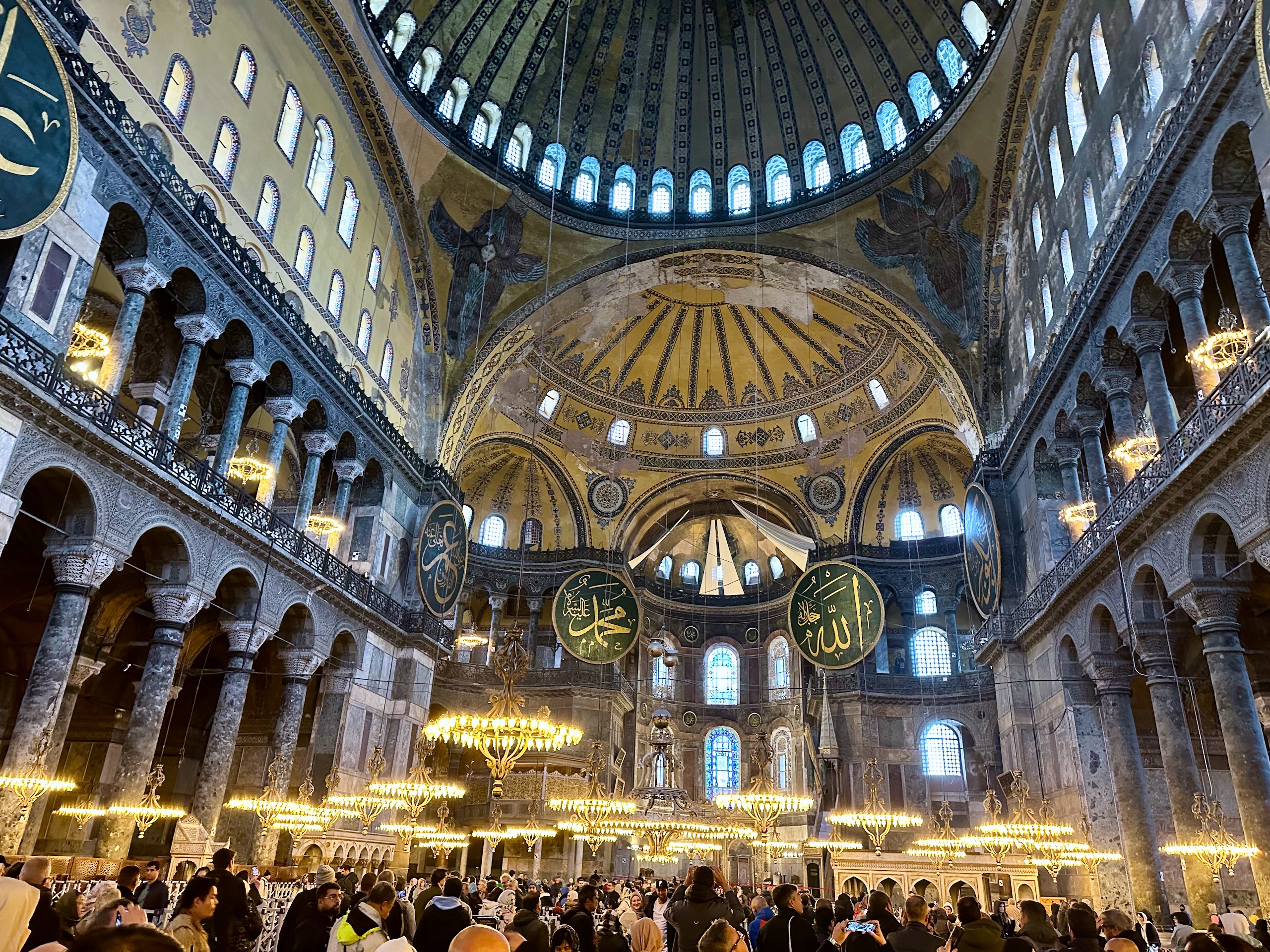
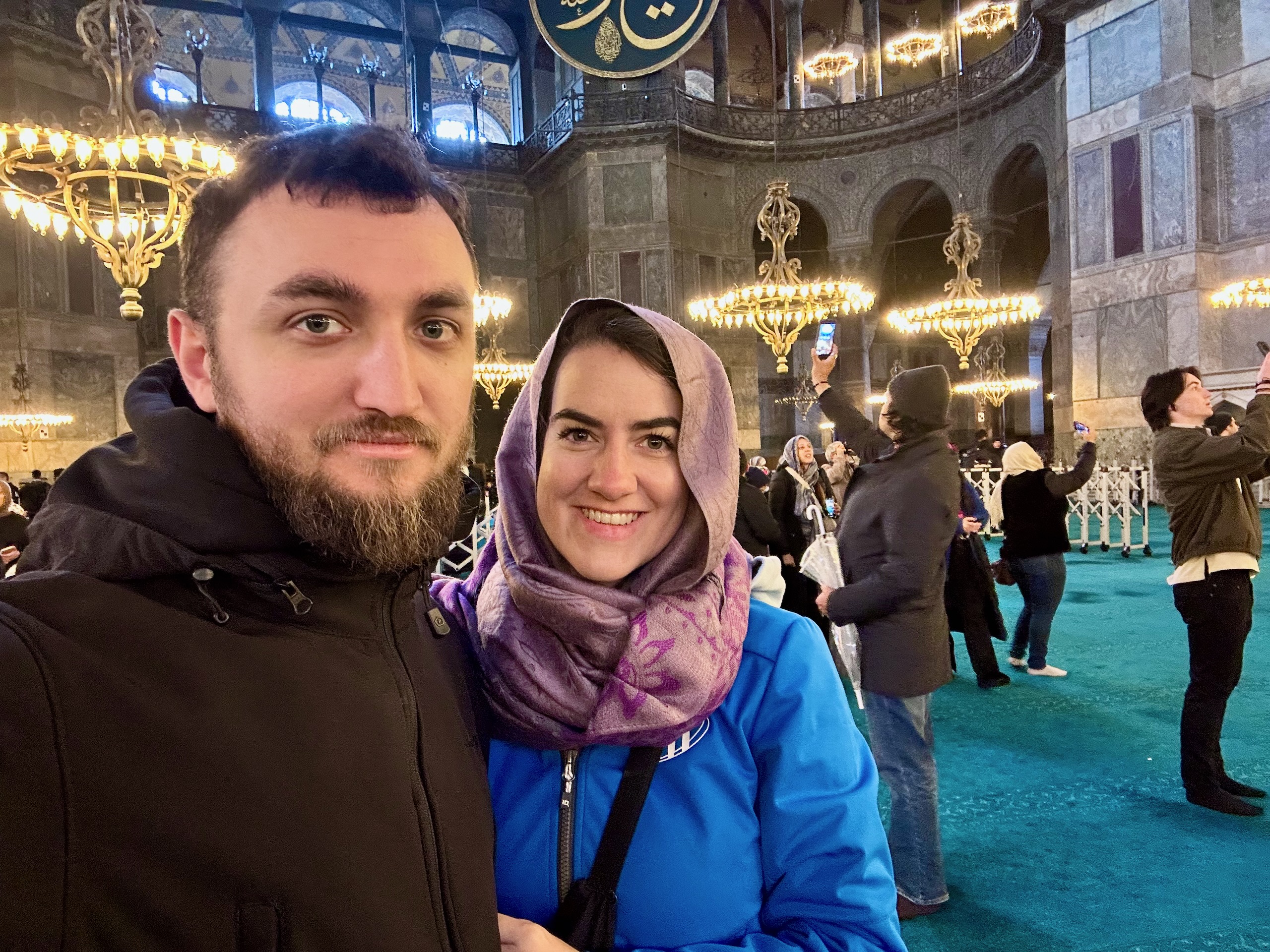
It’s an icon — no doubt about that. We visited back when entry was still free, but now the tourist route is ticketed. The price for foreigners is €25, and children under 8 enter free with a guardian. Opening hours are roughly 9:00 a.m. to 7:30 p.m. daily, but access is paused during prayer times, especially Friday noon prayers — so it’s best to plan your visit between prayer hours.
Is it “worth it”? If it’s your first time, yes, although in our opinion it’s not as impressive as other mosques in the Middle East.
Blue Mosque
🇹🇷 Sultanahmet Mosque / 📌 Pin on Google Maps – click here.
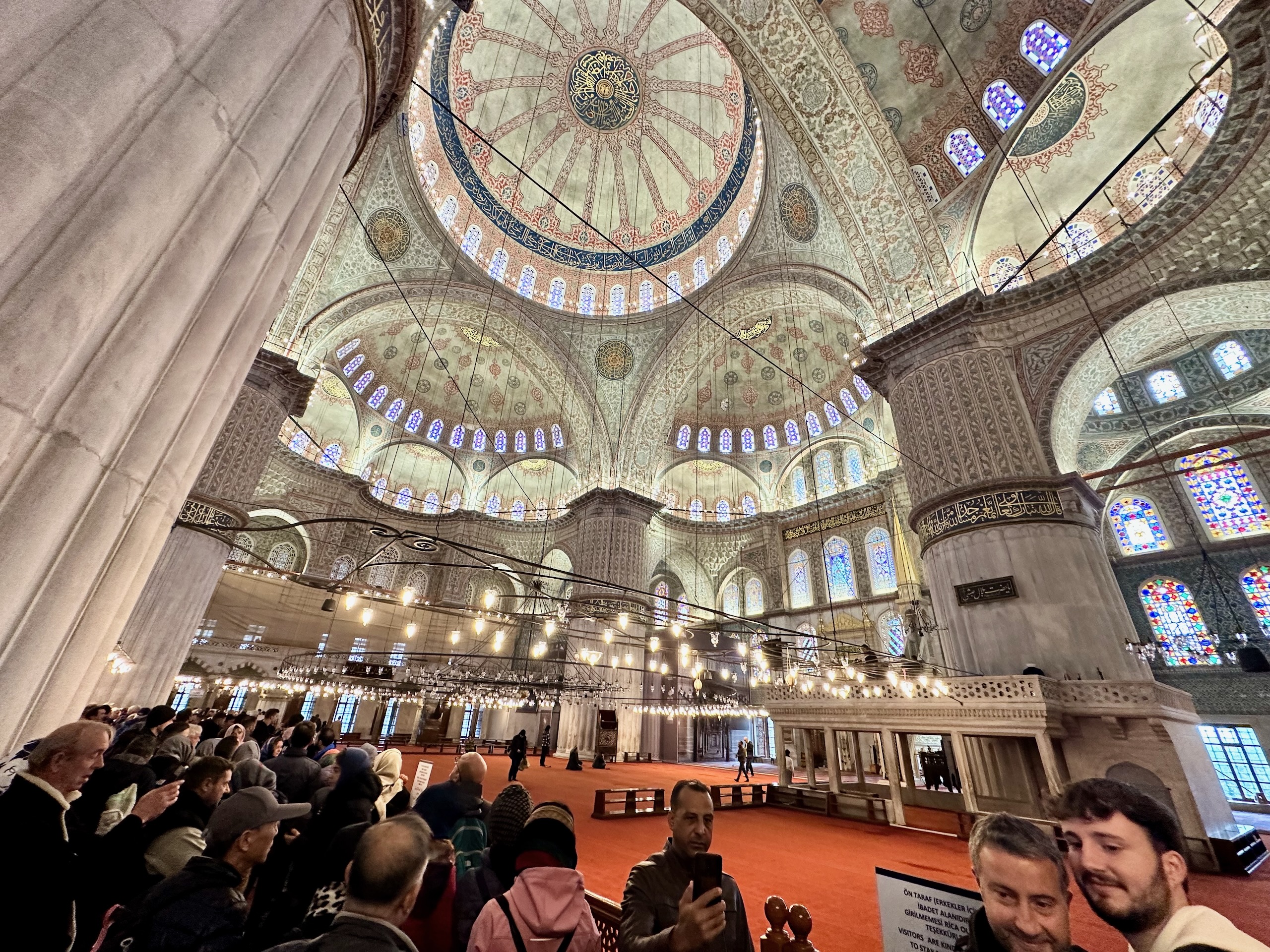
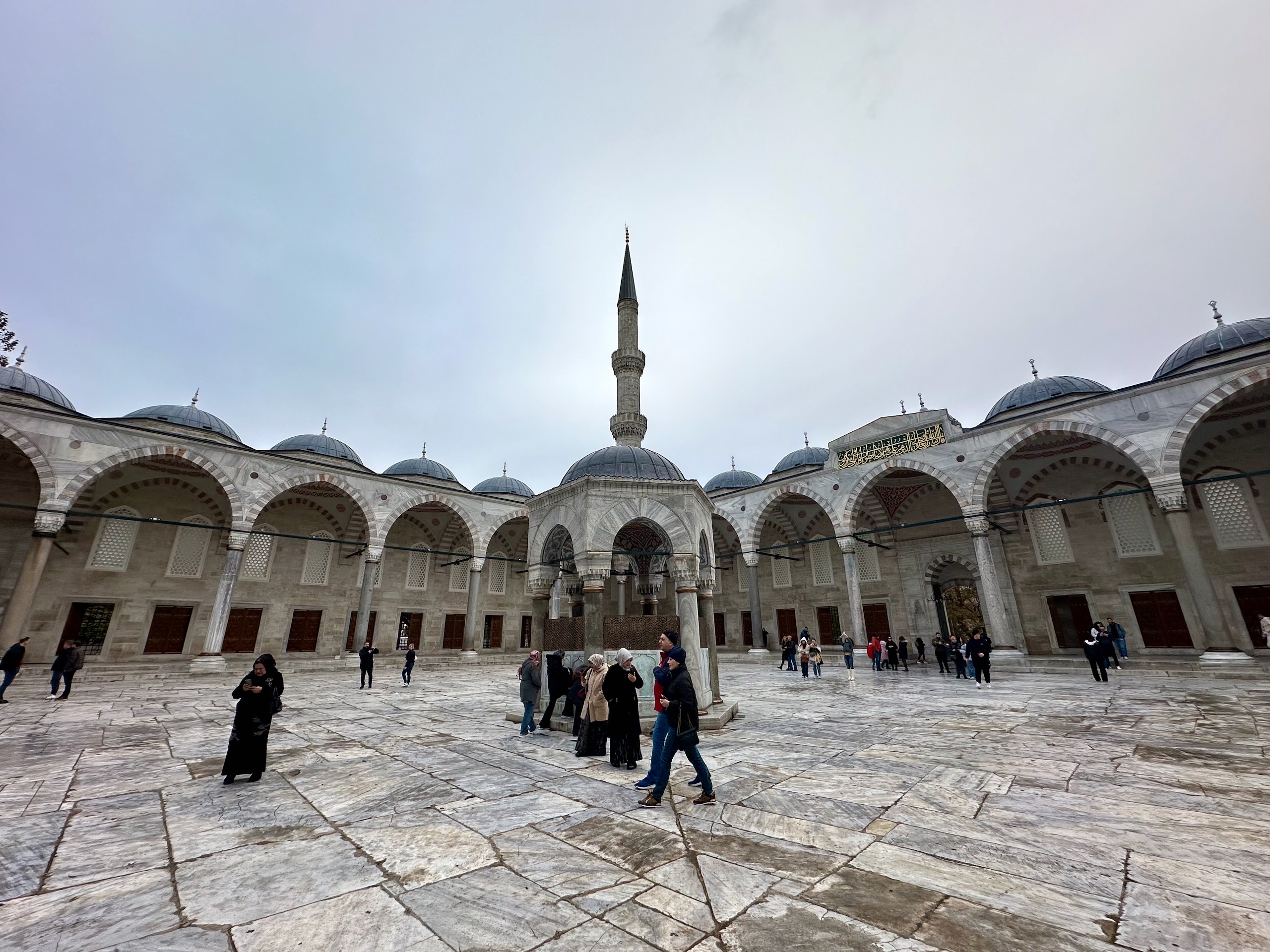
“Crowded” is putting it mildly 😅 — this is one of the city’s most visited mosques. The interior is stunning: six slender minarets, a classic domed layout, and thousands of İznik tiles that gave rise to its nickname, the Blue Mosque. Built between 1609 and 1617, it was designed by Sedefkar Mehmed Ağa and is part of the UNESCO World Heritage Site.
Grand Bazaar
🇹🇷 Kapalı Çarşı / 📌 Pin on Google Maps – click here.
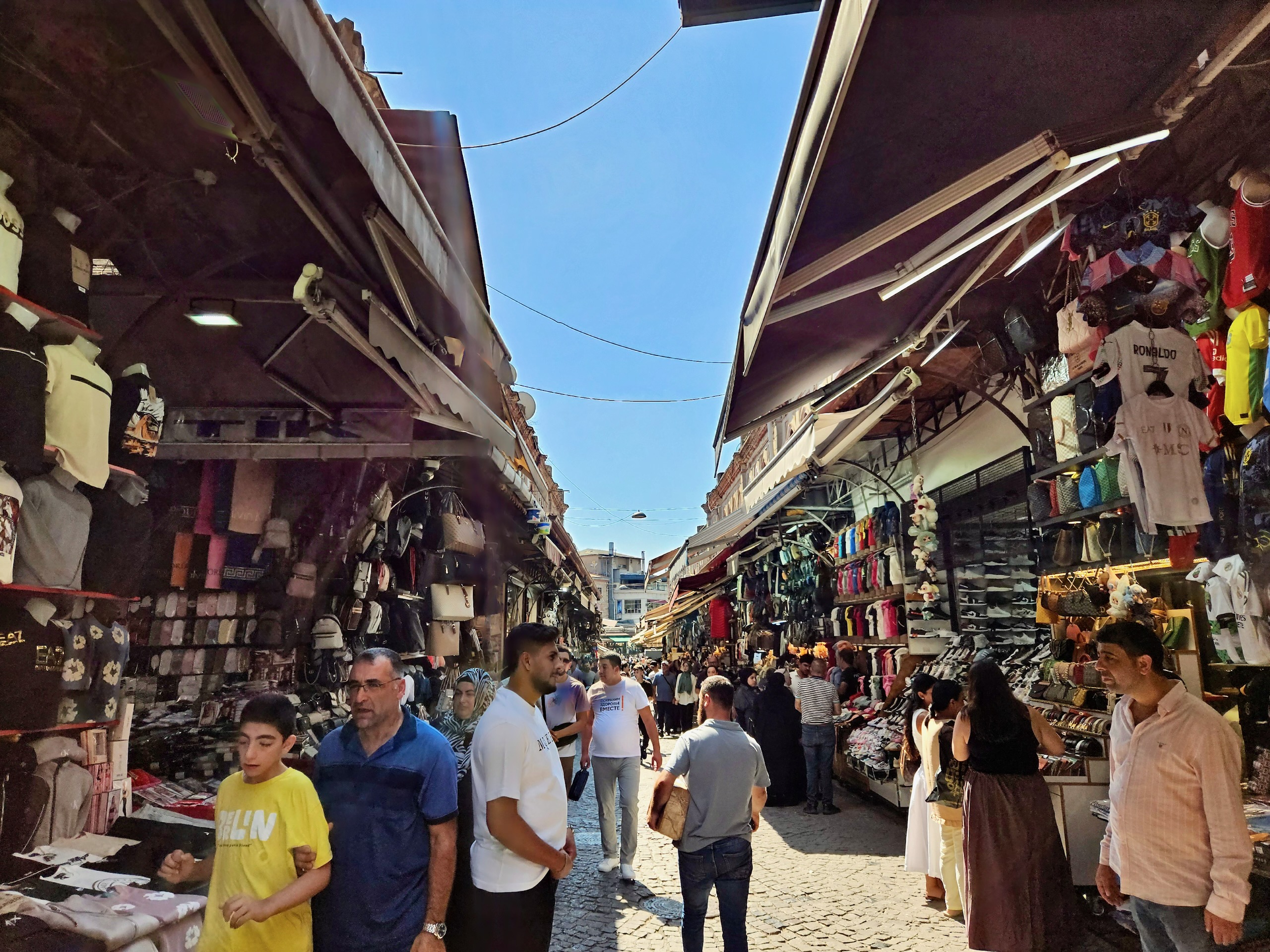
If you’re wondering whether it’s more for tourists than locals — yes, these days it mostly is. The Grand Bazaar is a historic “city under a roof”, with around 61 covered streets and 3–4 thousand shops , several hundred thousand people pass through here every day. It is more of a spectacle and a hunt for souvenirs than a place for everyday shopping for Istanbul residents.
Egyptian Bazaar
🇹🇷 Mısır Çarşısı / 📌 Pin on Google Maps – click here.
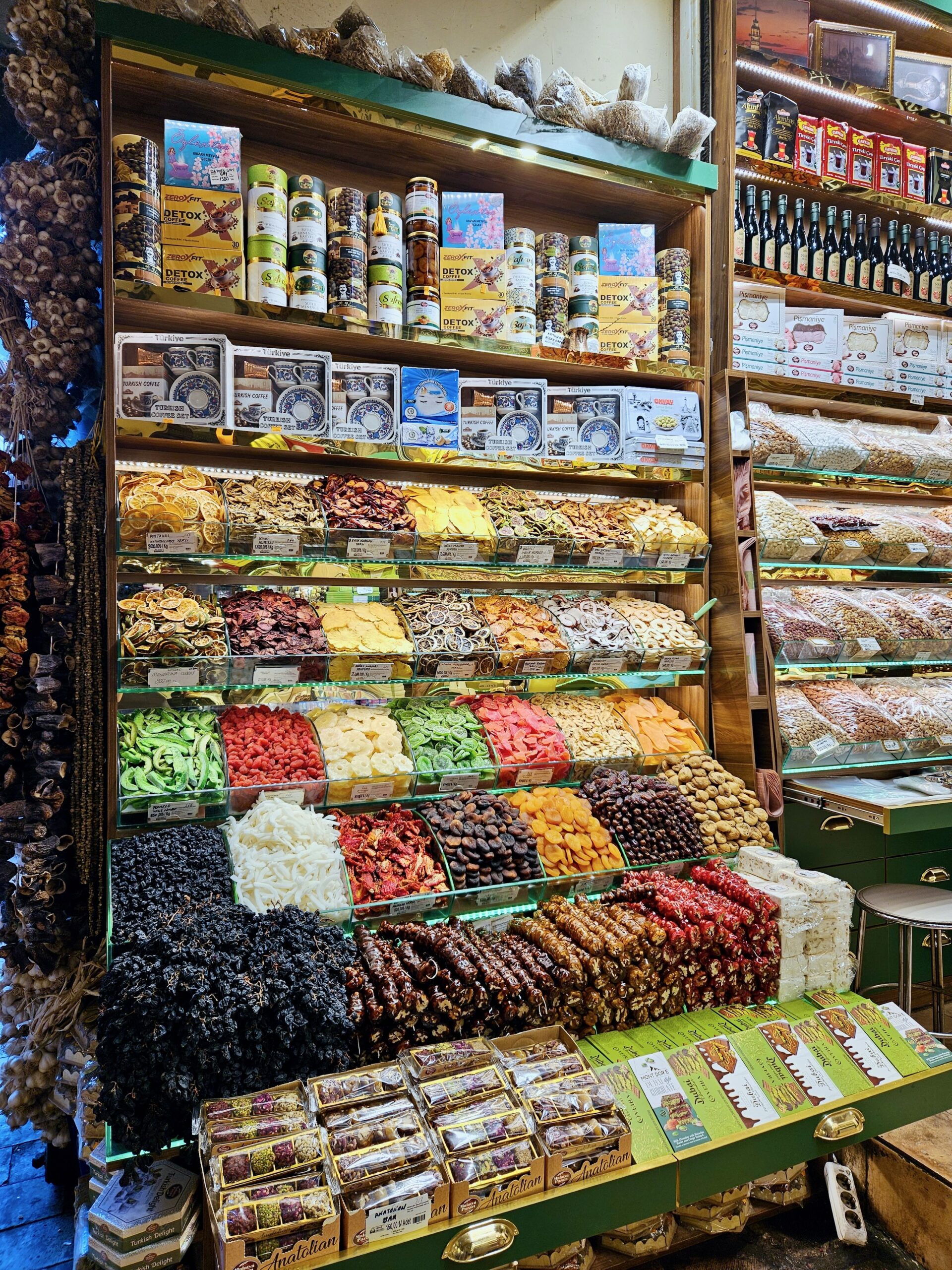
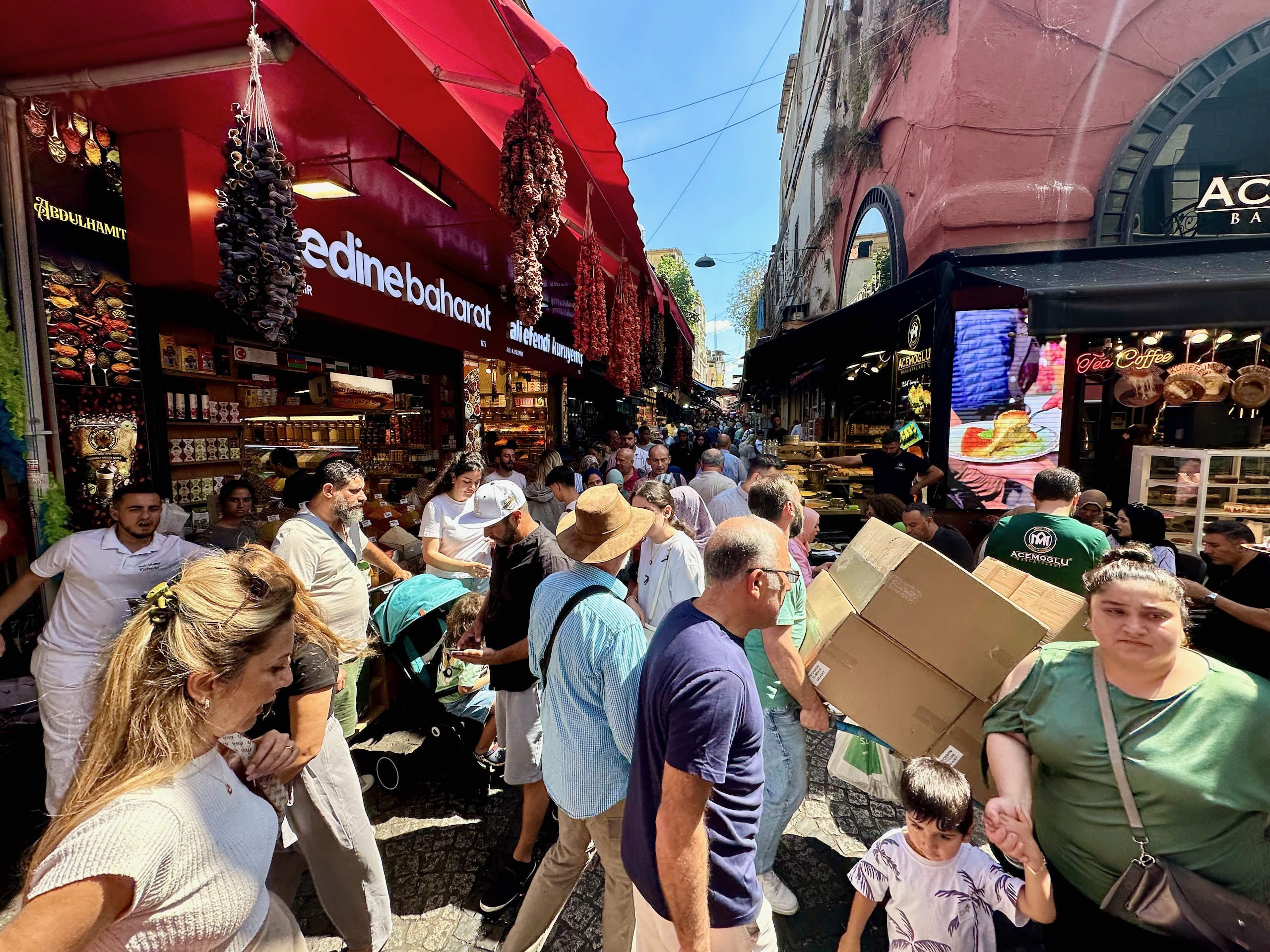
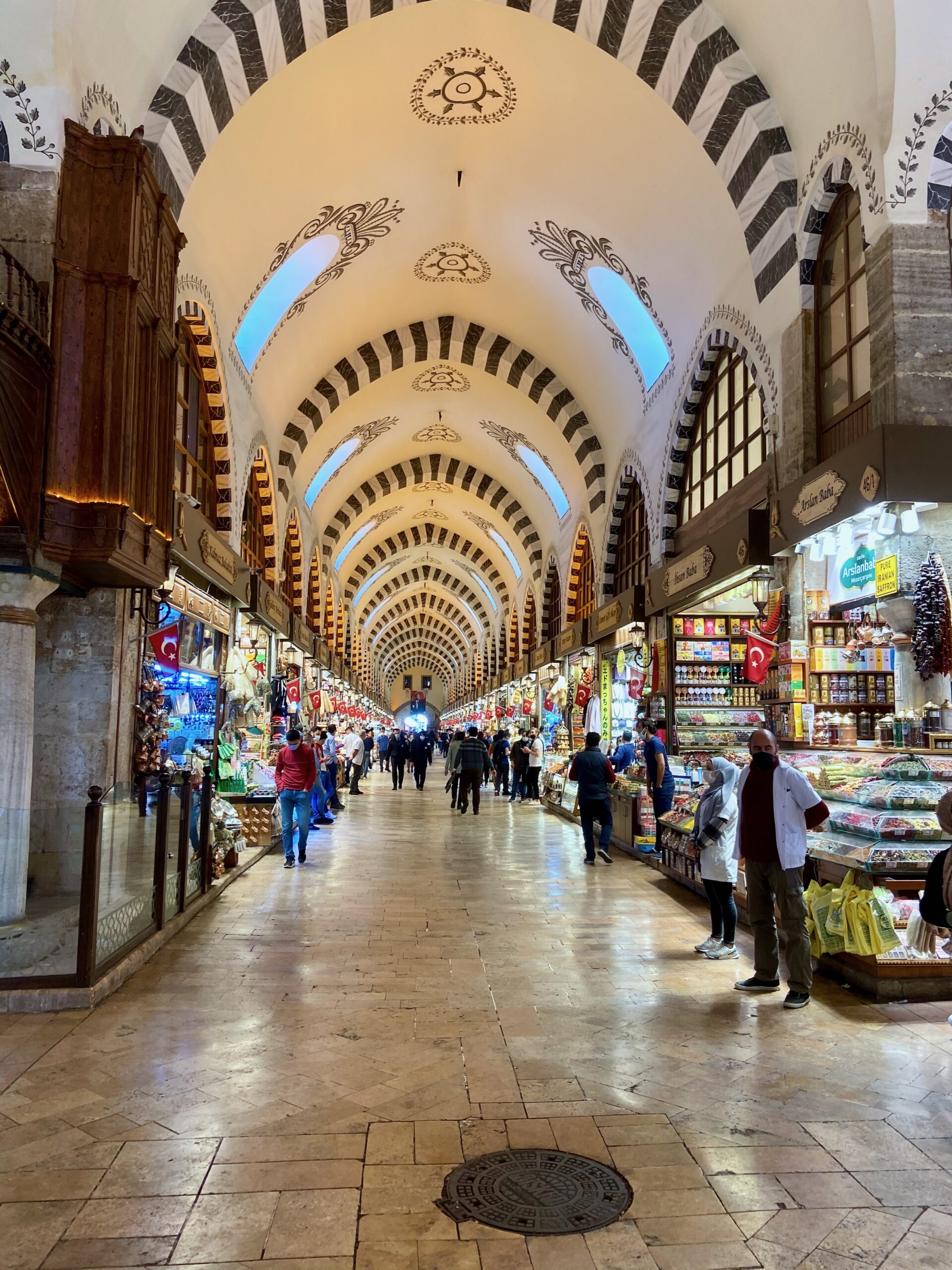
It’s the “younger cousin” of the Grand Bazaar — and nowadays, more of a spectacle than a place for daily shopping. This 17th-century hall was built as part of the New Mosque (Yeni Camii) complex, and for centuries it was the heart of the spice trade. Today, alongside spices, you’ll find Turkish delight, nuts, teas, and souvenirs. The atmosphere is great, but both the prices and product selection are clearly aimed at tourists. The bazaar is located right on Eminönü Square, right next to Yeni Camii.
Opening hours can vary depending on the day and season, but a safe bet is roughly 9:00 a.m. to 7:00 p.m., with closures or reduced hours during public holidays. Entry is free. If you’re after a more relaxed visit, come in the morning — by midday, the crowds tend to build up at every entrance.
Summary
You can see the key highlights of this city in 24–48 hours, but there’s no way to capture it all in just one blog post. If you can, try not to visit places just to tick them off a map — take some time to blend into the rhythm of each neighbourhood, even if just briefly. Of course, we know that takes time too — and let’s be honest, vacation days aren’t endless.
We’ve intentionally skipped the topic of “serious shopping” here — and no, we’re not talking about those “Gucci” treasures at souvenir stands 😅, but actual sales in malls and outlet stores. That deserves a separate guide on its own, because price differences and travel times can eat up your day faster than some historical landmarks.
And then there’s the Asian side — Kadıköy, Üsküdar, and beyond — still sitting on our list, waiting for a proper, unhurried visit. We’ll get to it next time and share ready-made 1–2 day loops for exploring “the other side” of the city.If you’re planning your own stopover, feel free to use all the tips above — and if you’ve got questions about a specific day plan or logistics, don’t hesitate to reach out. Istanbul has this magic: even a short visit can feel like something much bigger.