
Ten wpis jest również dostępny w języku:
 Polski
Hey there, fellow traveler!
We’d like to welcome you to the second part of our Desert Horizons 2025 travel diary — or simply, our little road journal — this time taking you with us across Turkey.
From smooth European highways, we dive straight into Istanbul’s traffic — where the heat, the noise, and the smells are on a whole different level than anything back in Europe.
For those of you who’ve just joined us — this series is our daily travel log. No sugarcoating, no guidebook clichés. If we stayed somewhere long enough to actually explore, you’ll find separate posts with tips and photos from those places. And if you haven’t seen the beginning of our route yet, start here: From Poland to Turkey (the first leg of the journey).
More information about the entire project – including a map of the route, partners, and subsequent stages – can be found at:
Day 6: September 3, 2025, Wednesday
🇹🇷 Turkey, Istanbul -> 🇹🇷 Turkey, Ankara
In the previous part, we left off on September 1st, when we rolled into Istanbul late at night. September 2nd was all about the city — visiting a few places we’d missed before, some walking, some eating. If you’re planning a short trip yourself, or just have a stopover with Turkish Airlines, check out our post about what’s worth seeing in Istanbul during a stopover — we covered both what we explored back in 2023 and what we managed to see this time.
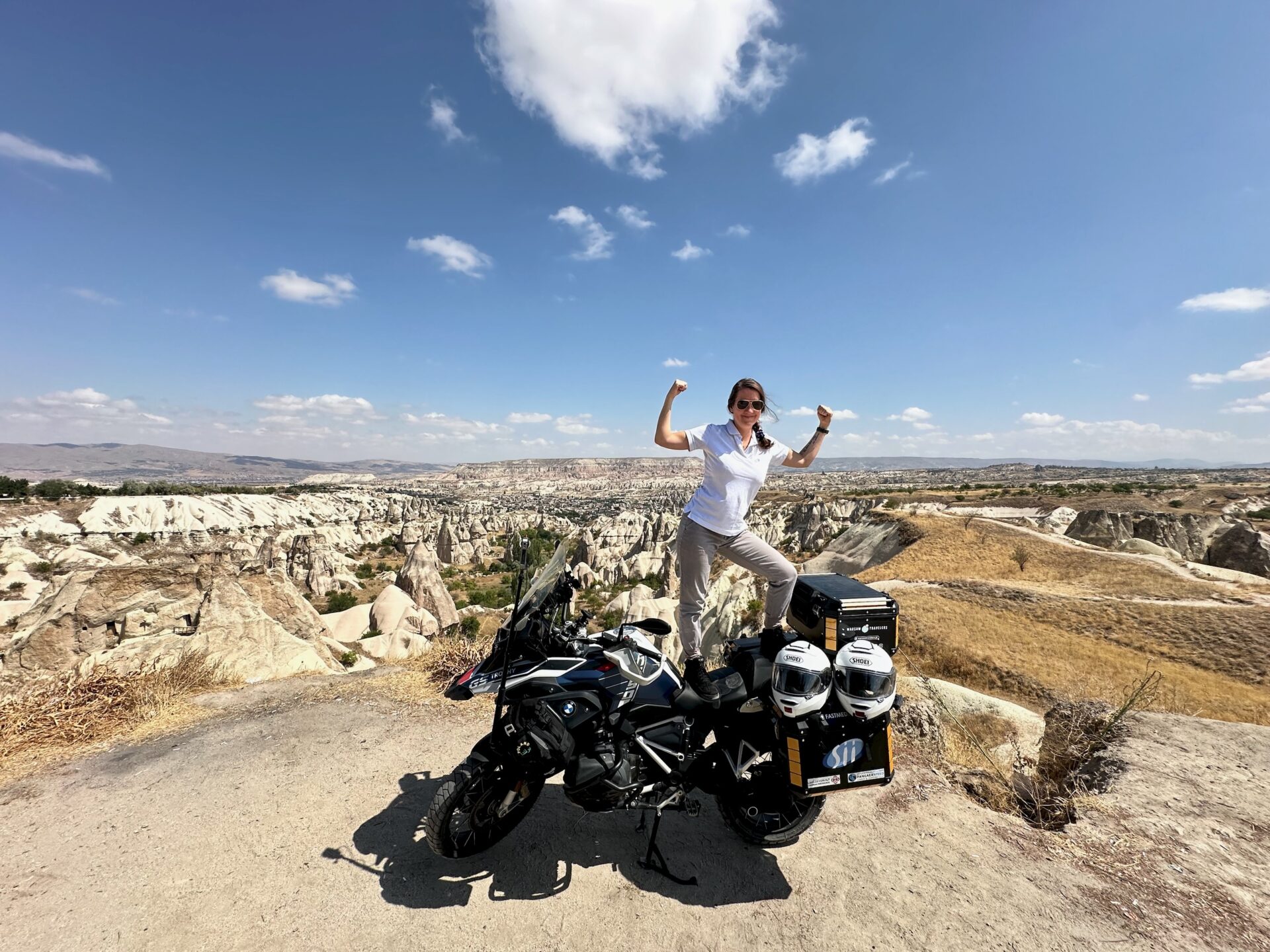
September 3rd — time to pack up and hit the road: destination Ankara. Leaving Istanbul, of course, meant traffic again, but just like last time, motorcycles can ride along the edge or between lanes, so we flowed with the stream. We probably looked like a mobile version of IKEA, but hey — we’re still on two wheels, and that saves a lot of time.
Outside the city, the roads were great: wide, smooth, and with beautiful views. We reached Ankara with a bit more traffic and some hilly stretches, but it’s nothing like Istanbul — you can feel the difference right away. At the hotel, the staff smiled and congratulated us for taking on this route with such a “beast” of a bike. We grinned — our GS loves hearing that.
An important insurance note. After crossing the Bosphorus, our comprehensive coverage ended — and with it, the GAP protection. GAP is an extra type of insurance that covers the difference between the original invoice value (or the agreed amount in the contract) and the current market value if the vehicle gets stolen or written off. In short, it fills the “value gap” as prices of new bikes go up and the insured value goes down. We had it, but only within Europe. So if you’re planning a similar trip, make sure to check your policy details and territorial coverage. Honestly, we were less worried about the bike getting stolen here than in some places in Western Europe.
In the evening — a quick reset, something to eat, and straight to bed. The next day was all about exploring! If you want to get a feel for what Ankara tastes like and what life there is like — where we ate, how safe it felt, and how we got around — check out our post 🌃 Ankara – food, safety, and getting around. And if you prefer something more practical, take a look at our guide ⛲️ What to see in Ankara, where we listed the most interesting spots along with short travel tips.
- ⌚️ Travel time: 5 hours 26 minutes;
- 🛣️ Distance: 464 km;
- 🏍️ Average speed: 98 km/h
Day 9: September 6, 2025, Saturday
🇹🇷 Turkey, Ankara -> 🇹🇷 Turkey, Goreme (Cappadocia)
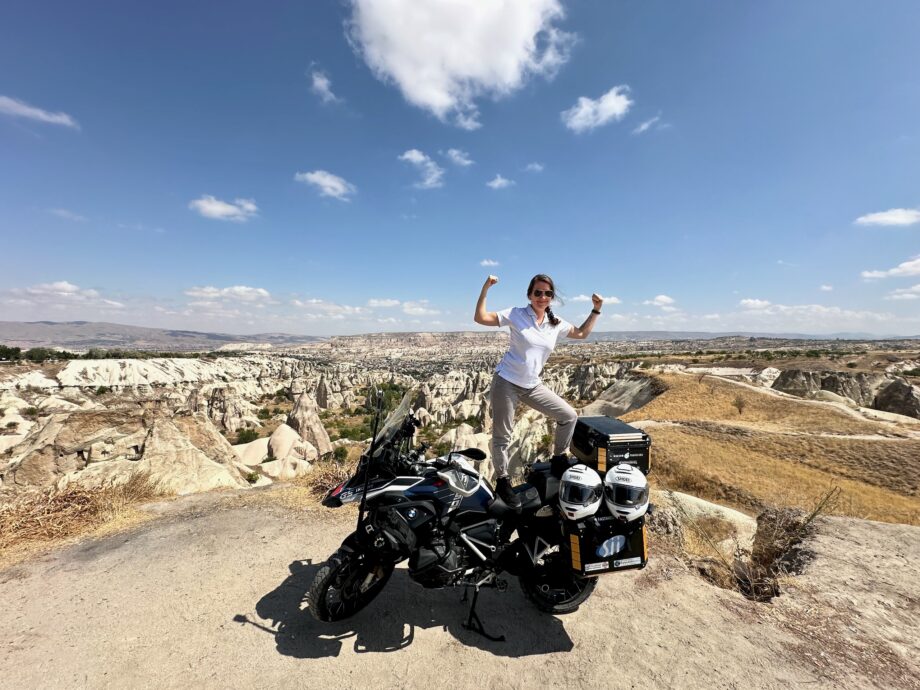
After Ankara, it was time for a change of scenery. Jadzia was as excited about the hot air balloons as a kid waiting for presents — that part of the plan was non-negotiable. Right after checking out, we packed our stuff, left the city, and about three and a half hours later we were in Göreme, which we chose as our base for exploring Cappadocia.
The ride went smoothly — good roads, smooth asphalt, and with every kilometre less city, more open space. As soon as you enter the region, you can tell it’s like another planet — the rocks, the valleys… you can’t help but slow down, even if you won’t admit it.
Once we got there, the first steps were pretty down to earth — drop the bags, find something to eat nearby, and check if our hot air balloon booking hadn’t been cancelled. Balloons take off before sunrise, so a 4:30 AM wake-up call isn’t exactly our idea of fun, haha. But the first surprise hit our wallets — Cappadocia is noticeably more expensive than the rest of Turkey. A meal that would cost around 40 lira elsewhere could easily be twice as much here. And those little “on the house” extras you get in most Turkish restaurants — like salad or appetizers — forget it. If someone only visited this region and judged all of Turkey by it, they’d get a seriously skewed picture.
If you want to see what it was really like — the balloon flight, how much it actually costs, where we stayed, and what food we liked — we wrote all about it in a separate post 🎈 Cappadocia – impressions, balloons, prices.
- ⌚️ Travel time: 3 hours 37 minutes;
- 🛣️ Distance: 294 km;
- 🏍️ Average speed: 99 km/h
Day 11: September 8, 2025, Monday
🇹🇷 Turkey, Goreme (Kapadocia) -> 🇹🇷 Turkey, Sanliurfa
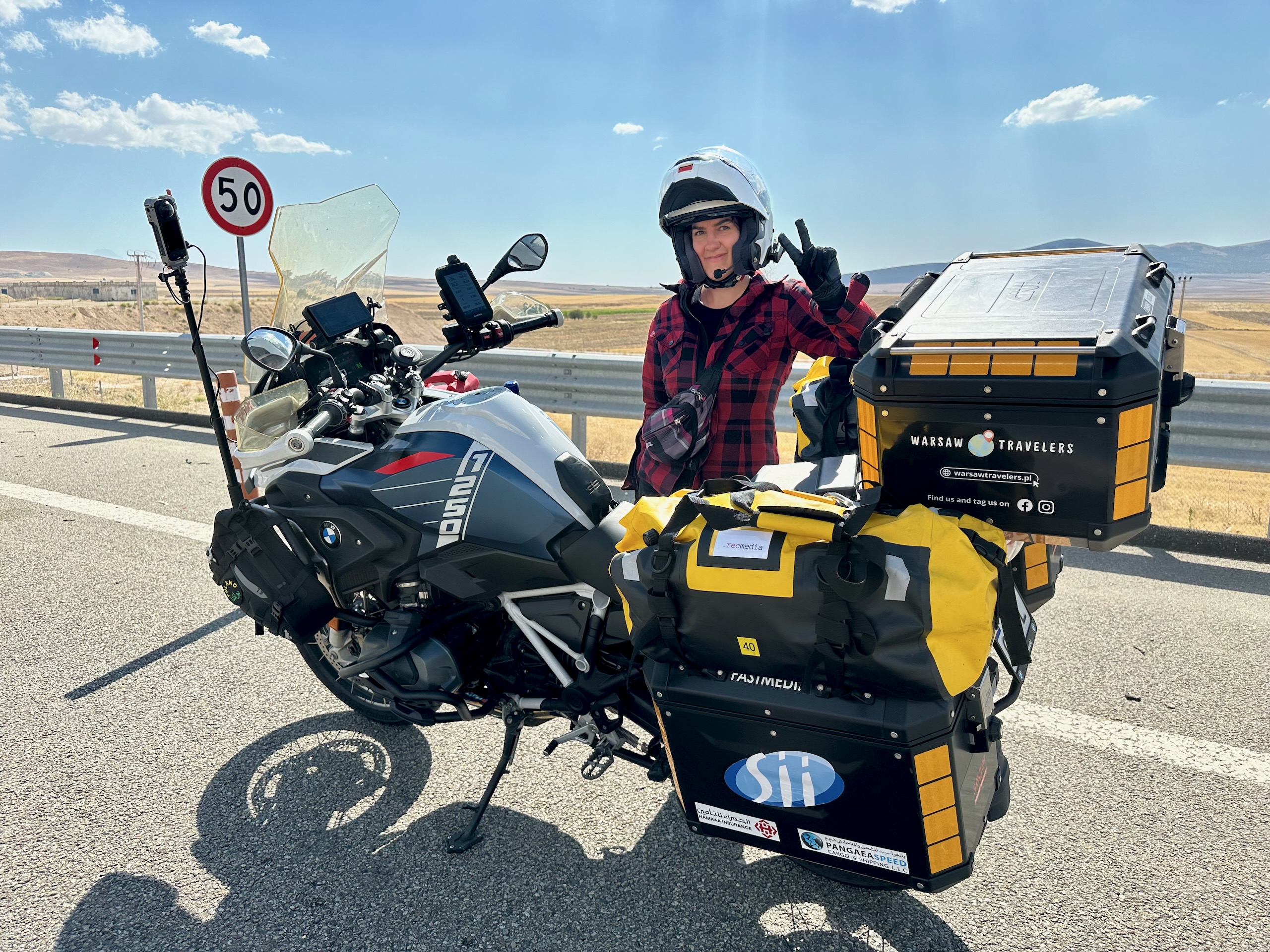
We left Göreme, and just a few kilometres in, it started to drizzle. Remember how we sent our rain gear back to Poland in Bulgaria? Yeah… xD Would’ve come in handy today. For the first hour it was just a light drizzle, but the closer we got to the Medetsiz mountain area (heading towards Adana), the heavier it got. It poured so hard our mesh jackets turned into unwanted air conditioning.
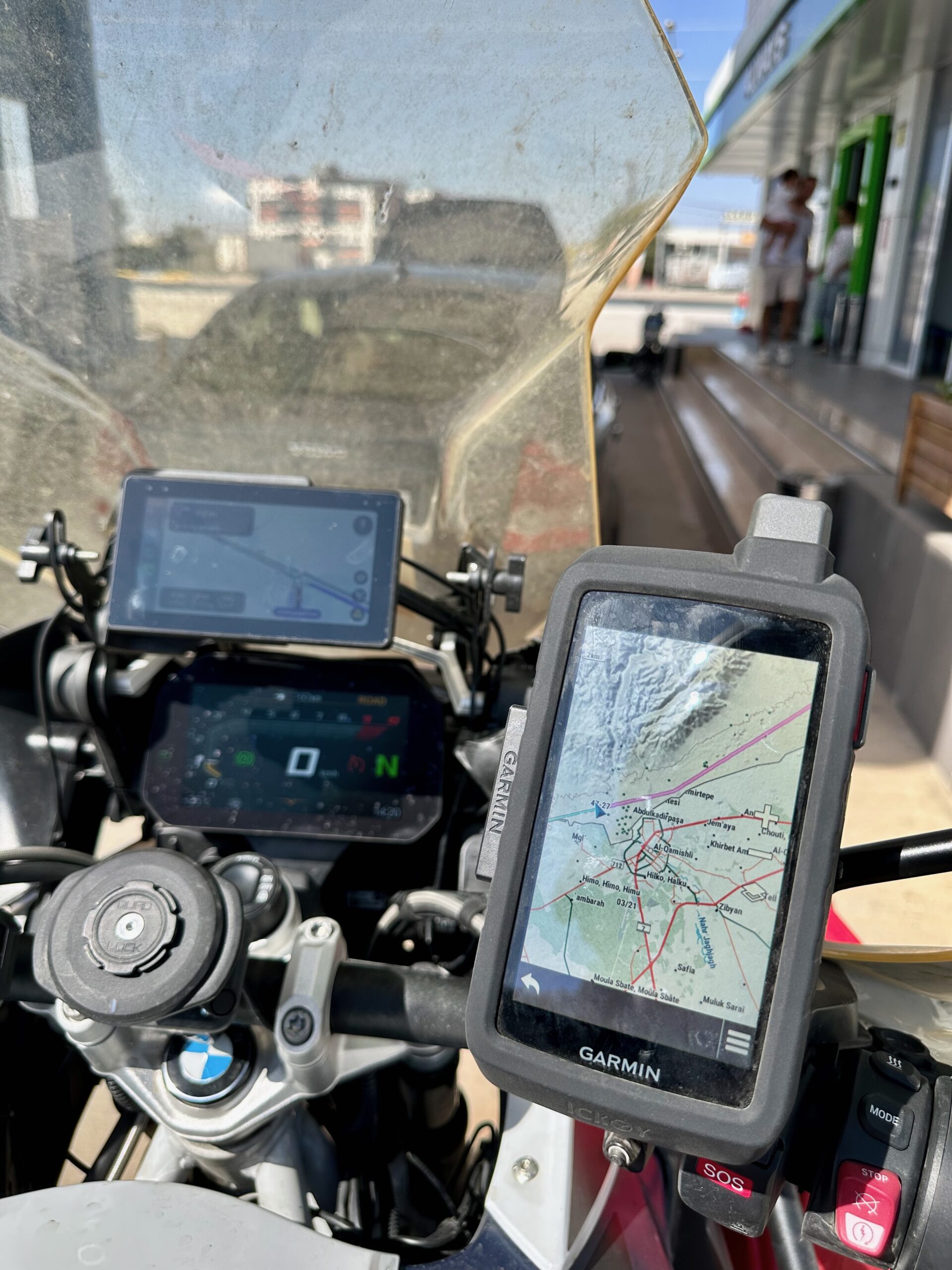
The temperature dropped to around 17–18°C, so we threw on hoodies underneath and kept pushing through. We stopped at a gas station — refuel, quick tea, checked the weather on the Garmin — and saw that rain would stick with us all through the mountain section. No point waiting — time to ride on.
On one of the long downhill stretches, we hit a section with grooved pavement. The bike followed those lines like it was on rails — not exactly the feeling you want in the rain, especially with this much weight. We slowed down and stuck to the right side for a while, carefully avoiding the ruts. And then, just like that, the mountains were behind us and the temperature shot up to 35°C. Us? Still in wet clothes. The smell of adventure? Let’s just say… intense.
The last stretch of the route runs along the border. On the right side — fences, military posts, and beyond them, Syria. It’s a strange feeling; just an ordinary road, yet it carries a different kind of weight in your mind. Maybe one day we’ll have the courage to ride to Aleppo, but for now, we’re just keeping an eye on the situation — land crossings from Turkey are still closed to foreigners anyway. Along the way, a few drivers honked at us, but not out of anger. These were the friendly kind — waves, thumbs up, genuine smiles.
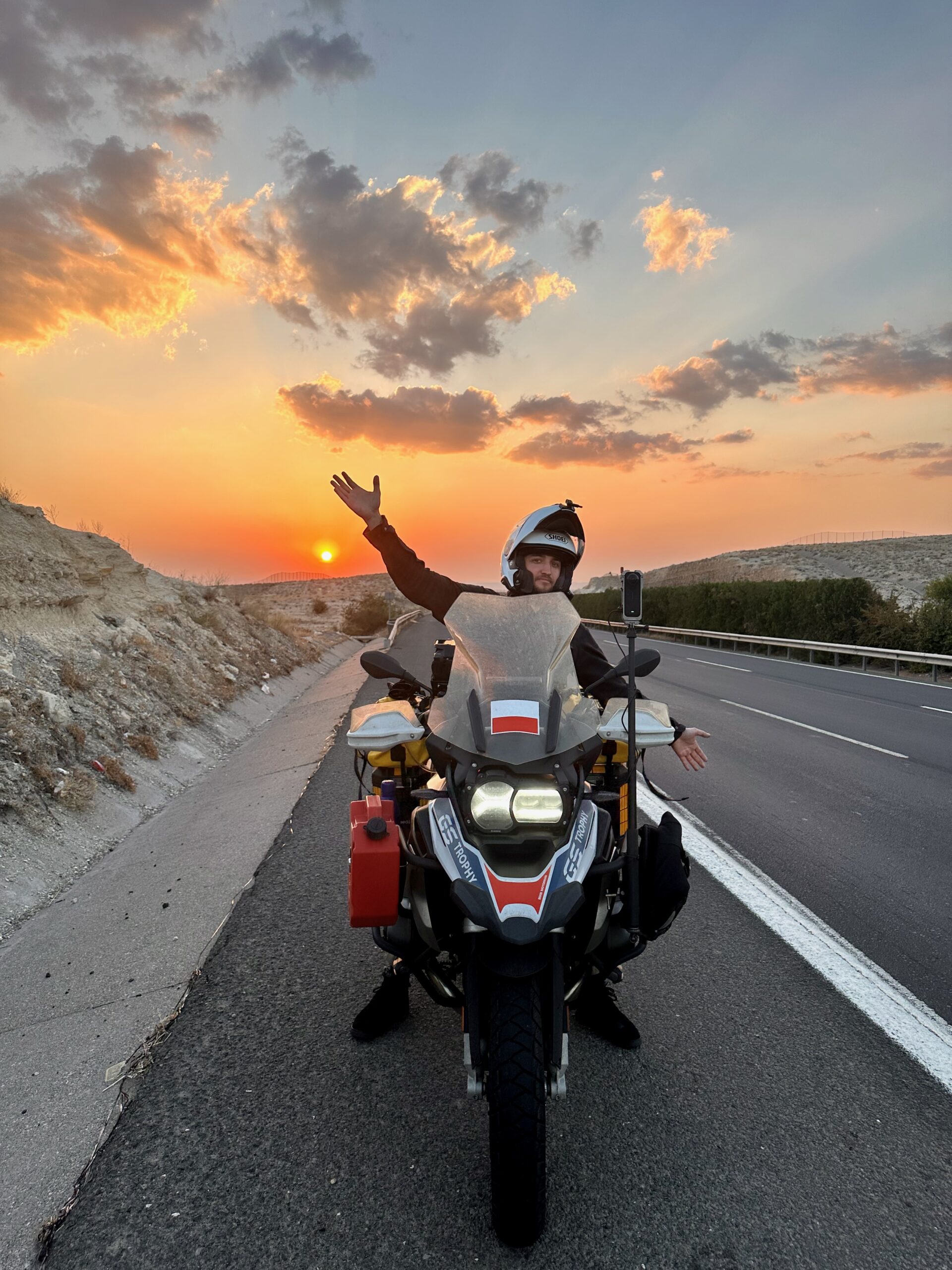
We arrived in Şanlıurfa in the evening — a long day with a lot of weather packed into just a few hours. Quick shower, simple dinner from a nearby shop, and finally we could spread out in a huge hotel room. We bought another eSIM card, this time thinking ahead to Iraq, and activated our Garmin inReach subscription — it’s a satellite communicator that lets us send messages, share our location without cell coverage, and has an SOS button that connects directly to a 24/7 rescue center. It gives real peace of mind, especially when the next parts of the route lead through less obvious places. The bed was amazing. We were asleep within a minute.
- ⌚️ Travel time: 8 hours 13 minutes;
- 🛣️ Distance: 629 km;
- 🏍️ Average speed: 95 km/h
Day 12: September 9, 2025, Tuesday
🇹🇷 Turkey, Sanliurfa -> 🇮🇶 Iraq, Erbil (Autonomous Region of Kurdistan)
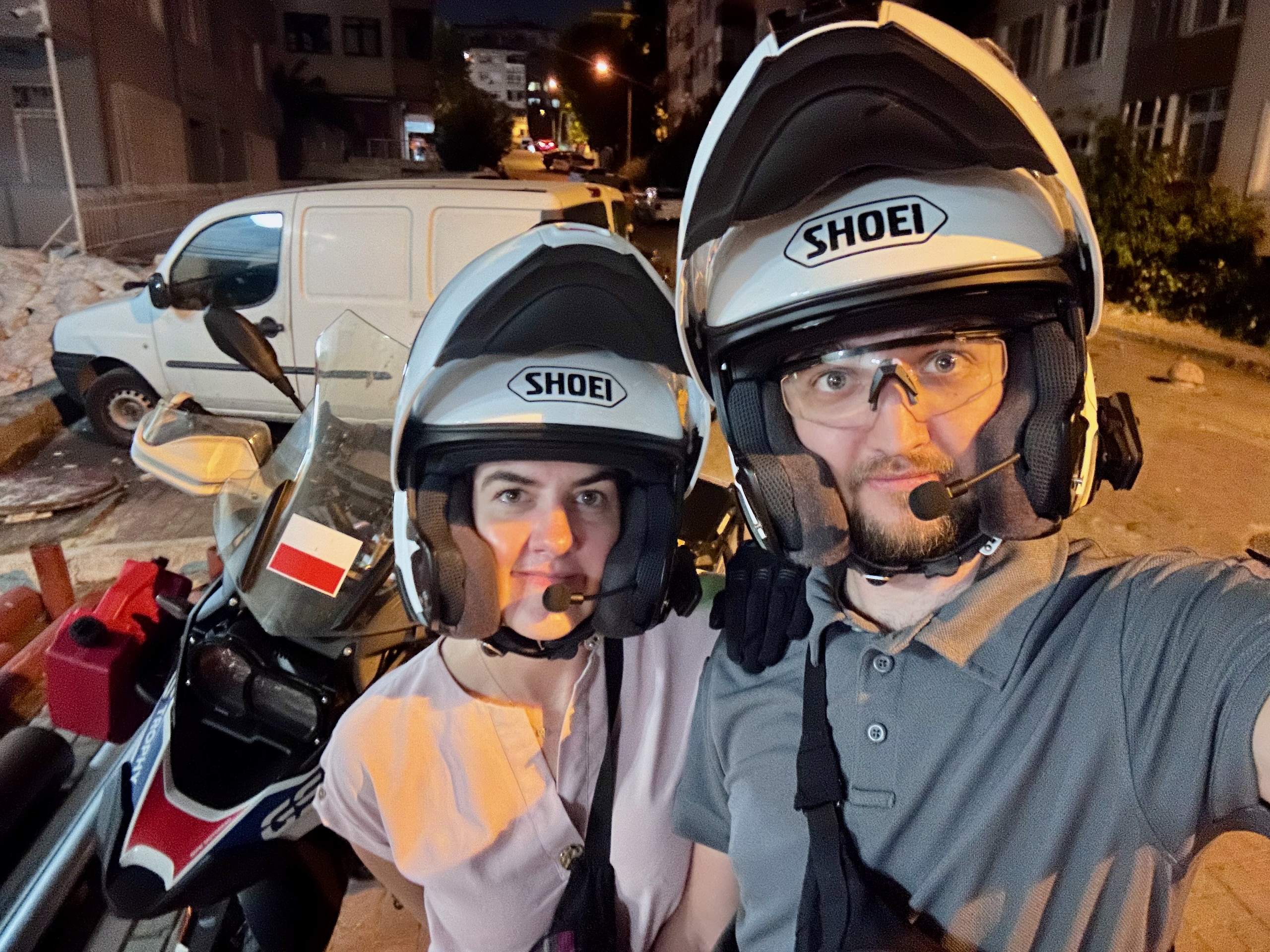
Alright then — we’re off to Iraq! 😀 After a year of planning and overthinking, it’s finally becoming real. The guys at the hotel entrance were clearly curious about us as we packed up the roll bags and fired up Stefan. We wanted to buy some Turkish tea as gifts, but time was running out. A lot of kilometres ahead — and this is only the end of Turkey.
The first part of the route went smoothly, though the road surface had its moods. We kept jumping between a fresh layer of asphalt on the right (made for trucks) and an older one on the left, dodging the occasional pothole. The closer we got to the border, the more chaotic it became — classic border towns where everyone drives wherever there’s space.
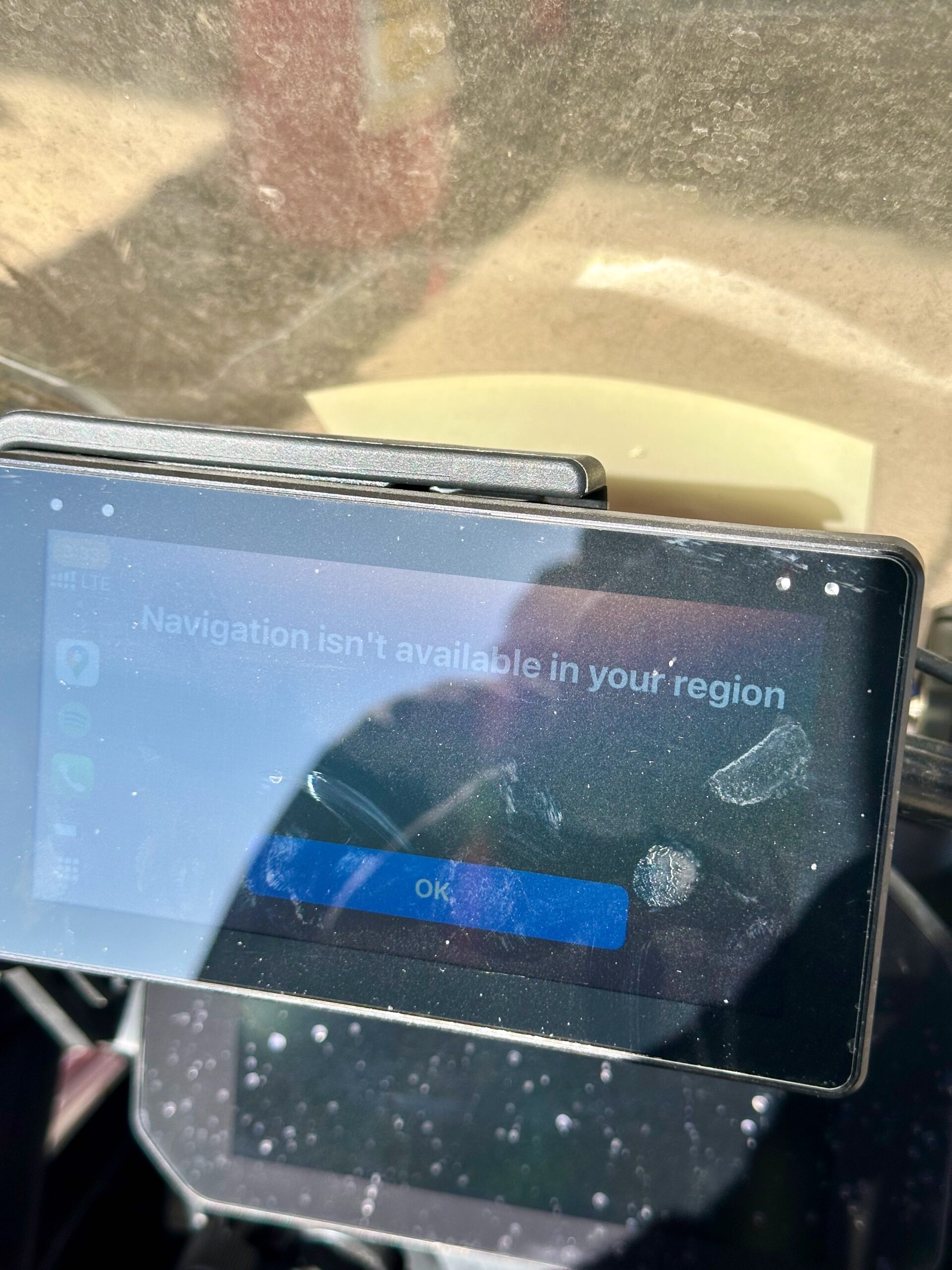
Near Syria, Waze, Google Maps, and Apple Maps all gave up on us, showing messages that navigation isn’t available in this region. Luckily, we had our Garmin and offline maps in mapy.cz, so we went old-school — just following the track, no fancy features.
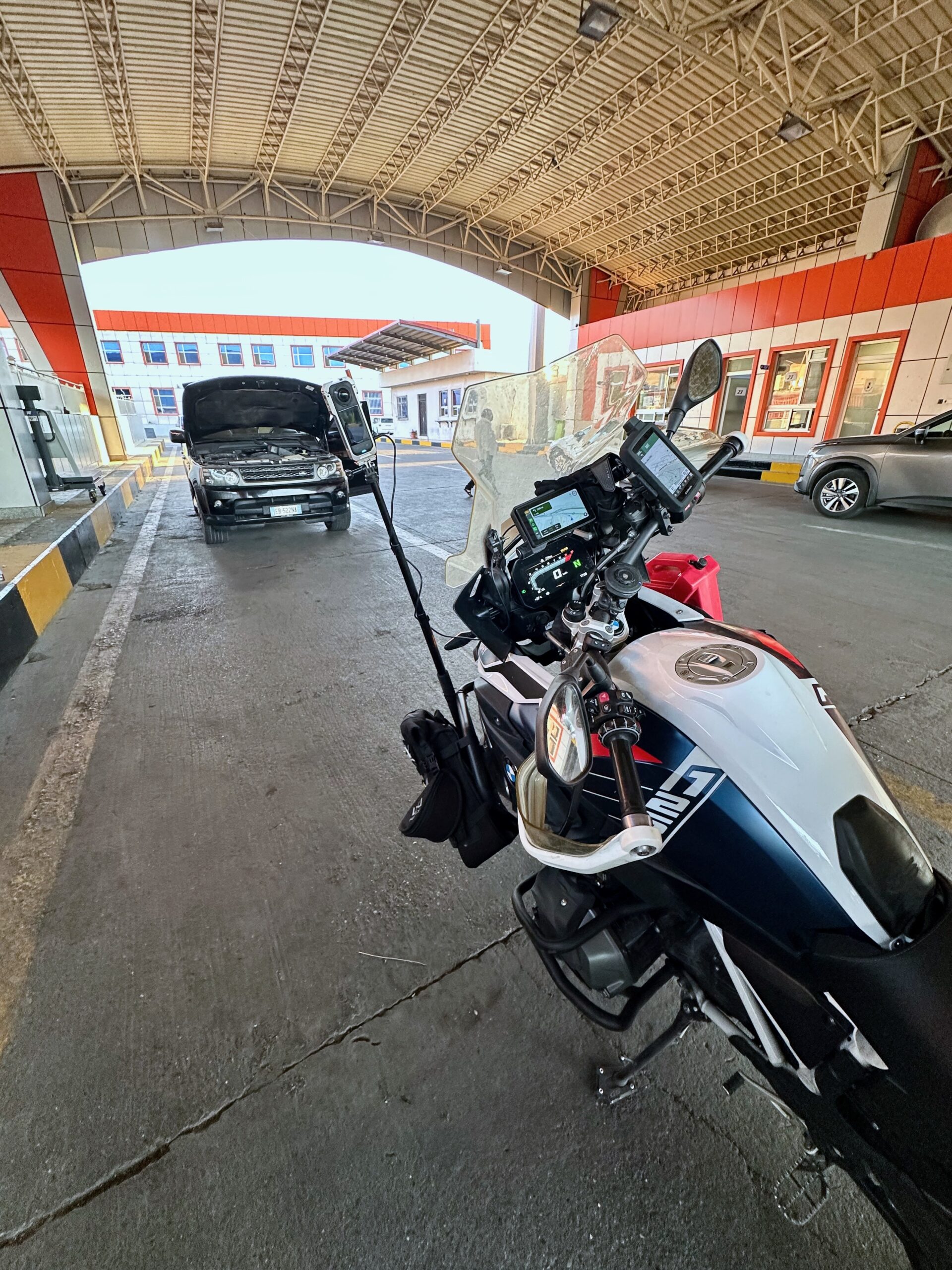
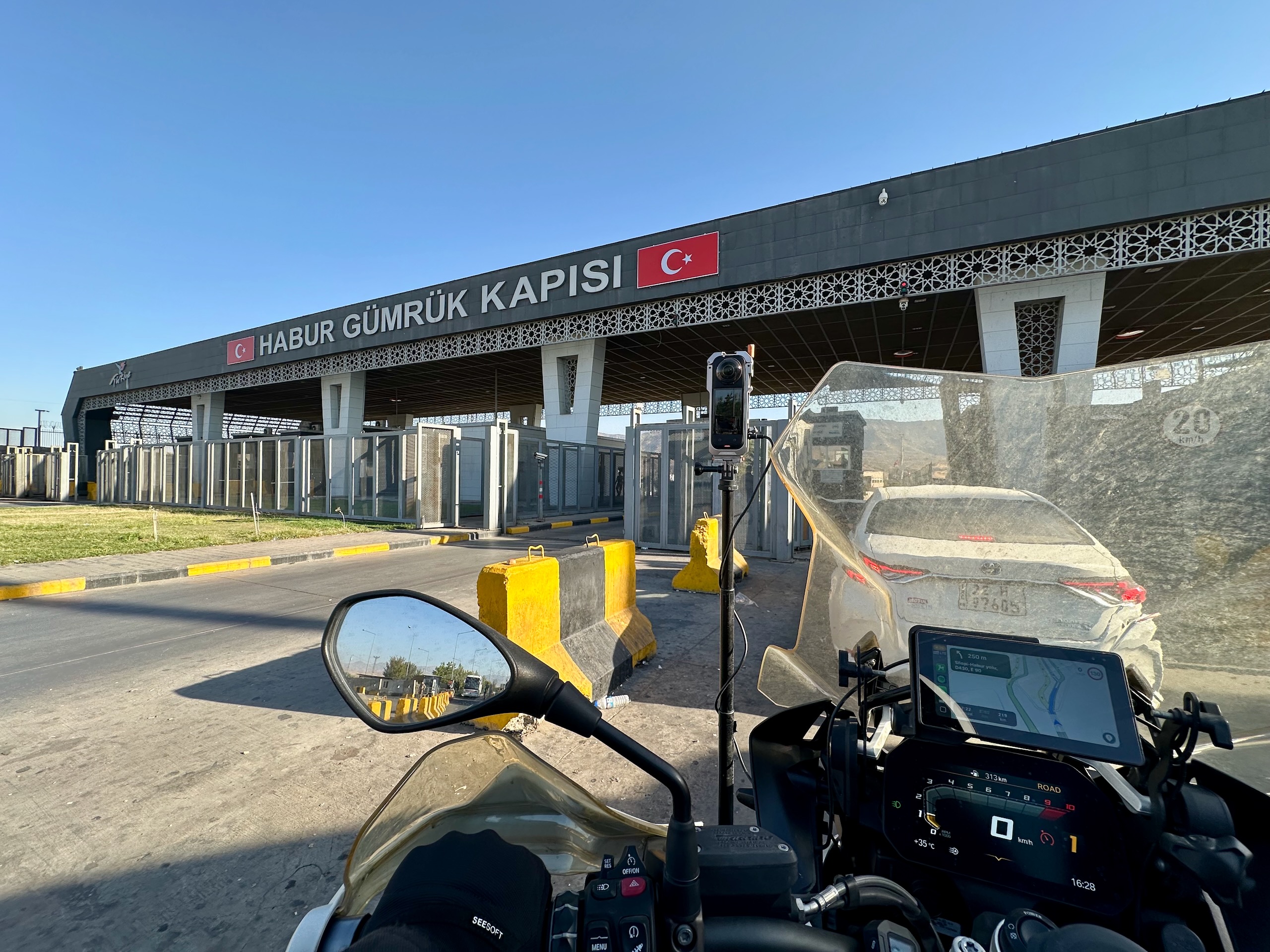
Once we reached the border crossing, a little show began. First, there was a passport check — or at least that’s what it looked like — but no, “not here”. Then a window with a passenger list — which we didn’t have — so with a mix of gestures and broken English, we figured out the form and filled in what we needed. It all moved slowly.
Then came the toll road episode: we had already paid the fee online earlier (about two zloty in total), but the officer at the last gate still wouldn’t let us through. So back we went to another window, paid again (this time in cash), no arguments. The whole border setup was far from intuitive — no explanations, just guesswork. It took us about an hour, maybe a bit more, but eventually — stamp, exit, done.
On the Kurdish side, we didn’t turn on the Insta360 — no need to provoke anyone by filming at the border. We went in with our documents for passport control.
The day before, someone online had us second-guessing things — we’d read that two visas were required: one for Kurdistan and another for Federal Iraq. But we’d double-checked that earlier on Iraqi travel groups and with the embassy… and it turned out just as expected: one visa does the job — a Kurdish stamp in the passport plus a printed sheet with the federal visa. Works perfectly.
Then came the vehicle inspection: customs officers asked for the notarized authorization to use the motorcycle, checked the embassy stamps — all good. At that point, both of us would’ve gladly gone straight to bed, but we still had three hours to Erbil, and night was falling. Time to push on.
Finally, the last customs formality. Our Carnet de Passages got stamped, the license plate noted down, and a $35 fee for the temporary vehicle import attached to the document — and we were good to go. Luckily, we had a full tank, because hunting for a currency exchange at that hour was the last thing we wanted to do.
The road to Erbil is… let’s say, mixed 😂. Some stretches are perfect — smooth asphalt, great surface — and then suddenly you’re detoured onto sand and rocks. The road crews set up a detour, but it’s more of a suggestion than an actual plan.
The ride gets rough, the bike jumps around, and inside my helmet I’m having a full-on internal monologue about the meaning of life. Jadzia, meanwhile, gets a free ticket to “Energylandia” — Poland’s biggest amusement park, famous for its roller coasters. But hey, despite all that, the traffic is actually pretty civil. Drivers keep reasonable speeds, often honk in a friendly way, wave, and smile. We’re a bit of an attraction — a motorcycle with Polish plates, midweek, after dark, on an Iraqi road.
We reached the hotel completely exhausted. The driveway was covered with slippery tiles, and my heart nearly jumped out of my chest 😳 — cars parked on both sides, and it felt like I was about to slide down like on ice. Somehow managed to roll in and park without a scratch, though my hands were still shaking for a while. Inside, we paid in cash — U.S. dollars — sorted out the essentials, and crashed. Details about Erbil — the food, safety, prices, and a few surprises — will be in a separate post. If you feel like it, take a look, because it’s a different world from Turkish highways.
- ⌚️ Travel time: 10 hours;
- 🛣️ Distance: 591 km;
- 🏍️ Average speed: 69 km/h
What next?
Still curious about our Desert Horizons expedition? We’re going deeper: the roads and wilderness of Iraq, Baghdad, and all the “is this really a good idea?” moments along the way. If you feel like getting back in the saddle with us, hop on, cowboy, and join us for the next installment.
Want to see where the money actually went on this whole ride? We put everything into one finance summary — simple numbers, no flex 💸