

Ten wpis jest również dostępny w języku:
 Polski
Hi 👋
Ankara isn’t a “shortcut” kind of city. Even though it’s not as massive as Istanbul, distances can surprise you — the government quarter, business districts, and residential areas are all farther apart than the map suggests, and traffic has a mind of its own. That’s why the metro quickly becomes your best ally: you hop on, ride at your own pace, and skip the chaos. It’s the city’s backbone that lets you squeeze in one more coffee, one more museum, one more viewpoint — instead of collecting red lights on the road.
The stations are easy to navigate, transfers are painless, and suddenly the city layout just clicks — after a couple of rides, you already know where your center is and how to get back to it. Of course, the metro won’t take you everywhere, but it definitely makes getting around much easier.
In this post, we’ll show you how to make the most of it — where to hop underground, how to plan your metro rides while sightseeing, and what to keep in mind so you spend your energy on exploring Ankara itself, not on logistics.
History of the subway in the capital of Turkey
For decades, Ankara’s residents relied mainly on EGO buses. The real breakthrough came in the 1990s: in August 1992, construction began on Ankaray, a light rail line connecting the main bus terminal (AŞTİ) with Dikimevi. It officially opened on August 30, 1996 — marking the capital’s first step into rapid rail transit.
A year later, on December 28, 1997, the first full metro line, M1, opened between Kızılay and Batıkent. From that point on, Kızılay naturally became the central hub of the entire network.
The next major expansions came after a long pause: on February 12, 2014, the M3 line (Batıkent–OSB/Törekent) opened, followed by M2 (Kızılay–Çayyolu) on March 13, 2014. For the first few years, the lines operated separately, requiring a transfer — only in 2018/2019 were they linked into a single continuous route from Koru to OSB/Törekent, which made cross-city travel much simpler.
In the north, the M4 (Keçiören) line joined the network — its first section opened on January 5, 2017, and on April 12, 2023, it was finally extended to Kızılay, once again improving transfers and cutting travel times across the city.
Today, the metro serves as the city’s fast backbone, while buses take passengers deeper into the neighborhoods — a setup that simply works in Ankara. And if you’re in the mood for some cardio, you can always get off one stop earlier: the capital sits on hills, so your legs will do the rest (though they might complain afterward). Enough talking — in the next part, we’ll show how this whole system actually saves you time and nerves in practice.
Metro lines
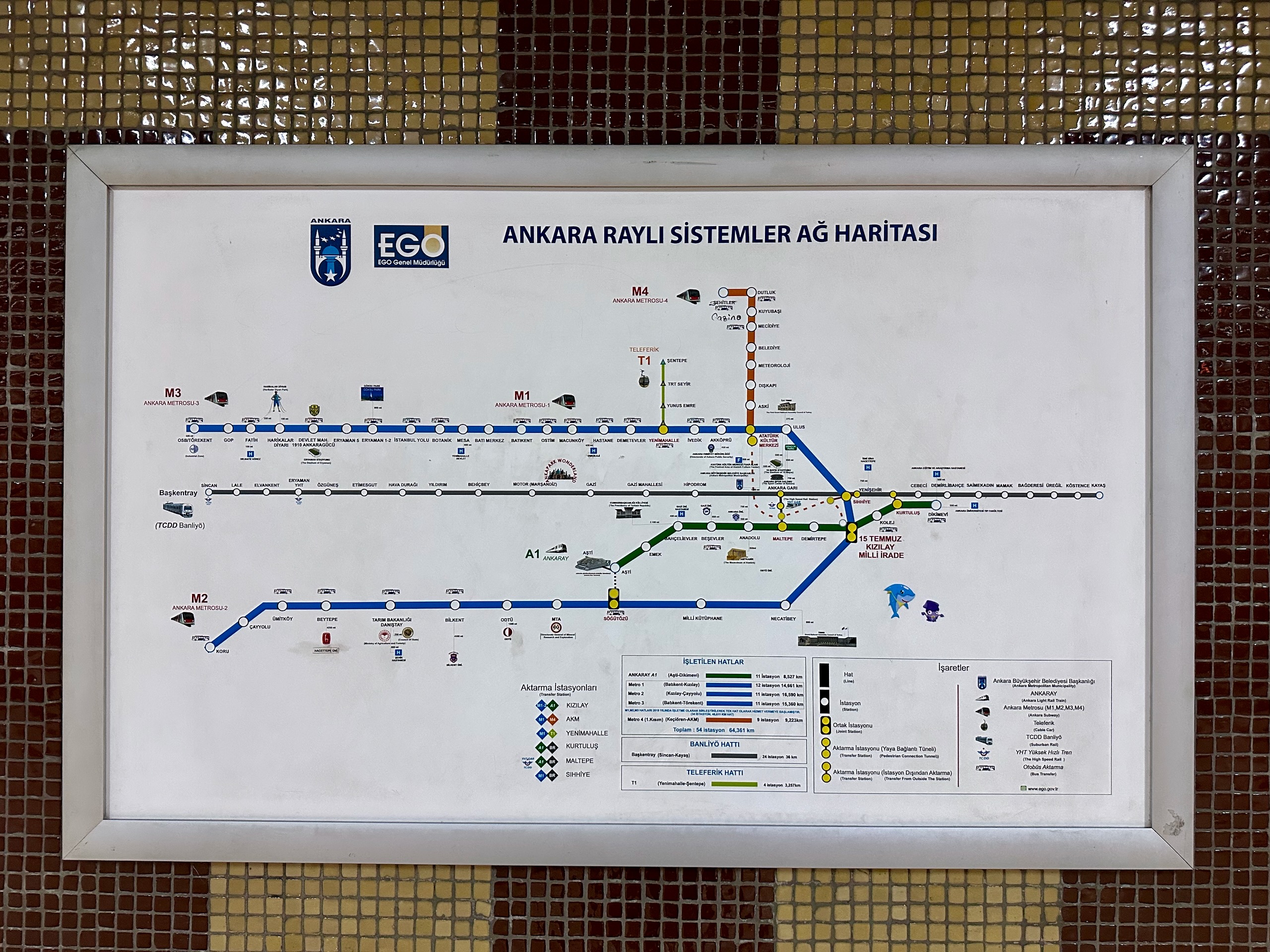
Ankara has four metro lines (M1–M4) and one light rail line in the city center — Ankaray (A1).
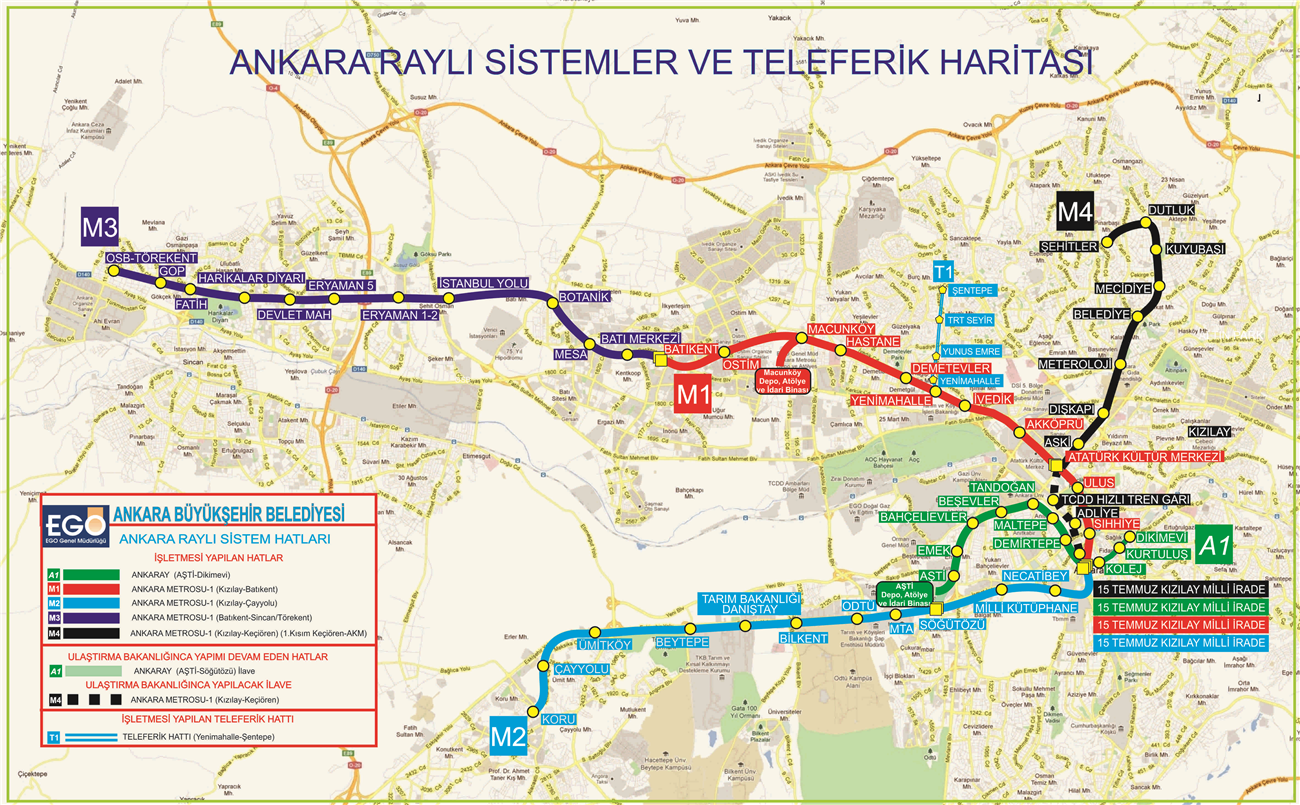
🟢 Ankaray (A1) – AŞTİ ↔ Dikimevi
A fast east–west backbone running through the very heart of the city. The most convenient way to get from the main bus terminal AŞTİ straight to Kızılay and onward to Dikimevi. Along the way, you’ll pass Maltepe and Kurtuluş, both offering easy access to the Başkentray commuter rail and the main train station area. A perfect line to start your exploration of the city.
🔴 M1 – Kızılay ↔ Batıkent
Center axis → northwest. It takes you near the old town and major museums (Sıhhiye, Ulus), stops at AKM (Atatürk Kültür Merkezi; transfer to M4 here), and continues through residential and industrial districts (Yenimahalle, OSTİM) all the way to Batıkent. A great choice if you’re staying in the western part of Ankara.
🟠 M2 – Kızılay ↔ Çayyolu/Koru
This line heads southwest — a typical everyday route for students and commuters. It stops at Milli Kütüphane (National Library), the business district of Söğütözü, and passes by the ODTÜ/METU and Bilkent campuses, ending at Koru. Perfect if you’re visiting universities or the city’s newer residential areas.
🔵 M3 – Batıkent ↔ Sincan / OSB-Törekent
It extends M1 further west — through Eryaman, Harikalar Diyarı (a large “Wonderland” park), Sincan, and industrial zones all the way to OSB–Törekent. Handy if you’re heading outside the city center — whether to visit family, shop, or check out specific local spots.
🟣 M4 – Keçiören ↔ Kızılay
The north of the city connected to the center. Key stops include Dışkapı (near hospitals and universities), AKM (transfer to M1), and Gar — the main railway station serving YHT high-speed trains and Başkentray commuter rail — with the line ending at Kızılay. If you want to cross Ankara from the north straight into the city’s heart, this is the obvious choice.
Transport hub – 15 July Kızılay Milli İrade
It’s the central hub of the entire network — where Ankaray (A1) and metro lines M1, M2, and M4 all intersect. In practice, that means from Kızılay you can reach any direction in the city, and most daily or sightseeing routes cross here anyway. The metro (M1/M2/M4) and Ankaray platforms are all underground within the same complex — you just walk through connecting corridors without ever needing to exit to street level.
On the surface, you’ve got Kızılay Square and the adjacent Güvenpark — a massive hub for EGO buses and dolmuş minibuses. It’s a great spot to start or end your day: easy to catch a bus deeper into the districts or head back underground to the metro. The square sits right along major arteries like Atatürk Blvd. and Gazi Mustafa Kemal Blvd., so within a few minutes’ walk you’ll find shops, cafés, and plenty of office blocks.
Hours of operation
In short: trains start running around 6:00 AM and operate until late at night. The last departures are usually around 1:00 AM, though exact times depend on the line and direction.
- M1–M2–M3 line (Koru ↔ Kızılay ↔ OSB/Törekent): During peak hours, trains run every 5–7 minutes, off-peak every 7–10 minutes, and after 11:00 p.m. about every 15 minutes. Last trains: from OSB/Törekent at 00:10, from Koru at 00:35, and from Kızılay in both directions at 01:00.
- M4 line (Keçiören ↔ Kızılay): Operating hours are similar to the other lines — about every 9 minutes during peak times and less frequently in the evening. Last trains: from Şehitler at 00:30 and from Kızılay at 01:10.
- Ankaray A1 line (AŞTİ ↔ Kızılay ↔ Dikimevi): High frequency during peak hours (every 4–6 minutes), 7–10 minutes off-peak, and about every 20 minutes after midnight. Last trains: from AŞTİ at 00:50, from Dikimevi at 00:55, and from Kızılay in both directions at 01:00.
How to buy a ticket? Options and prices
The easiest way: use the AnkaraKart (also known as Başkentkart) or simply pay contactless with your bank card or phone. The difference is in the price and transfers.
- AnkaraKart: A standard ride costs 26 TL. You can make two transfers within 75 minutes (valid across the metro, Ankaray, EGO buses, and the suburban train Başkentray). The first transfer costs 13 TL (or 8 TL for discounted fares), and there are also special rates for teachers. It’s the most economical option if you plan to combine several modes of transport in one day.
- Contactless bank card (Visa/Mastercard): Works at the gates like a single-use ticket. The fare is 31 TL, with no transfer discounts. In our experience, it’s the most convenient option — but if you’re combining multiple rides, AnkaraKart will be cheaper overall.
- Phone with NFC: Also 31 TL per ride, with no discounted transfers. In practice, it works as a virtual ticket on your phone, powered by the AnkaraKart system.
Two practical notes: the airport line 442 has a separate fare of 100 TL, and between 06:00 and 06:45 there’s an early-morning discount for standard AnkaraKart users — 23 TL instead of 26 TL.


Where to buy tickets and cards?
- Ticket machines and sales points: You can buy and top up AnkaraKart at machines inside metro stations and at official AnkaraKart/Başkentkart points. The official “Dolum ve Satış Yerleri” map shows all locations across the city. Pro tip: You can use a regular, non-personalized card for two people — just tap it twice at the gate. ⚠️ Note: This doesn’t apply to discounted or personalized cards (fines apply), and transfer discounts are calculated per card, so if you switch lines often, it’s better for each person to have their own.
- AnkaraKart service centers: If you prefer in-person assistance, you’ll find offices at Kızılay, Akköprü, Dikimevi, Beşevler, and the EGO headquarters. Kızılay stays open longer — Mon–Fri 08:00–20:00, Sat 11:00–16:00. Other locations typically operate Mon–Fri 08:00–17:00 and Sat 11:00–16:00. All are closed on Sundays.
- EGO Cepte app: The official mobile app lets you top up your AnkaraKart, check your balance, and locate the nearest sales or top-up points on the map.
- Without a card (the easiest option): You can enter the gates using a contactless bank card, an NFC-enabled phone, or by buying a single-use QR ticket in the app — just remember these options don’t include transfer discounts.
What does the trip look like? Comfort and rules
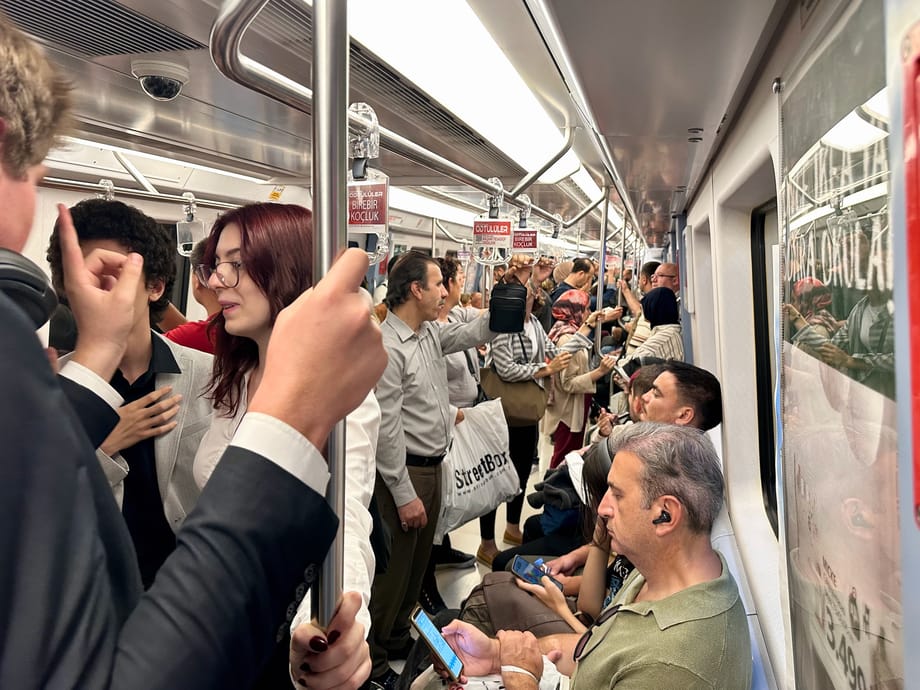
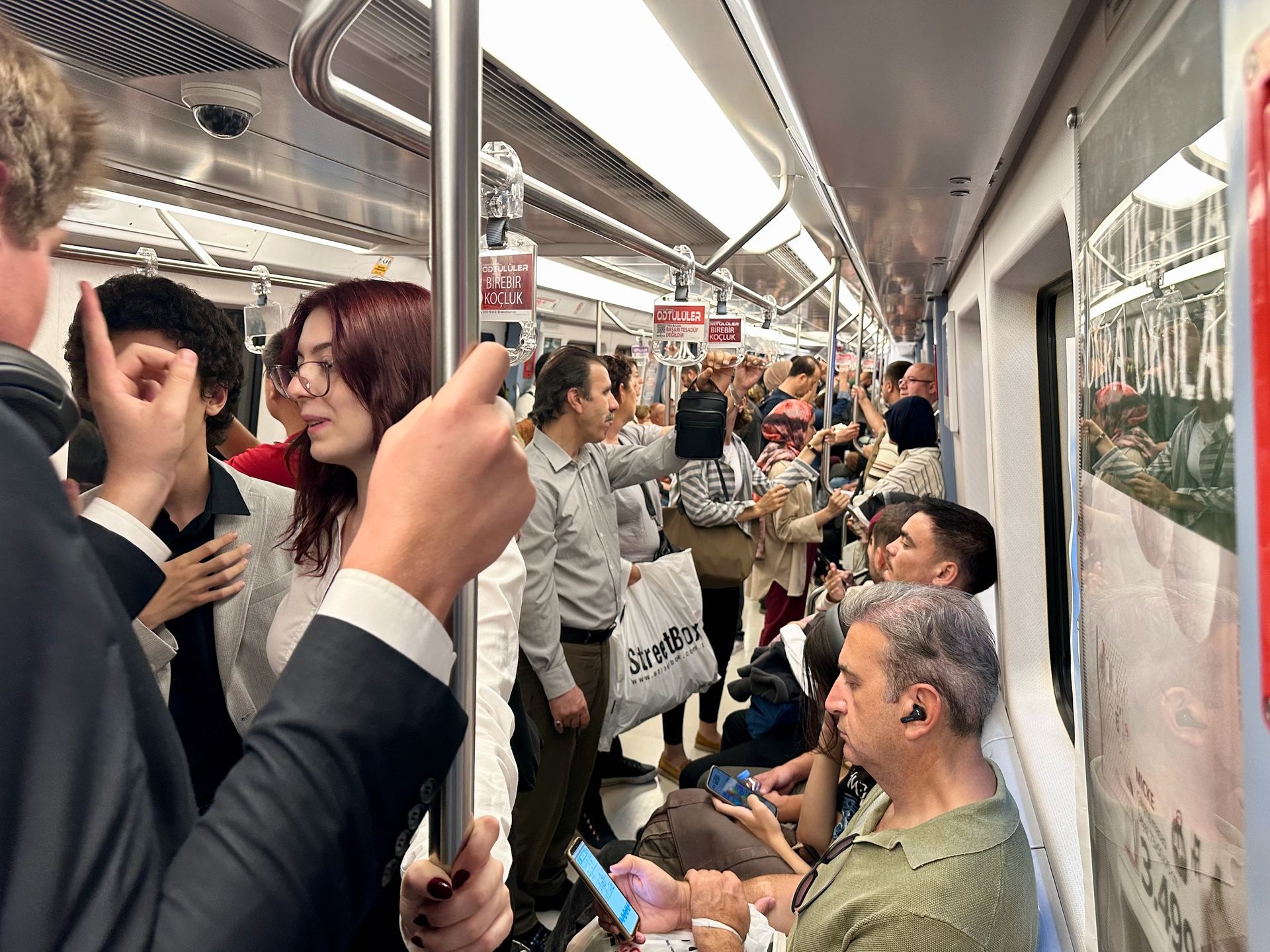
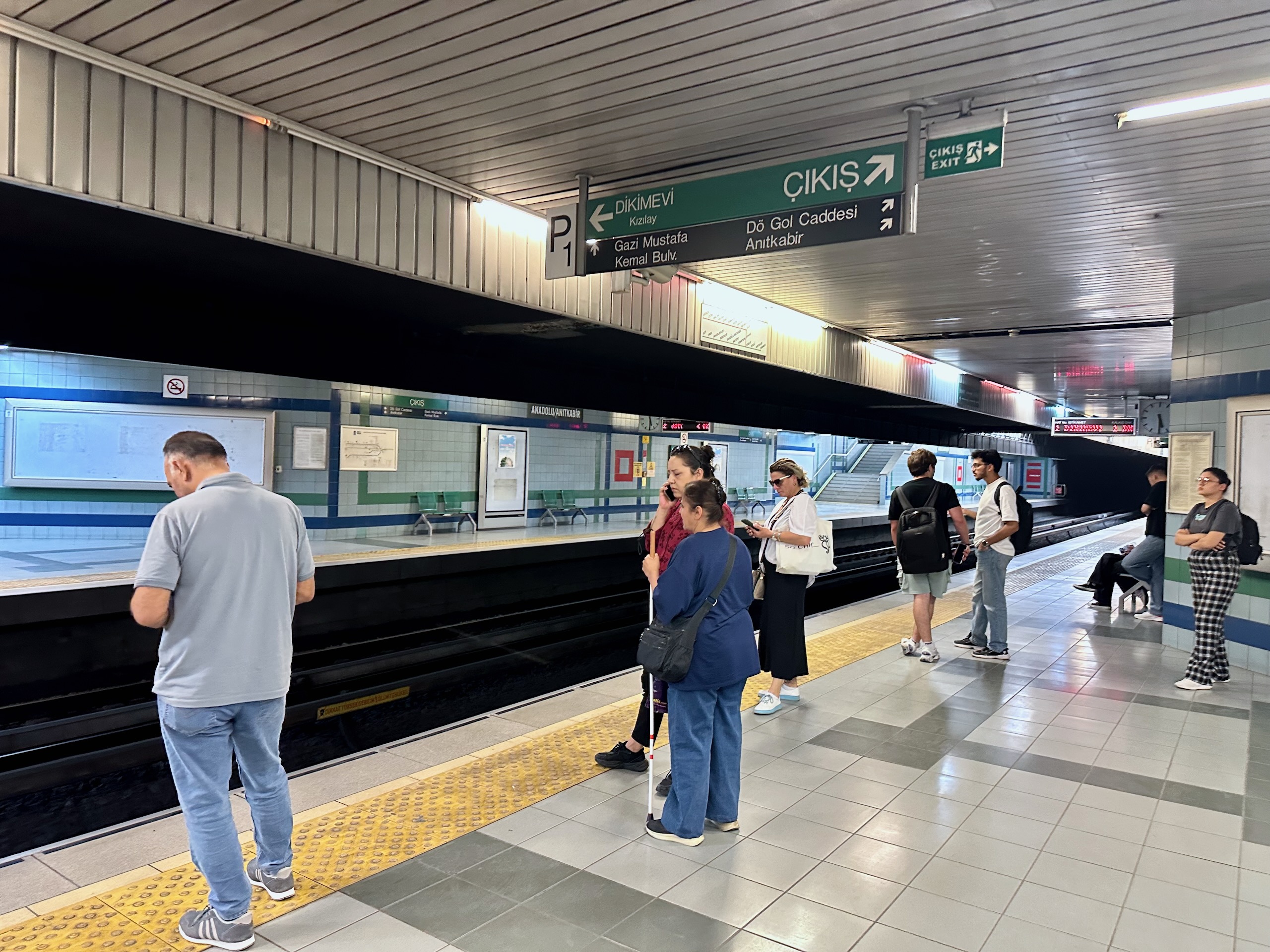
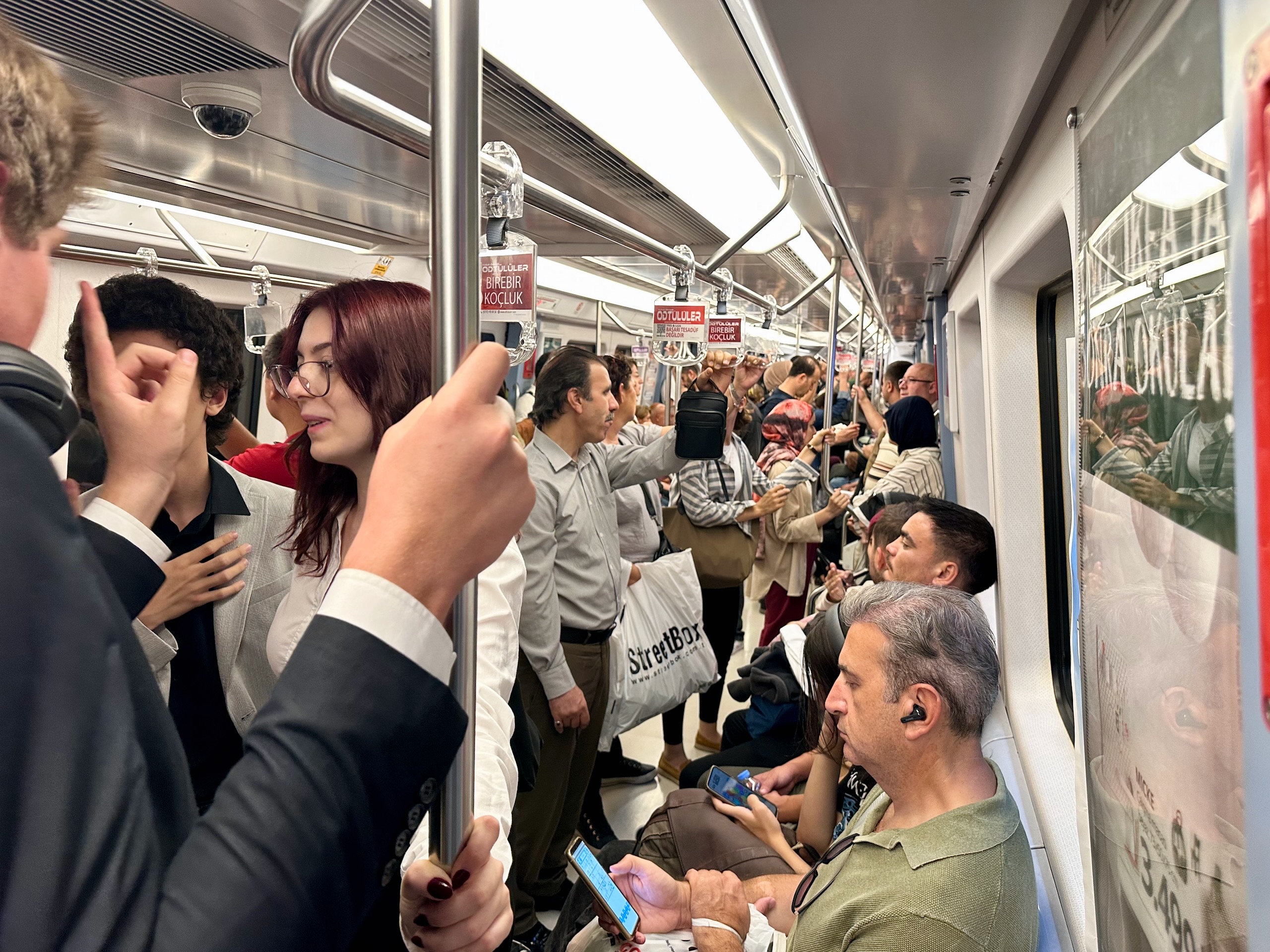
Ankara’s metro stations have a bit of a ’90s vibe — functional, but nothing flashy, similar to the older sections of Warsaw’s metro. They may not be the prettiest, but they do the job: platforms are clearly marked, and transfers happen underground without needing to exit the station. Riding a few stops, you might notice that Warsaw’s stations feel a bit cleaner and brighter, but overall, Ankara’s system works efficiently and reliably.
There are a few rules worth keeping in mind. Always keep your ticket or card until you exit the paid area — fines for fare evasion are steep (often several times the full ticket price). Smoking, drinking alcohol, or eating messy food is prohibited on trains and platforms, and blocking doors, making noise, or crossing the yellow safety line can also get you fined.
Small animals may only be transported in a closed carrier, and large luggage and packages are restricted.
Security has the right to ask for your documents and inspect your luggage if something arouses suspicion.
Ticket inspections
In the metro and Ankaray, ticket inspections are carried out by security staff and EGO personnel inside the paid area. They have the right to ask for ID and, if there’s suspicion of an offense, detain you until the police arrive. That’s why it’s important to keep your card or ticket until you’ve fully exited the paid zone.
Fines are calculated as multiples of the full fare. As of now, a single full ticket costs 26 TL, so it’s easy to estimate the penalty amount: the higher the violation, the more times that base fare you’ll pay.
- passing through the gates without a valid ticket: 200× full ticket price (≈ 5200 TL),
- failure to present a valid ticket during inspection: 50× (≈ 1300 TL),
- public order violations (e.g., littering, disruptive behavior): usually 20× (≈ 520 TL),
- entering the tracks, bringing in hazardous materials, large packages, etc.: up to 50× (≈ 1300 TL),
- blocking doors or preventing departure: 30× (≈ 780 TL).
The exact legal basis and list of violations are outlined in EGO’s “Raylı Sistem Yolcu Taşıma Yönergesi” (Rail System Passenger Transport Regulation). And honestly — it’s a bit ironic: stepping onto the tracks is technically cheaper than passing through the gates without a valid ticket. Where’s the logic in that, right? 🤨
Take a look at our other posts
If you’re planning a broader trip around Turkey, check out our other posts — we’ve gathered plenty of tried-and-true tips: how to handle transportation, where to go, and what’s actually worth seeing — plus a handful of prices and practical insights.
We dropped by Ankara as part of our motorcycle journey from Poland to Oman — the Desert Horizons expedition. So besides the “touristy” side, you’ll also find here some on-the-road essentials: navigation tips, route logistics, and a few lessons learned along the way.