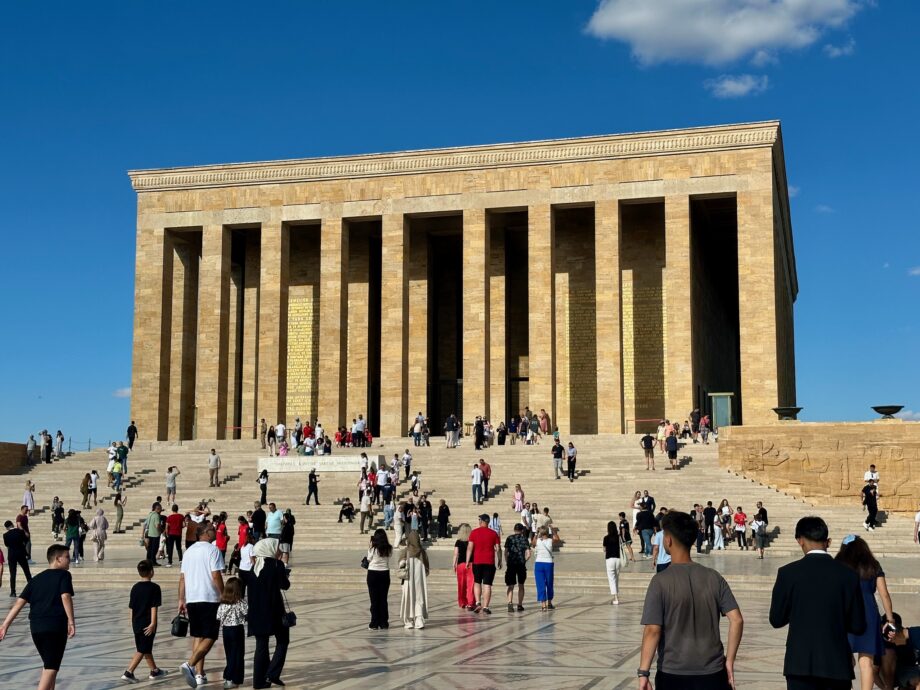
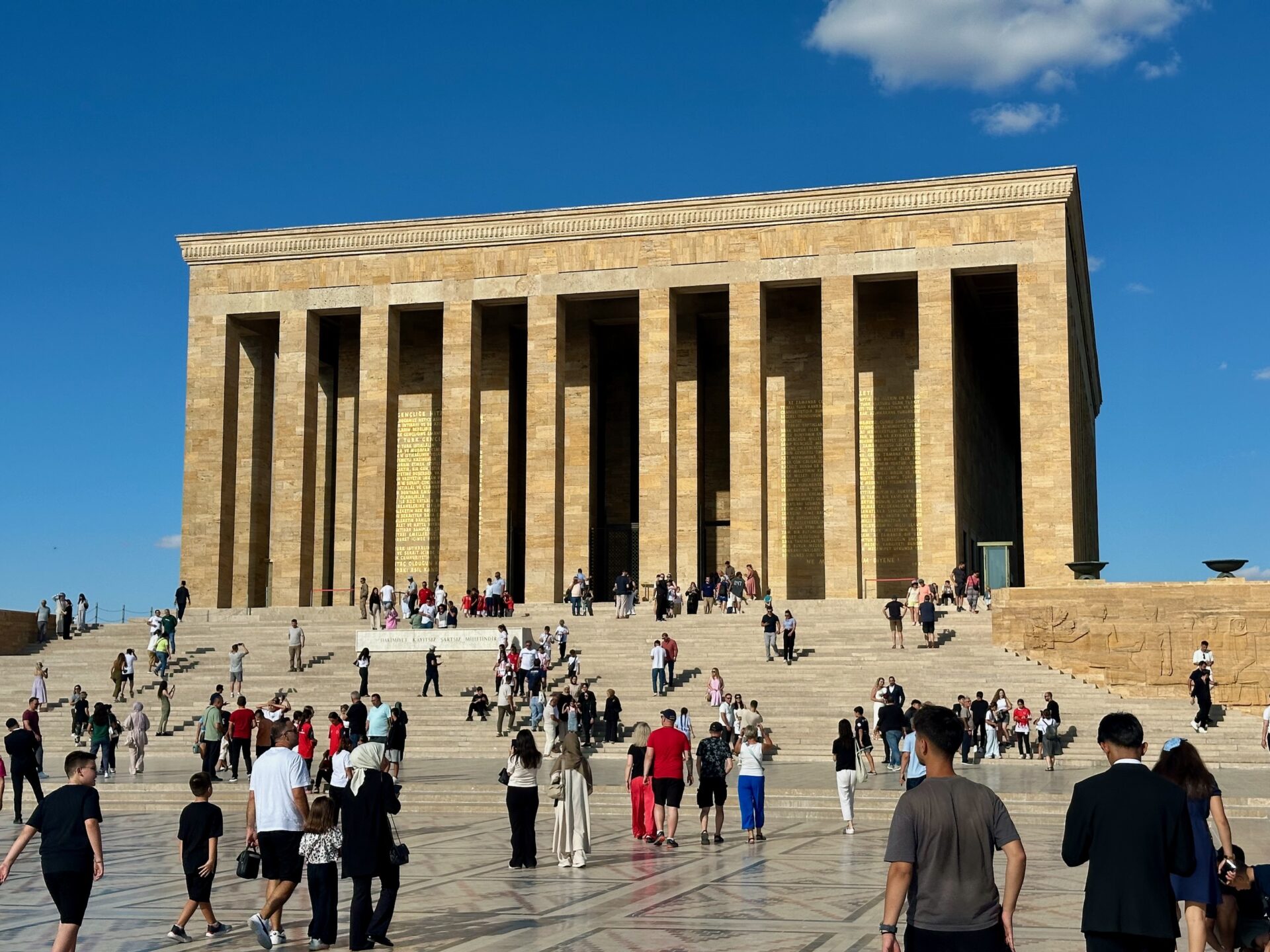

Ten wpis jest również dostępny w języku:
 Polski
Hello! 👋
Ankara had been on our minds for quite a while. Every time we looked at the map of Turkey, that same thought popped up in the back of our heads – when are we finally going to make it there? Eventually, instead of pushing it off for “someday”, we decided to squeeze Ankara into our motorcycle trip – deliberately, and with the clear intention that it wouldn’t just be a quick kebab stop on the bypass.
Our article isn’t a postcard or a tourism brochure. If you’re looking for a city where you can “tick off everything” in a single day, Ankara probably isn’t it. But if you want to get a feel for how a real capital actually lives – with its offices, embassies, everyday neighborhoods, public transport, and a noticeably calmer rhythm than Istanbul – then it’s definitely worth adding to your route for a day or two.
If up until now Ankara was just a name you’d occasionally hear in the weather forecast, by the end of this post you’ll know whether it’s a place that fits your travel plans.
Where is Ankara located?
Ankara is the capital of Turkey and the country’s second-largest city after Istanbul. It sits roughly in the middle of the country, in the Central Anatolia region – far from the coast, perfectly placed “in the middle of nowhere and everywhere at once,” between the shores, Istanbul, Cappadocia, and the road leading further east.
The city sits high up — about 938 meters above sea level — and you can definitely feel it, especially in the evenings or outside the summer season, when the temperatures can come as a surprise if you’ve just ridden in from the warm coast.
It’s not “just another dot on the map”. Ankara is the administrative heart of the country — home to the parliament, the presidential palace, most ministries, embassies, and central government offices.
We visit Ankara during our motorcycle trip
We didn’t end up in Ankara “by chance” — it was more out of curiosity (and a bit of stubbornness). Since we were already on our 🏍️ Desert Horizons motorcycle expedition from Warsaw toward the Middle East, it would’ve felt wrong to just ride through Turkey and skip its capital.
Our route took us from Poland through Slovakia, Hungary, and Bulgaria, and then deeper into Turkey. We naturally passed through Istanbul first, then veered off toward the capital. From Ankara, we continued south — through Cappadocia, Şanlıurfa, Iraqi Kurdistan, Iraq, Kuwait, Saudi Arabia, the UAE, and finally Oman.
If you’re planning a longer motorcycle journey or road trip across Turkey, Ankara is an easy stop to reach — not some “middle of nowhere,” but a well-connected, practical spot for a night’s rest and a quick city reset.
We’ve detailed the entire route to Turkey — the ride across the country and onward toward Iraq — in our Desert Horizons travel diary, where you’ll find day-by-day sections, costs, border info, and what the road conditions were really like:
- 1️⃣ The first days of the Desert Horizons expedition – from Poland to Turkey
- 2️⃣ Through 🇹🇷 Turkey to the south – the next stage of the journey (all the way to 🇮🇶 Iraq)
If you’re curious about how the whole idea for this journey started — and who supported us along the way — check out our Desert Horizons page and our partners. It’ll give you a better sense of whether Ankara might fit into your travel plans too, not just ours.
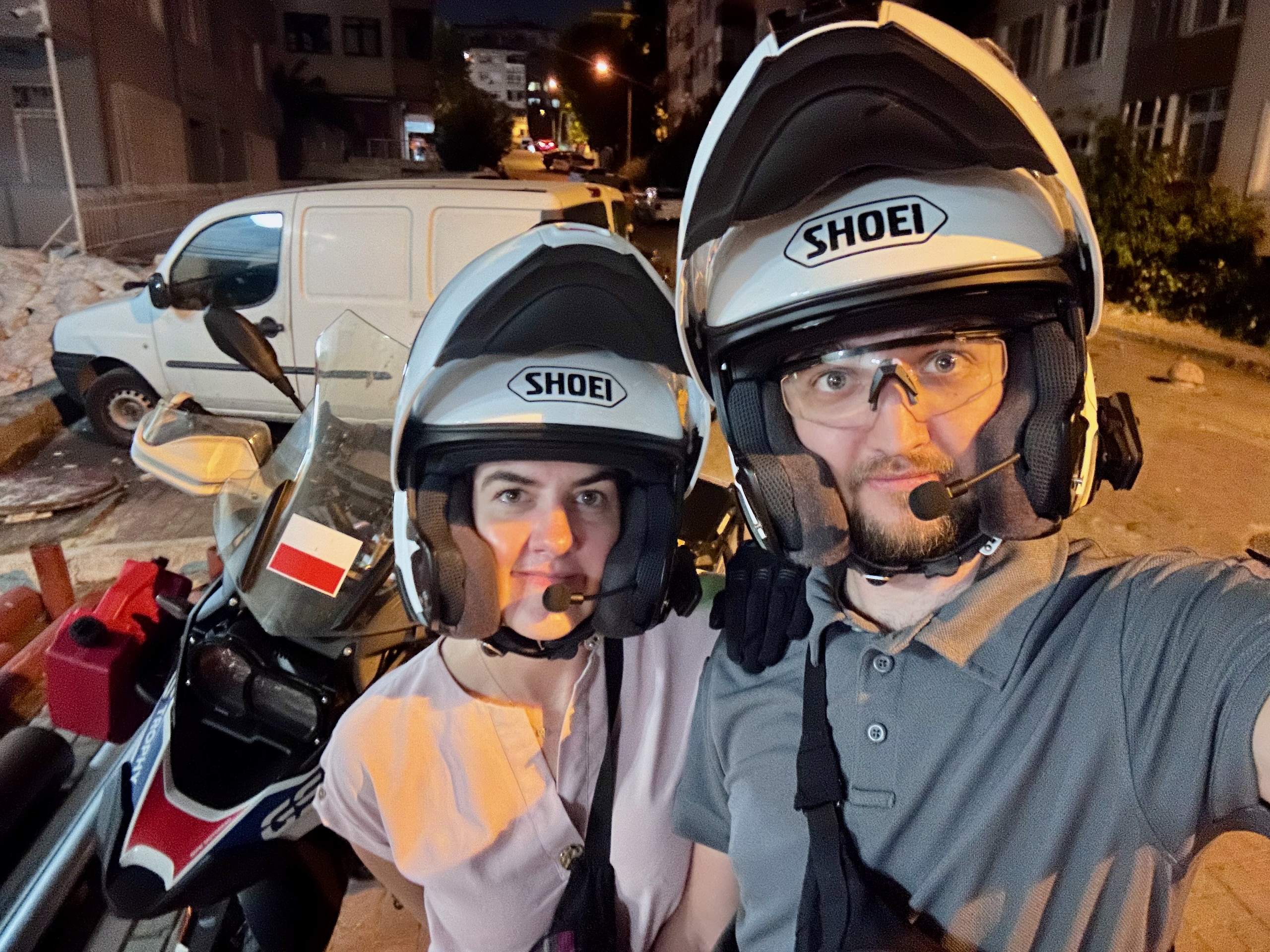
Visas and documents required for entry
As we mentioned in our article about the Istanbul stopover, Turkey is a formally easy destination for Polish citizens.
At the time of writing, Polish citizens can enter Turkey for tourism without a visa for up to 90 days within a 180-day period. The decision to lift visa requirements was officially published in Turkey’s Official Gazette in 2022 and covered by local media at the time.
Additionally, Turkey allows citizens of several European countries — including Poland — to enter using just a national ID card, based on agreements within the Council of Europe framework. If you’re entering with just your ID card, you might receive a small slip or printed confirmation at the border — don’t throw it away, as you’ll need to present it when leaving the country.
- Passport: it’s recommended that it be valid for at least 60 days beyond your planned stay — a standard Turkish requirement that also applies to visa-free and e-visa entries, as stated by the Ministry of Foreign Affairs.
- National ID card: accepted for Polish citizens traveling for tourism — but we still recommend carrying a passport, especially if your trip continues beyond just Poland and Turkey.
- If a child is traveling with only one parent, grandparents, or family friends, make sure to have a written consent letter from the other parent (or both parents), ideally in English or in English and Turkish. Border officers don’t always ask for it, but if you happen to meet a particularly thorough one, that document can save you a lot of trouble.
- In practice, there aren’t any special entry rules for Ankara — nationwide regulations apply everywhere. If you’re flying into Esenboğa Airport, you’ll go through the same procedures as any other traveler. And if you’re arriving by car or motorcycle from Europe, the only real border control happens at the entry point to Turkey — Ankara is just another stop along the way.
Are you traveling by car or motorcycle? Or maybe you plan to rent a car at your destination?
- Vehicle documents – standard: registration certificate with valid inspection.
- Third-party liability insurance: Turkey is part of the Green Card system — make sure to bring it with you. Without it, you’ll need to buy local border insurance, which is noticeably more expensive. (This applies to your own vehicle, of course — not to rental cars or motorcycles.)
- Not the owner of the vehicle (leased, company car, borrowed): take a written authorization from the owner allowing you to take it abroad, ideally with a Turkish translation. For destinations further east it’s an absolute must, but even in Turkey border officials sometimes ask for it. If you’re not sure how to handle the paperwork, check out our separate post where we describe how we went through the document legalization process ourselves.
- In practice, the vehicle entry is registered to one specific person — officially, only that person should be driving it. Someone else can take the wheel, but only with you present in the vehicle, since it’s tied to your name in the customs system.
A Polish driver’s license is fully recognized — as a tourist, you can drive in Turkey (including Ankara) without an international permit, within the standard time limits of your stay.
Accommodation in Ankara
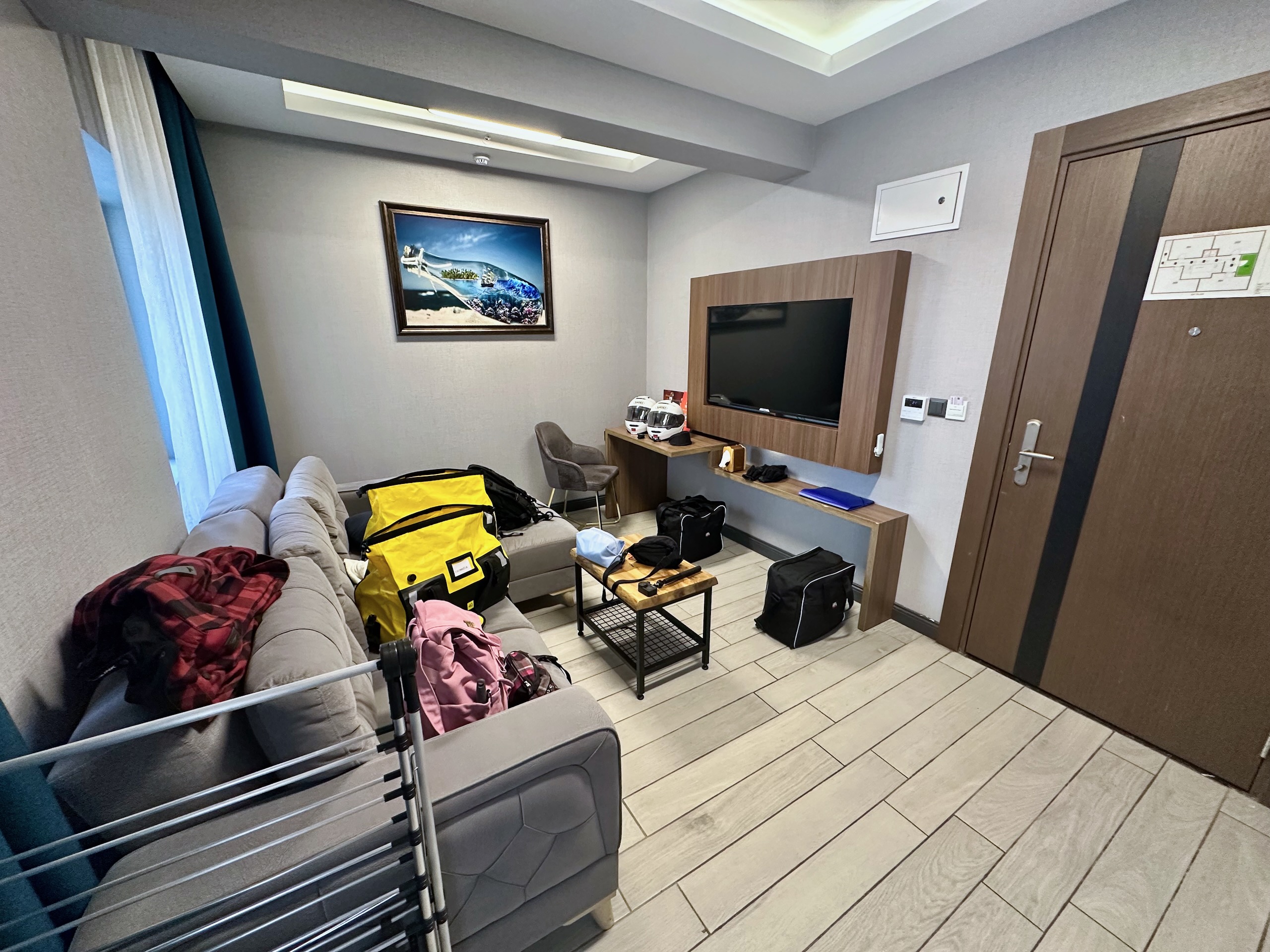
We stayed at Golaz Suit Otel in the Çankaya district — more of an aparthotel than a classic hotel: a washing machine in the room (a blessing on a long trip), plenty of space, daily cleaning, easy access, and a safe spot to park the motorcycle right by the building. The Wi-Fi could’ve been faster, but it was fine for planning routes, checking emails, and browsing maps. The location, close to the city center and within walking distance of a metro station, was a big plus for both getting around and heading in or out of Ankara.
If you’re traveling by car or motorcycle, pay attention to two main things: parking and access. Ankara has plenty of narrow, crowded streets where parking “wherever it fits” isn’t really an option. When searching for accommodation, it’s worth filtering right away for places that offer:
- Çankaya and the Kızılay area – plenty of hotels and aparthotels, a convenient base for exploring the city, easy access to public transport and offices, and often the option of private parking or valet service.
- Tunalı Hilmi / Kavaklıdere area – a more urban vibe with plenty of cafés, restaurants, and shops. Many hotels here have underground parking or reserved spots. A good choice if you like to go out for an evening walk without needing to move the bike or car.
When booking, don’t just look for “parking available” — check whether it’s actually a private hotel parking lot or just means “if you find a spot on the street, good luck”.
Traffic conditions
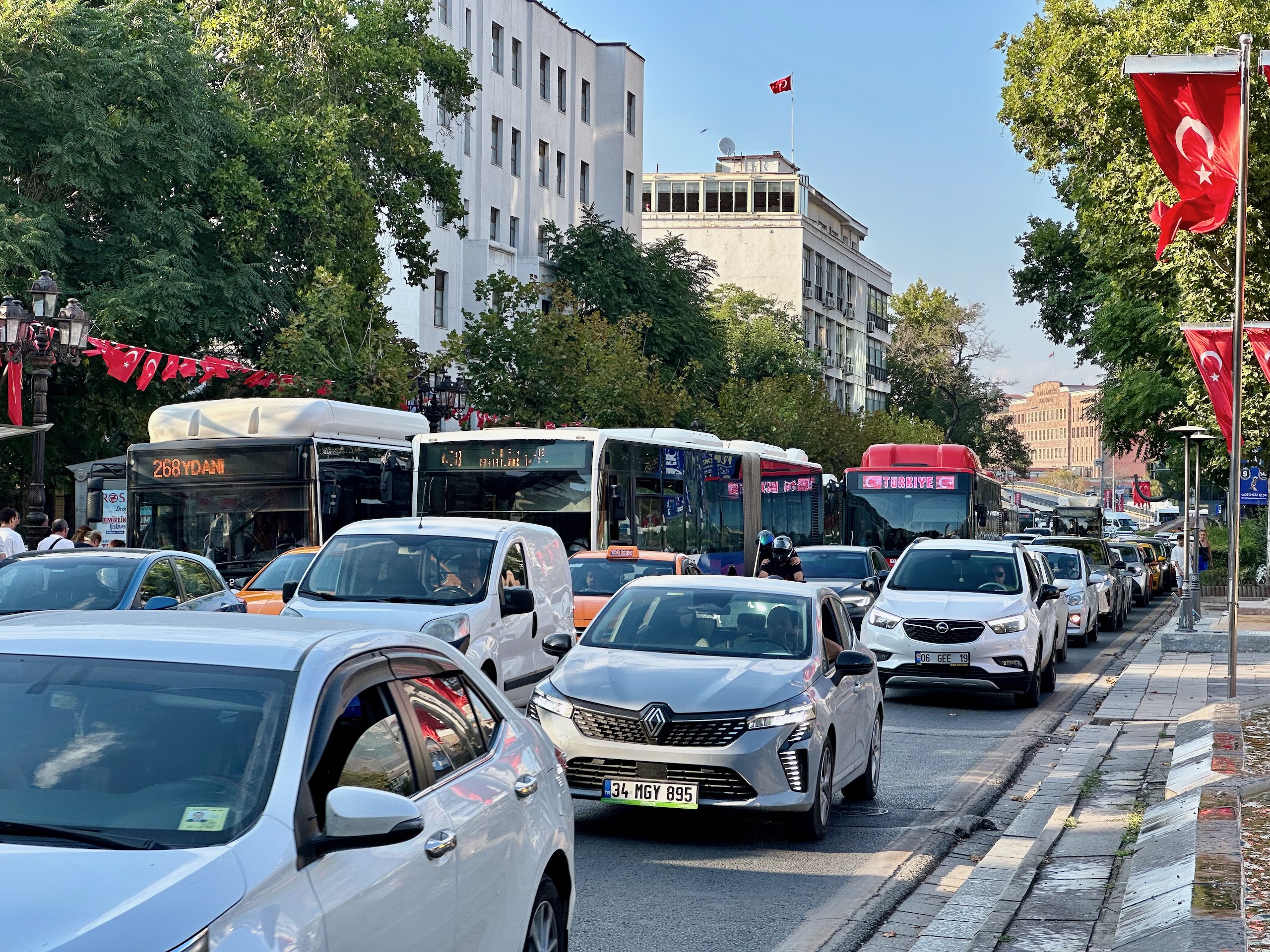
Ankara is much calmer than Istanbul, but it’s still a big capital — there’s traffic, congestion, speed cameras, and a few toll roads. The good news: for both drivers and motorcyclists, it’s a very predictable city. As long as you’ve got proper navigation and don’t ride like you’re in a rally, getting around is perfectly manageable.
According to the TomTom Traffic Index 2024, the average travel time for 10 km in Ankara is around 20 minutes, with heavier congestion during morning and evening rush hours — but still far better than in Turkey’s most traffic-clogged cities.
If you’re interested in what to watch out for when renting a car in Turkey, check out our separate post where we’ve covered all the details for exactly that situation 😊.
- Major highways lead to Ankara from every direction — including the motorway corridor from Istanbul and routes heading toward Cappadocia and further south or east. The drive itself is smooth and generally enjoyable.
- Transit traffic is efficiently handled by the O-20 ring road (Ankara Çevre Yolu) — a full loop around the city and a smart way to avoid diving into the center if you’re just passing through.
- The asphalt is generally in good condition, with near-motorway standards on most major entry routes into the city.
- Google Maps, Apple Maps, and Waze work normally and provide good guidance around the city and on the ring road.
- In built-up areas, expect plenty of speed bumps and random pedestrian crossings that seem to appear out of nowhere — in residential districts, it’s best to forget about any “sport mode” right away.
Toll roads and HGS
- Most motorways (otoyol) and some intercity routes are toll roads operated under the HGS electronic payment system — no cash or card booths. You don’t stop anywhere to pay; everything is handled automatically through a windshield sticker or license plate recognition. Some roads still have a card payment booth — usually the far-right lane at a toll gate. On the route leading to Ankara, we remember one or two such points where we paid directly. Either way, the signage is clear and huge, so you’ll have no trouble figuring out where to go.
- Rental cars usually come with an HGS sticker already on the windshield — you’ll settle the tolls when returning the vehicle. Just make sure to ask for a detailed breakdown of your trips rather than some random “flat fee” estimate.
Speed limits
They apply nationwide, unless otherwise indicated by signs.
- Built-up area – car and motorcycle: 50 km/h;
- Outside built-up areas – cars: 90 km/h, motorcycles: 80 km/h;
- On expressways – cars: 110 km/h, motorcycles 90 km/h;
- On KGM highways and some sections of concession roads, you can drive at 120 km/h (or 130 to 140 km/h where marked), but unfortunately only 100 km/h on a motorcycle.
Car parking
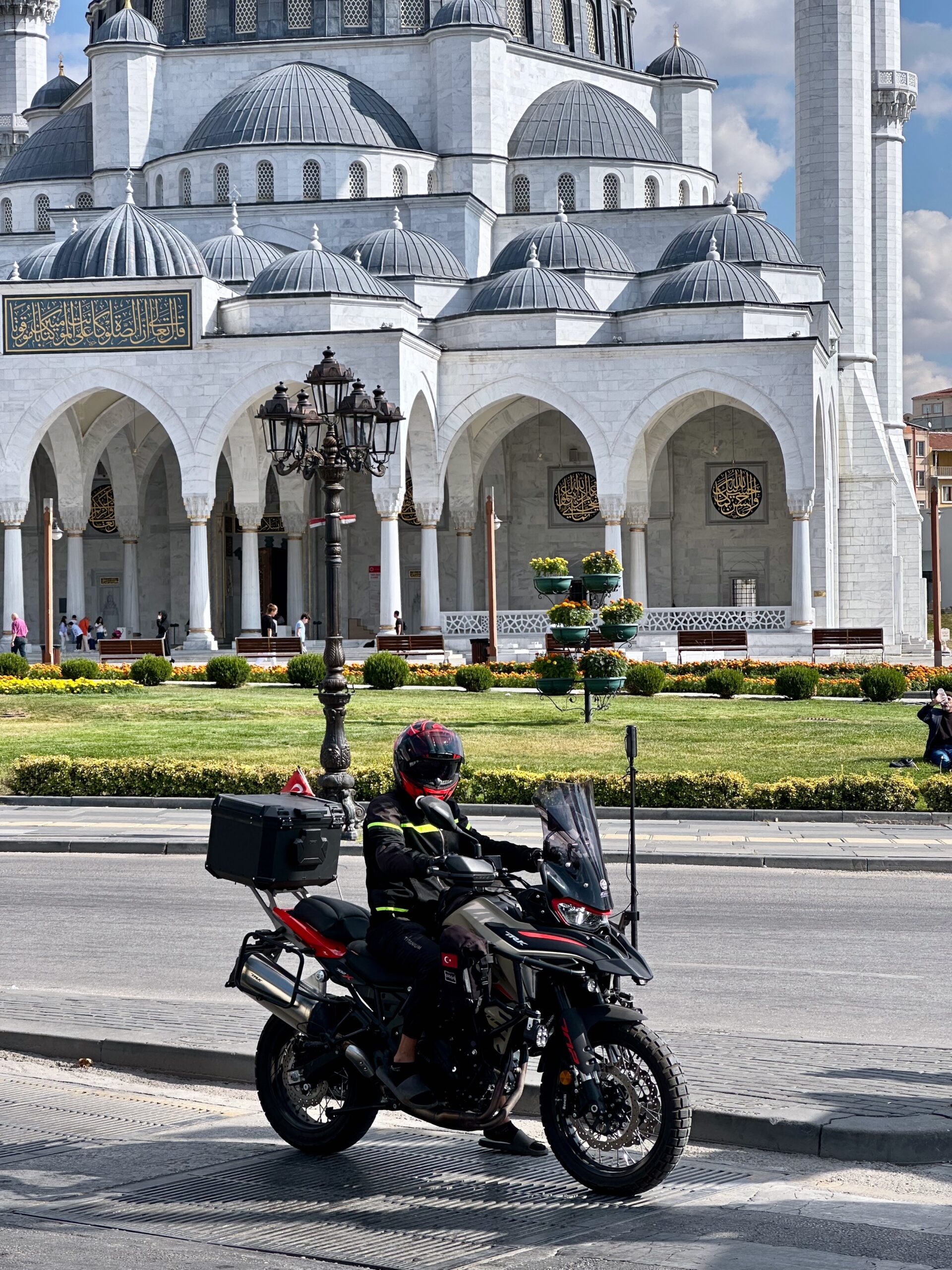
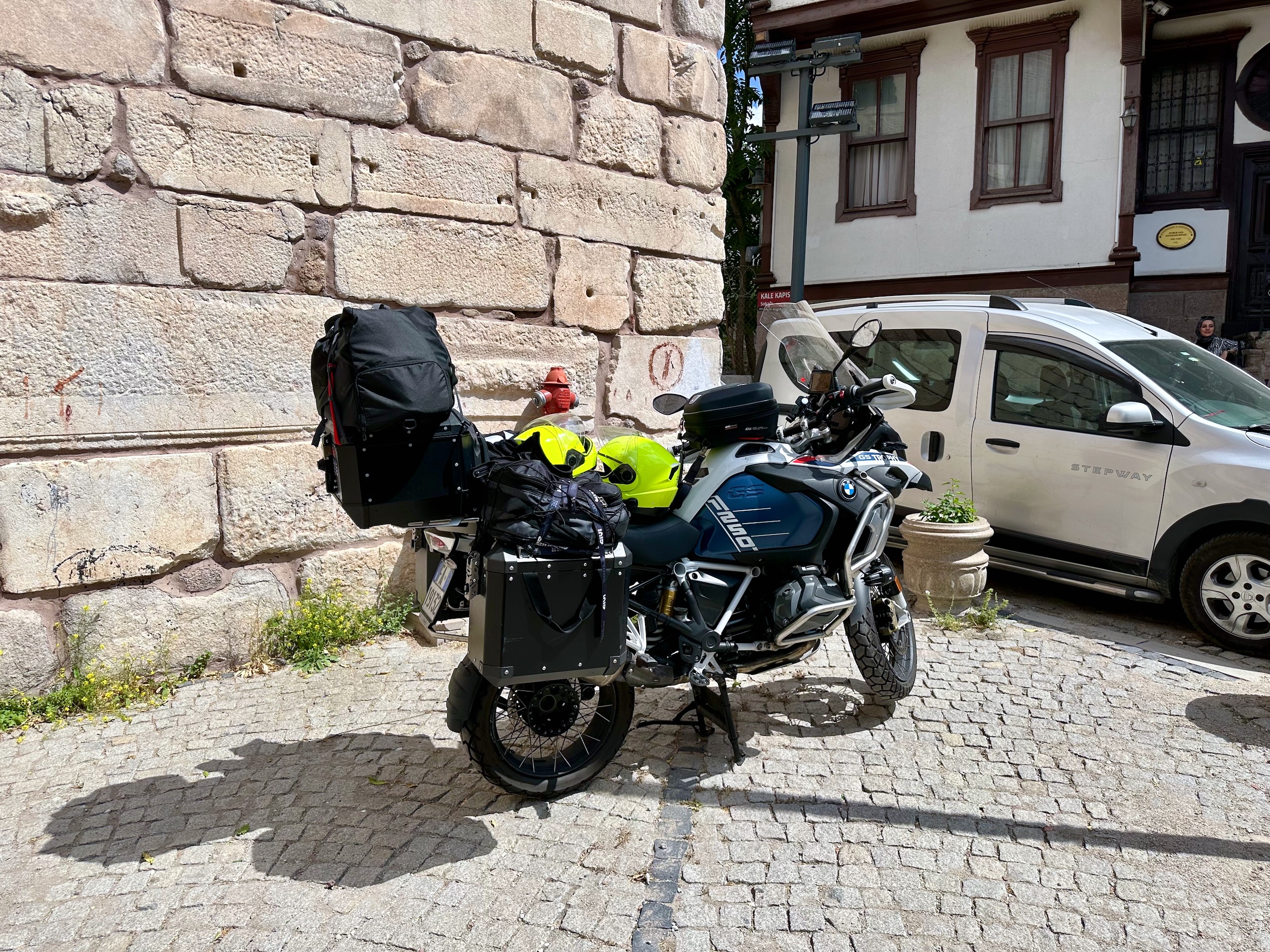
- In the very center, many streets are narrow, crowded, and not exactly intuitive — especially if you’re driving a larger car or a motorcycle loaded with panniers.
- Look for marked “otopark” areas (municipal or private), multi-level garages, and — ideally — hotels with their own parking. It makes life so much easier.
- Parking “wherever everyone else does” — like on sidewalks — can easily earn you a ticket or a wheel clamp, especially near government or administrative buildings.
Public transportation in Ankara
Ankara is one of those cities where public transport actually works — you can easily rely on it for your entire stay. If you’re staying around Kızılay, Çankaya, or near the main roads, you’ll get around just fine using the metro, Ankaray light rail, EGO buses, and the occasional ride-hailing app.
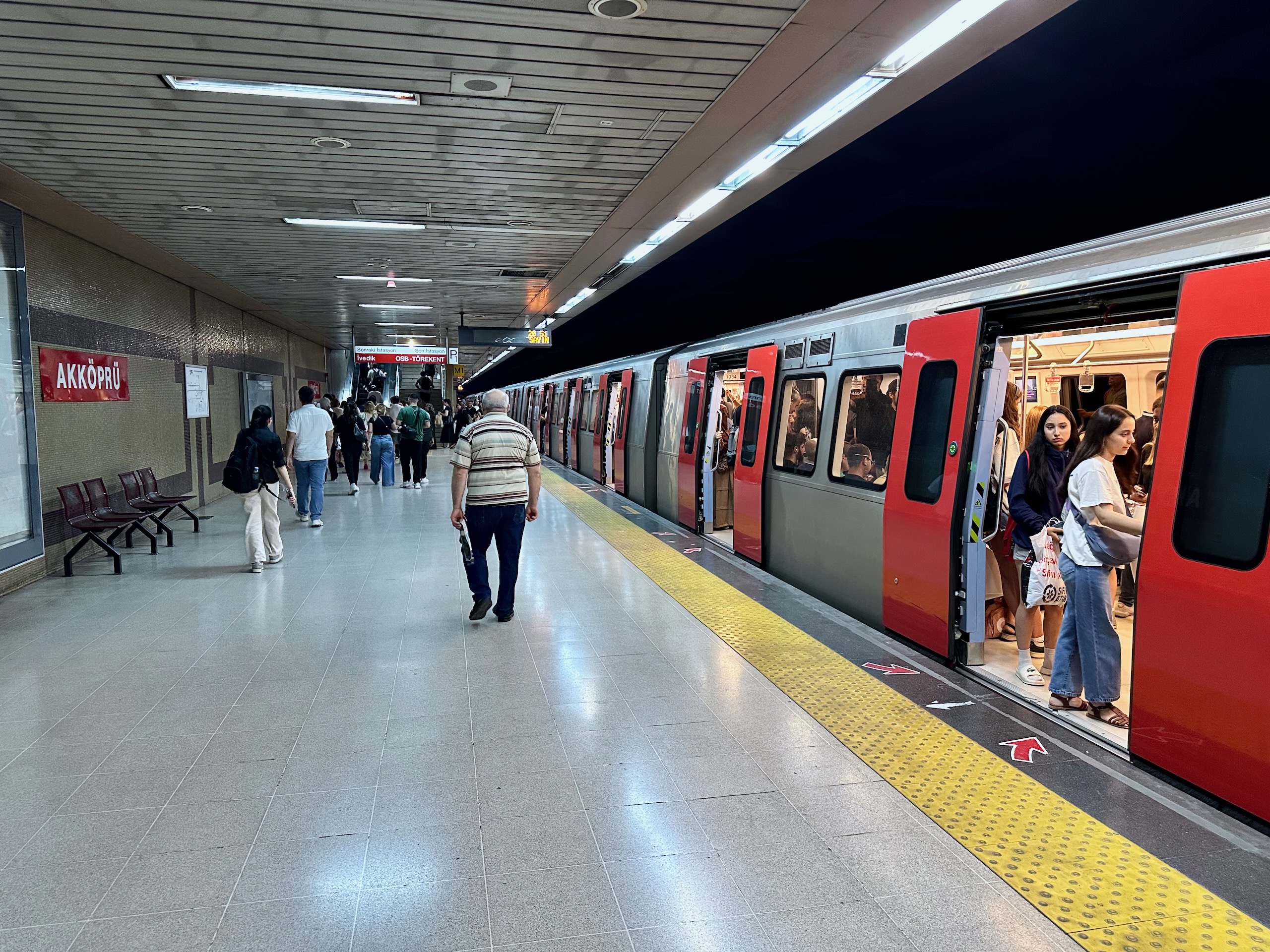
We mostly got around the city either by metro or on our own two feet 😁 — after spending so many hours on the motorcycle seat, walking a few extra kilometers felt like a well-earned stretch.
Public transportation (🚌 buses, 🚇 subway)
We’ve put together a detailed guide to the Ankara metro in a separate post — with line maps, transfers, and even screenshots from the ticket machines. Here’s a quick rundown of the essentials so you can start using the system right away.
The metro, Ankaray, and EGO buses all run under one unified system. The standard is the Ankarakart — a contactless plastic card you buy once (for a few dozen lira) and top up as needed. You can get it at metro stations or official EGO kiosks, then simply tap it at the gates or on the bus. In many places, you can also pay with a regular contactless bank card, but the fare is usually higher, so if you’re staying a few days, the Ankarakart definitely pays off.
A single ride within the city costs roughly 20–25 TL when using an Ankarakart (fares can change, so it’s worth checking the current prices in the EGO CEP’TE app or on the official EGO website before your trip). For a short city break, one card is usually enough for two people or a small group — just tap it for each person at the gate, and you’re good to go.
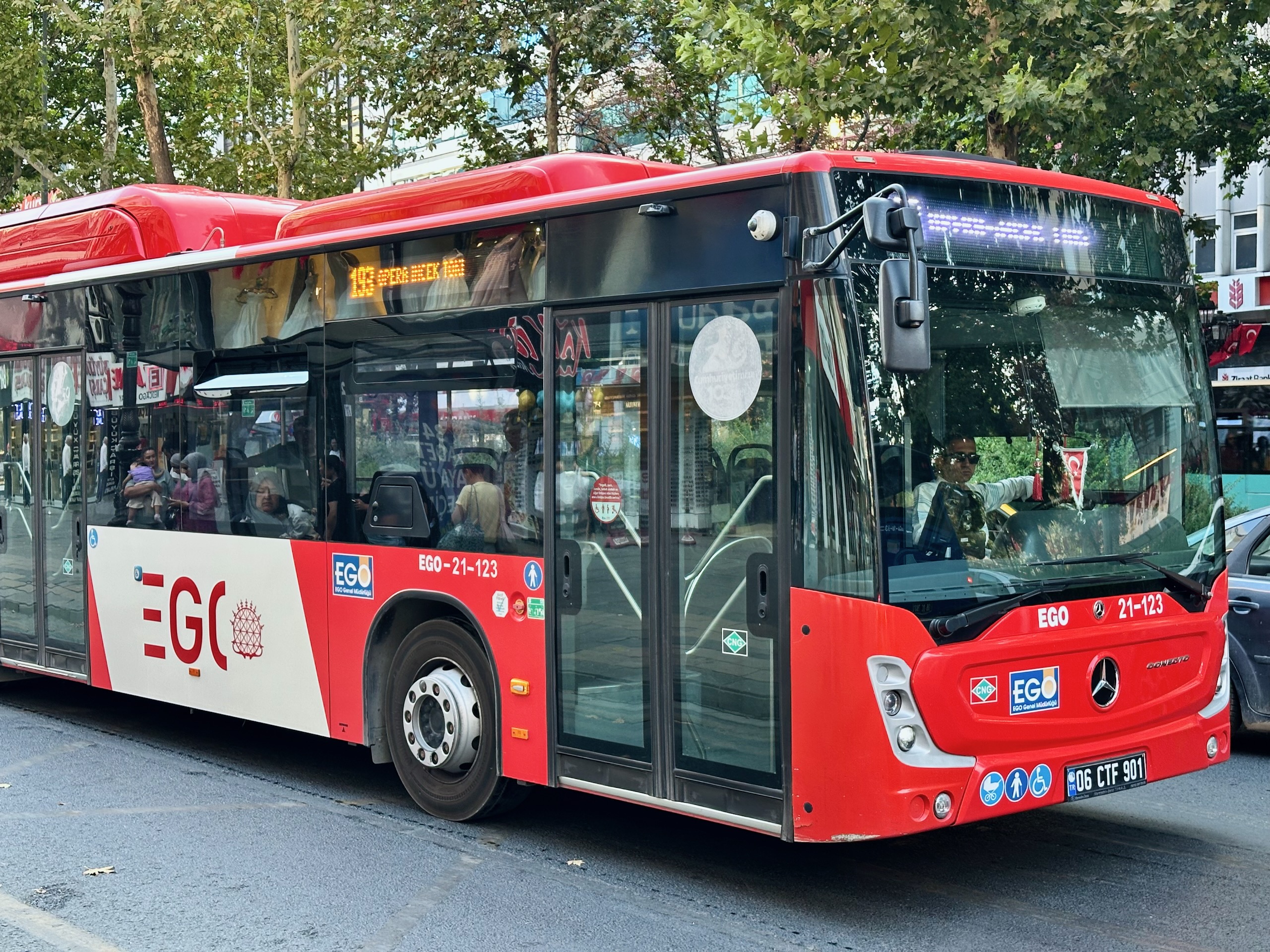
EGO buses are a solid complement to the metro — they cover residential districts well and connect key spots like AŞTİ (the main bus terminal), Anıtkabir, Ulus, and the city center. Onboard, you can use your Ankarakart or — on some routes — pay with a contactless bank card. Schedules and routes are best checked in the EGO CEP’TE app: it actually works, shows real-time locations, and is more than enough for any visitor.
From Esenboğa Airport, you can get to the city by EGO bus line 442 — the ride usually takes 40–60 minutes, depending on traffic, and stops at key points such as Kızılay and the main bus terminal. It’s a much cheaper option than taking a taxi, yet still reasonably comfortable.
Rides via the app 🚕
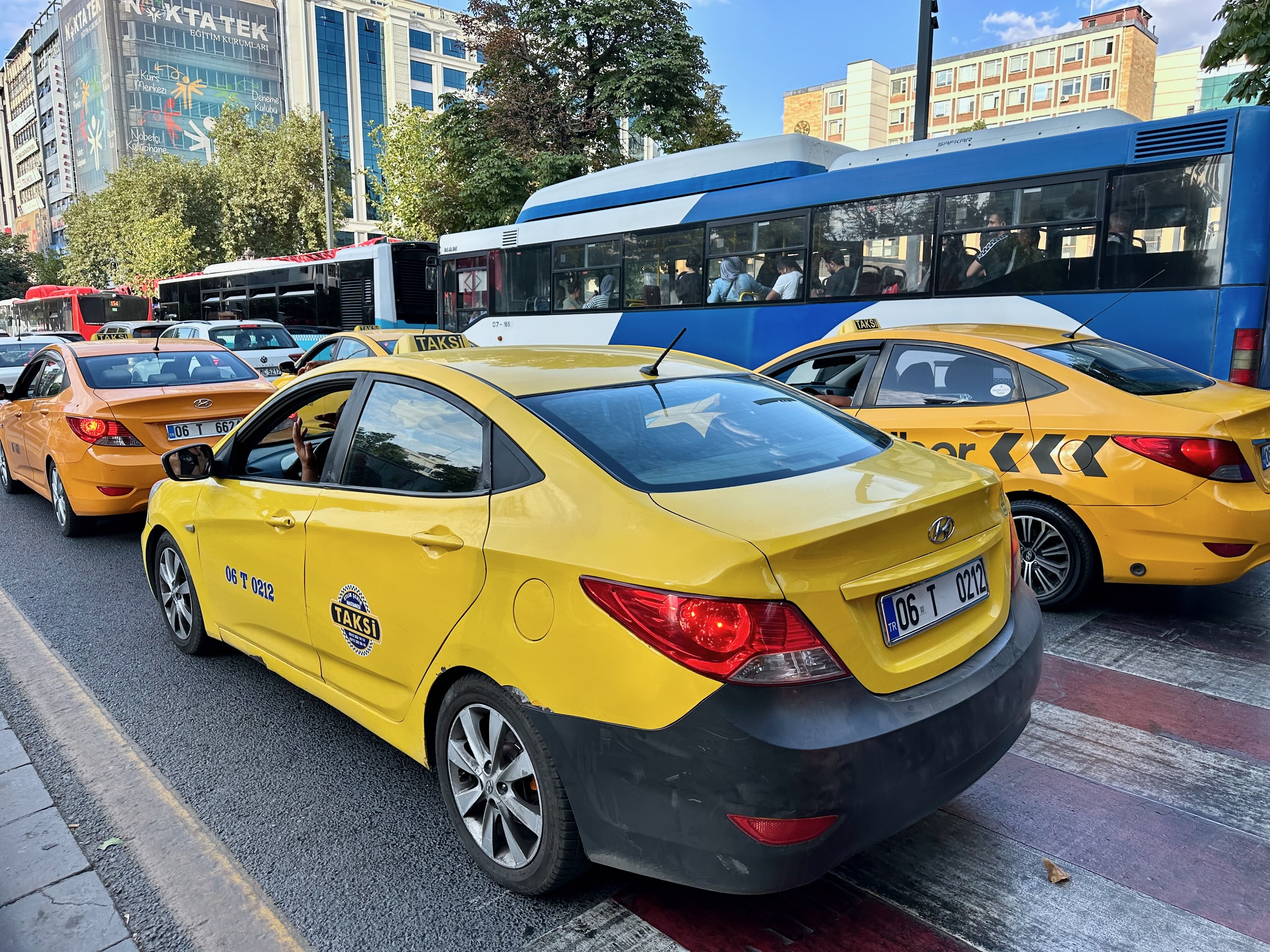
If you’d rather skip the hassle of transfers and don’t feel like flagging down a random taxi, apps like BiTaksi and Uber work reliably in Ankara.
BiTaksi lets you order a licensed taxi at the regular meter rate but with live tracking of the car, driver details, and an estimated fare. Uber operates in a similar way in Ankara — it also uses official taxis; you just manage everything through the app. In practice, that means you get a clear route, an upfront price estimate, and far fewer chances of any “tourist surprises.”
Fares are based on the official city tariff: there’s a starting fee, a per-kilometer rate, and a minimum fare — meaning that most short rides in the city center end up costing that minimum amount. A trip from Esenboğa Airport to Kızılay is about 28–33 km, so the final price usually lands in the hundreds of lira. The app will show you an estimated range before booking, which is a great reference point — especially if you’re splitting the cost between two or three people.
SIM card and mobile Internet
When it comes to mobile internet, Ankara is pretty much the same as the rest of Turkey — with one big advantage: there’s far less of a “tourist tax” than in Istanbul. It’s a great place to sort out your SIM card for the entire trip instead of overpaying at the airport.
Key facts:
- The main operators are Turkcell, Vodafone, and Türk Telekom.
- You need a passport to make a purchase – your details are recorded, as required by Turkish law.
- A phone with a Turkish SIM card works without IMEI registration for about 120 days; for longer stays, official registration and a fee are required, so for standard trips you can simply ignore this.
Sample tourist packages (as of 2025, check current prices before departure):
- Turkcell Tourist Welcome Pack: 20 GB + minutes, approx. 1500 TRY for 28 days.
- Türk Telekom Tourist Welcome: official packages of 10–75 GB with minutes/SMS, from approx. 320–550 TRY depending on the variant and validity.
- Vodafone Welcome to Turkey Pack: 20 GB + minutes/SMS for 28 days, price depends on the point of sale, details in the official guide and on the package website.
Food and food prices
It’s hard to go hungry in Ankara. Being a city full of offices and students, food here has to be quick, filling, and available at all price ranges. The good news: there’s plenty to choose from, and by Turkish standards, you can still eat really well for cheap — especially if you skip the “Instagram-famous” spots.
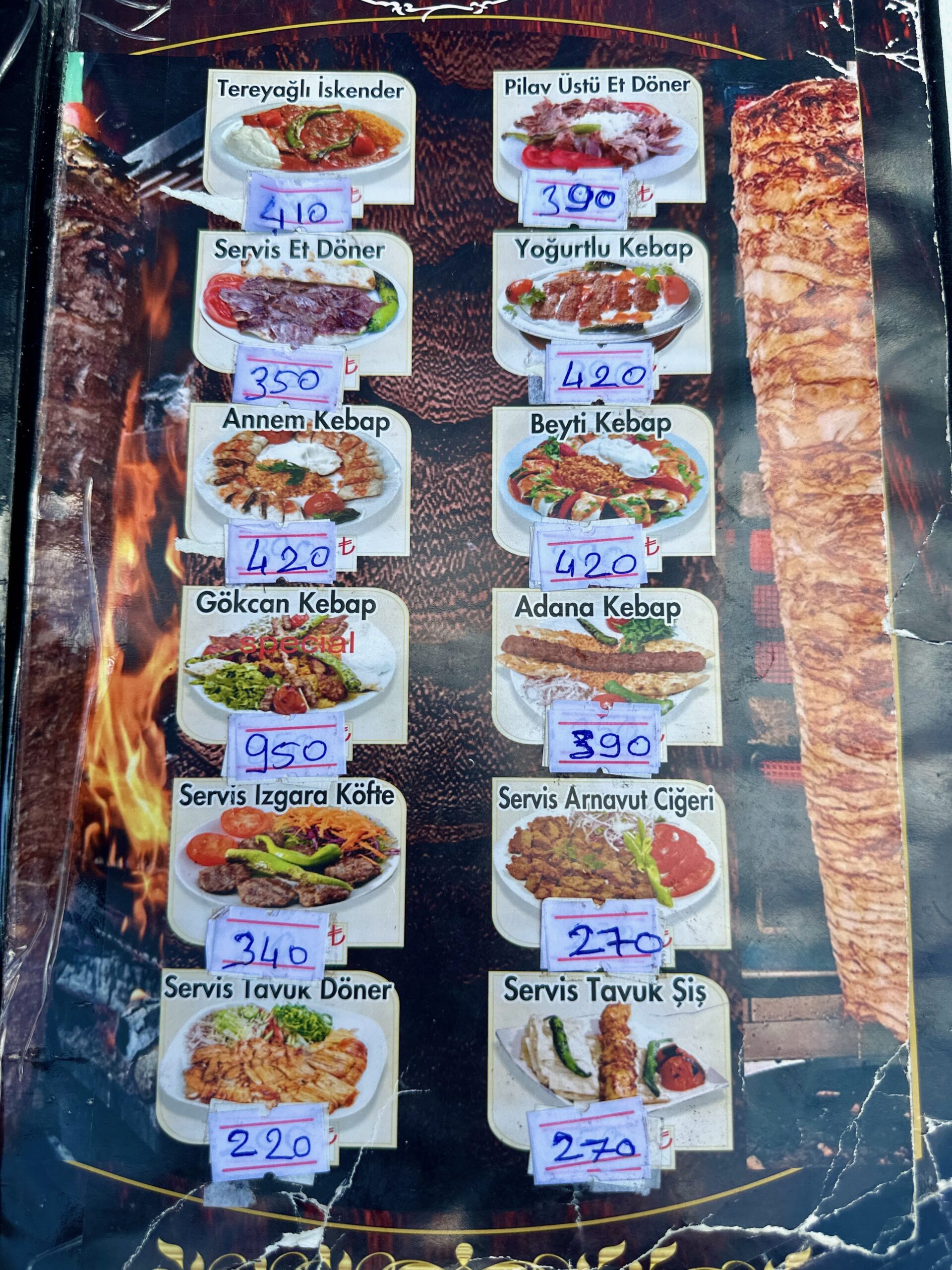
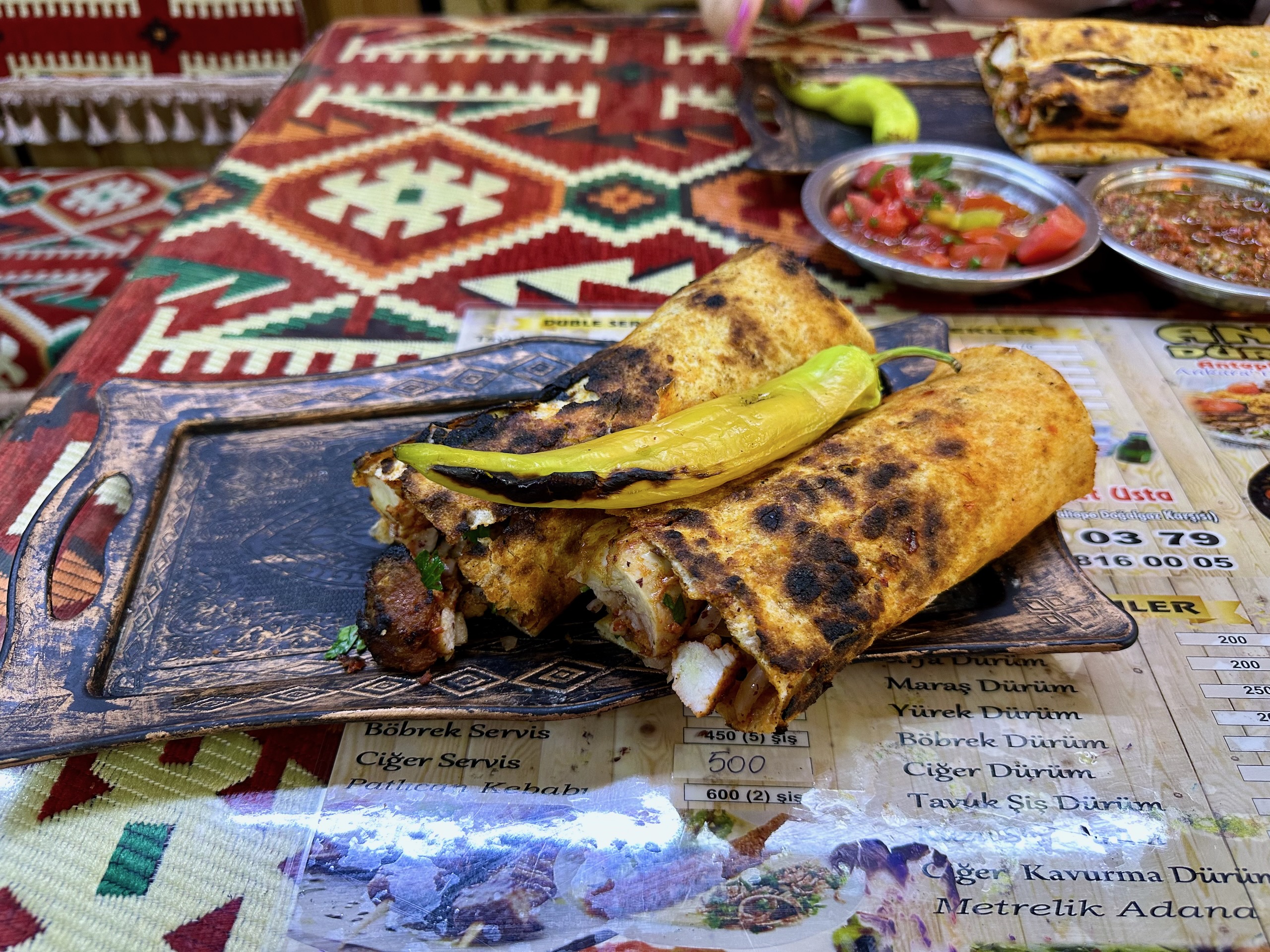
Around bus stations, metro stops, and major intersections, you’ll find countless “sandwich” stands — though calling them sandwiches is a stretch. In reality, they’re wraps stuffed with döner or shawarma, packed with meat, veggies, and sauce — easily a full meal on their own. Expect to pay roughly 150–300 TL per person in a casual local spot, depending on the portion and location — still perfectly reasonable for a capital city.
You can pay by card pretty much everywhere — even in many small eateries near transit hubs. Cash only comes in handy occasionally, but there’s no need to carry much of it just for food.
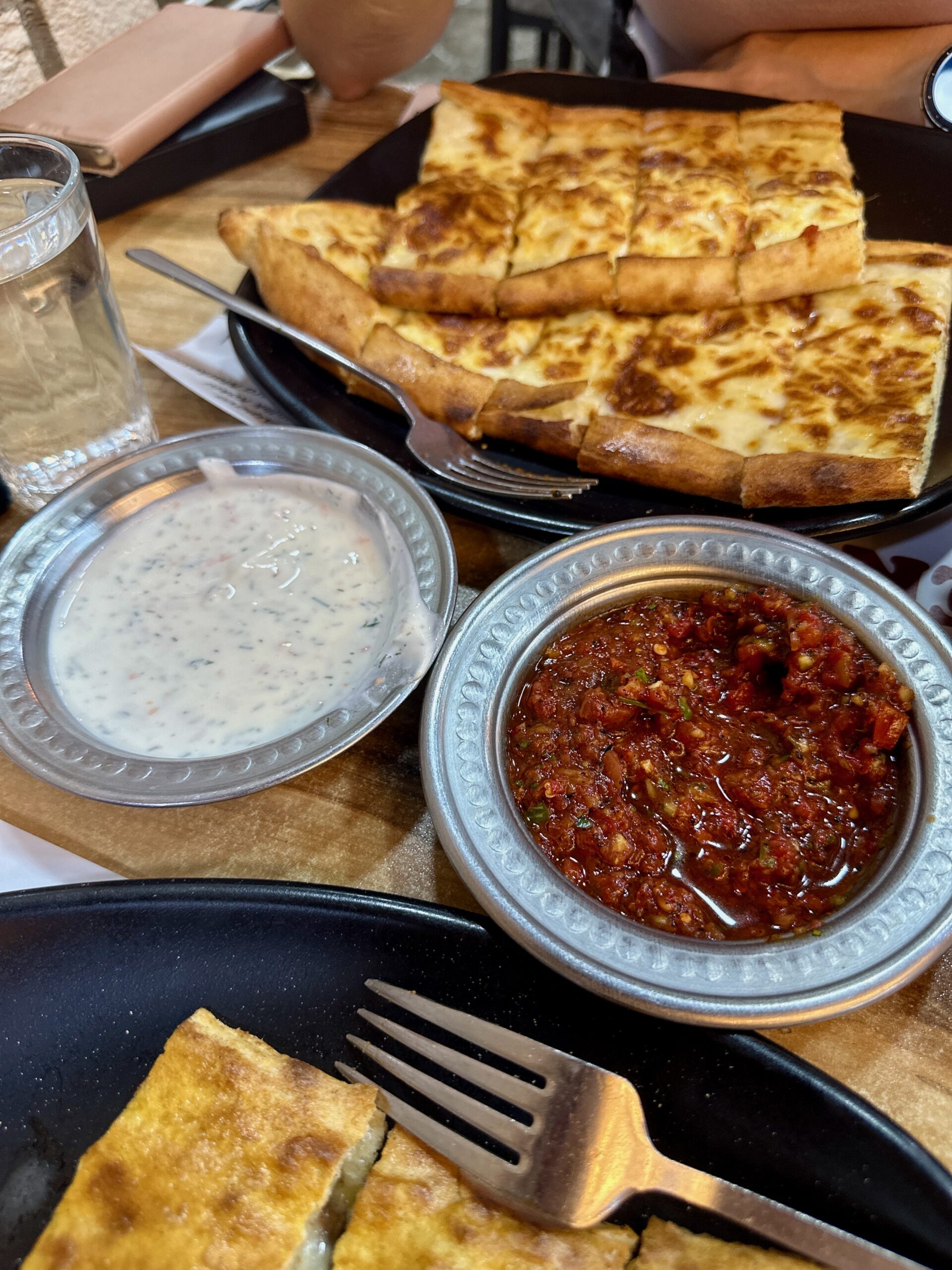
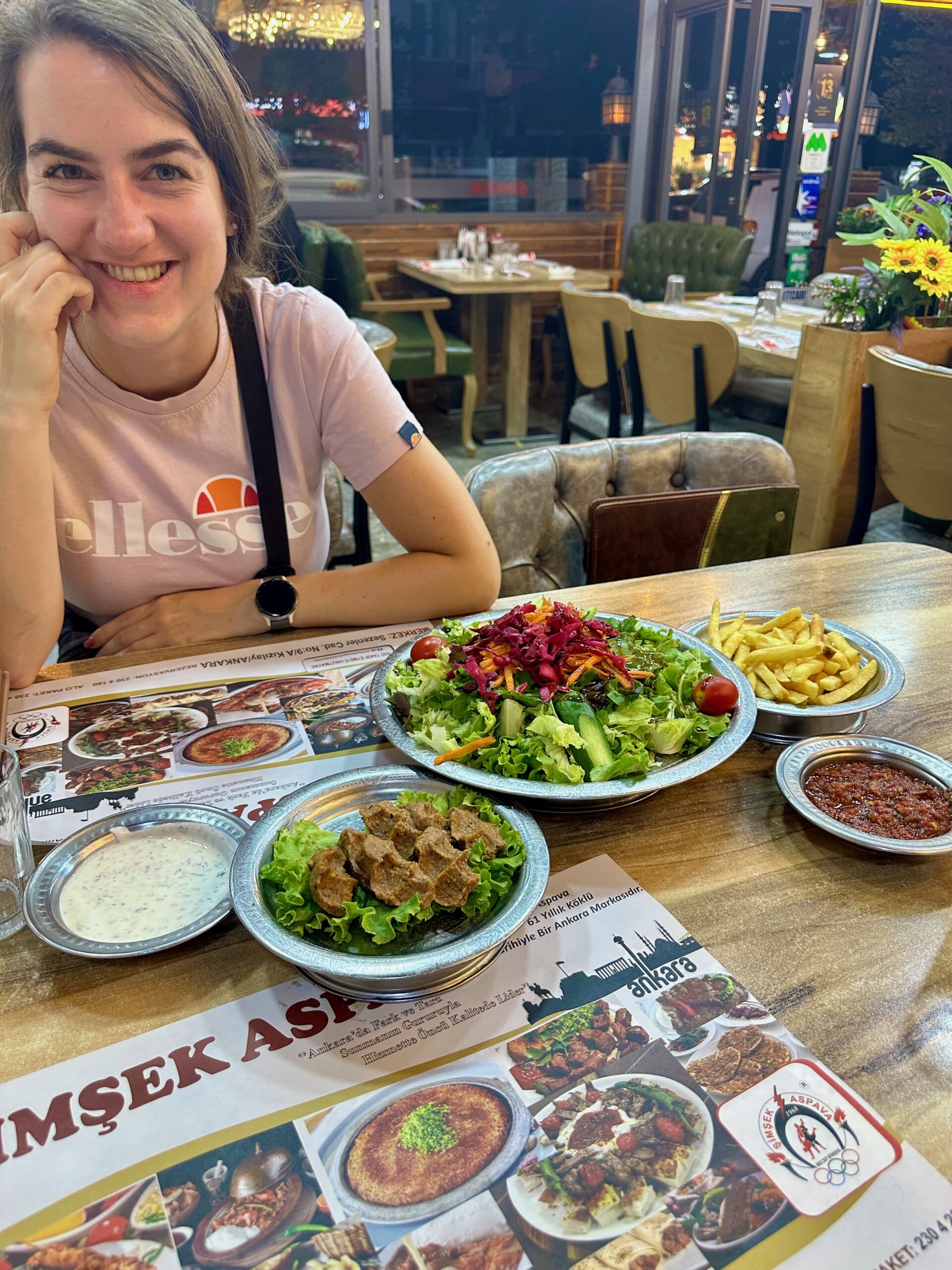
A whole separate world here is “Aspava”. It’s not one specific dish but rather a style of eatery — casual kebab and döner spots where your table starts filling up with sides long before your main order arrives. Salads, fries, sauces, ezme, cacık, sometimes soup, tea, or dessert — many of them served as ikram, meaning complimentary. You’ll find Aspava restaurants all over Ankara, especially around Çankaya and Tunalı, and they’re considered the go-to spots for local comfort food.
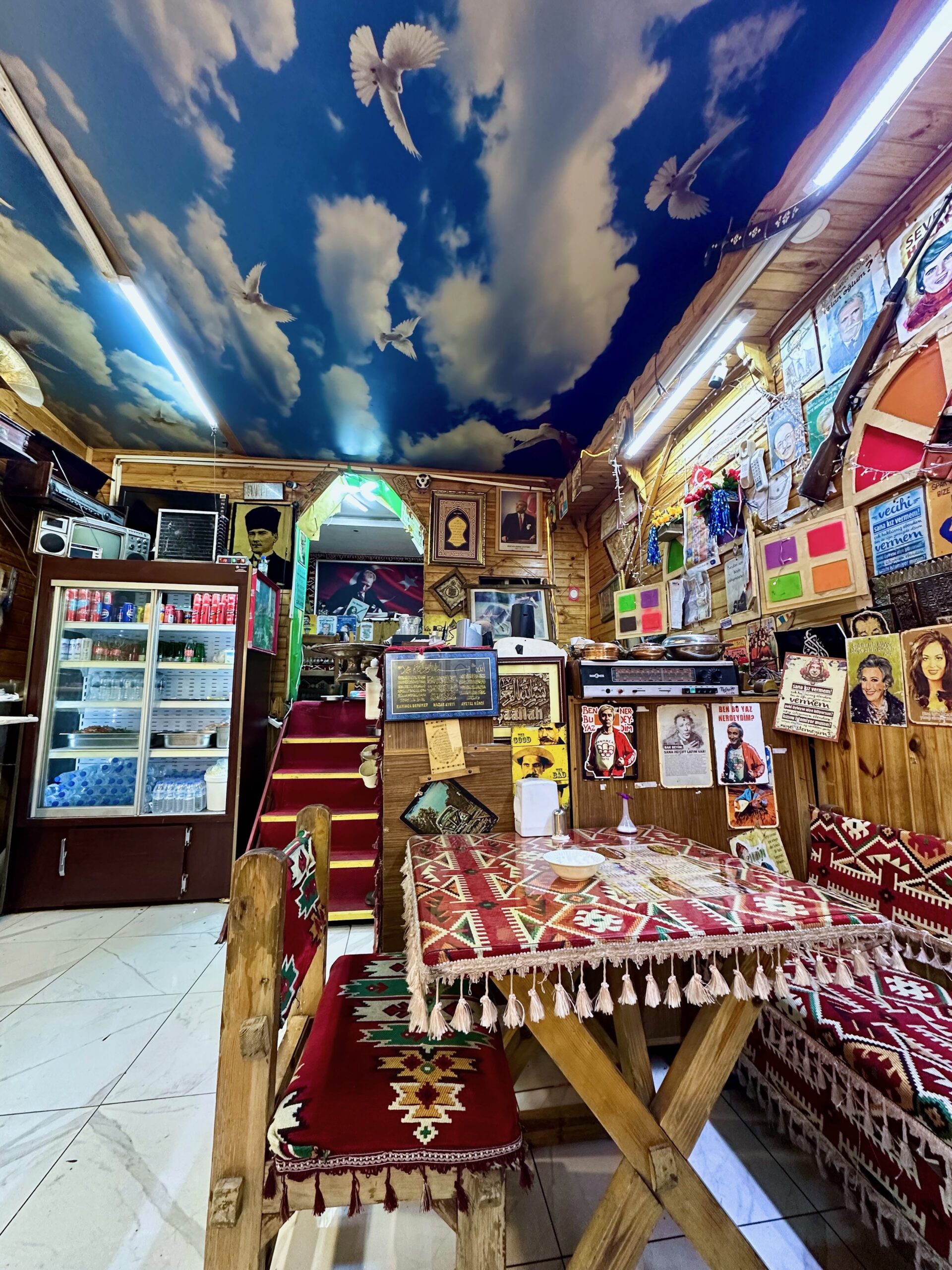
We totally fell in love with one of those places near our hotel — Simek Aspava. The typical scenario? You order one main dish, and within minutes your table looks like a mini buffet. Huge portions, endless side dishes that just keep coming, and the bill still stays perfectly reasonable for the capital. You leave with that classic Turkish feeling that someone genuinely tried to feed you beyond capacity. It’s the perfect dinner stop after a long day of exploring or being on the road.
Exchange office or ATM? Where is the best place to exchange money?
This will be brief and to the point, without any philosophy.
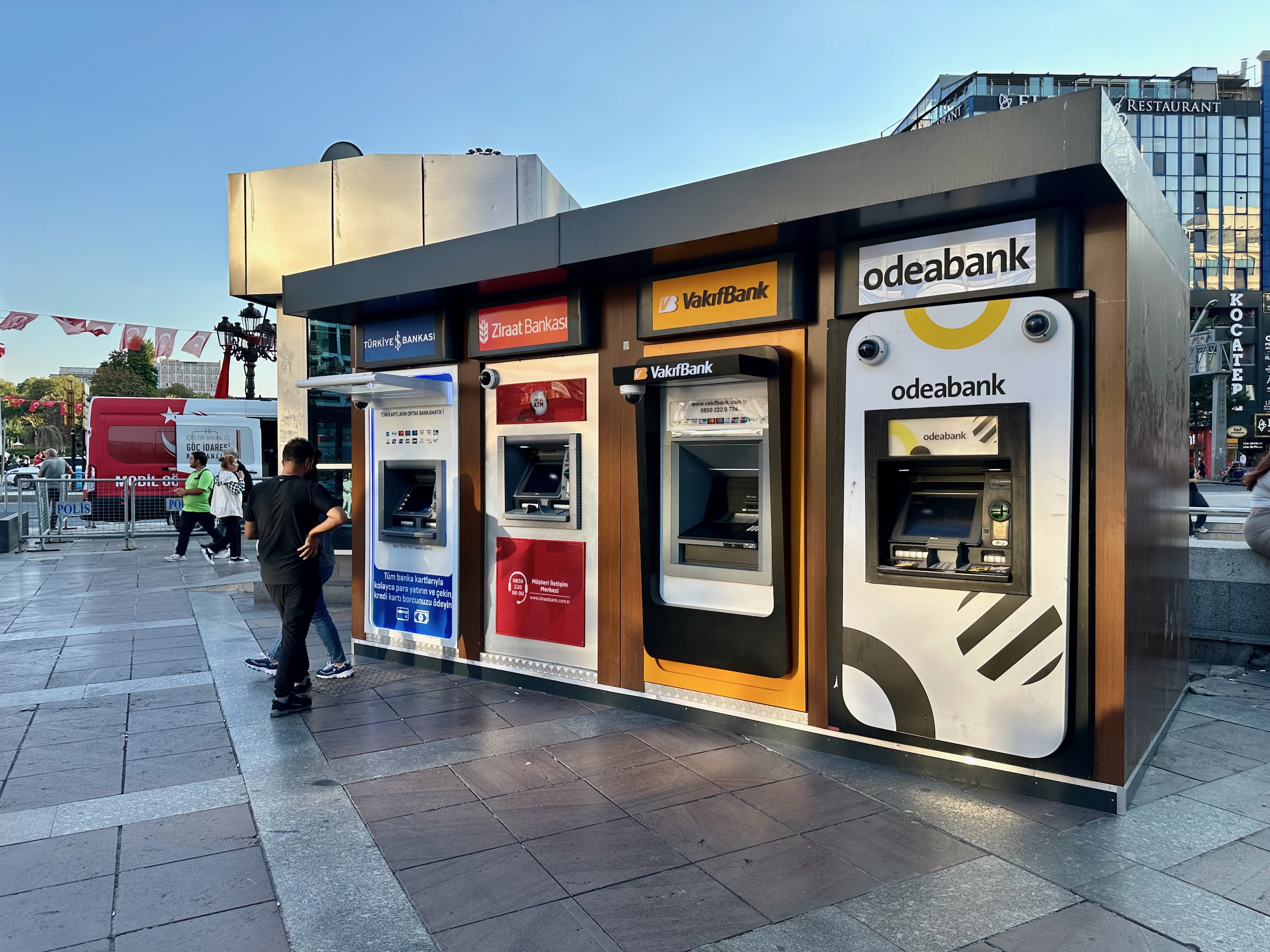
Ankara (and Turkey in general) isn’t the kind of place where you have to hunt for a single ATM within a 50 km radius. You can pay by card pretty much everywhere — in supermarkets, restaurants, hotels, gas stations, most chains, and regular shops. Cash is more of a plan B than your main way to pay.
How to handle it most conveniently:
- Pay by card wherever you can — ideally with one that gives you a decent exchange rate: a multi-currency card, Revolut, Wise, Curve, or a foreign-currency account from your bank, whatever you have handy. If you use a regular card from a Polish bank account, you’ll get hit with less favorable conversion rates — not a disaster, but a waste of money over time.
- Watch out for the “pay in your home currency” option: if the terminal asks whether to charge you in Turkish lira (TRY) or your local currency — always choose lira. Paying in your own currency triggers Dynamic Currency Conversion (DCC), which almost always means a worse exchange rate and unnecessary fees.
- ATM over exchange office: if you need cash (for emergency fuel stops, small shops, or tips), the easiest way is to withdraw it from an ATM of a major bank using a card with a Mastercard or Visa exchange rate. It’s usually much fairer than dealing with tourist exchange offices. Just remember — if the ATM offers to “convert to your home currency,” decline it and choose TRY (Turkish lira) instead.
- Exchange offices do exist, but… Ankara has plenty of them, especially in central areas — we just never needed one. With cards and ATMs available everywhere, it simply didn’t make sense.
Climate and weather conditions
If you’re coming here with that “seaside Turkey” image in your head — yeah, not quite 😅. The city sits high up in the middle of the country, so the climate is much drier and more unpredictable than in Istanbul or along the Aegean coast.
Summers here get really hot, but not in the same way as by the sea — there’s less humidity and more of that dry, steady heat. Daytime temperatures can easily climb above 30°C, but evenings cool down nicely, making it much easier to move around and actually enjoy the city.
In winter, Ankara turns into a proper cold-weather capital — coats, snow, and subzero temperatures included. It’s not exactly Siberia, but if you come here in December expecting “Turkey = warm”, you’ll quickly rethink your packing choices. Winter weather is the norm here, not an exception.
The best months for sightseeing and riding (especially by motorcycle) are spring and early autumn. For us, September hit the sweet spot — warm days just the way Jadzia likes them, and evenings still pleasant without needing to dress like it’s November in Warsaw. That’s the perfect time when you can both stroll around the city and cover longer distances on the road without melting inside your riding gear.
Safety in Ankara
From a traveler’s perspective, Ankara feels like a calm, steady capital. We didn’t have a single moment here when we felt unsafe.
According to local sources, Ankara’s provincial authorities highlight the high effectiveness of the police — in 2024, the city’s governor reported a crime detection rate of
Security checks are simply part of everyday life here — at major stations like AŞTİ, shopping malls, or the airport, you’ll pass through metal detectors and bag scanners, sometimes even full x-rays. It can be a bit of a hassle, but it works and genuinely adds to the sense of order in the city.
High-profile incidents have occurred in recent years — and it’s worth understanding the context rather than dramatizing it. On October 1, 2023, an attack took place near the Ministry of Interior buildings in Ankara, and on October 23, 2024, the TUSAŞ aerospace complex outside the city was targeted (resulting in several fatalities and dozens injured). Both were widely covered in Turkish and international media. For ordinary travelers, the takeaway is simple: avoid demonstrations or visibly tense political gatherings and follow the instructions of local authorities. Beyond such rare events, the city functions normally and feels stable day to day.
When it comes to everyday risks, the real concern is actually on the roads. According to TÜİK data for 2024, a total of 6,352 people died in traffic accidents nationwide — with Ankara province recording the highest number of fatalities (325). It’s not a reason to panic, but definitely a reminder to drive defensively and treat speed limits as rules, not suggestions.
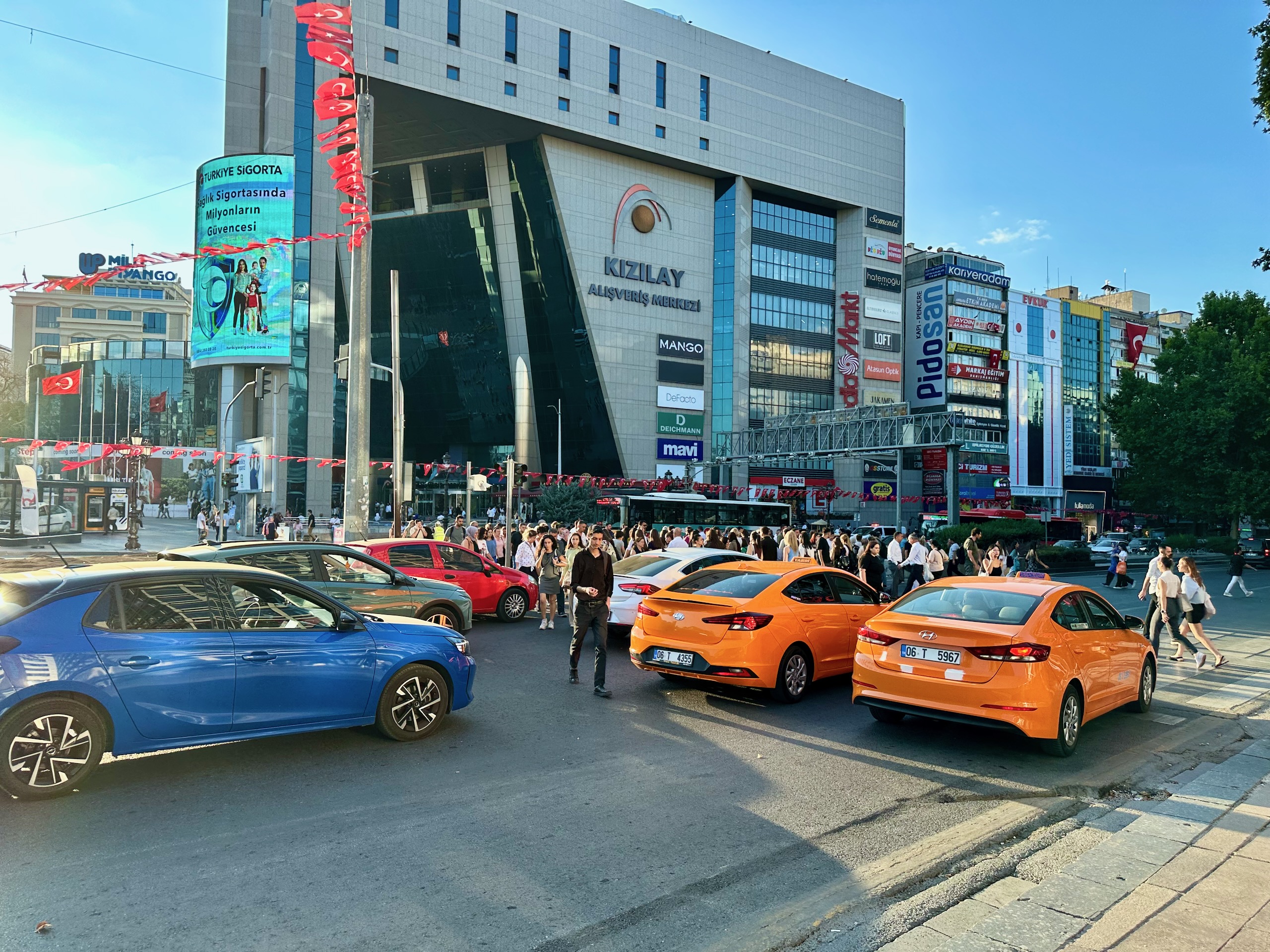
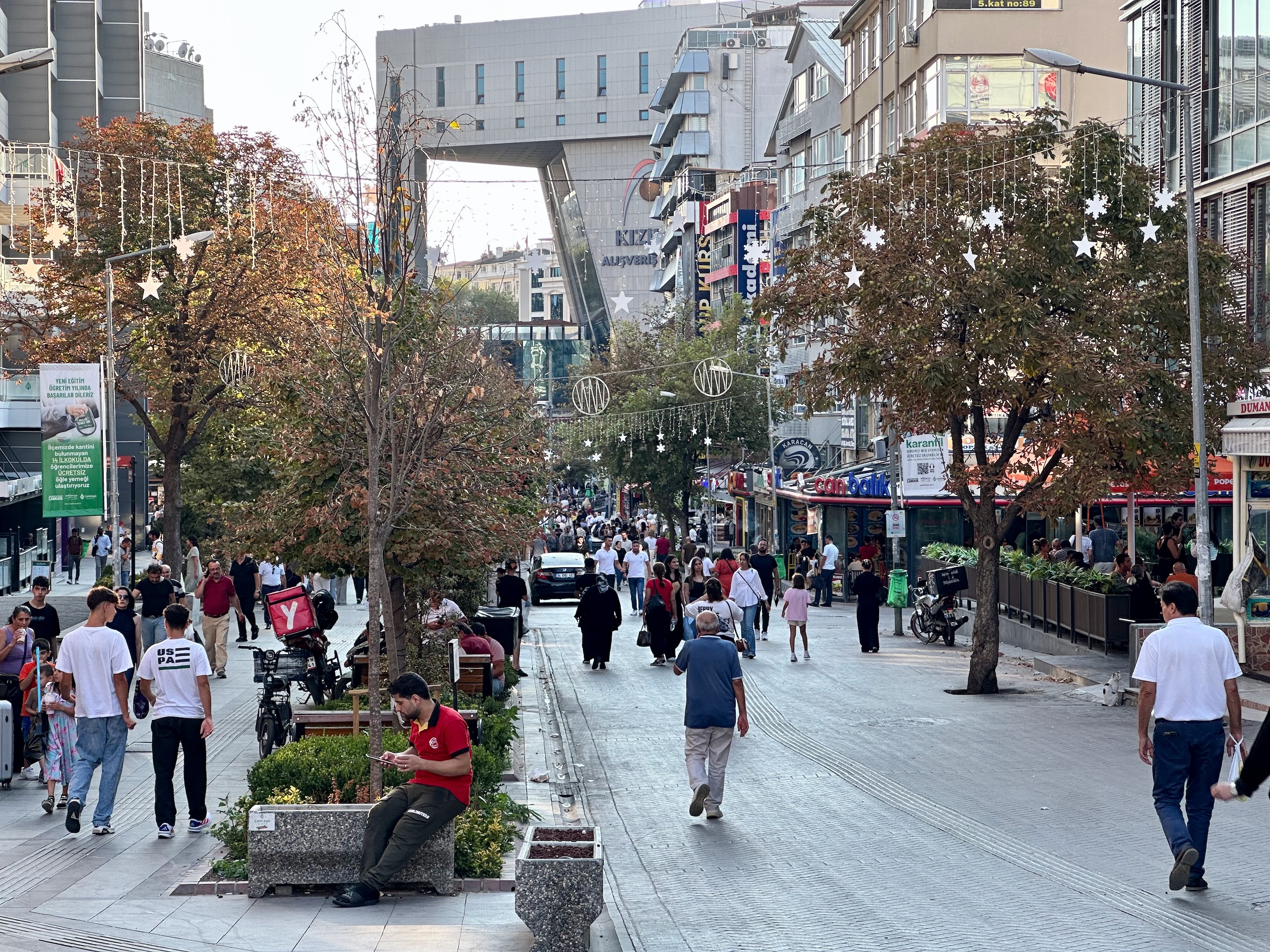
Places we visited in Ankara
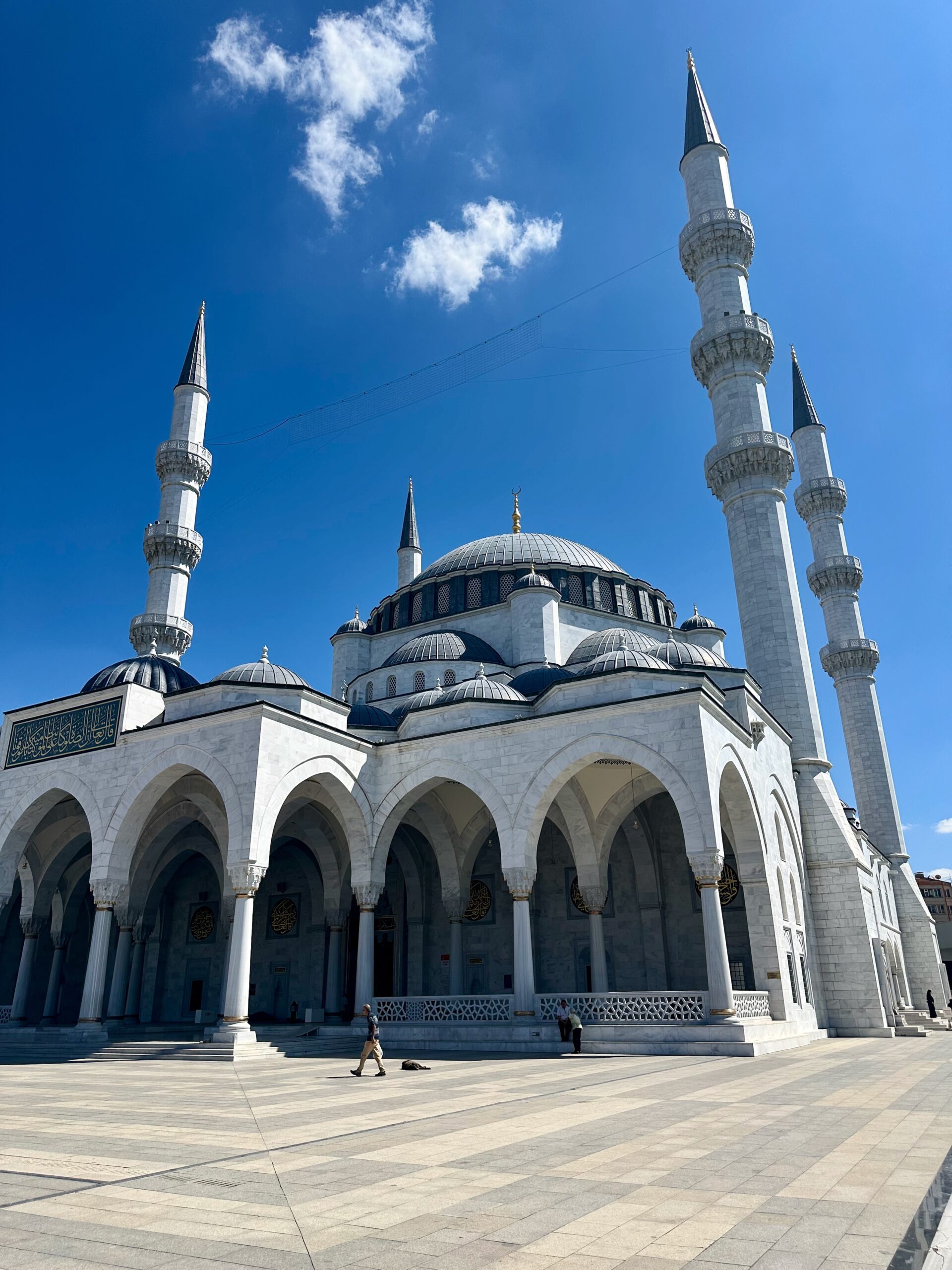
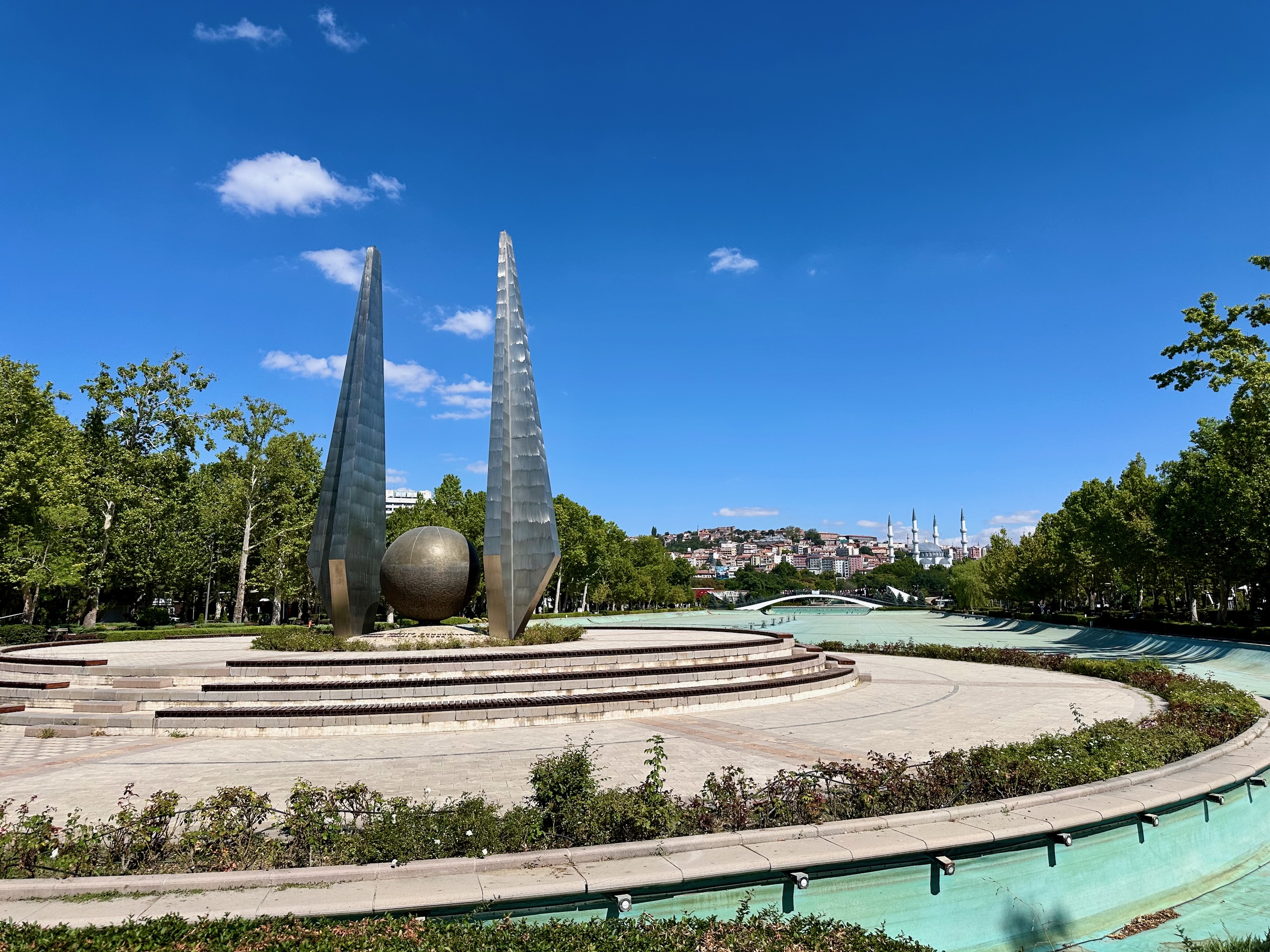
You can really put your fitness to the test here — seriously 🥸. A calm walk quickly turns into a “why is it uphill again?” situation, and the stairs and inclines between viewpoints give you better cardio than most gyms. This is the kind of city where one minute you’re crossing an ordinary intersection, and the next you’re staring at a sweeping panorama, reminded that the capital was built on hills, not flat ground.
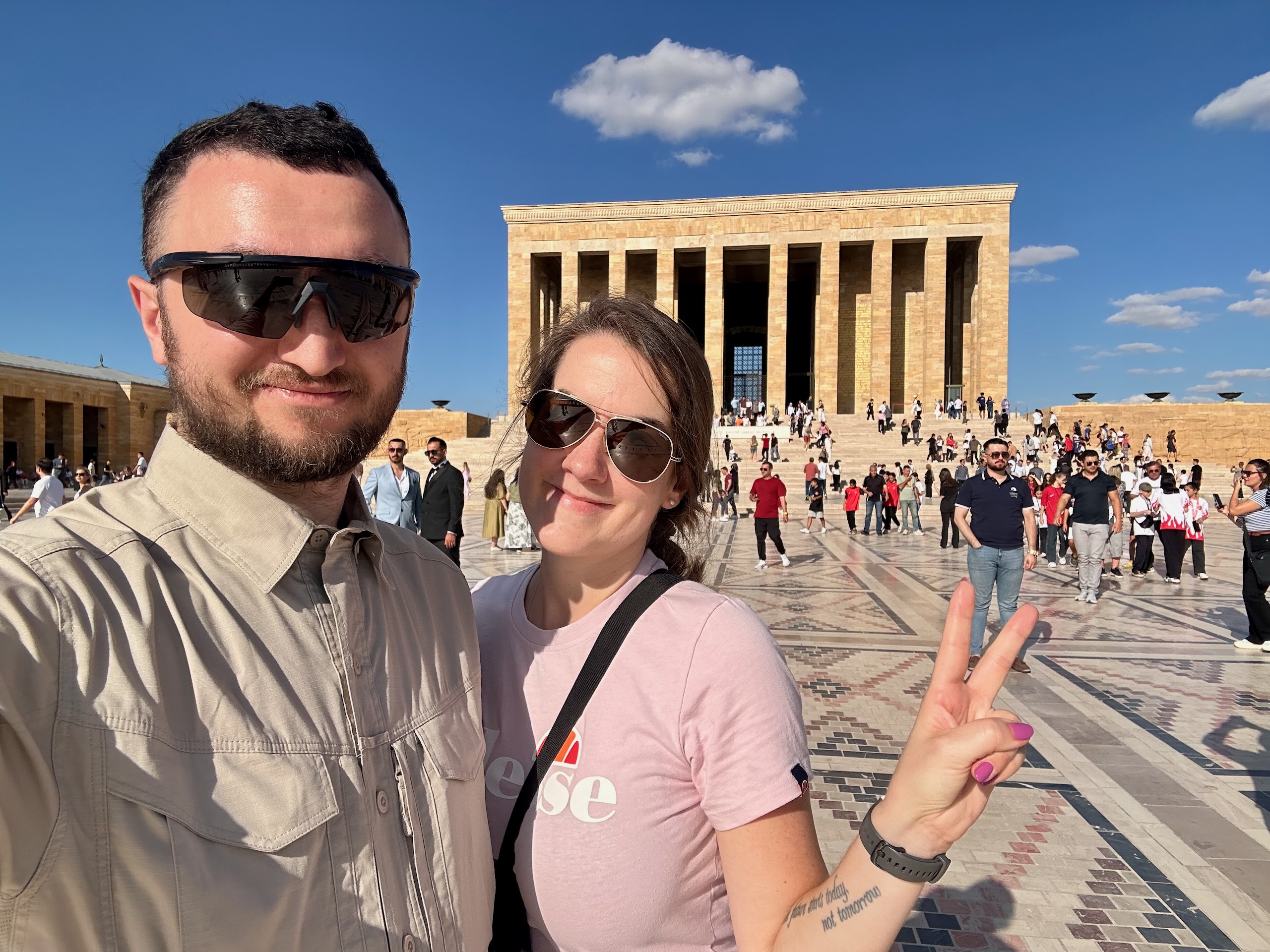
To avoid repeating ourselves across multiple posts — 👉 we’ve gathered all the specific places we visited in Ankara (including the best viewpoints, walkable routes, and atmospheric corners) in a separate article 👈. You’ll find a ready-made list of spots to check out and a suggested walking route. If you’re planning 1–2 days in the capital and want to explore it efficiently — without random wandering just because “something must be around here” — that’s the one to read.
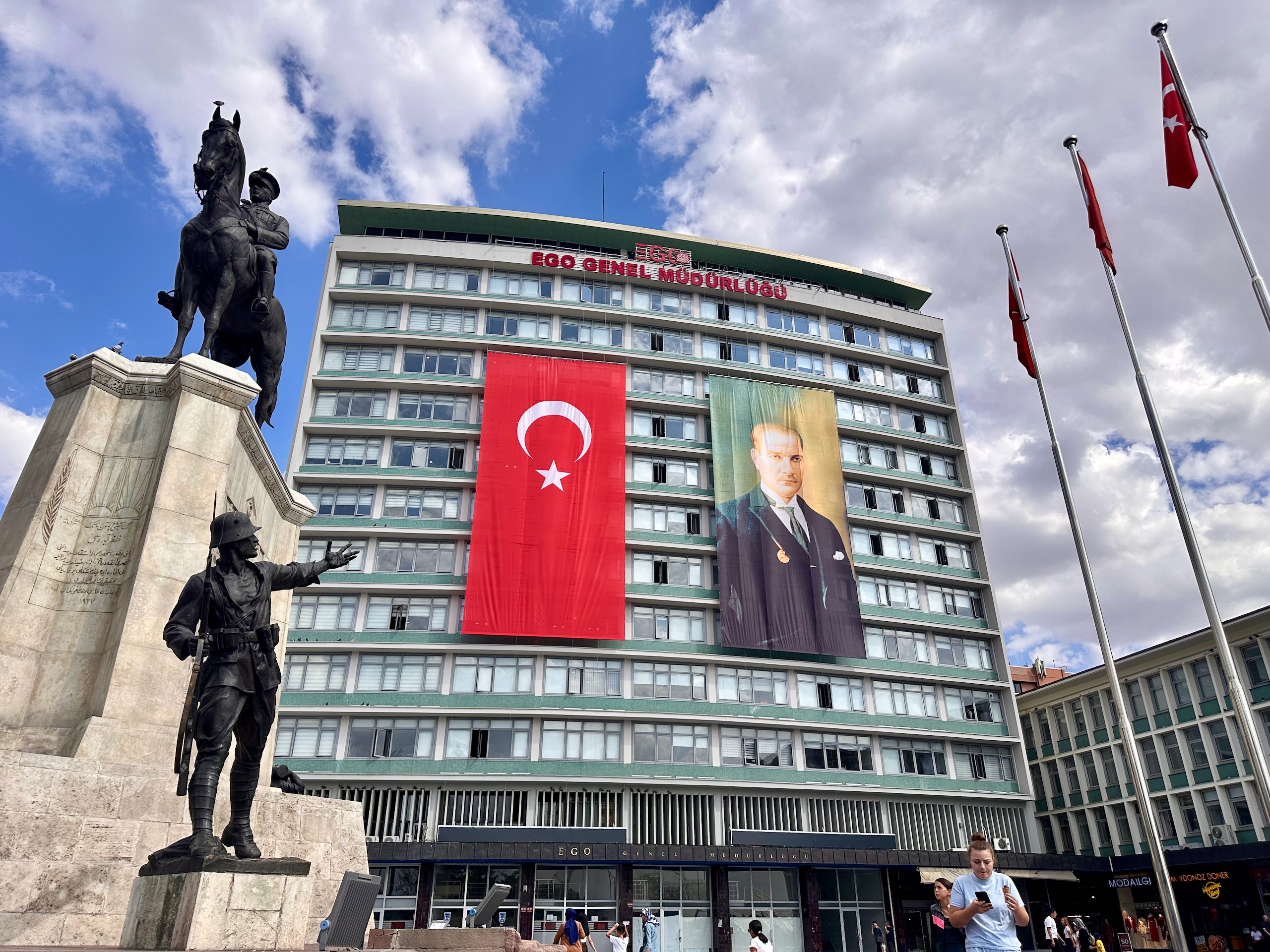
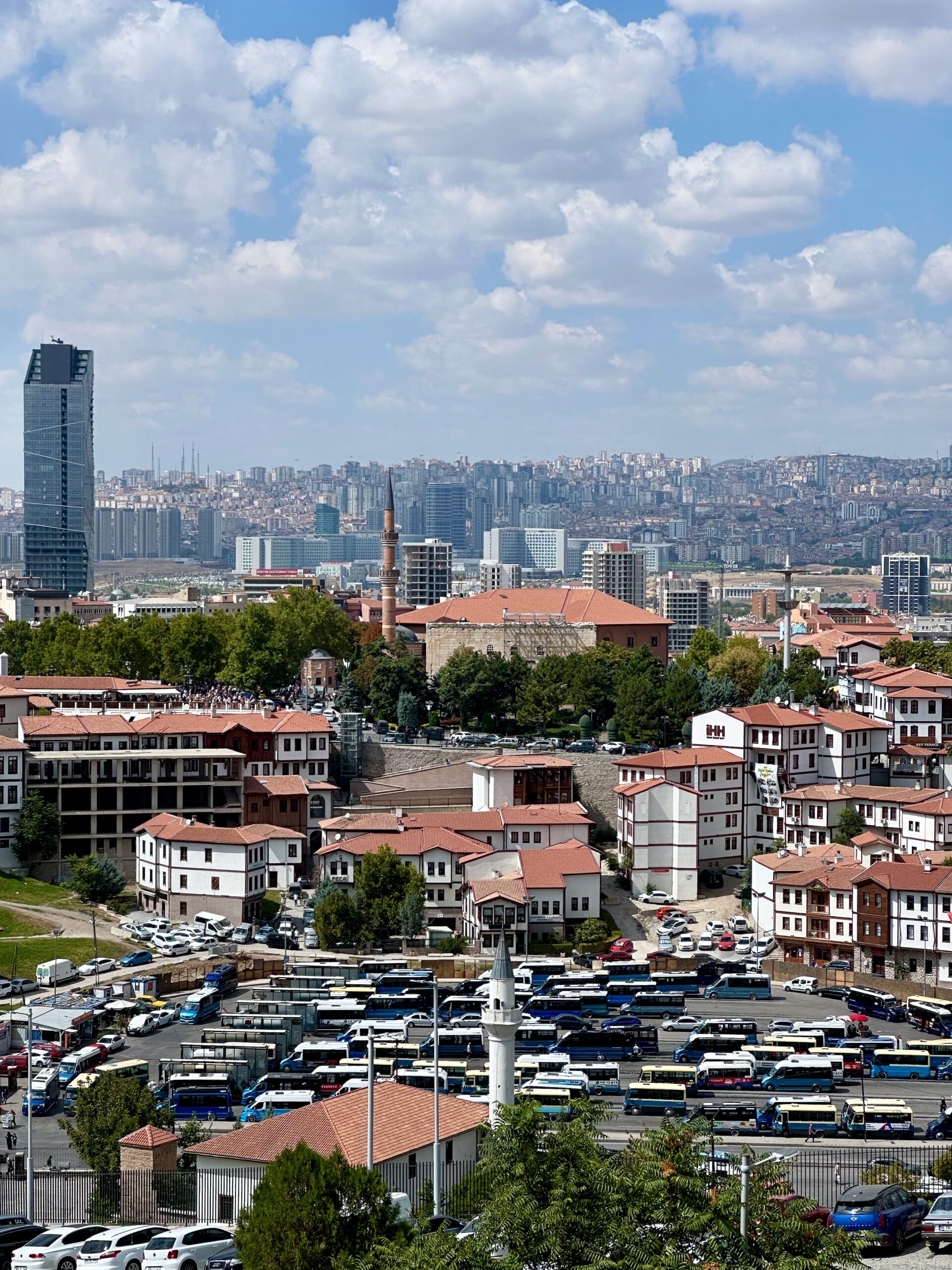
Summary
Ankara turned out to be exactly what Istanbul sometimes lacks — a bit of breathing space. For a capital, it feels surprisingly normal — fewer crowds, less tourist chaos, and more people just going about their daily lives. That makes exploring the city a lot calmer: no endless queues, no pushing through crowds, and no one trying to sell you something every five steps.
Price-wise, Ankara is also a pleasant surprise — especially when it comes to food. It’s the kind of place where dinner alone can change your travel plans. You finish eating and suddenly start thinking, “Maybe we should stay one more day… just for the food”. Honestly, if cheap flights to Ankara popped up tomorrow, we’d come back in a heartbeat — purely for the cuisine.
Add to that the climate (especially in September — the perfect balance of warmth and comfort), solid infrastructure, reliable public transport, and that feeling of being in an important city without the unnecessary rush. For those heading deeper into Turkey or onward to the Middle East, Ankara makes an excellent stopover. And for anyone looking for a less obvious city break — it’s a genuinely fair alternative to Istanbul.